

Why Your Solar Project Needs the National Grid Hosting Capacity Map
Understanding your property’s hosting capacity could mean the difference between a straightforward solar installation and costly grid upgrades that delay or derail your project. Hosting capacity represents the amount of solar energy your local electric grid can accept without requiring infrastructure improvements—essentially, it’s the grid’s available “parking space” for new solar systems.
For Illinois property owners considering solar, the hosting capacity map serves as your first checkpoint in the feasibility process. These interactive maps, maintained by your utility company, reveal whether your specific location has sufficient grid capacity to accommodate a solar array. Areas shown in green typically accept new solar interconnections smoothly, while yellow or red zones may require additional studies or equipment upgrades that add thousands of dollars to installation costs.
The stakes are significant: attempting to install solar in a constrained area without checking hosting capacity can lead to months of delays, unexpected expenses for grid improvements, or even project rejection. Illinois property owners benefit from checking these maps early in their planning phase, ideally before signing contracts or making financial commitments.
This complexity underscores the value of partnering with experienced, locally owned solar installers who navigate utility requirements daily. They understand how to interpret hosting capacity data, identify workarounds for challenging locations, and guide you toward the most cost-effective path to solar ownership—turning technical obstacles into manageable steps in your clean energy journey.
What Is Grid Hosting Capacity?
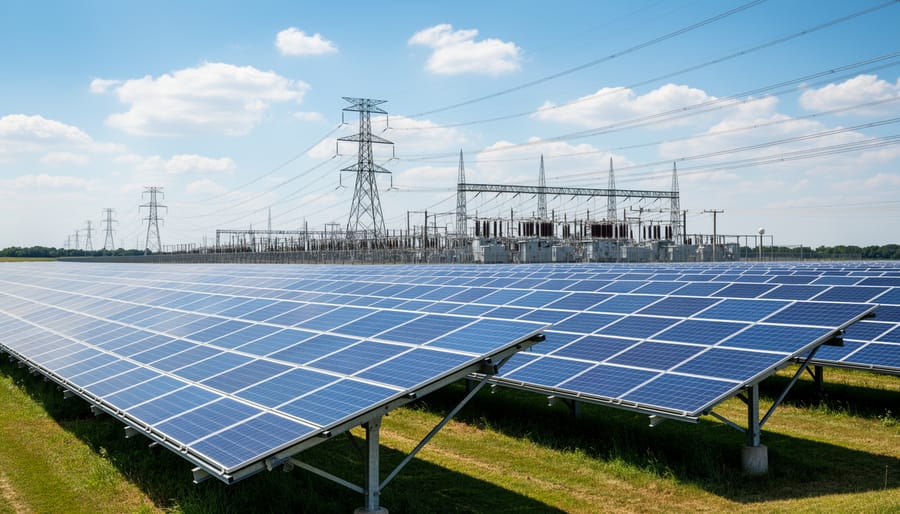
Grid hosting capacity is essentially the maximum amount of distributed solar energy that your local electric grid can safely handle at a specific location without requiring expensive infrastructure upgrades. Think of it like a highway system—just as roads have capacity limits for traffic flow, your neighborhood’s electrical circuits have limits for how much solar power they can accommodate before experiencing congestion.
When you generate solar electricity at your home or business, any excess power flows back into the grid for your neighbors to use. This reverse flow of electricity wasn’t part of the grid’s original design, which was built to deliver power in one direction from large power plants to consumers. With smart grid technology and growing solar adoption across Illinois, utilities now carefully monitor how much distributed generation each circuit can handle.
Hosting capacity depends on several factors at your specific location. The existing electrical infrastructure, including transformer size and wire capacity, plays a major role. The number of solar installations already connected in your area matters too—if your neighbors have already installed significant solar capacity, there may be less room available for additional systems. Distance from the substation and the overall electrical load in your neighborhood also influence the calculations.
Understanding hosting capacity is crucial before investing in solar panels because exceeding it may trigger costly grid upgrade requirements. These upgrades could delay your project timeline and add unexpected expenses. The good news is that utilities are increasingly providing hosting capacity maps to help property owners make informed decisions about solar feasibility at their locations from the start.
How the National Grid Hosting Capacity Map Works
Reading the Map for Your Illinois Property
Understanding the hosting capacity map for your Illinois property doesn’t require an engineering degree. These interactive maps use a color-coded system to show how much distributed energy, like solar, the existing electrical infrastructure can accommodate at specific locations.
Most utilities display capacity information using a traffic light approach. Green zones indicate ample capacity available, meaning your solar system can likely connect without triggering expensive grid upgrades. Yellow or orange areas suggest moderate capacity, where smaller systems may work fine, but larger installations might require additional review. Red zones signal limited or no available capacity, which doesn’t necessarily mean solar is impossible, but you’ll need to explore alternatives with your installer.
The capacity measurements appear in kilowatts (kW) or megawatts (MW), representing how much generation the grid segment can handle. For residential projects typically ranging from 5-15 kW, even moderate capacity readings often provide sufficient room. Commercial installations requiring 50 kW or more need closer attention to these figures.
When reviewing the map, locate your property’s specific address or nearby circuit. The data reflects conditions at the distribution feeder level, so neighboring properties generally share similar capacity constraints. Remember that these maps provide snapshots in time and update periodically as conditions change.
If your location shows limited capacity, don’t abandon your solar plans. Experienced Illinois solar installers know how to work within these constraints, whether through system sizing adjustments, energy storage integration, or utility coordination to find workable solutions for your renewable energy goals.
Why Hosting Capacity Matters for Your Solar Investment
The Cost of Ignoring Hosting Capacity
Skipping the hosting capacity check might seem like a minor oversight, but it can derail your solar project in costly ways. Many Illinois property owners and businesses have learned this lesson the hard way.
Consider a manufacturing facility in central Illinois that invested in design and permitting for a 500 kW solar array, only to discover during the interconnection application that their distribution circuit was at capacity. The project faced an eight-month delay while the utility assessed options, and the business ultimately had to fund a transformer upgrade costing nearly $75,000—expenses they hadn’t budgeted for.
Similarly, a commercial developer in the Chicago suburbs signed contracts for rooftop solar installations across multiple properties without reviewing hosting capacity data. Three of the five locations required grid modifications, adding unexpected grid upgrade costs that reduced project returns by 15 percent.
In some cases, projects face outright rejection when capacity constraints cannot be economically resolved. A planned community solar farm in rural Illinois was denied interconnection after engineering studies revealed that connecting the proposed system would require substation upgrades exceeding the project’s entire budget.
These scenarios share a common thread: they were avoidable. Checking hosting capacity maps early in the planning process allows you to make informed decisions about system sizing, site selection, and budget expectations. Working with locally owned solar installers who understand Illinois grid conditions helps identify potential capacity issues before significant resources are committed, saving time and money while increasing project success rates.
How Illinois Utilities Handle Hosting Capacity
Illinois property owners benefit from transparent hosting capacity information thanks to the state’s two major investor-owned utilities: Commonwealth Edison (ComEd) and Ameren Illinois. Both utilities have developed publicly accessible hosting capacity maps that help homeowners and businesses understand their property’s solar interconnection potential before investing in a system.
ComEd, serving the northern Illinois region including Chicago and its suburbs, provides an interactive hosting capacity map through its online portal. The tool displays color-coded information showing available capacity on specific distribution circuits. Green areas indicate ample hosting capacity, yellow signals moderate availability, and red shows limited or no capacity. ComEd updates this data regularly to reflect current grid conditions and recently completed upgrades.
Ameren Illinois serves central and southern portions of the state with a similar mapping approach. Their hosting capacity analysis tool allows users to search by address or navigate the map directly. The system provides capacity information at the circuit level, helping solar installers and property owners identify potential interconnection challenges early in the planning process.
Illinois regulations have strengthened requirements for utility transparency in recent years. The state’s Future Energy Jobs Act and subsequent Climate and Equitable Jobs Act established clear timelines for interconnection applications and mandated that utilities maintain current hosting capacity information. These regulations also created streamlined approval processes for smaller residential systems, reducing wait times and complexity for typical home solar installations.
Both utilities participate in Illinois’s Smart Inverter Working Group, which addresses technical standards for modern solar equipment. This collaboration ensures that new solar installations can support grid stability while maximizing available hosting capacity.
When capacity constraints exist, Illinois utilities must identify specific technical issues and provide cost estimates for necessary upgrades. This transparency helps property owners make informed decisions about proceeding with projects or exploring alternative solutions. Working with locally owned Illinois solar installers familiar with these utility-specific processes can significantly simplify navigation of hosting capacity questions and interconnection requirements.
What to Do When Your Location Has Limited Capacity
Discovering that your location has limited hosting capacity doesn’t mean your solar dreams are over. Several practical solutions can help you move forward with your project while working within grid constraints.
The first step is adjusting your system size to fit within available capacity. If the map shows your area can only accommodate a 5 kW system but you planned for 10 kW, consider starting with the smaller installation. You can often revisit expansion options once the utility makes grid upgrades or capacity becomes available. Many Illinois homeowners and businesses find that even a right-sized system delivers meaningful energy savings.
Pairing solar panels with energy storage solutions offers another pathway forward. Battery systems allow you to store excess energy generated during peak sunlight hours rather than sending it all back to the grid. This reduces your impact on grid capacity while maximizing the value of your solar investment through increased self-consumption and backup power capabilities.
In some cases, utilities offer cost-sharing programs for grid upgrades. If your solar project would benefit from transformer or line improvements, you might negotiate with your utility to share these infrastructure costs. While this requires upfront investment, it can unlock larger system capacity and potentially benefit your entire neighborhood.
For properties with significant energy needs and limited grid capacity, exploring microgrid alternatives might make sense. These self-contained systems can operate independently from the main grid during certain periods.
Working with experienced, locally owned solar installers familiar with Illinois grid conditions ensures you receive guidance tailored to your specific situation. They understand regional hosting capacity challenges and can design creative solutions that maximize your solar potential while navigating technical constraints effectively.
How Working with Local Solar Experts Simplifies the Process
Working with experienced Illinois solar installers takes the guesswork out of navigating hosting capacity challenges. Local solar experts understand the specific requirements of Illinois utilities and have established relationships with grid operators, making the interconnection process smoother and faster for property owners.
A knowledgeable installer will evaluate the National Grid hosting capacity map for your location before designing your system, identifying potential constraints early in the planning process. They can determine whether your property falls within an area with sufficient capacity or if alternative approaches are needed. This upfront analysis saves time and prevents costly redesigns later.
When hosting capacity is limited, experienced installers know how to optimize system design to work within grid constraints. They might recommend adjusting system size, incorporating battery storage, or implementing advanced inverter settings that allow your solar array to operate without overloading local circuits. Their expertise in system integration ensures your installation meets both utility requirements and your energy goals.
Local solar professionals also handle all utility coordination on your behalf, submitting interconnection applications, responding to technical questions, and managing timeline expectations. They understand Illinois-specific incentive programs and can structure your project to maximize financial benefits while complying with grid limitations.
This local knowledge proves invaluable in turning hosting capacity challenges into manageable details rather than project roadblocks, allowing you to move forward confidently with your solar investment.

Checking the National Grid hosting capacity map should be one of your first steps when planning a solar installation in Illinois. Understanding your location’s grid capacity early in the process can save you significant time, money, and frustration. Properties in low-capacity areas may face unexpected upgrade costs or extended timelines that could impact your solar investment’s financial viability. By reviewing hosting capacity upfront, you can make informed decisions about system sizing, budget expectations, and project feasibility.
Navigating grid interconnection requirements doesn’t have to be overwhelming. Working with knowledgeable local installers who understand Illinois-specific grid requirements makes all the difference. Experienced professionals can interpret hosting capacity data, communicate effectively with utility companies, and design systems that maximize your solar potential while meeting technical specifications. They bring expertise in handling complex interconnection scenarios and can identify creative solutions when capacity constraints exist.
Whether you’re a homeowner exploring residential solar or a business owner planning a commercial installation, partnering with locally owned solar companies ensures you receive guidance tailored to Illinois’s unique regulatory landscape and grid infrastructure.
