
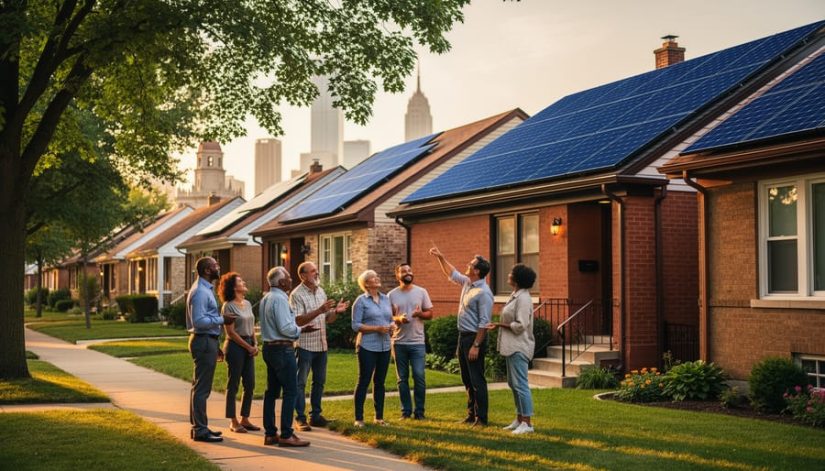
How Community Solar Advocacy Is Transforming Illinois Neighborhoods
Renewable energy advocates are transforming Illinois communities by building grassroots movements that make solar power accessible to everyone. These dedicated individuals work beyond their own installations, organizing neighborhood solar co-ops, speaking at local government meetings to strengthen clean energy policies, and helping neighbors navigate the technical and financial aspects of going solar. In Illinois, community advocacy has proven essential—from suburban Chicago homeowners forming buying groups that reduce installation costs through collective bargaining, to Downstate business owners testifying about solar’s economic benefits at county board hearings.
Becoming an advocate requires no special credentials, just genuine enthusiasm for clean energy and willingness to share knowledge. Start by documenting your own solar journey through social media or neighborhood forums, addressing common concerns about costs, maintenance, and weather performance specific to Illinois conditions. Connect with established organizations like the Illinois Solar Energy Association to access resources, training sessions, and networking opportunities with experienced advocates. Attend municipal planning meetings to support solar-friendly zoning ordinances that remove barriers for future installations.
The impact extends beyond environmental benefits. Community advocacy creates local jobs, strengthens energy independence, and builds social connections among neighbors working toward shared goals. When homeowners and business owners voice support for renewable energy policies, they influence decision-makers far more effectively than industry representatives alone. Your participation—whether hosting informational sessions, sharing installation experiences, or simply recommending reliable local solar providers—accelerates Illinois’s transition to clean energy while helping others overcome the initial uncertainty of adopting new technology.
What Community-Led Renewable Energy Advocacy Really Means
Community-led renewable energy advocacy puts local residents, business owners, and organizations in the driver’s seat when it comes to shaping energy policy and adoption in their neighborhoods. Unlike corporate initiatives driven by profit margins or government programs designed at the state level, community-led movements start with the people who will directly benefit from clean energy solutions.
At its core, this grassroots approach means that Illinois homeowners and businesses work together to voice their needs, share knowledge about solar energy options, and push for policies that reflect local priorities. When communities organize themselves into groups like an energy communities alliance, they gain collective bargaining power and create a unified voice that policymakers cannot ignore.
The difference between community-led and top-down advocacy is significant. Corporate campaigns often focus on selling products, while government initiatives may overlook unique local challenges. Community advocates, on the other hand, understand firsthand what Illinois property owners face—from installation costs and financing options to municipal regulations and utility interconnection processes.
Local voices matter because energy decisions affect daily life. When your neighbors advocate for better net metering policies or streamlined permitting processes, they’re working to solve problems you actually experience. These advocates often partner with locally owned solar providers who have expertise in solar energy specific to Illinois conditions and regulations.
Community-led advocacy also builds trust. When information about renewable energy comes from someone in your own community rather than a distant corporation, it carries more weight. This peer-to-peer education helps dispel myths, shares real experiences, and makes solar adoption feel achievable rather than intimidating.
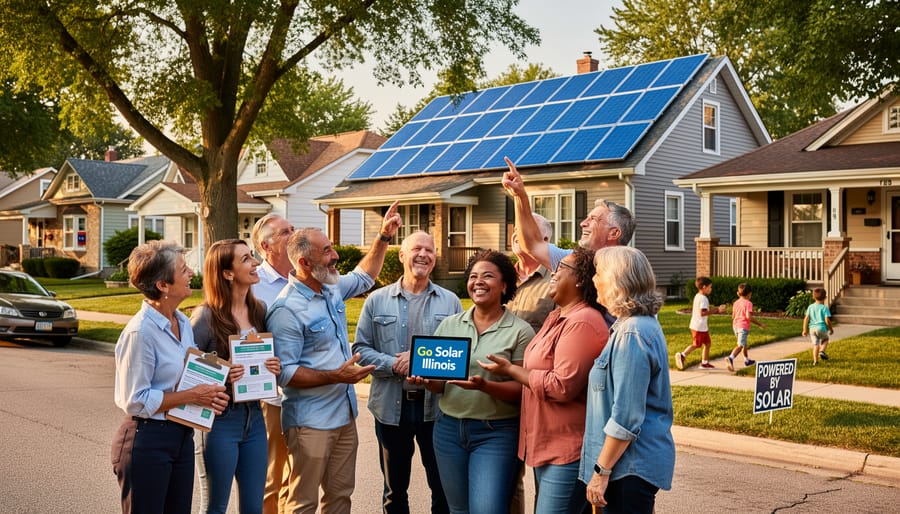
The People Driving Solar Change in Illinois Communities
Homeowner Champions
When Illinois homeowners make the switch to solar energy, they often become the most credible voices for renewable energy in their communities. These residential solar adopters naturally transform into advocates by openly discussing their experiences with neighbors, friends, and family members. Their authenticity carries significant weight because they can share real numbers from their own utility bills, demonstrating tangible cost savings that skeptics find hard to dismiss.
The power of homeowner advocacy lies in its accessibility. When neighbors see solar panels on a familiar rooftop and learn about actual monthly savings, the technology becomes less abstract and more achievable. Many Illinois solar homeowners report fielding questions at neighborhood gatherings, sharing installation timelines, and explaining incentive programs they utilized. This peer-to-peer education proves invaluable for spreading awareness about local renewable energy solutions.
These homeowner champions also help demystify common concerns about solar adoption. By providing firsthand accounts of working with locally owned solar companies, discussing financing options, and showcasing their energy production data, they address practical questions that potential adopters want answered. Their visible commitment to renewable energy creates a ripple effect throughout Illinois communities, inspiring others to explore solar solutions for their own properties.
Business Leaders as Community Models
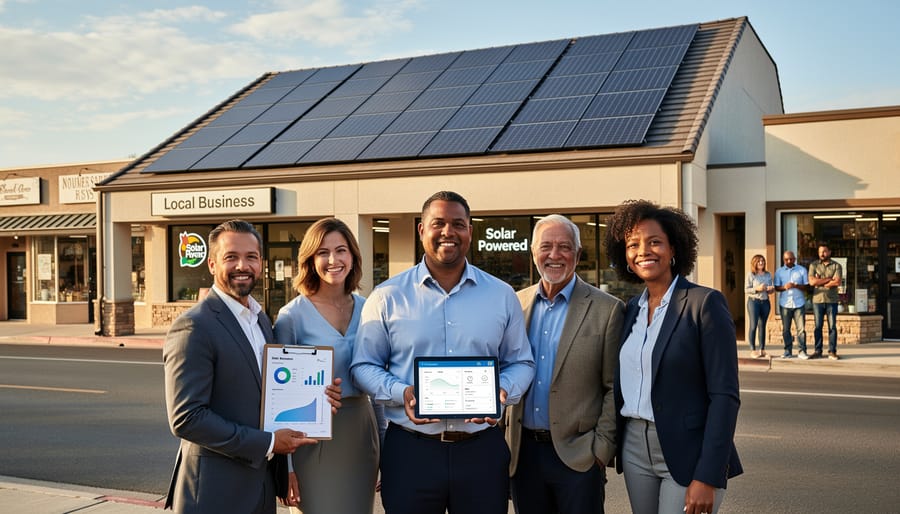
Local businesses that invest in solar energy become powerful catalysts for change in their communities. When commercial properties install visible solar arrays, they send a clear message that renewable energy is reliable, economically sound, and accessible to Illinois businesses of all sizes.
Forward-thinking business owners who adopt solar energy often find themselves in unexpected leadership roles. Their installations spark conversations with neighboring business owners, create opportunities to share real-world performance data, and demonstrate the financial benefits firsthand. A restaurant that reduces its energy costs by 40% or a retail store that eliminates summer demand charges becomes a living case study that resonates far more than any brochure.
These business leaders normalize solar technology simply by integrating it into their daily operations. When customers see solar panels on their favorite local shop or professional office, renewable energy shifts from an abstract concept to a practical business decision. This visibility is particularly influential in commercial districts where property owners closely watch their neighbors’ innovations and successes.
Many Illinois businesses discover that sharing their solar journey, whether through community events or informal conversations, strengthens customer loyalty while encouraging broader adoption across their industry sectors and geographic areas.
Why Community Advocacy Works Better Than Going It Alone
Strength in Numbers: Better Pricing and Resources
One of the most compelling advantages of joining community-led energy movements is the collective buying power that groups bring to solar projects. When neighbors, businesses, or community organizations band together, they can negotiate better pricing on solar panels, installation services, and equipment than individuals working alone. This bulk purchasing approach often results in savings of 10-20% compared to going solo.
Beyond pricing benefits, community groups share valuable resources that reduce costs for everyone involved. Members exchange practical knowledge about permits, financing options, and installer experiences specific to Illinois. Some communities pool resources for shared energy storage systems or coordinate installation schedules to reduce labor costs. Local solar providers who understand Illinois regulations and incentives often partner with these groups, offering specialized pricing structures and educational workshops. This collaborative approach makes solar energy more accessible and affordable, especially for homeowners and small businesses who might otherwise find the upfront investment challenging. The shared experience also reduces the learning curve, helping participants avoid common pitfalls and make informed decisions about their renewable energy investments.
Knowledge Sharing That Cuts Through Confusion
One of the most valuable aspects of renewable energy advocacy is learning directly from neighbors and fellow business owners who’ve already made the switch to solar. These peer educators can demystify the entire process, from understanding financing options like power purchase agreements and solar loans to navigating installation timelines and maintenance requirements. When you hear firsthand about someone’s experience with local installers, permitting processes specific to Illinois municipalities, or real-world performance data from systems similar to what you’re considering, it eliminates much of the guesswork and anxiety.
Community advocates often share practical insights you won’t find in brochures—like how they managed the installation around their business operations, what questions to ask potential contractors, or how they calculated their actual return on investment. This peer-to-peer knowledge sharing is especially helpful for understanding what to expect during different Illinois seasons and how weather patterns affect system performance. Rather than sorting through conflicting information online, you gain clarity from trusted sources who understand your local context. These experienced solar users become accessible resources, making the transition to renewable energy feel less overwhelming and more achievable for homeowners and businesses taking their first steps.
Practical Ways to Become a Renewable Energy Advocate in Your Illinois Community
Start With Your Story
Becoming a renewable energy advocate often starts with a simple conversation. When you install solar panels on your Illinois home or business, neighbors naturally become curious. They ask about your experience, the installation process, and whether the investment makes sense. These everyday interactions are powerful advocacy moments. Share your real savings numbers, discuss how your system performs during Illinois winters, and be honest about both the benefits and learning curve. Social media posts showing your monthly energy bills or celebrating milestones like your first year of clean energy production spark genuine interest. When you answer questions based on your actual experience, you build trust that generic marketing never can. Your story becomes proof that solar energy works in our local climate and economy, making it easier for others to take that first step toward renewable energy.
Connect With Local Groups and Initiatives
Connecting with local groups amplifies your impact as a renewable energy advocate. Start by searching for existing community solar groups in your Illinois neighborhood or county. Many communities already have residents working together on solar initiatives, and joining these established networks provides immediate opportunities to learn and contribute.
Attend town meetings and local government sessions where energy policies are discussed. These gatherings offer chances to voice support for solar-friendly ordinances and meet like-minded residents. Your presence demonstrates community interest in renewable solutions, which can influence local decision-makers.
Partner with local environmental organizations, sustainability committees, and business associations. Libraries, community centers, and chambers of commerce often host educational events about clean energy. If no solar-focused group exists in your area, consider starting one. Even a small gathering of interested neighbors can evolve into effective community solar leadership.
Connect with locally owned solar companies who understand Illinois-specific incentives and regulations. These partnerships provide technical expertise while you contribute grassroots momentum, creating a powerful combination for advancing solar adoption in your community.
Help Others Navigate the Process
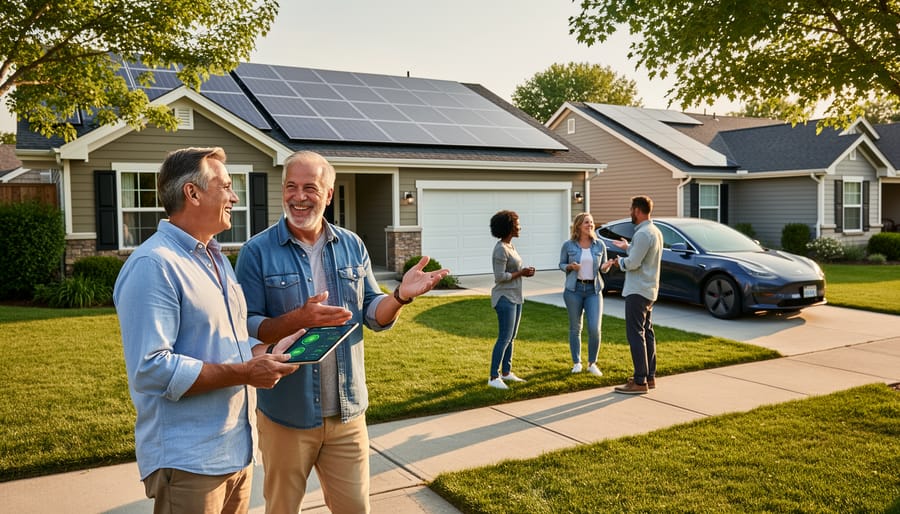
One of the most valuable contributions you can make as a renewable energy advocate is helping others understand the practical side of going solar. When neighbors express interest in your solar installation, take time to share your experience candidly. Recommend reputable installers you’ve worked with, explaining what made them stand out in terms of customer service, quality of work, and ongoing support. This firsthand insight is invaluable for homeowners just beginning their research.
Many people assume solar is financially out of reach, so demystifying financing options can be transformative. Explain available incentives like federal tax credits, Illinois-specific programs, and various payment structures including cash purchases, loans, and power purchase agreements. Break down how these options work in simple terms, sharing what you learned during your own decision-making process.
Walk interested parties through the installation timeline, from initial consultation to system activation. Address common concerns about roof suitability, permit requirements, and what to expect during construction. Your practical knowledge removes uncertainty and builds confidence, making the transition to renewable energy feel achievable rather than overwhelming. By sharing information freely, you create a supportive environment where more community members feel empowered to make informed decisions about solar energy.
Illinois-Specific Advantages for Community Solar Advocates
Illinois stands out as one of the most supportive states for community solar initiatives, thanks to forward-thinking policies and substantial financial backing. The state’s commitment to renewable energy creates unique opportunities for advocates working to expand solar access throughout their communities.
The Illinois Shines program, part of the Future Energy Jobs Act, represents a cornerstone of state support. This program provides renewable energy credits that significantly reduce the cost of solar installations for residential and commercial customers. Community solar projects receive particular attention, with dedicated incentive blocks specifically designed to support shared solar installations. These programs enable homeowners and businesses without suitable roofs to benefit from solar energy through subscriptions to local solar farms.
The Climate and Equitable Jobs Act further strengthened Illinois’s position by increasing renewable energy targets and expanding funding. This legislation prioritizes projects in underserved communities, ensuring that solar benefits reach all Illinois residents. Advocates can leverage these equity-focused provisions to build support for community projects in areas that have historically faced barriers to solar adoption.
Local utilities also contribute to Illinois’s favorable environment. Many offer net metering programs that credit solar users for excess electricity sent back to the grid, making shared solar arrangements financially viable. Municipal aggregation programs in numerous Illinois communities allow local governments to negotiate renewable energy rates on behalf of residents, creating additional pathways for community-led initiatives.
Illinois solar incentives work together to create a comprehensive support system. For advocates, this means access to funding, regulatory frameworks that encourage participation, and growing public awareness. Locally owned solar companies understand these programs intimately and can guide community groups through available opportunities, making Illinois an ideal environment for grassroots renewable energy advocacy.
Real Challenges Community Advocates Face (And How to Overcome Them)
Community renewable energy advocates in Illinois face real challenges, but successful communities have developed practical solutions worth sharing.
Initial skepticism often tops the list. Neighbors may doubt whether solar truly works during Illinois winters or question the reliability of renewable energy. The solution is sharing local success stories with real data. When advocates in Naperville showed their neighbors actual energy bills and production data from cloudy January days, conversations shifted from skepticism to genuine interest. Nothing beats tangible proof from someone right down the street.
Misinformation presents another hurdle. Common myths about solar panels causing roof damage or being impossible to maintain still circulate. Effective advocates counter this by connecting their communities with locally owned solar providers who can explain proper installation techniques and maintenance requirements. Hosting informal information sessions where experts address concerns directly helps clear up misconceptions quickly.
Upfront cost concerns represent perhaps the biggest obstacle. Even with federal tax credits and Illinois incentives, the initial investment feels daunting to many homeowners and business owners. Successful advocates address this by sharing information about financing options, explaining long-term savings calculations, and organizing group purchasing programs that reduce individual costs through collective buying power.
Property suitability varies significantly across Illinois. Not every roof faces the right direction, and some properties have shading issues. Rather than avoiding this reality, experienced advocates acknowledge these limitations upfront. They help neighbors understand alternatives like ground-mounted systems, community solar programs for those with unsuitable properties, or energy efficiency improvements as complementary steps.
The key across all these challenges is honesty paired with solutions. Communities that acknowledge obstacles while demonstrating practical pathways forward build trust and maintain momentum in their renewable energy advocacy efforts.
How Locally Owned Solar Companies Support Community Advocacy
Locally owned solar companies bring a distinct advantage to community advocacy efforts that larger national corporations simply cannot replicate. Their deep roots in Illinois communities create a foundation of trust and accountability that empowers residents to become confident renewable energy advocates.
Local solar providers invest in educating their communities beyond the sales pitch. They host workshops, attend town halls, and provide transparent information about solar technology, costs, and realistic savings expectations. This education transforms customers into informed advocates who can speak credibly about solar benefits to their neighbors and local officials.
Transparent pricing is another hallmark of locally owned businesses. Without pressure from distant corporate headquarters, local companies can offer straightforward quotes tailored to Illinois-specific incentives and regulations. This honesty helps build the credibility that advocacy movements need to gain momentum.
Quality installations matter for advocacy too. When local companies prioritize excellence over volume, satisfied customers naturally become ambassadors for solar energy. A well-installed system that performs as promised provides the real-world evidence that convinces skeptical community members to consider making the switch themselves.
Perhaps most importantly, locally owned solar companies provide ongoing support long after installation. They’re available when advocates need data about their system’s performance for presentations, when questions arise at community meetings, or when neighbors want referrals. This sustained relationship creates a network of supported advocates who can effectively promote renewable energy throughout Illinois communities. Local expertise combined with genuine community investment makes these companies invaluable partners in the broader advocacy movement.
Becoming a renewable energy advocate doesn’t require a technical degree or years of activist experience. It’s simply about sharing what you’ve learned with your neighbors, coworkers, and community members who are curious about solar energy. Whether you’ve already installed solar panels on your Illinois home or are just beginning to explore the option, your conversations can help others make informed decisions about sustainable power.
Start small. Answer questions when friends ask about your solar installation. Share your research when local business owners express interest in reducing energy costs. Connect people with locally owned solar providers who understand Illinois-specific incentives and weather patterns. These everyday interactions create a ripple effect that strengthens your entire community’s understanding of renewable energy.
The beauty of community-led advocacy is that it meets people where they are. Some will be ready to install solar immediately after your conversation. Others might need years to consider the transition. Both outcomes matter because you’re building awareness and trust that shapes long-term energy decisions.
Take that first step today. Schedule a consultation with a local solar expert, or simply start a conversation with someone who’s been asking about your panels. Your community’s clean energy future begins with these small, genuine efforts to help neighbors navigate their renewable energy options.
