
How Smart Thermostats Learn Your Home and Slash Your Energy Bills
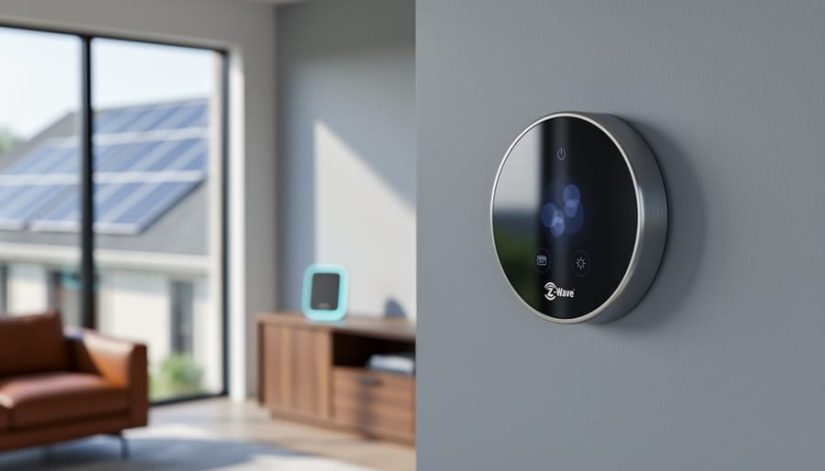
Choose a Z-Wave smart thermostat with machine learning capabilities that automatically adapts to your heating and cooling patterns, reducing energy waste by analyzing occupancy data, weather forecasts, and your daily routines. These intelligent devices learn when you’re home, asleep, or away, making real-time adjustments that can cut HVAC energy consumption by 15-25% without sacrificing comfort.
Install your Z-Wave thermostat as part of a comprehensive home automation system that communicates with other smart devices through a central hub, creating coordinated energy-saving strategies across your entire property. Unlike WiFi-dependent thermostats, Z-Wave technology operates on a dedicated mesh network that provides reliable connectivity and enhanced security, ensuring your climate control responds instantly to changing conditions without internet interruptions.
Program temperature setbacks during Illinois’s extreme seasonal swings, where winter temperatures regularly drop below freezing and summer heat drives cooling costs upward. Machine learning algorithms monitor your preferences and automatically optimize scheduling, eliminating the manual adjustments that homeowners typically forget, which accounts for significant energy waste in traditional programmable thermostats.
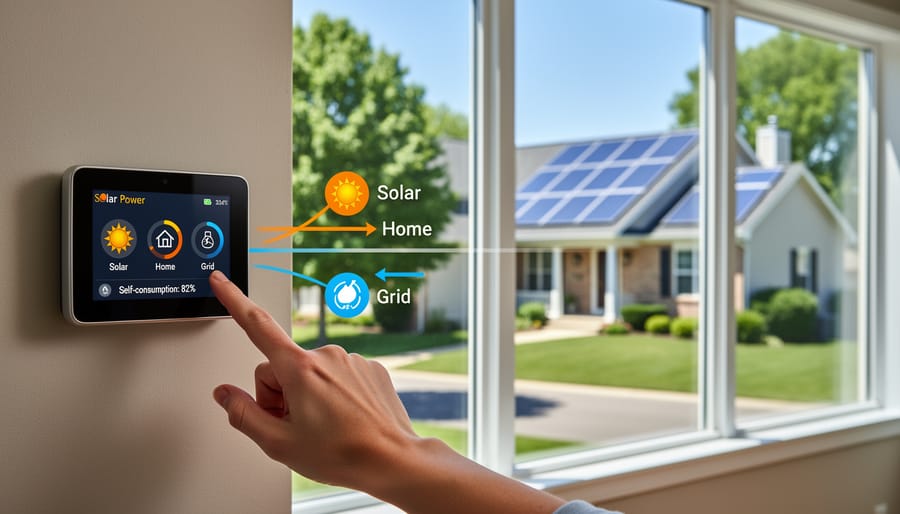
Integrate your smart thermostat with solar energy systems to maximize self-consumption of generated electricity during peak production hours. The thermostat can precool or preheat your space when solar panels produce excess energy, storing thermal comfort rather than sending surplus power back to the grid at lower compensation rates.
Monitor detailed energy reports through smartphone apps that break down heating and cooling costs by day, week, or month, revealing patterns and opportunities for additional savings. This data-driven approach transforms climate control from guesswork into measurable efficiency gains, providing the transparency Illinois property owners need to make informed decisions about their energy investments.
What Makes Z-Wave Smart Thermostats Different
The Z-Wave Advantage for Illinois Homes
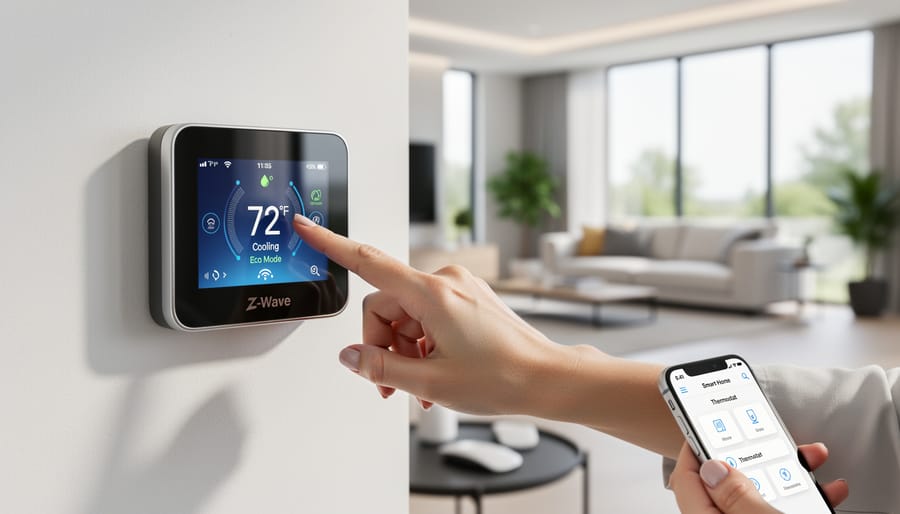
Illinois homeowners face unique climate challenges that make Z-Wave smart thermostats particularly valuable. Our state experiences temperature swings from below-zero winters to sweltering summers, putting significant demands on heating and cooling systems. Z-Wave technology addresses these challenges through its reliable mesh network design.
Unlike Wi-Fi-dependent thermostats that can lose connection during storms or power fluctuations, Z-Wave creates a self-healing mesh network. Each Z-Wave device in your home acts as a signal repeater, ensuring your thermostat stays connected even during harsh Illinois winter conditions when reliable climate control matters most. This redundancy means your heating system responds consistently, preventing frozen pipes or uncomfortable temperature drops.
The mesh network also extends throughout larger homes common in suburban Illinois communities, maintaining strong connections in multi-story properties or homes with thick walls and traditional construction materials that can block standard wireless signals.
Z-Wave’s open protocol standard offers exceptional compatibility with popular smart home ecosystems like Samsung SmartThings, Ring, and Hubitat. This flexibility allows you to integrate your thermostat with other energy-saving devices, creating a comprehensive home automation system. For Illinois homeowners investing in solar panels, this integration becomes especially powerful. Your Z-Wave thermostat can coordinate with solar production monitoring, automatically adjusting climate settings during peak generation hours to maximize your renewable energy usage and reduce grid dependence.
This locally-focused approach to smart home technology ensures your investment works reliably through every Illinois season while supporting your broader energy efficiency goals.
How Z-Wave Connects with Your Energy System
Z-Wave thermostats use a wireless mesh network protocol to communicate with other smart devices throughout your home or business. Unlike Wi-Fi devices that connect directly to your router, Z-Wave creates its own dedicated network where each device acts as a signal repeater, strengthening communication reliability across longer distances.
When you integrate a Z-Wave smart thermostat into your system, it can seamlessly connect with your solar panels, battery storage, and other home automation platforms. This allows your thermostat to receive real-time data about your solar energy production. For example, during peak sunlight hours when your panels are generating excess power, your thermostat can automatically adjust cooling or heating to take advantage of that free energy, storing thermal comfort instead of letting surplus power go unused.
The connection process is straightforward. Most Z-Wave thermostats pair with a central hub or controller that manages all your smart devices. This hub speaks the same language as your energy management system, enabling coordinated operation between your climate control and renewable energy sources. For Illinois homeowners and businesses with solar installations, this integration maximizes your investment by ensuring energy consumption aligns with production patterns, ultimately reducing grid dependence and lowering utility costs.
Machine Learning: Your Thermostat Gets Smarter Every Day
Learning Your Schedule and Preferences
Z-Wave smart thermostats with machine learning capabilities transform your home comfort by studying your daily routines and temperature preferences over time. During the first few weeks of operation, the device monitors when you typically wake up, leave for work, return home, and go to bed. It tracks temperature adjustments you make throughout the day and correlates them with factors like outdoor weather conditions and time of year.
The learning process behind AI-powered climate control works seamlessly in the background. For example, if you consistently lower the temperature to 68 degrees at 10 PM on weeknights, your thermostat will begin making this adjustment automatically. Similarly, if the system notices you prefer warmer temperatures on cold Illinois winter mornings, it will preheat your home before you wake up.
Common learning scenarios include detecting when your home is unoccupied during weekday work hours and reducing heating or cooling to save energy. The thermostat also recognizes weekend patterns, understanding that you might stay home later in the morning or maintain different temperature preferences. For Illinois homeowners with solar panels, this intelligent scheduling can maximize the use of self-generated solar energy during peak production hours. Business owners benefit from similar patterns, with the system learning operating hours and adjusting climate control during closed periods, resulting in significant energy savings without sacrificing comfort.
Predicting Weather and Adjusting Ahead
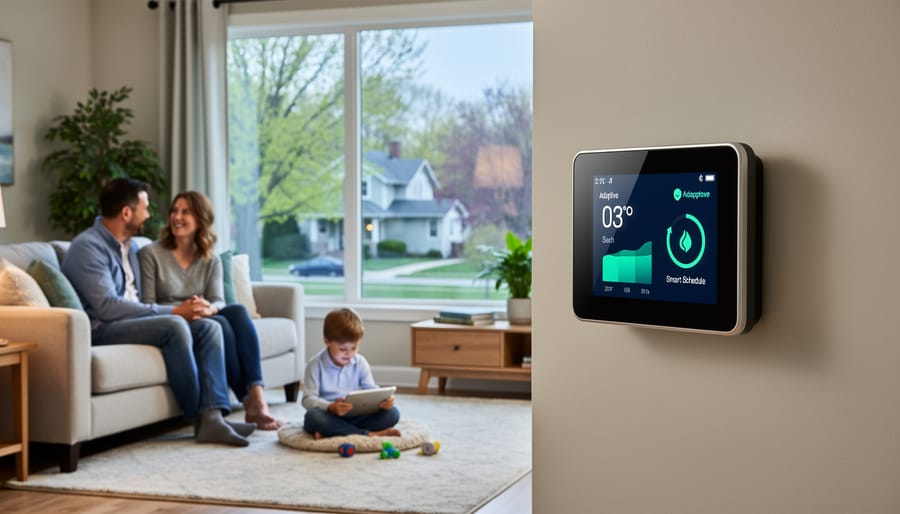
Z-Wave smart thermostats take climate control beyond basic scheduling by actively monitoring weather forecasts and adjusting your home’s temperature accordingly. These devices access real-time weather data through your home’s internet connection, analyzing upcoming temperature changes, humidity levels, and severe weather patterns. For Illinois homeowners, this feature proves particularly valuable given our unpredictable climate, from sudden spring cold snaps to summer heat waves.
Machine learning algorithms process this weather information alongside your home’s thermal characteristics, such as how quickly it heats or cools. When the system predicts a temperature drop, it may pre-heat your home gradually during off-peak energy hours rather than working harder during expensive peak times. Similarly, before a hot afternoon, it can pre-cool your space while rates are lower and solar panels are generating maximum power.
This predictive approach reduces energy waste and lowers utility bills by avoiding the inefficient temperature spikes that occur with reactive heating and cooling. For homes with solar installations, Z-Wave thermostats can coordinate with your energy production schedule, maximizing self-consumed solar power while maintaining comfort throughout Illinois’s changing seasons.
Optimizing for Your Solar Energy Production
If you’ve invested in solar panels for your Illinois property, a Z-Wave smart thermostat with machine learning capabilities can dramatically increase your return on investment. These intelligent devices learn your solar production patterns throughout the day and automatically shift energy-intensive heating and cooling to periods when your panels generate the most power. Instead of drawing from the grid during expensive peak hours, your thermostat pre-conditions your space during sunny midday periods when you’re producing excess solar energy. Advanced IoT energy management systems coordinate your thermostat with battery storage and solar inverters, creating a seamless ecosystem that maximizes self-consumption. For Illinois homeowners and businesses, this coordination can reduce grid dependence by 30-50% during peak production months, translating to significant savings on utility bills while making full use of your renewable energy investment.
Real Energy Savings for Illinois Properties
Residential Savings Breakdown
Illinois homeowners who install Z-Wave smart thermostats typically see annual energy savings between 10-15% on their heating and cooling costs. For an average Illinois home spending $1,200 annually on HVAC energy, this translates to $120-$180 in yearly savings. With smart thermostats ranging from $150-$300 for the device and professional installation adding $100-$200, most homeowners reach their break-even point within 18-24 months.
These savings become more significant when Z-Wave thermostats work alongside smart energy systems and solar installations. The machine learning capabilities optimize energy use based on your home’s thermal characteristics, local weather patterns, and your household routines, creating increasingly efficient performance over time.
However, actual savings depend on several factors. Homes with older, less efficient HVAC systems may see lower percentage savings simply because the equipment itself limits efficiency gains. Insulation quality significantly impacts results—a poorly insulated home loses conditioned air regardless of thermostat intelligence. Household occupancy patterns matter too; homes with consistent schedules benefit more from automated learning than those with irregular routines.
Illinois utility rates also affect your ROI timeline. Northern Illinois residents with higher ComEd rates typically recover their investment faster than those in southern regions with lower electricity costs. Additionally, some Illinois utilities offer rebates for smart thermostat installations, potentially reducing your upfront investment by $50-100 and shortening the payback period.
Commercial and Industrial Benefits
For businesses across Illinois, Z-Wave smart thermostats offer substantial cost savings and operational efficiency that multiply across larger facilities. Commercial and industrial properties benefit from advanced multi-zone control capabilities, allowing different areas of a building to maintain optimal temperatures based on actual usage patterns. A warehouse section with minimal staff presence doesn’t need the same heating or cooling as an active office space, and smart thermostats automatically adjust accordingly.
The advanced scheduling features particularly benefit businesses with predictable operating hours. Restaurants can program different temperature settings for prep time, peak service hours, and overnight periods. Retail stores can reduce heating and cooling during closed hours while ensuring comfortable conditions before doors open. Manufacturing facilities can adjust climate control based on production schedules and equipment heat output.
Machine learning capabilities analyze energy consumption patterns across multiple zones simultaneously, identifying inefficiencies that manual monitoring might miss. The system learns which areas require more attention during Illinois summers and harsh winters, optimizing HVAC performance to reduce overall energy costs without compromising comfort in occupied spaces.
For businesses that have invested in solar energy systems, smart thermostats provide intelligent load management that maximizes renewable energy utilization during peak production hours. This coordination between solar generation and HVAC demand creates additional savings beyond what either system achieves independently.
Property managers overseeing multiple buildings can monitor and adjust settings remotely through centralized dashboards, eliminating the need for on-site visits while maintaining consistent comfort standards across all locations. This scalability makes Z-Wave technology practical for businesses of any size seeking measurable energy reductions and improved operational control.
Choosing the Right Z-Wave Smart Thermostat
Compatibility with Your HVAC System
Before investing in a Z-Wave smart thermostat, you’ll want to verify compatibility with your existing heating and cooling system. Start by checking your current thermostat’s wiring configuration. Most Z-Wave thermostats work with standard 24-volt HVAC systems, which include conventional furnaces, air conditioners, and heat pumps. However, systems like high-voltage baseboard heaters, some older furnaces, and specialty equipment may require additional adapters or may not be compatible at all.
Take a photo of your existing thermostat’s wiring before removing it, noting which wires connect to which terminals. Common wire labels include R (power), C (common), W (heat), Y (cooling), and G (fan). The C-wire deserves special attention, as many smart thermostats require it for continuous power. If your system lacks a C-wire, you may need a professional to install one or use an adapter provided by some manufacturers.
For Illinois homeowners with solar energy systems, compatibility becomes even more important. Smart thermostats can maximize your solar investment by scheduling heating and cooling during peak production hours, reducing reliance on grid power. This coordination requires proper system integration.
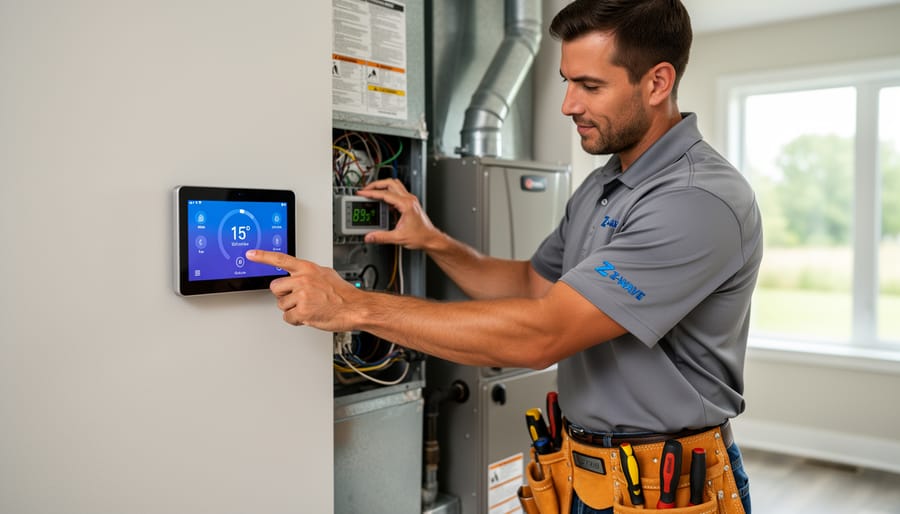
Common compatibility issues include insufficient power supply, incompatible multi-stage systems, and communication problems with older HVAC equipment. While some homeowners feel comfortable installing thermostats themselves, we recommend professional installation for Z-Wave models. A qualified HVAC technician ensures proper wiring, tests system communication, and integrates the device with your home automation network. Professional installation also protects your equipment warranty and prevents potential damage from incorrect wiring.
Integration with Solar and Other Smart Home Devices
Z-Wave smart thermostats integrate smoothly with solar panels and other smart home devices through a unified automation network. When connected to your solar energy system, these thermostats can automatically adjust heating and cooling based on available solar power generation, maximizing your use of clean energy and minimizing grid dependence. This coordination becomes especially valuable when paired with home battery storage, allowing your thermostat to prioritize battery-stored solar energy during peak rate periods.
To ensure seamless integration, verify that your Z-Wave hub supports all your devices and uses the same Z-Wave frequency standard. Most modern systems communicate through a central hub that coordinates actions between your thermostat, smart lighting, occupancy sensors, and window shades. For example, when your occupancy sensors detect an empty home, your thermostat can adjust temperatures while smart lights turn off automatically.
Illinois homeowners working with locally owned solar providers can request integration assistance during installation. Professional setup ensures your thermostat communicates properly with solar monitoring systems, enabling real-time adjustments that respond to both weather conditions and energy production levels, ultimately reducing your overall energy costs while maintaining comfort.
Installation and Setup Considerations
Installing a Z-Wave smart thermostat typically falls within the capabilities of most handy homeowners, though certain situations warrant professional assistance. The process generally takes 30 to 60 minutes and requires basic tools like a screwdriver and voltage tester. Before beginning, turn off power at the circuit breaker to ensure safety throughout installation.
Most Z-Wave thermostats replace existing units using standard HVAC wiring configurations. You’ll photograph the existing wiring, remove the old thermostat, and connect the labeled wires to corresponding terminals on your new device. However, Illinois homeowners with older heating systems, multi-stage HVAC equipment, or those integrating thermostats with solar energy systems should consider professional installation. HVAC technicians familiar with renewable energy integration can ensure compatibility between your smart thermostat and solar panels, maximizing efficiency across your entire energy ecosystem.
The critical difference between basic installation and optimal setup lies in the initial configuration for machine learning performance. After physical installation, you’ll need to accurately input your system type, square footage, and insulation details through the thermostat’s interface or companion app. This foundational data allows the learning algorithms to establish baseline performance metrics.
For the first two weeks, resist the urge to constantly adjust settings. Machine learning thermostats need consistent usage patterns to identify your preferences and household rhythms. The device analyzes when you’re typically home, your comfort preferences at different times, and how quickly your space heats or cools. In Illinois climate conditions with significant seasonal variation, this learning period proves especially valuable as the system adapts to both summer cooling demands and winter heating requirements.
Position matters considerably for accurate temperature sensing. Avoid locations near windows, doorways, heat sources, or direct sunlight, which can skew readings and confuse the learning algorithms. Proper placement ensures the thermostat gathers reliable data, enabling smarter decisions that reduce energy consumption while maintaining comfort. Business owners with multiple zones should ensure each thermostat has clear communication pathways within the Z-Wave network for coordinated operation.
Maximizing Performance with Your Renewable Energy System
Illinois property owners who’ve invested in solar energy can amplify their savings by strategically managing their Z-Wave smart thermostats. The key is synchronizing your heating and cooling patterns with your solar production schedule to maximize use of clean energy you’re already generating.
Start by programming your thermostat to run energy-intensive cooling or heating during peak solar production hours, typically between 10 AM and 3 PM on sunny days. This approach allows you to condition your home using your own renewable energy rather than drawing from the grid during expensive peak-rate periods. Most Z-Wave thermostats allow you to create custom schedules for weekdays and weekends, so take advantage of these features to align with your household’s routine.
Monitor your energy consumption patterns through your thermostat’s companion app and compare them with your solar production data. This visibility helps you identify opportunities to shift energy use and reduce reliance on utility power. Many Illinois homeowners find that pre-cooling their homes during high solar output periods reduces the need for air conditioning during evening hours when solar production drops.
Consider integrating smart home energy sensors alongside your Z-Wave thermostat to gain deeper insights into your property’s energy flow. These sensors work together to create a comprehensive picture of consumption patterns, helping you make informed adjustments.
Set temperature parameters that balance comfort with efficiency. A one-degree adjustment can yield 3-5 percent savings on heating and cooling costs. For Illinois properties with solar installations, this means more of your generated power can offset other household energy needs or feed back to the grid for credits.
Review your thermostat’s performance reports monthly, particularly during seasonal transitions when heating and cooling demands shift. This regular monitoring ensures your system continues operating at peak efficiency year-round, maximizing both your solar investment and smart thermostat benefits.
Investing in a Z-Wave smart thermostat with machine learning capabilities represents a smart step toward comprehensive energy efficiency for Illinois properties. These intelligent devices go beyond simple programmable thermostats by continuously learning your preferences and adapting to seasonal changes, delivering energy savings that typically range from 10-23% on heating and cooling costs. For homeowners and businesses already considering renewable energy solutions, smart thermostats create the perfect complement to solar panel installations by optimizing when and how you use the energy you generate.
The combination of Z-Wave’s reliable mesh networking and machine learning algorithms means your climate control system becomes more efficient over time, automatically adjusting to Illinois’s variable weather patterns without constant manual intervention. Whether you’re managing a residential property or commercial facility, these devices provide real-time insights into your energy consumption patterns, helping you make informed decisions about your overall energy strategy.
As a locally owned company with expertise in solar energy, we understand that every efficiency improvement contributes to long-term cost savings and environmental benefits. Smart climate control isn’t just about convenience—it’s about maximizing the return on your energy investments and reducing your carbon footprint.
Consider incorporating a Z-Wave smart thermostat into your energy efficiency plan. Whether you’re exploring solar options or looking to optimize your current energy usage, smart climate control technology offers measurable benefits that align perfectly with Illinois’s energy goals and your financial objectives. The time to upgrade your property’s energy management is now.
