
Why Second-Life Solar Panels Need Different Certification Standards (And What Illinois Installers Should Know)
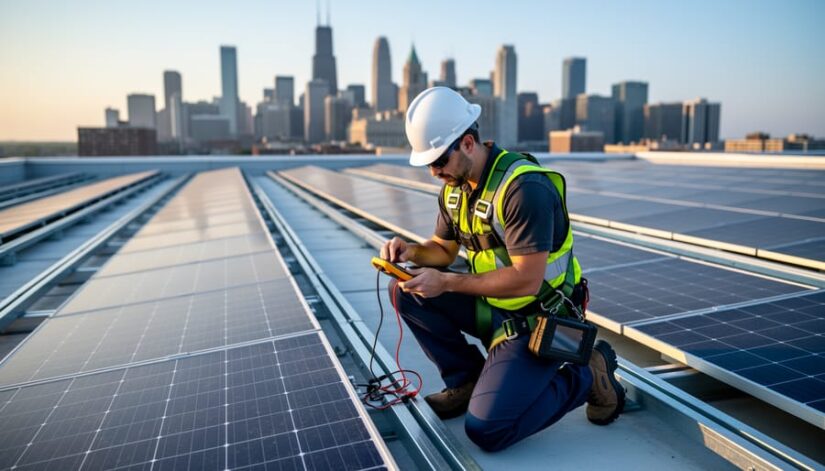
Verify that any solar installer you work with holds NABCEP (North American Board of Certified Energy Practitioners) certification, the gold standard credential that ensures technicians understand electrical systems, safety protocols, and proper mounting techniques for photovoltaic systems. This certification matters even more when considering second-life or reconditioned panels, where installers must assess additional factors like degradation rates and warranty implications.
Understand that while new solar panels must meet strict UL (Underwriters Laboratories) and IEC (International Electrotechnical Commission) standards, second-life panels require additional evaluation beyond original certifications. Reputable installers will test used panels for current output, check for micro-cracks or hot spots using infrared imaging, and verify that panels still perform at acceptable efficiency levels—typically above 80% of original capacity.
Request documentation showing the installer’s licensing status with Illinois state authorities and proof of liability insurance covering solar installations specifically. In Illinois, electrical work requires proper state licensing, and solar installations fall under these regulations. A certified installer will readily provide credentials and explain how they evaluate whether second-life panels meet local building codes and utility interconnection requirements.
Ask potential installers about their experience with reconditioned panels and request references from similar projects. The emerging market for second-life solar panels means not all installers have equal expertise in assessing used equipment quality. Experienced professionals can identify which reconditioned panels offer legitimate value versus those that pose performance or safety risks, helping Illinois property owners make informed decisions that balance cost savings with long-term reliability.
What Are Second-Life Solar Panels?
Second-life solar panels are photovoltaic modules that have been removed from their original installation but still retain significant energy-generating capacity. These panels typically come from several sources: large-scale commercial solar farms that upgrade to newer, more efficient technology; residential systems where homeowners have chosen to expand or modernize their arrays; or installations that have been decommissioned early due to property development or business changes.
Despite being removed from service, these panels often perform at 80-90% of their original rated capacity, making them viable options for new installations. Most panels are designed to last 25-30 years, so a module decommissioned after 10-15 years still has substantial productive life remaining. The reduced performance is gradual and predictable, allowing installers to accurately calculate expected energy output.
In Illinois, second-life panels are gaining traction as cost-effective alternatives to new equipment. They typically sell for 40-60% less than new panels while delivering reliable performance for another decade or more. This makes solar energy accessible to homeowners and businesses with tighter budgets who might otherwise delay their transition to renewable energy.
The growing popularity also aligns with Illinois’s commitment to sustainability and circular economy principles. By extending the useful life of existing panels, second-life options reduce manufacturing demand and keep functional equipment out of waste streams. However, purchasing these panels requires careful evaluation of their condition, remaining warranty coverage, and certification status to ensure they meet current safety and performance standards for installation in Illinois.
The Performance Gap: Why Standard Certifications Don’t Tell the Whole Story
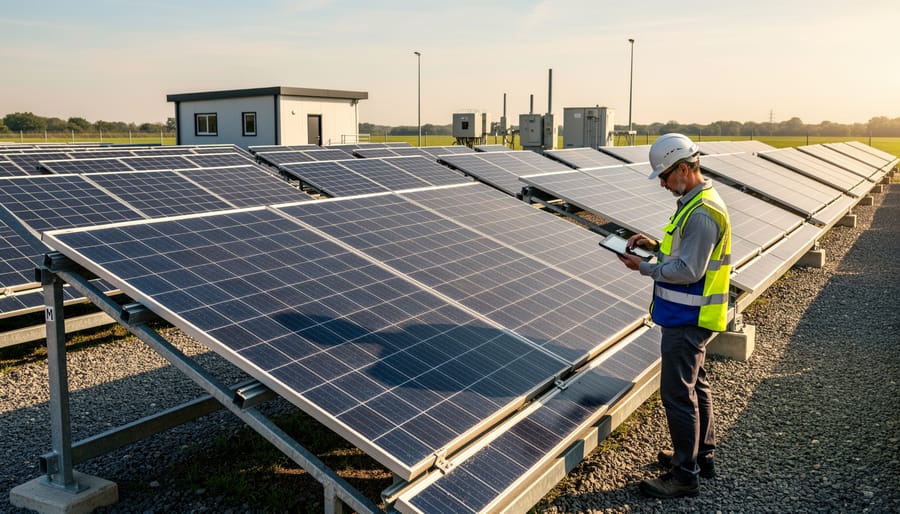
When you’re considering second-life solar panels for your Illinois home or business, understanding the performance gap between used and new panels is essential for making an informed decision. While traditional certifications like UL 1703 and IEC 61215 provide valuable safety and quality benchmarks for new panels, they don’t fully account for the unique characteristics of panels that have already spent years generating power.
New solar panels typically come with 25-year performance warranties, guaranteeing they’ll still produce at least 80-85% of their original capacity after decades of use. Second-life panels, however, have already experienced some degradation. Most quality panels degrade at approximately 0.5-0.8% annually, meaning a 10-year-old panel might operate at around 92-95% of its original efficiency. Understanding panel degradation rates helps set realistic expectations for long-term performance.
The challenge with standard certifications is that they test panels fresh from the factory. They verify manufacturing quality, structural integrity, and initial performance, but they weren’t designed to evaluate panels with operational history. A used panel might have microcracks from thermal cycling, potential moisture ingress, or connection point wear that wouldn’t exist in new equipment.
Warranty coverage presents another significant difference. New panels typically include 25-year performance warranties and 10-15 year product warranties from manufacturers. Second-life panels rarely carry original manufacturer warranties, and any coverage provided usually comes from the reseller or installer, often with shorter terms and more limited protections.
This doesn’t mean second-life panels can’t be reliable options for Illinois property owners. It simply means you need additional evaluation beyond traditional certifications. Visual inspections, electrical testing, thermal imaging, and performance verification under real-world conditions become crucial. Working with locally owned solar experts who understand both certification standards and practical assessment methods ensures you get quality equipment that meets your energy goals while staying within budget.
Current Certification Requirements for Second-Life Panel Installation in Illinois
Installer Licensing and Training Standards
In Illinois, solar panel installers must meet specific certification and licensing standards to ensure safe, code-compliant installations. The North American Board of Certified Energy Practitioners (NABCEP) certification stands as the industry’s gold standard. NABCEP offers two primary credentials: the PV Installation Professional Certification and the PV Technical Sales Certification. To qualify for the Installation Professional credential, candidates need documented work experience, completion of an approved training program, and must pass a comprehensive exam covering system design, safety protocols, and electrical code compliance.
Illinois requires electrical contractors performing solar installations to hold a valid Illinois electrical contractor license. While the state doesn’t mandate a separate solar-specific license, installers must comply with the National Electrical Code and local building codes. Many municipalities also require permits and inspections before systems can connect to the grid.
When working with second-life solar panels, installers need additional expertise beyond standard installation training. This includes understanding how to properly evaluate used equipment for safety and performance, interpreting testing data from recertified panels, and identifying potential degradation issues that might affect system longevity. Reputable installers should complete specialized training in assessing panel condition, including visual inspections for micro-cracks, delamination, or hot spots, as well as electrical testing procedures.
Homeowners and business owners should verify their installer holds current NABCEP certification and appropriate state licensing. Ask about their specific experience with used equipment installations and request references from similar projects. Working with locally owned companies that understand Illinois regulations and climate conditions ensures installations meet both legal requirements and performance expectations for your specific location.
Panel Testing and Quality Verification
Before second-life solar panels can be safely installed on Illinois properties, they must undergo rigorous testing and inspection protocols to ensure they meet safety and performance standards. Understanding these quality verification processes helps homeowners and business owners make informed decisions about using reconditioned panels.
Physical inspection is the first critical step. Trained technicians examine panels for visible damage, including cracks in the glass, corrosion on frames, delamination of cells, and compromised junction boxes. These visual assessments identify panels that might pose safety risks or have reduced lifespans. Any panel showing signs of significant wear or structural damage is typically rejected for reuse.
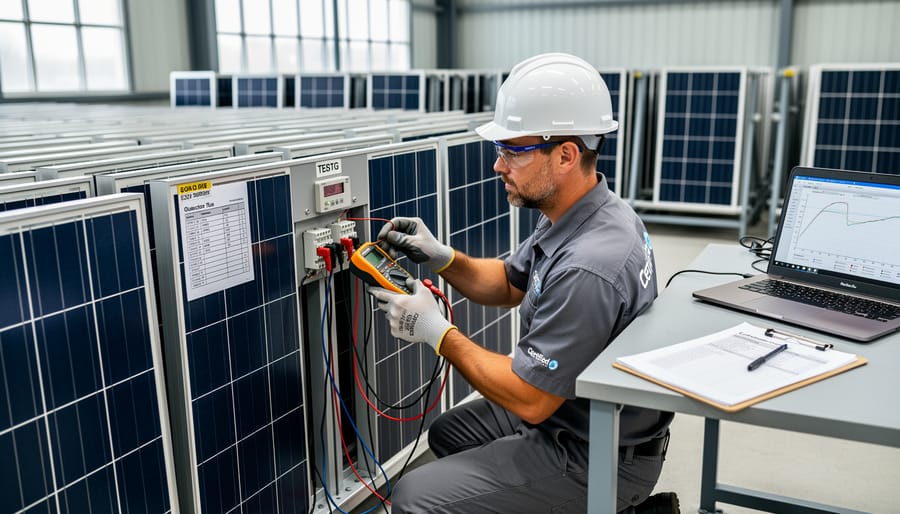
Electrical testing follows the physical evaluation. Technicians measure the panel’s current output, voltage, and overall power generation capacity using specialized equipment. This testing determines whether the panel still performs within acceptable parameters. Most second-life panels should produce at least 80 percent of their original rated capacity to be considered viable for installation. Flash testing, which simulates sunlight conditions, provides accurate measurements of the panel’s real-world performance.
Performance verification also includes insulation resistance testing and ground continuity checks to ensure electrical safety. These tests prevent potential hazards like electrical shorts or fire risks. Locally owned solar companies in Illinois with expertise in solar energy can guide property owners through understanding these testing protocols and help identify certified second-life panels that meet all necessary safety and performance standards for reliable, long-term energy production.
Documentation and Traceability Requirements
Proper documentation is essential when certifying second-life solar panels for installation. Whether you’re a homeowner or business owner in Illinois considering used panels, understanding the traceability requirements helps ensure your investment is both safe and compliant.
Complete documentation should include the panel’s manufacturing date, original installation location, and total operational hours. This history reveals how the panel was used and whether it experienced any environmental stressors like extreme weather or prolonged shading. Previous performance data, including energy output measurements over time, provides valuable insights into the panel’s actual degradation rate compared to manufacturer specifications.
Maintenance records are equally critical. These should document any repairs, cleaning schedules, and electrical testing performed throughout the panel’s first life. Panels with consistent maintenance typically perform more reliably than those with gaps in their service history.
For installations in Illinois, certified installers verify this documentation meets both state requirements and industry standards. Without proper records, it becomes nearly impossible to accurately assess a panel’s remaining lifespan or predict future performance. This traceability also protects you legally, ensuring your installation passes inspections and qualifies for available incentives. Working with locally owned solar experts who understand Illinois-specific regulations ensures your documentation meets all necessary compliance standards while maximizing the value of your second-life panel investment.
Emerging Standards: What’s Coming for Second-Life Solar Certification
The solar industry is actively developing new certification frameworks to address the unique needs of second-life panels, and Illinois property owners should understand what’s on the horizon. Unlike traditional solar certification that focuses exclusively on new equipment, these emerging standards aim to validate the safety, performance, and longevity of previously installed panels entering their second use.
Several industry organizations are leading this effort. The Solar Energy Industries Association (SEIA) has established working groups to create standardized testing protocols for decommissioned panels. These protocols will evaluate factors like power degradation, physical integrity, and electrical safety through comprehensive testing procedures. The International Electrotechnical Commission is also developing IEC standards specifically for refurbished photovoltaic modules, which will provide globally recognized benchmarks for quality assessment.
Proposed testing protocols go beyond simple visual inspections. They include electroluminescence imaging to detect microcracks, infrared thermography for hotspot identification, and detailed power output measurements under standardized conditions. These tests help determine whether a panel can deliver reliable performance for another 10 to 20 years.
For Illinois specifically, the timeline for widespread adoption remains fluid but promising. Industry experts anticipate that formal certification programs for second-life panels could become available within the next two to three years. State-level initiatives may develop even sooner, as Illinois continues prioritizing renewable energy expansion and circular economy practices.
In the meantime, reputable installers with expertise in solar energy are already applying best practices from these emerging frameworks. They conduct thorough assessments of used panels, provide transparent performance data, and offer warranties that reflect realistic expectations for second-life equipment. Property owners considering this option should work with locally owned installers who stay current with developing standards and can guide them through the evolving certification landscape.
What Illinois Property Owners Should Ask Before Installing Second-Life Panels
Before committing to second-life solar panels for your Illinois property, asking the right questions can help you make an informed decision and ensure a quality installation. Start by verifying your installer’s credentials. Ask whether they hold NABCEP certification, which demonstrates comprehensive knowledge of solar system design and installation best practices. Inquire about their specific experience with second-life panels, as these require different evaluation and installation considerations than brand-new equipment.
Request detailed information about the panels themselves. Where did they originate? What testing have they undergone to verify their current output capacity? Ask to see performance data showing the panels still produce at least 80 percent of their original rated capacity. Reputable installers should provide documentation including test results, warranty information, and the panels’ maintenance history.
Clarify warranty coverage before signing any contract. Second-life panels typically come with shorter warranties than new equipment. Understand exactly what is covered, for how long, and who stands behind the warranty. Ask whether the installer offers additional workmanship guarantees on the installation itself.
Discuss permitting and inspection requirements specific to your local jurisdiction. Your installer should handle obtaining necessary permits and scheduling inspections with your local building department. Confirm they understand Illinois-specific regulations and will ensure your system meets all safety standards and interconnection requirements with your utility company.
Request a comprehensive cost-benefit analysis comparing second-life panels to new equipment. While second-life options cost less upfront, consider factors like remaining lifespan, efficiency ratings, and potential maintenance needs. A transparent installer will help you understand whether the savings justify any trade-offs.
Finally, ask for references from previous customers who installed second-life panels. Speaking with other Illinois property owners about their experience provides valuable insights into the installer’s reliability and the panels’ real-world performance. Working with locally owned solar experts who understand Illinois conditions ensures you receive guidance tailored to your specific situation and long-term energy goals.
How Illinois Renewables Ensures Quality with Second-Life Solar Solutions
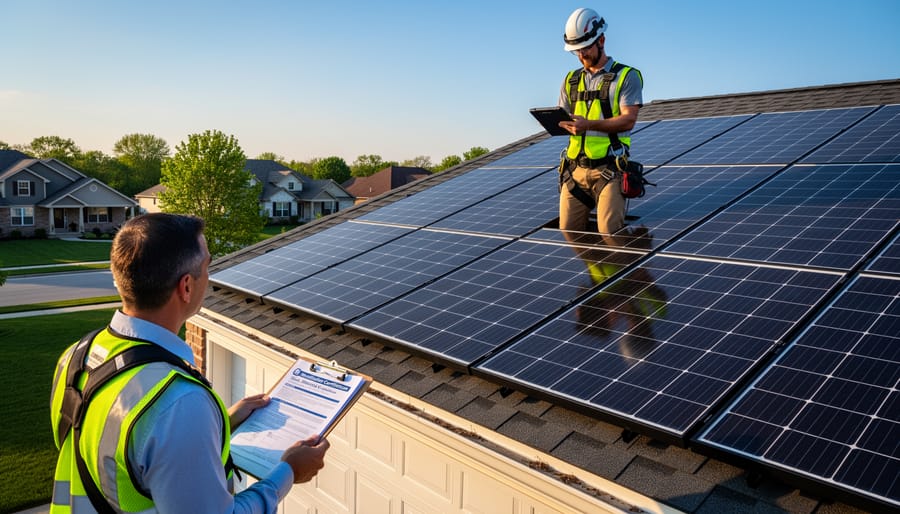
At Illinois Renewables, quality assurance begins with rigorous evaluation protocols that meet or exceed industry standards for both new and second-life solar panels. As a locally owned company serving Illinois communities, we understand that choosing solar energy represents a significant investment, and our commitment to certification and quality ensures you receive reliable, safe installations every time.
Our technical team performs comprehensive testing on all second-life panels before they ever reach your property. This includes electrical performance testing, visual inspections for physical damage, thermal imaging to identify hidden defects, and verification that panels still produce at least 80% of their original rated capacity. We follow established certification frameworks like IEC 61215 and UL 1703 standards, adapting these protocols specifically for previously owned equipment.
Every installer on our team maintains current certifications from recognized organizations, including NABCEP credentials and Illinois-specific licensing requirements. We stay updated on evolving standards for second-life panel installations, ensuring our work complies with local building codes and electrical regulations throughout Illinois.
Our quality commitment extends beyond installation day. We provide detailed documentation of panel testing results, performance warranties, and transparent information about the history and expected lifespan of your second-life system. This locally focused approach means we understand Illinois weather patterns, regional regulations, and the specific needs of property owners across the state. When you work with Illinois Renewables, you benefit from our expertise in sustainable energy solutions combined with unwavering dedication to safety standards that protect your investment and your property.
Proper certification for second-life solar panel installation is essential for ensuring safety, performance, and long-term value. As the solar industry evolves and circular economy practices gain traction, the need for qualified professionals who understand both new and reconditioned solar technology becomes increasingly important. Working with certified installers protects your investment and ensures that your system meets all applicable codes and standards, whether you choose new panels or opt for quality second-life alternatives.
When done correctly, second-life solar panel installations offer significant benefits. Property owners can access sustainable solar solutions at reduced costs while contributing to environmental conservation by extending the useful life of existing equipment. Certified professionals bring the expertise needed to properly evaluate used panels, verify their remaining efficiency, and integrate them safely into your electrical system. They understand the nuances of testing protocols, warranty considerations, and performance expectations that differ between new and second-life components.
In Illinois, where solar adoption continues to grow, choosing certified installers with local expertise ensures your project complies with state and municipal regulations while maximizing available incentives. These professionals stay current with evolving industry standards and best practices for both conventional and circular solar installations. Whether you’re a homeowner looking to reduce energy costs or a business owner pursuing sustainability goals, partnering with qualified installers who thoroughly understand second-life solar technology positions you for success. Make the informed choice by verifying credentials, asking about experience with reconditioned panels, and selecting professionals committed to quality workmanship and ongoing system performance.
