
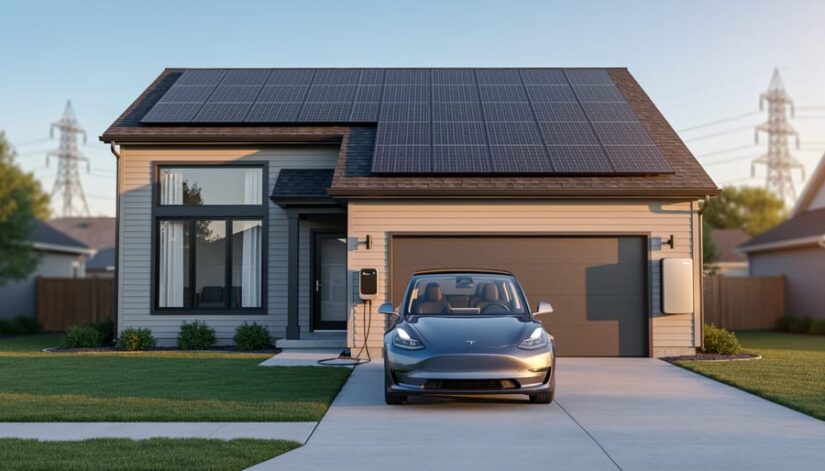
How Smart Energy Tariffs Can Slash Your Illinois Electric Bill
Review your current electricity bill to identify whether you’re on a flat-rate, time-of-use, or real-time pricing tariff—this single step determines your potential savings through demand response automation. Most Illinois consumers unknowingly pay premium rates during peak hours when simple scheduling adjustments could cut costs by 20-40%.
Time-of-use tariffs charge different rates based on when you consume electricity, typically with higher prices during afternoon and early evening hours when grid demand peaks. By shifting energy-intensive activities like running dishwashers, charging electric vehicles, or operating HVAC systems to off-peak hours, you immediately reduce expenses without sacrificing comfort or productivity.
Smart automation systems take this strategy further by monitoring real-time pricing signals and automatically adjusting your energy consumption patterns. Programmable thermostats, automated water heaters, and battery storage systems respond to price fluctuations without requiring constant manual intervention, maximizing savings while maintaining your daily routines.
Solar energy installations paired with battery storage offer the most comprehensive solution to tariff optimization. Generate electricity during expensive peak periods, store excess power during low-demand times, and leverage net metering programs to sell surplus energy back to the grid. This combination transforms your property from a passive consumer into an active participant in Illinois’s energy marketplace, protecting against rate increases while reducing your carbon footprint.
Understanding your tariff structure is the foundation for making informed decisions about energy automation and renewable investments that deliver measurable financial returns.
What Are Consumer Energy Tariffs and Why They Matter in Illinois

Time-of-Use (TOU) Rates Explained
Time-of-Use rates offer a straightforward way to lower your electricity costs by shifting energy consumption to less expensive hours. Under TOU pricing, your utility charges different rates based on when you use electricity throughout the day.
In Illinois, peak hours typically occur on weekday afternoons and early evenings, roughly between 2 PM and 7 PM, when demand is highest. During these periods, electricity rates can be significantly higher, sometimes double or triple the off-peak rate. Off-peak hours generally include nighttime, early morning, and weekends when overall energy demand drops.
The cost difference between peak and off-peak periods can be substantial. For example, you might pay 15 to 20 cents per kilowatt-hour during peak times, compared to just 5 to 8 cents during off-peak hours. This pricing structure creates an opportunity for strategic energy management.
Understanding your household or business energy patterns is the first step toward maximizing TOU savings. Solar energy systems paired with battery storage can be particularly effective under TOU rates, allowing you to generate power during expensive peak hours and store excess energy for later use, effectively reducing your reliance on grid electricity when prices are highest.
Peak Demand Charges for Commercial and Industrial Users
For commercial and industrial energy users, peak demand charges can represent a significant portion of your monthly electricity bill—sometimes accounting for 30% to 50% of total costs. Unlike residential customers who typically pay only for the kilowatt-hours (kWh) they consume, businesses face an additional charge based on their highest level of power usage during any 15 to 30-minute interval within the billing period.
Here’s how it works: your utility company monitors your facility’s electricity demand continuously throughout the month. The highest spike in usage—perhaps when multiple machines start up simultaneously or your HVAC system kicks in during a hot afternoon—becomes your demand peak. You’ll then pay a premium rate for that peak level, even if it only occurred once.
The financial impact can be substantial. For example, a manufacturing facility that experiences a single 15-minute spike of 500 kilowatts might pay demand charges of $10 to $20 per kilowatt, adding $5,000 to $10,000 to that month’s bill.
Understanding these charges is essential for Illinois business owners looking to control energy costs. Many companies find that implementing smart energy management systems, combining solar installations with battery storage, and using automated controls can help flatten demand curves and reduce these expensive peak charges. By distributing energy usage more evenly throughout the day or drawing from stored solar energy during peak periods, businesses can significantly lower their demand charges while maintaining full operational capacity.
Understanding Consumer Demand Response Programs
How Illinois Utilities Reward Flexible Energy Use
Illinois utilities offer several demand response programs that reward customers for adjusting their energy consumption during peak demand periods. These programs create opportunities for both residential and commercial customers to lower their electricity bills while supporting grid reliability.
ComEd, serving northern Illinois, operates the Peak Time Savings program for residential customers. This program alerts participants via email or text message when peak demand events occur, typically on hot summer afternoons. By reducing energy use during these windows—usually 1 to 4 hours—households can earn bill credits. Enrollment is free and requires only a smart meter, which most ComEed customers already have installed. Participants can save anywhere from $20 to $100 annually depending on their ability to shift usage.
Ameren Illinois provides similar incentives through its Peak Time Rewards program in central and southern Illinois. Business owners can benefit significantly, with commercial participants potentially saving hundreds to thousands of dollars annually. The program works by sending advance notice of peak periods, allowing businesses to pre-cool buildings, dim non-essential lighting, or temporarily adjust operations.
For businesses with higher energy consumption, both utilities offer curtailment programs with larger financial incentives. These require advance enrollment and capacity commitments but can generate substantial savings. Commercial participants typically need interval metering and may benefit from pairing these programs with solar energy systems and battery storage, which provide even greater flexibility to manage energy use strategically while maximizing incentive payments.
The Role of Renewable Energy in Demand Response
Solar energy systems offer homeowners and businesses in Illinois a powerful tool for participating in demand response programs while reducing energy costs. When you install solar panels, you generate electricity during peak sunlight hours, which often coincide with periods of high energy demand and premium pricing under time-of-use tariffs.
During peak demand periods, typically afternoon and early evening hours when electricity rates are highest, your solar system can offset a significant portion of your consumption from the grid. This means you’re buying less expensive power when it costs the most. Any excess solar energy your system produces can often be sent back to the grid through net metering programs, providing additional savings or credits on your utility bill.
For businesses facing demand charges, solar energy becomes even more valuable. By reducing the amount of power drawn from the grid during peak periods, solar installations can lower demand charge calculations, which are often based on your highest consumption point during a billing cycle.
The combination of solar panels with battery storage systems takes this advantage even further. Batteries allow you to store solar energy generated during off-peak hours and use it during peak pricing periods, maximizing your participation in demand response programs. As a locally owned company with expertise in solar energy, we understand how Illinois-specific tariff structures work and can design systems that optimize your energy independence while helping you respond effectively to grid demands and pricing signals.

Tariff-Aware Energy Automation: Making Your System Work Smarter
Smart Home and Business Energy Controllers
Modern technology makes it easier than ever to take advantage of time-varying energy tariffs and maximize your savings. Smart home energy controllers automatically monitor electricity prices and adjust your energy consumption accordingly, ensuring you use power when rates are lowest.
These intelligent systems connect to your utility’s pricing signals and control various devices throughout your home or business. For example, smart thermostats can pre-cool your building during off-peak hours, reducing air conditioning needs during expensive peak periods. Smart water heaters can heat water overnight when electricity costs less, while battery storage systems charge when prices drop and discharge during high-cost periods.
Popular technologies include programmable thermostats like Nest or Ecobee, whole-home energy management systems such as Sense or Emporia, and solar-plus-storage inverters with built-in time-of-use optimization. Many of these devices integrate seamlessly with solar panel systems, allowing you to maximize self-consumption of your own clean energy while minimizing grid purchases during peak rates.
For Illinois businesses, demand response controllers can automatically reduce non-essential loads when prices spike, protecting your bottom line without requiring constant monitoring. These systems are particularly effective when paired with solar energy installations, as they intelligently balance solar production, battery storage, and grid interaction based on real-time tariff pricing. As a locally owned company with expertise in solar energy, we help Illinois customers select and implement the right automation solutions for their specific tariff structure and energy goals.

Battery Storage and Load Shifting Strategies
Energy costs in Illinois can vary dramatically throughout the day, with peak hours sometimes costing three to four times more than off-peak rates. This is where battery storage systems become invaluable for homeowners and businesses looking to maximize their energy savings.
Battery storage works by capturing excess solar energy generated during the day, particularly during off-peak hours when electricity rates are lowest. Instead of sending this energy back to the grid or letting it go unused, the battery stores it for later use. When evening arrives and peak pricing kicks in, your battery automatically deploys this stored energy to power your home or business, allowing you to avoid expensive grid electricity.
This strategy, known as load shifting, can substantially reduce your monthly energy bills. For example, if your facility runs machinery or operates during evening hours when demand charges are highest, your battery can supply power during these expensive periods. You’re essentially using yesterday’s sunshine to power tonight’s operations at a fraction of the cost.
Modern battery systems can be programmed to respond automatically to time-of-use tariffs, optimizing when to charge, discharge, or pull from the grid. This level of automation means you don’t need to manually manage your energy usage. The system learns your consumption patterns and adjusts accordingly.
For Illinois property owners with solar panels, adding battery storage transforms your investment from a daytime-only benefit to a round-the-clock energy solution. You’re no longer dependent on producing and consuming energy simultaneously, giving you greater control over your electricity costs regardless of when you actually need power.
Practical Benefits for Illinois Homeowners and Businesses
Residential Savings Scenarios
Let’s look at how Illinois homeowners can realize meaningful savings by combining solar energy with smart automation under typical utility tariff structures.
Consider a typical 2,000 square-foot home in central Illinois with an average monthly electric bill of $150. By installing a solar array paired with smart home automation, this household can expect to reduce their energy costs by 40-60% annually. Here’s how the savings break down:
Under a time-of-use tariff, automated systems shift high-energy activities like running the dishwasher, charging electric vehicles, or operating pool pumps to off-peak hours when rates drop by as much as 50%. When combined with solar generation during peak sun hours, homeowners can offset their most expensive daytime electricity use. A family might save $600-900 annually just from this strategic timing alone.
For homes with battery storage added to their solar system, savings increase further. The battery stores excess solar energy produced during the day and automatically releases it during evening peak rate periods. This setup can boost overall savings to 65-75%, potentially cutting that $150 monthly bill down to $40-50.
Even modest solar installations without batteries show impressive results. A 5-kilowatt system paired with basic smart thermostats and programmable appliances typically delivers 35-45% savings for Illinois homeowners. That translates to roughly $630-810 back in your pocket each year, making the initial investment in solar and automation technology pay for itself faster than many homeowners expect.
Commercial and Industrial Cost Reduction Strategies
For commercial and industrial operations in Illinois, understanding energy tariffs is essential to controlling operational costs. Businesses typically face demand charges—fees based on peak power usage during billing periods—which can represent 30-50% of monthly electricity bills. By implementing smart energy management systems alongside solar installations, companies can significantly reduce these charges.
Automated energy systems monitor real-time consumption and strategically shift non-essential operations to off-peak hours when rates are lower. When paired with solar energy and battery storage, businesses can draw from stored power during peak demand periods rather than pulling expensive grid electricity. This approach not only reduces demand charges but also provides predictable energy costs, making budgeting more reliable.
Illinois businesses also benefit from enhanced sustainability credentials through these integrated systems. Many corporate clients and government contracts now prioritize vendors with strong environmental commitments. Solar installations combined with automated energy optimization demonstrate measurable carbon footprint reduction while delivering quantifiable cost savings.
As a locally owned company with deep expertise in solar energy, Illinois Renewables understands the unique tariff structures and incentive programs available to Illinois businesses. Our team can assess your facility’s energy profile, identify opportunities for demand charge reduction, and design customized solutions that integrate solar generation with intelligent automation systems. This comprehensive approach transforms energy from a variable expense into a manageable, sustainable asset that supports both your bottom line and environmental goals.

Getting Started: Implementing Tariff-Aware Solar Solutions in Illinois
Evaluating Your Energy Profile and Tariff Options
Understanding your energy consumption is the foundation for reducing costs through tariff optimization. Start by analyzing your consumption patterns over at least three months to identify when you use the most electricity. Review your utility bills to determine your average daily usage, peak demand times, and total monthly costs.
Once you understand your baseline consumption, compare it against available tariff options in Illinois. Time-of-use rates may benefit households that can shift energy-intensive activities to off-peak hours, while flat-rate plans might suit those with consistent usage throughout the day. Consider conducting a professional energy usage assessment to identify inefficiencies and opportunities for improvement.
Calculate potential savings by modeling your current usage against different tariff structures. Many Illinois utilities offer online calculators or customer service representatives who can help evaluate which plan aligns best with your consumption habits. This evaluation becomes even more valuable when considering solar energy integration, as locally owned providers can design systems that maximize savings under your specific tariff structure.
Choosing the Right Solar and Automation Package
Selecting the right solar and automation package requires careful consideration of your specific energy usage patterns and tariff structure. Start by reviewing your utility bills to understand your peak consumption times and monthly energy usage. This information helps determine the appropriate solar panel capacity for your property—whether residential or commercial.
Battery storage size is equally important, especially if you’re on a time-of-use tariff. A properly sized battery system allows you to store excess solar energy generated during off-peak hours and use it when electricity rates are highest, maximizing your savings. For Illinois homeowners and businesses, this typically means having enough storage to cover evening peak periods when rates jump significantly.
Your automation features should complement your tariff type. For time-of-use rates, programmable systems can shift energy-intensive tasks to lower-rate periods automatically. If you’re on a demand charge tariff, look for automation that monitors and controls peak demand to prevent costly spikes.
Working with a locally owned solar provider who understands Illinois energy markets ensures your system is optimized for regional tariff structures and weather patterns. Our expertise in solar energy helps match system components to your actual needs rather than offering one-size-fits-all solutions, creating a package that delivers genuine cost savings.
Understanding and leveraging consumer energy tariffs through demand response strategies and automation offers substantial financial and environmental benefits for Illinois property owners. By aligning your energy consumption with time-of-use pricing structures and integrating solar energy systems, you can significantly reduce your electricity costs while contributing to a more stable and sustainable power grid.
The combination of tariff-aware automation and solar energy creates a powerful strategy for managing your energy expenses. Automated systems can shift energy-intensive activities to off-peak hours when rates are lowest, while solar panels generate clean electricity during peak sunlight hours, often coinciding with the most expensive rate periods. This dual approach maximizes your savings potential and reduces reliance on grid power during high-demand times.
However, navigating Illinois-specific energy tariffs and regulations requires local expertise. Energy pricing structures, utility policies, and available incentive programs vary considerably across the state. Working with experienced local providers who understand these nuances ensures you implement solutions tailored to your specific situation and maximize your return on investment.
Now is the time to take action. Start by reviewing your current energy bills to identify your consumption patterns and understand which tariff structure applies to your property. Consider scheduling a consultation with knowledgeable professionals who can assess your energy needs, explain available options, and design a customized solution combining solar energy, automation, and demand response strategies. By taking these steps today, you position yourself to enjoy lower energy costs, increased energy independence, and a reduced environmental footprint for years to come.
