
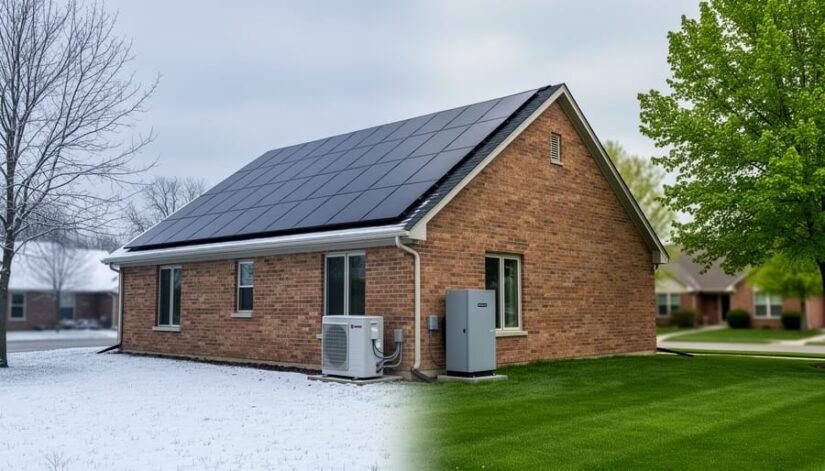
How Solar Systems Keep Illinois Buildings Warm in Winter and Cool in Summer
Illinois property owners face a unique climate challenge: frigid winters demanding substantial heating and sweltering summers requiring aggressive cooling. Solar cooling and heating systems offer a year-round solution that harnesses the sun’s energy to maintain comfortable indoor temperatures while dramatically reducing utility costs. These integrated systems use solar panels to power heat pumps, absorption chillers, or geothermal equipment that efficiently heats your space during January’s subzero days and cools it through July’s humidity. Unlike conventional HVAC systems that rely entirely on expensive grid electricity or natural gas, solar-powered climate control converts free sunlight into consistent comfort.
The technology works remarkably well in Illinois despite our variable weather. Solar panels generate electricity even on cloudy days, and modern battery storage systems ensure your heating and cooling continue operating during nighttime hours or overcast periods. For businesses and homeowners, this means protection from rising energy costs, reduced carbon footprints, and increased property values. The initial investment typically pays for itself within 7-12 years through energy savings, and federal tax credits currently cover 30% of installation costs.
Choosing a locally-owned solar provider with Illinois-specific expertise ensures your system is properly sized for our climate extremes and positioned to maximize year-round performance.
What Are Solar Heating and Cooling Systems?
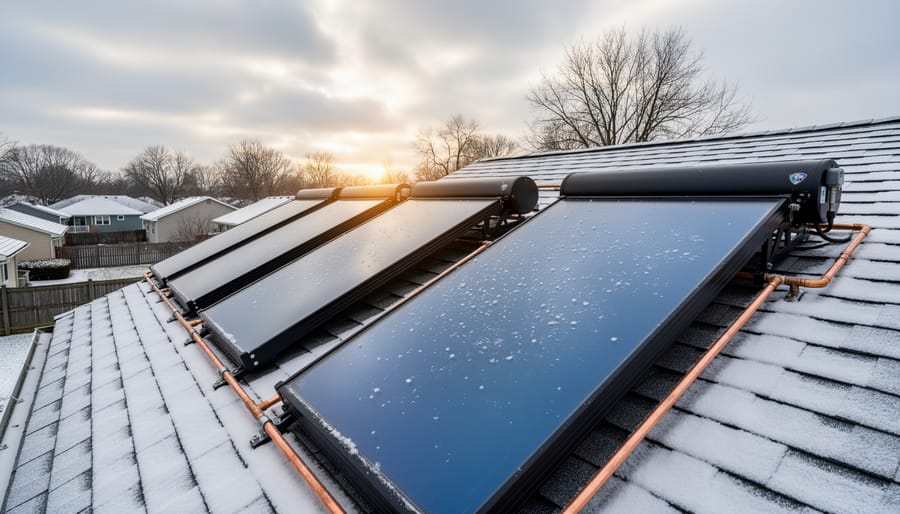
Active Solar Heating Systems
Active solar heating systems use specialized equipment to capture the sun’s energy and convert it into usable heat for your property. At the heart of these systems are solar thermal collectors, typically mounted on rooftops or south-facing areas where they can maximize sun exposure throughout Illinois’s cold months.
These collectors contain absorber plates that capture solar radiation and transfer it to a heat transfer fluid, usually a water-glycol mixture designed to prevent freezing during harsh Illinois winters. As sunlight strikes the collectors, the fluid heats up and circulates through a closed-loop system. This heated fluid then passes through a heat exchanger, where it transfers warmth to your building’s existing heating distribution system, whether that’s radiant floor heating, baseboard heaters, or forced-air systems.
A key advantage of active solar heating is its ability to integrate with conventional heating systems. On cloudy days or during extended cold spells, your backup heating system automatically supplements the solar output, ensuring consistent comfort. For Illinois property owners, this hybrid approach provides reliable year-round heating while significantly reducing energy costs during sunny winter days when heating demands are highest.
Solar Cooling Technologies
Solar energy isn’t just for heating—it can power your cooling needs too. Solar cooling technologies work by converting sunlight into electricity through photovoltaic panel installation, which then powers traditional air conditioning systems or specialized cooling equipment.
The most straightforward approach uses solar panels to generate electricity that runs conventional AC units, offsetting your cooling costs during Illinois’s hot summer months. This method integrates seamlessly with existing cooling systems while reducing your energy bills when air conditioning demand peaks.
Another option is solar absorption chillers, which use thermal energy from solar collectors rather than electricity. These systems utilize heat to drive a chemical process that produces cooling—a particularly efficient approach for commercial buildings and industrial facilities with significant cooling requirements.
Both technologies allow Illinois property owners to harness abundant summer sunshine precisely when cooling demands are highest, creating a natural match between energy production and consumption. Our locally owned team specializes in designing solar systems that address your specific cooling needs while maximizing year-round energy savings.
Passive Solar Design
Passive solar design harnesses the sun’s natural energy to regulate indoor temperatures without mechanical systems, creating an effective foundation that complements active solar heating and cooling equipment. In Illinois, where seasonal temperature swings are significant, these principles prove particularly valuable. Strategic placement of south-facing windows maximizes winter heat gain when the sun sits lower in the sky, while properly sized overhangs prevent excessive summer heat when the sun is higher. Thermal mass materials like concrete floors, brick walls, or stone features absorb heat during the day and release it gradually at night, naturally stabilizing indoor temperatures. When integrated with active solar systems, passive design reduces overall energy demands, improving system efficiency and lowering operational costs. Illinois homeowners working with locally owned solar experts can optimize both passive and active elements to create comprehensive climate control solutions tailored to the region’s unique weather patterns throughout the year.
Why Solar Heating and Cooling Makes Sense in Illinois
Illinois Climate Challenges
Illinois experiences one of the most demanding climates in the nation when it comes to energy use for comfort. Our winters bring freezing temperatures and substantial snowfall, requiring reliable heating systems that run for months at a time. Come summer, residents face hot, humid conditions that push air conditioning systems to their limits, driving up electricity costs considerably.
The shoulder seasons of spring and fall present their own challenges with unpredictable temperature swings. You might need heating one day and cooling the next, making efficient climate control a year-round concern rather than a seasonal one. This variability means Illinois property owners face some of the highest combined heating and cooling demands in the country.
These extreme conditions create significant energy expenses for homeowners and businesses alike. Traditional heating and cooling systems must work harder and longer to maintain comfortable indoor temperatures, leading to substantial utility bills throughout the year. This climate reality makes exploring alternative energy solutions particularly important for Illinois residents looking to reduce costs while maintaining comfort. Understanding how solar technology can address both heating and cooling needs becomes essential for anyone seeking to manage these challenging seasonal demands effectively.
Energy Cost Considerations
Illinois residents face fluctuating energy costs throughout the year, with average electricity rates ranging from 10 to 13 cents per kilowatt-hour and natural gas prices varying seasonally. Traditional heating and cooling systems account for nearly half of most property owners’ annual energy expenses, making these costs particularly significant during Illinois’s cold winters and humid summers.
Solar cooling and heating systems dramatically reduce dependence on both grid electricity and natural gas by generating clean energy on-site. During peak summer months when air conditioning demand drives up electricity bills, solar panels produce maximum output, offsetting cooling costs precisely when they’re highest. In winter, solar thermal systems can provide supplemental heating, while photovoltaic systems continue generating electricity to power heat pumps and other efficient heating equipment.
By producing your own energy, you gain protection against future rate increases and utility price volatility. Many Illinois property owners report 50-70% reductions in their heating and cooling expenses after installing solar systems. Working with locally owned solar experts who understand Illinois’s unique climate patterns ensures your system is optimized for maximum energy production and cost savings year-round.
Local Incentives and Programs
Illinois property owners have access to several financial programs that make solar cooling and heating systems more affordable. The state’s Adjustable Block Program offers substantial incentives for solar installations, while the federal Solar Investment Tax Credit allows you to deduct a significant portion of system costs from your taxes. Many Illinois utilities also provide net metering programs, enabling you to earn credits when your system produces excess energy. Additionally, the Illinois Shines program supports renewable energy adoption through renewable energy credits. Local municipalities may offer property tax exemptions for solar equipment. To maximize your savings and understand which Illinois solar incentives apply to your specific situation, consulting with a locally owned solar provider familiar with state and regional programs ensures you benefit from all available opportunities.
How Solar Heating Works for Illinois Homes and Businesses
Solar Thermal Collectors
Solar thermal collectors are the foundation of any solar heating and cooling system, designed to absorb sunlight and transform it into usable thermal energy. These panels contain tubes or flat plates filled with a heat-transfer fluid, typically water or a glycol mixture, which circulates through the collector. As sunlight strikes the collector’s surface, the fluid heats up and carries that warmth to your building’s heating system or thermal storage tank.
What makes these collectors particularly effective for Illinois properties is their ability to function even during overcast conditions. While direct sunlight produces optimal results, modern collectors can still capture diffuse radiation on cloudy days, generating heat throughout the year. This capability is especially valuable during Illinois’s winter months when solar heating in winter can significantly reduce your conventional energy consumption.
The collected thermal energy serves multiple purposes: providing hot water, supplementing space heating, or powering absorption chillers for cooling during summer. With proper sizing and installation by experienced professionals, solar thermal collectors deliver reliable performance adapted to Illinois’s diverse climate conditions.
Heat Storage and Distribution
Once your solar thermal system captures heat, proper storage ensures you have warmth available during cloudy periods and nighttime hours. Most systems use insulated water tanks ranging from 80 to 120 gallons for residential applications. These storage tanks maintain heated water or glycol solution at temperatures between 120-180°F, ready for distribution throughout your home.
Illinois homeowners have several distribution options depending on their existing infrastructure. Radiant floor heating provides excellent efficiency by circulating warm water through tubing beneath your floors, creating consistent, comfortable heat from the ground up. If you have traditional forced-air systems, a water-to-air heat exchanger can integrate solar thermal heat into your existing ductwork. Baseboard hydronic systems offer another effective option, using heated water to warm individual rooms through wall-mounted units.
The distribution method you choose affects both installation complexity and operating efficiency. Our locally-owned team helps Illinois property owners evaluate their current heating systems and determine the most practical integration approach. Modern controllers automatically switch between solar-stored heat and backup systems, ensuring continuous comfort regardless of weather conditions. This seamless operation makes solar thermal heating a reliable solution even during Illinois’s coldest winter months.
Supplemental Heating Integration
Solar heating systems work seamlessly with your existing furnace or boiler, acting as a primary heat source when sunlight is available. On sunny Illinois winter days, solar collectors capture warmth and reduce reliance on conventional energy. When solar production decreases during cloudy periods or nighttime, your backup system automatically activates to maintain comfort. This dual-source approach maximizes energy savings while ensuring reliable heating regardless of weather conditions. Modern control systems intelligently switch between solar and supplemental heat, optimizing efficiency without requiring manual intervention from homeowners.
How Solar Cooling Systems Beat the Illinois Summer Heat
Solar-Powered Air Conditioning
Solar-powered air conditioning offers Illinois property owners a practical way to offset their highest energy expenses during summer months. This approach uses photovoltaic panels installed on your roof to generate electricity that powers conventional air conditioning units. As temperatures rise and cooling demands peak, solar panels produce maximum output, creating a natural alignment between energy generation and consumption.
The beauty of solar-powered HVAC systems lies in their ability to dramatically reduce electricity bills precisely when air conditioning costs would otherwise spike. During Illinois’s hot, sunny summer days, your panels work hardest when your AC needs the most power. Many homeowners see their summer utility bills drop by 50-70% after installing solar panels sized appropriately for their cooling needs.
This system requires no specialized equipment beyond standard photovoltaic panels and your existing AC unit. Any excess electricity generated during the day can be sent back to the grid through net metering programs, further offsetting costs. For businesses with daytime operations, this timing is particularly advantageous since peak cooling demands coincide perfectly with solar production hours.
Solar Absorption Cooling
Solar absorption cooling represents an innovative approach to air conditioning that harnesses the sun’s heat rather than traditional electricity-powered compressors. This technology uses heat from solar thermal collectors to drive a chemical absorption process that produces cooling—essentially turning hot water into cold air.
Here’s how it works: Solar collectors heat a fluid, typically water or a glycol mixture, which then powers an absorption chiller. Inside the chiller, a refrigerant and absorbent solution work together through an evaporation and absorption cycle to remove heat from your building. The process is similar to how an old-fashioned gas refrigerator operates, but powered by clean solar energy.
For Illinois property owners, absorption cooling offers particular advantages during hot summer months when cooling demand peaks alongside solar availability. While the initial investment is higher than conventional systems, absorption chillers have fewer moving parts, resulting in lower maintenance costs and longer equipment lifespans. They’re especially viable for larger commercial or industrial facilities with substantial cooling loads and adequate roof space for solar collectors. As this technology continues to advance and costs decrease, solar absorption cooling is becoming an increasingly practical option for comprehensive climate control throughout Illinois.
Reducing Cooling Load
Solar cooling and heating systems significantly reduce cooling loads through strategic design approaches. Proper system sizing and placement minimize energy waste, while high-efficiency solar panels generate power that offsets air conditioning demands during Illinois’s hot summer months. Integrating passive cooling techniques like strategic shading and improved insulation works alongside active solar systems to lower overall energy consumption. Our locally owned team helps Illinois property owners design systems that maximize efficiency year-round, reducing both cooling costs and environmental impact. Smart thermostats paired with solar energy storage further optimize performance, ensuring your system adapts to seasonal temperature fluctuations while maintaining comfortable indoor conditions efficiently.
Real Benefits for Illinois Property Owners
Lower Energy Bills Year-Round
Solar cooling and heating systems deliver measurable cost reductions throughout Illinois’s diverse seasons. Homeowners typically see 40-70% savings on heating bills during cold months and 30-50% reductions in summer cooling costs. These systems work efficiently even during Illinois’s variable weather, capturing solar energy when available and storing it for later use. For a typical Illinois home, this translates to potential annual savings of $800-$1,500 depending on system size and energy usage patterns. Business owners experience even greater returns due to larger-scale operations and higher baseline energy consumption. By addressing both heating and cooling needs with one integrated system, property owners eliminate the seasonal energy cost spikes common with conventional systems. Our locally owned team has extensive expertise helping Illinois residents calculate precise savings based on their specific property characteristics and usage patterns.
Environmental Impact
Solar cooling and heating systems significantly reduce your carbon footprint by harnessing clean, renewable energy from the sun instead of relying on fossil fuels. By switching to solar-powered climate control, Illinois property owners can cut greenhouse gas emissions substantially while decreasing dependence on traditional energy sources. These systems align perfectly with Illinois’s commitment to achieving 100% clean energy by 2050, helping our state meet its environmental goals one building at a time. The technology produces no direct emissions during operation, and modern solar systems offset tons of carbon dioxide annually. Beyond environmental benefits, choosing a locally owned solar provider ensures your investment supports Illinois’s clean energy economy while contributing to cleaner air and a healthier environment for future generations. Every solar installation represents a meaningful step toward sustainable living in our community.
Increased Property Value and Energy Independence
Installing solar cooling and heating systems represents a smart financial investment beyond monthly energy savings. Research consistently shows that properties equipped with solar energy systems sell for 4-6% more than comparable homes without them. Illinois homeowners particularly benefit as buyers increasingly prioritize energy-efficient features that reduce long-term costs. Beyond resale value, solar systems provide crucial protection against unpredictable utility rate increases. By generating your own energy for climate control, you shield yourself from the volatility of conventional energy markets. This energy independence becomes especially valuable during Illinois’s extreme weather seasons when heating and cooling costs typically surge. Working with locally owned solar experts ensures your system is designed to maximize both immediate savings and long-term property value appreciation while delivering reliable year-round comfort regardless of external energy price fluctuations.
What to Consider Before Installing a Solar Heating and Cooling System
Property Assessment
Before installing a solar cooling and heating system, a thorough property assessment ensures optimal performance. Your roof’s condition is critical—it should be structurally sound and have at least 15-20 years of remaining lifespan to match your solar system’s longevity. Roof orientation matters significantly in Illinois; south-facing roofs capture the most sunlight year-round, though southeast and southwest orientations can also work effectively. Shading analysis identifies trees, buildings, or structures that might block sunlight during peak hours, reducing system efficiency. Available space determines system size and capacity—whether you’re considering rooftop panels or ground-mounted installations, adequate unobstructed area is essential. Working with locally owned solar experts who understand Illinois-specific conditions helps identify the best configuration for your property, ensuring your investment delivers maximum heating and cooling benefits throughout our variable seasons.
System Sizing and Design
Properly sizing your solar cooling and heating system is essential for maximizing efficiency and return on investment in Illinois’s diverse climate. An undersized system won’t meet your property’s demands during peak winter cold or summer heat, while an oversized system wastes money upfront and may cycle inefficiently. Professional assessment considers your building’s square footage, insulation quality, window placement, occupancy patterns, and existing HVAC infrastructure. Illinois experiences temperature swings from below zero in January to above 90 degrees in July, requiring careful calculation of both heating and cooling loads. A locally owned solar provider with expertise in Illinois installations understands regional climate patterns and building codes, ensuring your system design accounts for seasonal variations. Accurate sizing also determines the appropriate solar collector area, thermal storage capacity, and backup system integration needed for reliable year-round comfort in our climate.
Investment and Payback Period
Solar cooling and heating systems require a significant upfront investment, typically ranging from $15,000 to $40,000 depending on system size and complexity. However, multiple financing options can make these systems accessible, including solar loans, home equity lines of credit, and specialized clean energy financing programs available to Illinois residents. Many homeowners also benefit from the federal solar Investment Tax Credit, which covers 30% of installation costs, plus state-level incentives that further reduce the financial burden.
The payback period for solar climate control systems in Illinois generally ranges from 8 to 15 years, depending on your current energy costs, system efficiency, and available incentives. As a locally owned company with expertise in solar energy, we help you navigate financing options and calculate realistic timelines based on your specific situation. After the payback period, you’ll enjoy decades of reduced energy costs and increased property value, making this a sound long-term investment for Illinois property owners.
Working with Local Solar Experts in Illinois
Selecting the right installation partner is crucial for maximizing your solar cooling and heating system’s performance and longevity. Working with local solar experts who understand Illinois-specific conditions offers distinct advantages over national chains or out-of-state contractors.
Experienced Illinois-based installers possess intimate knowledge of our state’s unique climate patterns, from harsh winters with heavy snow loads to humid summers. This expertise ensures your system is properly sized and configured to handle seasonal temperature swings and performs optimally year-round. Local professionals are also well-versed in Illinois building codes, permitting requirements, and municipal regulations that vary across counties and municipalities.
Beyond technical knowledge, locally-owned solar companies understand available state incentives, including Illinois Solar Renewable Energy Credits (SRECs) and the Illinois Shines program. They can guide you through application processes and help maximize your financial benefits. Local installers also provide accessible, responsive service when you need maintenance or support, building long-term relationships with their communities rather than completing installations and disappearing.
When evaluating installers, look for those with proven track records in Illinois, proper licensing and insurance, and experience specifically with solar heating and cooling applications. Request references from nearby installations and verify their familiarity with equipment suitable for our climate. Choosing a locally-owned company means supporting Illinois’s clean energy economy while ensuring your investment receives the expert attention it deserves.
Solar heating and cooling systems represent a smart investment for Illinois property owners seeking year-round comfort while reducing energy costs. These versatile systems adapt to our state’s distinct seasons, providing reliable heating during cold winters and efficient cooling throughout humid summers. By harnessing the sun’s free, renewable energy, you can significantly lower your utility bills while reducing your carbon footprint.
The technology has proven effective in Illinois’s variable climate, with systems designed specifically to handle our temperature extremes and weather patterns. Whether you’re a homeowner looking to enhance comfort, a business owner aiming to reduce operational costs, or an industry seeking sustainable solutions, solar climate control offers tangible benefits that extend beyond immediate savings to long-term energy independence.
Exploring your options with local solar experts who understand Illinois-specific challenges ensures you receive tailored recommendations that match your property’s unique needs. As a locally owned company with extensive expertise in solar energy, we’re committed to helping you navigate the transition to solar-powered comfort. Contact us today to discover how solar heating and cooling can transform your property’s energy efficiency and provide lasting value for years to come.
