

Solar Home Upgrades That Actually Pay Off in Illinois
Illinois homeowners can now slash their electricity bills by up to 70% while contributing to a cleaner environment through residential solar installation. With the state’s ambitious renewable energy goals and generous incentives, 2024 presents an unprecedented opportunity to transition to solar power. The Illinois Solar for All program, combined with federal tax credits and net metering policies, allows homeowners to recoup their investment in as little as 5-7 years, while enjoying 25+ years of clean, reliable energy production.
Recent legislation has simplified the solar adoption process and increased financial benefits for Illinois residents. The Smart Solar Illinois initiative provides qualifying homeowners with upfront rebates covering up to 30% of installation costs, while utilities are required to purchase excess power generated by residential systems. This comprehensive support system, coupled with falling equipment costs, has made Illinois one of the most advantageous states for residential solar investment.
Whether you own a modest suburban home in Chicago or a sprawling property in Springfield, Illinois’ sunny climate yields enough solar potential to power your home year-round. Modern solar technology performs efficiently even during cloudy Midwest winters, ensuring consistent energy production and reliable savings throughout all seasons.
Why Illinois Homeowners Are Going Solar Now
State and Federal Solar Incentives
Illinois homeowners can take advantage of several significant financial incentives when installing solar panels. The Illinois Solar for All program offers eligible low-income households the opportunity to access solar energy with no upfront costs and guaranteed savings on their energy bills.
The federal solar investment tax credit (ITC) remains one of the most valuable incentives, allowing homeowners to deduct 30% of their total solar system costs from their federal taxes. This credit is available through 2032 and applies to both the equipment and installation costs.
At the state level, Illinois offers Solar Renewable Energy Credits (SRECs), which allow homeowners to earn money by selling credits for the clean energy their system produces. The value of these credits can significantly reduce the overall cost of going solar.
Local utilities also provide net metering programs, enabling homeowners to receive credits on their electricity bills for excess power their systems generate. Additionally, many Illinois counties offer property tax breaks for homes with solar installations, ensuring that your property taxes won’t increase due to the added value of your solar system.
Some municipalities and utilities offer additional rebates and incentives, which can vary by location. It’s recommended to check with your local government and utility provider to identify all available incentives in your area.
Net Metering Benefits in Illinois
Illinois residents can significantly reduce their electricity bills through net metering benefits, a program that allows solar panel owners to earn credits for excess power they generate. When your solar system produces more electricity than you’re using, the surplus is sent back to the grid, and your meter literally runs backward, reducing your future utility bills.
Under Illinois law, utilities must provide full retail rate credits for this excess generation, meaning you’ll receive the same rate for the power you generate as what you pay for electricity from the grid. These credits typically roll over month to month and can be particularly valuable during summer months when solar production is at its peak.
The program is available to all residential customers of major Illinois utilities, including ComEd and Ameren Illinois. To participate, you’ll need a bi-directional meter installed by your utility company, which they’ll provide at no additional cost once your solar system is approved. This arrangement ensures you maximize the value of every kilowatt-hour your system produces, making solar investment more financially attractive for Illinois homeowners.
Retrofitting Your Illinois Home for Solar
Roof Requirements and Structural Considerations
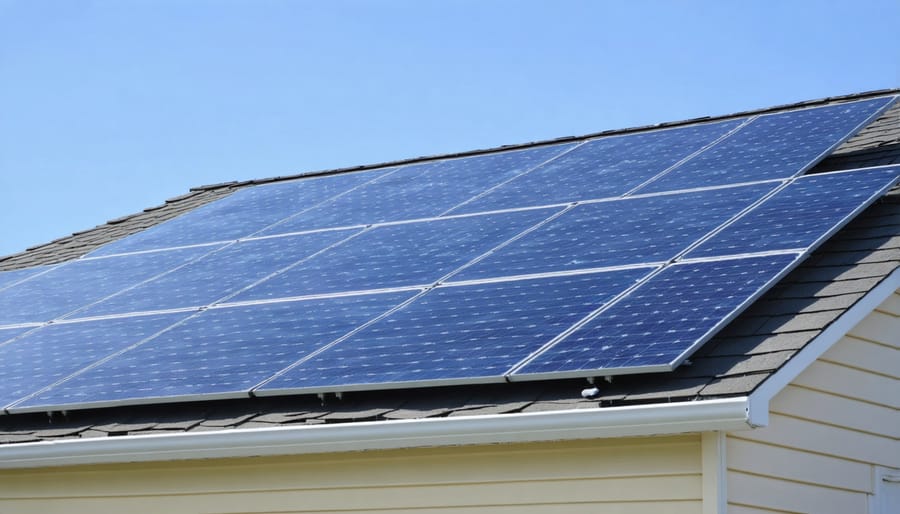
Before installing solar panels, your roof must meet specific requirements to ensure a safe and efficient system. First, assess your roof’s age and condition – ideally, it should have at least 10-15 years of life remaining before needing replacement. This helps avoid the costly process of removing and reinstalling panels during roof repairs.
In Illinois, south-facing roofs typically provide optimal sun exposure, though southeast and southwest orientations can also work well. Your roof should have a pitch between 30-45 degrees for maximum efficiency, though other angles can still be suitable with minor adjustments to panel positioning.
The structural integrity of your roof is crucial. A professional assessment will determine if your roof can support the additional weight of solar panels, which typically add 2.5-4 pounds per square foot. Many Illinois homes already meet these requirements, but some older structures may need reinforcement.
Shade from trees, chimneys, or neighboring buildings can significantly impact solar panel performance. A solar professional will conduct a shade analysis to identify potential obstacles and recommend solutions for maintaining your solar installation at peak efficiency.
Consider snow accumulation in Illinois winters when planning panel placement. Adequate roof space and proper mounting systems help ensure panels can shed snow effectively while maximizing energy production year-round.
Electrical System Updates
Before installing solar panels, your home’s electrical system may need several important upgrades to ensure safe and efficient operation. Most Illinois homes, especially those built before 2000, require an electrical panel upgrade to handle the additional power flow from solar panels. The standard requirement is a 200-amp service panel, though some larger homes might need 400 amps.
Your existing electrical panel must have enough available breaker spaces to accommodate the solar system’s circuit breakers. Additionally, the panel needs to support bi-directional power flow, allowing electricity to both enter and exit your home’s electrical system. This is essential for grid-tied systems, which are most common in Illinois.
Ground fault protection devices and rapid shutdown systems are required by Illinois electrical codes for solar installations. These safety features protect both your home and utility workers during power outages or maintenance work.
Some homes may also need updated wiring, particularly if the existing wiring is aluminum or outdated. Your licensed electrician will inspect the condition of your service entrance cable, grounding system, and junction boxes to ensure they meet current National Electrical Code (NEC) requirements.
Don’t worry about determining these needs yourself – a qualified solar installer will assess your electrical system during the initial site survey and include necessary upgrades in your project proposal.
Local Building Codes and Permits
Before installing solar panels in Illinois, you’ll need to navigate local building codes and secure the necessary permits. Most municipalities in Illinois require both building and electrical permits for solar installations. The specific requirements vary by city and county, but typically include structural engineering plans, electrical diagrams, and documentation of equipment specifications.
Chicago residents must submit their solar installation plans to the Department of Buildings and obtain a Standard Plan Review. Suburban areas often have their own specific requirements, so it’s essential to check with your local building department early in the planning process.
The permitting process usually takes between 2-8 weeks, depending on your location and the complexity of your installation. Many Illinois municipalities have adopted solar-friendly permitting processes, with some offering expedited reviews for residential installations that meet standard criteria.
You’ll also need to ensure your installation complies with Illinois’ interconnection standards if you’re connecting to the power grid. This requires additional approval from your utility company, such as ComEd or Ameren Illinois.
Most reputable solar installers in Illinois will handle the permitting process on your behalf, including submitting applications, coordinating inspections, and ensuring compliance with local codes. However, it’s important to understand that permit fees typically range from $200 to $500 and should be factored into your overall project budget.
Real Costs and Returns
Installation Costs in Illinois
In Illinois, the average cost of residential solar installation ranges from $15,000 to $25,000 for a typical 6kW system. However, prices can vary significantly based on system size, equipment quality, and installation complexity. Most Illinois homeowners pay around $2.70 to $3.20 per watt before incentives.
A breakdown of costs typically includes:
– Solar panels: 40-50% of total cost
– Inverter and electrical components: 20-25%
– Installation labor: 15-20%
– Permits and inspection fees: 5-10%
– Additional equipment (mounting hardware, wiring): 10-15%
The good news is that these upfront costs are significantly reduced through federal tax credits, state incentives, and local rebates. After applying the 30% federal tax credit, a $20,000 system would effectively cost $14,000. Additional Illinois solar incentives can further reduce this amount by several thousand dollars.
Most Illinois homeowners recover their solar investment within 7-10 years through energy savings, making it a financially sound long-term investment. Many local installers also offer flexible financing options, including solar loans, leases, and power purchase agreements (PPAs).
Expected Energy Savings
Illinois homeowners typically see significant reductions in their monthly electricity bills after installing solar panels. On average, residential solar systems can offset 70-90% of a home’s electricity consumption, leading to monthly savings between $100-$150 for a typical household. These savings can vary based on factors like system size, energy usage patterns, and local utility rates.
The payback period for residential solar installations in Illinois generally ranges from 5 to 8 years, thanks to the combination of federal tax incentives, state rebates, and ongoing energy savings. This calculation factors in the initial investment, which is offset by the 30% federal tax credit and Illinois Solar Renewable Energy Credits (SRECs).
Long-term savings are especially attractive, as most solar panel systems have a lifespan of 25-30 years. Over this period, Illinois homeowners can expect to save between $20,000 and $30,000 on electricity costs. Additionally, homes with solar installations typically see a 4-6% increase in property value, providing an immediate return on investment even before energy savings are calculated.
Remember that actual savings depend on your specific situation, including roof orientation, shading, and current electricity consumption patterns.
Property Value Impact
Installing solar panels can significantly increase your Illinois home’s market value. According to recent studies, homes with solar installations typically sell for 4.1% more than comparable properties without solar systems. For the average Illinois home value of $250,000, this translates to approximately $10,250 in added value.
The value boost is particularly notable in the Chicago metropolitan area and other urban centers where energy consciousness is high. Illinois buyers increasingly prioritize energy-efficient features, and solar installations are viewed as desirable home improvements that offer long-term utility savings.
Several factors influence the value-add of solar installations, including system size, age, and overall energy production capacity. Modern, well-maintained systems typically provide the highest return on investment. It’s worth noting that leased solar systems may impact property values differently than owned systems, as buyers must assume the lease agreement.
Property tax benefits further enhance the financial advantage, as Illinois law prevents your property taxes from increasing due to solar installation through the Special Assessment for Solar Energy Systems.
Getting Started
Finding Qualified Installers
When it comes to installing solar panels on your Illinois home, working with qualified solar installers is crucial for ensuring safety and optimal system performance. Start by verifying that potential installers are certified by the North American Board of Certified Energy Practitioners (NABCEP). Look for companies with substantial experience in Illinois installations and check their track record with the Better Business Bureau.
Request multiple quotes and references from previous customers, particularly those with similar installations in your area. Local installers often have better knowledge of Illinois building codes, weather conditions, and available incentives. Ensure the company carries proper insurance and can handle all necessary permits and utility interconnection paperwork.
Consider scheduling consultations with at least three different installers to compare their approaches, system recommendations, and pricing. Ask about their warranty coverage and post-installation support services. Many reputable installers offer monitoring systems and maintenance packages to ensure your solar investment performs optimally for years to come.
Initial Assessment Process
The initial solar assessment begins with a free consultation where a certified solar expert visits your Illinois home. During this visit, the consultant will evaluate your roof’s condition, orientation, and shading to determine solar potential. They’ll analyze your current energy consumption patterns using recent utility bills to right-size your system.
The consultant will also inspect your electrical panel and wiring to ensure compatibility with solar installation. Using satellite imagery and advanced software, they’ll create preliminary designs showing panel placement and estimate potential energy production based on Illinois weather patterns.
You’ll receive a detailed proposal outlining system costs, estimated energy savings, and available Illinois-specific incentives. The consultant will explain financing options, including solar loans, leases, and power purchase agreements. This no-pressure consultation typically takes 60-90 minutes and provides all the information needed to make an informed decision about going solar.

Installing solar panels on your Illinois home is a smart investment that pays dividends both financially and environmentally. With generous federal tax credits, state incentives, and the Illinois Shines program, there’s never been a better time to make the switch to solar energy. By going solar, you can significantly reduce your monthly utility bills while increasing your property value and contributing to a cleaner environment.
Remember that successful solar installation begins with choosing the right contractor who understands Illinois-specific requirements and can guide you through the entire process. Take advantage of free consultations to assess your home’s solar potential and get detailed estimates tailored to your energy needs. Whether you’re looking to offset a portion of your energy usage or achieve complete energy independence, solar power offers a customizable solution for every homeowner.
Don’t wait to start your solar journey. Contact local solar installers today to schedule a site assessment and learn more about available incentives. Join the growing community of Illinois homeowners who are already enjoying the benefits of clean, renewable solar energy while securing their energy future.
