

Protect Your Solar Investment: Smart Risk Management That Works
In today’s volatile business environment, managing risks isn’t just an option—it’s essential for survival and growth. Effective risk management can mean the difference between project success and costly failures, particularly in capital-intensive solar installations across Illinois. Leading organizations consistently implement five core strategies that transform potential threats into opportunities: systematic risk identification, quantitative assessment protocols, proactive mitigation planning, continuous monitoring systems, and adaptive response frameworks. Whether you’re developing a commercial solar array or overseeing multiple renewable energy projects, these field-tested approaches help safeguard investments while maximizing returns. Our Illinois-based team has successfully implemented these strategies across hundreds of solar installations, consistently delivering projects on time and under budget while maintaining the highest safety and performance standards.
Financial Risk Protection Strategies
Insurance Coverage Requirements
Proper insurance coverage is a fundamental component of solar project risk management in Illinois. At minimum, your solar installation should be protected by property insurance that specifically covers solar equipment and potential damage from severe weather events common in the Midwest. General liability insurance is essential to protect against third-party claims, typically with coverage limits of $1-2 million for residential installations and higher for commercial projects.
For businesses and larger installations, additional coverage types become crucial. These include builder’s risk insurance during construction, professional liability coverage for design and engineering work, and business interruption insurance to protect against income loss during system downtime. Performance guarantee insurance can also provide protection against underperforming systems.
Many Illinois insurance providers now offer specialized solar energy insurance packages that bundle multiple coverage types. When selecting coverage, consider factors like system size, location, and specific regional risks such as hail damage or severe storms. Working with an insurance provider familiar with solar installations ensures appropriate coverage levels and helps avoid potential coverage gaps that could leave your investment vulnerable.
Performance Guarantee Structures
Performance guarantees and warranty protections serve as critical safeguards for your solar investment in Illinois. Most reputable solar installers offer production guarantees that ensure your system generates the promised amount of electricity. If your system underperforms, these guarantees typically require the installer to compensate you for the shortfall or fix the underlying issues at no additional cost.
Comprehensive solar panel warranties usually include both equipment and performance warranties. Equipment warranties cover physical defects and typically last 10-15 years, while performance warranties guarantee minimum power output levels for 25-30 years. Many Illinois installers also provide workmanship warranties that protect against installation-related issues.
To maximize these protections, carefully document your system’s expected performance metrics during installation and maintain detailed records of actual production. Regular monitoring helps identify potential issues early, making warranty claims smoother if needed. When selecting a solar provider, prioritize those offering strong guarantee structures backed by established insurance policies or performance bonds, ensuring long-term protection for your investment.
Technical Risk Management
Equipment Validation Process
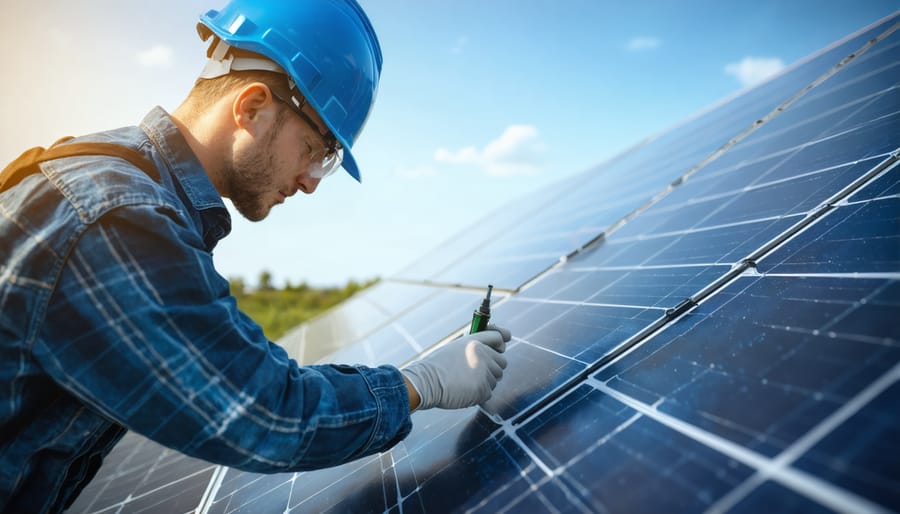
Equipment validation is a crucial step in minimizing technical risks in your solar installation. Start by researching manufacturers with proven track records in Illinois’s climate conditions. Look for solar panels and inverters that carry UL certification and meet IEEE standards, ensuring they can withstand local weather extremes from hot summers to frigid winters.
Request detailed performance data and warranty documentation from your supplier. Key metrics to verify include temperature coefficients, efficiency ratings, and degradation rates. For Illinois installations, pay special attention to snow load ratings and wind resistance specifications.
Consider working with an independent testing laboratory to verify equipment specifications, particularly for larger installations. This third-party validation can identify potential compatibility issues between components before installation.
Document all equipment specifications, test results, and certification details in your project file. Create a checklist for regular equipment inspections and maintenance schedules. This documentation serves as both a reference for future maintenance and proof of due diligence for warranty claims or insurance purposes.
Remember to verify that your chosen equipment complies with local utility interconnection requirements and building codes specific to Illinois.
Maintenance Planning
Regular maintenance is crucial for minimizing risks and ensuring optimal performance of your solar installation. Implementing solar panel maintenance best practices should include both scheduled inspections and preventive measures. We recommend establishing a comprehensive maintenance calendar that accounts for Illinois’ distinct seasonal challenges, from winter snow accumulation to summer storm impacts.
Key components of an effective maintenance plan include quarterly visual inspections, bi-annual professional system checks, and continuous performance monitoring through your inverter’s data system. Installing automated monitoring solutions helps detect potential issues early, reducing the risk of system failures and unexpected downtime.
Consider incorporating these essential maintenance tasks:
– Regular panel cleaning to remove dust, pollen, and bird droppings
– Inspection of mounting hardware and electrical connections
– Vegetation management to prevent shading
– Snow removal during winter months
– Performance data analysis to identify efficiency drops
Working with certified local technicians ensures your maintenance program complies with Illinois-specific requirements while maintaining manufacturer warranties. This proactive approach not only protects your investment but also maximizes energy production throughout your system’s lifetime.
Environmental Risk Mitigation
Weather Impact Analysis
Illinois experiences diverse weather patterns that can significantly impact solar energy systems, making weather analysis a crucial component of risk management. From heavy snowfall in winter to severe thunderstorms in summer, understanding and preparing for local weather conditions helps protect your solar investment.
Snow accumulation on solar panels can temporarily reduce energy production, but modern panels are designed to shed snow naturally once temperatures rise. Additionally, the smooth surface and tilted installation of most systems help facilitate snow removal. During winter months, monitoring snow buildup and having a professional snow removal plan can maintain optimal system performance.
Severe storms present another weather-related challenge, with Illinois experiencing an average of 51 thunderstorm days annually. High winds, hail, and lightning strikes pose potential risks to solar installations. To mitigate these risks, quality mounting systems with wind resistance ratings appropriate for our region are essential. Lightning protection systems and surge suppressors should be incorporated into the installation design.
Temperature fluctuations also affect solar panel efficiency. While panels actually perform better in cooler temperatures, extreme heat can slightly reduce their output. Proper installation with adequate airflow beneath the panels helps manage temperature-related impacts.
To protect against weather-related risks, consider:
– Installing weather monitoring systems
– Selecting equipment rated for local weather conditions
– Implementing regular maintenance schedules
– Securing comprehensive insurance coverage
– Developing emergency response procedures
Working with local solar professionals who understand Illinois weather patterns ensures your system is designed and installed with appropriate protective measures. Regular system monitoring and maintenance help identify and address weather-related issues before they become significant problems.

Regulatory Compliance Strategy
Permit Management
Navigating permit requirements is crucial for successful solar project implementation in Illinois. Understanding and complying with Illinois solar permitting requirements helps minimize delays and ensures your installation meets all local and state standards.
Start by researching your municipality’s specific requirements, as these can vary significantly across different Illinois regions. Common permits include building permits, electrical permits, and sometimes special solar installation permits. Many jurisdictions also require structural engineering assessments to verify your roof can support the solar array.
Create a comprehensive checklist of required documentation, which typically includes:
– Detailed system designs and specifications
– Site plans and equipment layouts
– Electrical diagrams
– Structural calculations
– Manufacturer documentation
– Proof of insurance and contractor licenses
Work with experienced solar contractors who understand local regulations and have established relationships with permitting authorities. They can help streamline the application process and anticipate potential challenges before they arise.
Consider timing in your project planning, as permit processing can take anywhere from a few weeks to several months. Build this timeline into your project schedule and maintain open communication with permitting offices throughout the process.
Keep detailed records of all permit applications, correspondence, and approvals. This documentation proves valuable during inspections and may be required for warranty claims or insurance purposes. Having a systematic approach to permit management reduces risks and helps ensure your solar installation proceeds smoothly from start to finish.
Operational Risk Control
Performance Monitoring
Effective performance monitoring is crucial for maintaining the health and efficiency of your solar energy system while minimizing potential risks. By implementing real-time monitoring solutions, you can track your system’s performance, detect issues early, and respond promptly to any challenges that arise.
Modern solar monitoring systems provide detailed insights into energy production, component performance, and system efficiency. These tools alert you to potential problems before they escalate into costly repairs or extended downtime. In Illinois, where weather conditions can vary significantly, having immediate access to performance data helps you identify whether reduced output is weather-related or indicates a system issue.
We recommend establishing clear response protocols for different types of alerts. For example, production drops might require immediate investigation, while routine maintenance alerts can be scheduled during regular business hours. Regular performance reviews should be conducted monthly, with comprehensive analyses quarterly to identify trends and optimize system operation.
Keeping detailed records of system performance, maintenance activities, and incident responses creates a valuable database for future reference and helps streamline warranty claims when needed.

Implementing these five risk management strategies is crucial for protecting your solar energy investment in Illinois. By conducting thorough financial planning, performing regular technical assessments, preparing for environmental challenges, staying compliant with regulations, and maintaining robust operational protocols, you can significantly reduce potential risks. These strategies work together to create a comprehensive safety net for your solar project, ensuring long-term sustainability and optimal performance. Remember that risk management is an ongoing process that requires regular review and updates. With proper implementation and monitoring, these strategies will help safeguard your investment while maximizing the benefits of solar energy for your property or business. Taking these proactive steps today will lead to greater peace of mind and more reliable solar energy production tomorrow.
