

Smart Solar Tech That’s Revolutionizing Illinois Project Management
Solar technology has revolutionized how Illinois homes and businesses harness clean energy, offering innovative solutions that range from simple rooftop installations to sophisticated smart energy management systems. Today’s solar applications extend far beyond traditional panels, encompassing advanced monitoring platforms, integrated storage solutions, and cutting-edge efficiency improvements that deliver unprecedented control over energy production and consumption.
Modern solar technologies now include bifacial panels that capture reflected sunlight, solar tiles that blend seamlessly with traditional roofing, and intelligent inverters that optimize power output in real-time. These advancements have made solar energy more accessible and efficient for Illinois property owners, with systems capable of generating consistent power even during our varied Midwestern weather conditions.
For businesses and homeowners alike, understanding these diverse solar applications isn’t just about environmental responsibility – it’s about making informed investments in technology that can significantly reduce energy costs while increasing property value. From solar-powered parking lot lighting to building-integrated photovoltaics (BIPV), the range of available solutions continues to expand, offering more options than ever for those ready to embrace clean energy technology.
Advanced Monitoring Systems
Real-Time Performance Tracking
Modern solar installations come equipped with sophisticated monitoring systems that help protect your solar investment through real-time performance tracking. These systems use advanced sensors and software to monitor energy production, system efficiency, and overall health of your solar array.
Through user-friendly mobile apps and web interfaces, property owners can track their solar panel performance anywhere, anytime. These platforms typically display daily, monthly, and annual energy production metrics, helping you understand exactly how much power your system generates. Real-time alerts notify you of any potential issues, allowing for quick responses to maintenance needs.
In Illinois’s varying climate, performance tracking becomes especially valuable. These systems can detect when snow coverage affects panel efficiency or when seasonal changes impact production levels. Many monitoring platforms also provide weather forecasts and their potential impact on energy generation, helping you plan your energy usage more effectively.
Advanced monitoring features include panel-level tracking, which identifies underperforming panels within your array. This granular data helps maintenance teams pinpoint exact locations needing attention, reducing diagnostic time and repair costs. Some systems even integrate with smart home devices, allowing automated adjustments to maximize energy efficiency based on real-time production data.
Energy production reports generated by these systems are invaluable for warranty claims and maintaining system documentation, ensuring long-term reliability of your solar investment.
Weather Integration Systems
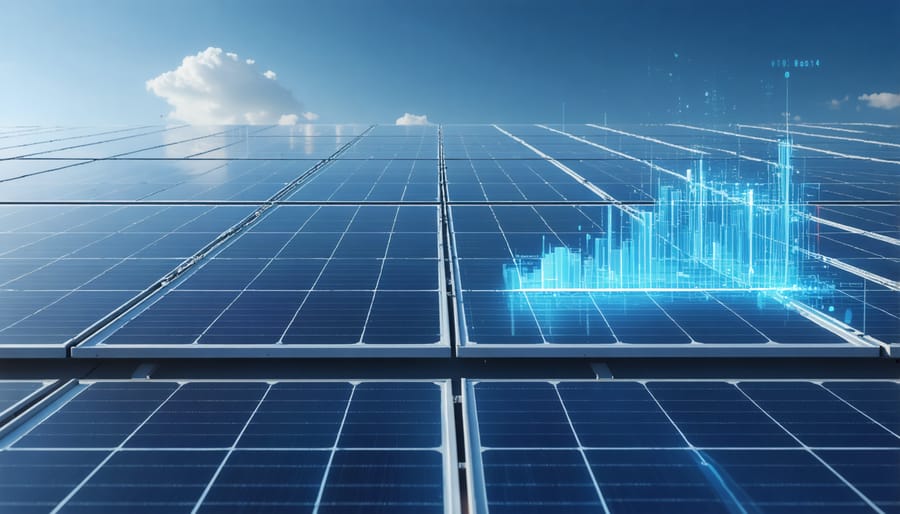
Weather integration systems represent a significant advancement in solar technology, combining real-time weather data with sophisticated monitoring systems to optimize solar panel performance. These smart systems use local weather forecasts, satellite imagery, and ground-based sensors to predict energy production and adjust system settings accordingly.
In Illinois, where weather patterns can be particularly variable, these systems prove invaluable. They analyze factors such as cloud cover, precipitation, temperature, and wind conditions to make intelligent adjustments to solar array positioning and energy storage strategies. During summer storms, the system can automatically adjust panel angles to minimize damage risk while maximizing available sunlight capture.
Many modern weather integration systems include predictive analytics that help homeowners and businesses plan their energy usage. For example, if the forecast shows several cloudy days ahead, the system might recommend storing more energy during clear periods or adjusting consumption patterns. Some advanced systems even integrate with smart home devices to automatically modify energy usage based on weather predictions.
These systems typically feature user-friendly interfaces that display weather data alongside solar production metrics, making it easy for property owners to understand how weather impacts their energy generation. Real-time alerts notify users about severe weather conditions that might affect their solar installation, allowing for proactive maintenance and protection of their investment.
Smart Design and Planning Tools
3D Modeling Software
Modern 3D modeling software has revolutionized the way solar installations are planned and designed in Illinois. These sophisticated tools enable solar professionals to create detailed virtual representations of properties and proposed solar arrays, ensuring optimal placement and helping to maximize project returns.
Using advanced laser scanning and photogrammetry, these programs capture precise measurements of roof angles, building orientations, and surrounding obstacles like trees or neighboring structures. This data is transformed into accurate 3D models where designers can experiment with different panel layouts, accounting for Illinois’ specific solar angles and seasonal variations.
Key features of these modeling tools include shade analysis, which predicts how shadows will affect panel performance throughout the year, and energy production simulations that factor in local weather patterns. For Illinois property owners, this means getting reliable estimates of solar energy generation before installation begins.
The software also helps identify potential installation challenges early in the planning phase, reducing costly surprises during construction. Designers can create detailed installation plans, including mounting points, wire routing, and equipment placement, which streamline the installation process and ensure code compliance.
These tools have become particularly valuable for complex commercial installations and multi-building projects, where precise planning is essential for optimal system performance. They also generate professional visualization renders, helping property owners better understand how their solar installation will look upon completion.

Shade Analysis Technology
Shade analysis technology has revolutionized the way solar installations are planned and optimized in Illinois. Modern solar designers use sophisticated software tools and imaging systems to identify potential shading issues that could impact system performance. These tools combine aerial imagery, 3D modeling, and sun-path analysis to create detailed shade reports throughout the year.
Advanced drone technology equipped with LiDAR sensors can create precise 3D models of your property and surrounding obstacles like trees, buildings, and chimneys. This technology measures how shadows will move across your solar panels throughout different seasons and times of day, ensuring optimal panel placement and system design.
Solar pathfinder devices provide on-site shade analysis by tracking the sun’s path and identifying obstructions that could cast shadows on your panels. These portable tools help installers make immediate adjustments during the planning phase, potentially saving thousands in lost energy production.
Some cutting-edge shade analysis systems now incorporate artificial intelligence to predict future shading concerns, such as tree growth patterns and seasonal variations. This forward-thinking approach helps homeowners and businesses make informed decisions about tree trimming or panel positioning to maximize long-term energy production.
For properties with unavoidable shading issues, modern microinverter and power optimizer technologies can help minimize the impact of partial shade on system performance, ensuring your solar investment generates the maximum possible return even under less-than-ideal conditions.
Installation Technology
Mounting System Innovations
Modern mounting systems have revolutionized solar panel installation, making it more efficient and adaptable to various roof types common in Illinois. Ground-mounted systems now feature single-axis and dual-axis tracking capabilities, allowing panels to follow the sun’s path throughout the day and maximize energy production. These smart tracking systems can increase energy yield by up to 25% compared to fixed installations.
For residential and commercial rooftops, ballasted mounting systems have gained popularity due to their non-penetrating design, which preserves roof integrity while providing secure installation. These systems use weight distribution technology to anchor panels without drilling into the roof structure, making them ideal for flat commercial roofs prevalent in Illinois’s urban areas.
Rail-free mounting systems represent another significant innovation, reducing installation time by up to 40% while maintaining structural integrity. These systems eliminate the need for traditional mounting rails, resulting in a sleeker appearance and lower material costs. Additionally, adjustable mounting solutions now accommodate various roof pitches and surfaces, from standard shingles to metal seam roofs.
Micro-racking systems have emerged as a space-efficient solution, particularly valuable in urban settings where roof space is limited. These systems allow for tighter panel arrangement while maintaining proper ventilation and accessibility for maintenance, making the most of available installation space while ensuring optimal performance.

Safety and Efficiency Tools
Modern solar installations prioritize both worker safety and operational efficiency through advanced technological solutions. Drones equipped with thermal imaging cameras allow installers to conduct thorough roof inspections without physical climbing, significantly reducing accident risks while providing detailed structural assessments. These aerial surveys create precise 3D models of installation sites, enabling better planning and safer execution.
Safety harness systems now incorporate smart sensors that detect falls and automatically alert emergency responders, providing an extra layer of protection for installation teams. Digital safety checklists and mobile apps help ensure compliance with OSHA regulations and local Illinois safety codes, maintaining consistent safety standards across all installation projects.
Efficiency-focused tools include solar panel cleaning robots that minimize maintenance risks and reduce labor costs. These automated systems can operate during off-peak hours, maximizing system performance without endangering workers. Advanced measuring devices with built-in solar pathfinding technology help installers quickly determine optimal panel placement, reducing installation time while ensuring maximum energy production.
Portable weather stations provide real-time environmental data, allowing teams to make informed decisions about installation timing and safety conditions. Additionally, digital project management platforms streamline communication between installation crews, supervisors, and clients, ensuring all safety protocols are followed while maintaining efficient workflow schedules.
Project Management Software
Timeline and Resource Management
Successful solar installations rely heavily on effective timeline management and resource allocation. Modern project management software specifically designed for solar installations helps coordinate multiple aspects of implementation, from initial site assessment to final system activation.
Popular tools like SolarDesign Pro and Aurora Solar enable project managers to create detailed installation schedules, allocate crews efficiently, and track equipment inventory. These platforms integrate with procurement systems to ensure materials arrive on time and within budget, reducing costly delays common in Illinois’s seasonal construction windows.
Resource management dashboards help track specialized equipment availability, ensuring critical tools like lifting equipment and safety gear are properly allocated across multiple job sites. Many platforms now include weather-tracking features, particularly valuable for Illinois’s variable climate, helping teams adjust schedules based on forecasted conditions.
Digital collaboration tools facilitate communication between designers, installers, and clients, while automated notification systems keep all stakeholders informed of project milestones. This technological integration has significantly improved project completion rates and customer satisfaction across the state’s solar industry.
Communication and Reporting Systems
Effective communication and reporting systems are essential components of successful solar energy projects in Illinois. Modern solar installations utilize integrated project management platforms that streamline information sharing between contractors, property owners, and maintenance teams. These digital solutions incorporate real-time monitoring dashboards, automated reporting features, and collaborative workspaces for seamless project coordination.
Cloud-based documentation systems ensure all project stakeholders have access to critical information, including installation specifications, maintenance schedules, and performance reports. Implementation of robust stakeholder communication strategies helps maintain transparency and accountability throughout the project lifecycle.
Mobile applications enable field technicians to update installation progress, document safety protocols, and report issues instantly. Automated notification systems alert property owners about system performance, maintenance requirements, and energy production metrics. These technologies also facilitate compliance reporting for state incentive programs and utility interconnection requirements.
Data visualization tools transform complex performance metrics into easily understandable formats, helping property owners track their return on investment. Regular automated reports provide insights into energy production, consumption patterns, and potential system optimizations, ensuring maximum value from solar installations while maintaining clear communication channels between all parties involved.
The integration of solar technology continues to revolutionize how Illinois homes and businesses harness clean energy. From advanced monitoring systems to smart inverters and innovative storage solutions, these technologies are making solar power more efficient, accessible, and cost-effective than ever before. The rapid advancement in solar cell efficiency, coupled with decreasing installation costs, has positioned solar energy as a leading solution for sustainable power generation.
Looking ahead, we can expect to see even more exciting developments in solar technology. Emerging trends include building-integrated photovoltaics that seamlessly blend with architectural designs, artificial intelligence-driven optimization systems that maximize energy production, and advanced battery storage solutions that provide reliable power around the clock. The growing adoption of smart grid technologies will further enhance the integration of solar power into our existing energy infrastructure.
For Illinois property owners, the future of solar technology offers promising opportunities. As efficiency continues to improve and new applications emerge, the return on investment for solar installations will become even more attractive. Whether you’re a homeowner looking to reduce utility bills or a business owner aiming to achieve sustainability goals, solar technology provides a proven path forward. By embracing these innovations today, you’re not just investing in current technology – you’re participating in the ongoing evolution of clean energy solutions that will power our future.
