
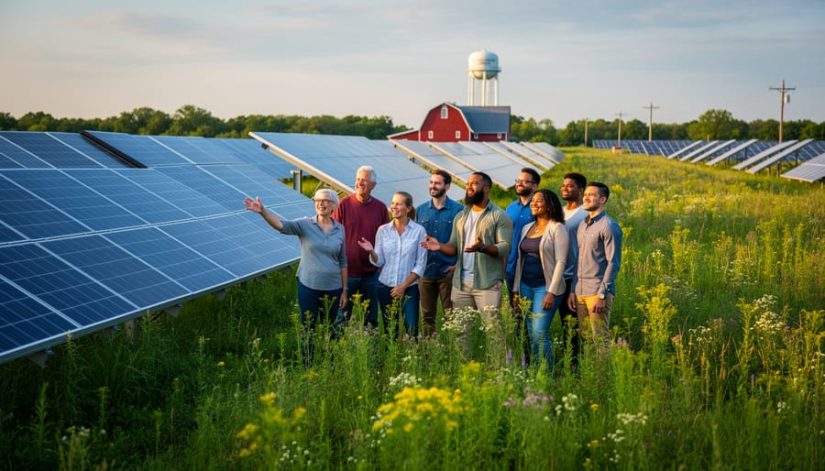
Community Solar Programs Are Breaking Down Barriers to Clean Energy in Illinois
Community solar programs remove the biggest barriers to accessing clean energy by allowing multiple participants to share the benefits of a single solar installation without needing rooftop space or upfront equipment costs. Subscribe to a portion of a local solar farm’s energy production and receive credits on your electricity bill for your share of the power generated, typically saving 5-15% on energy costs while supporting renewable development in Illinois. Renters, homeowners with shaded roofs, and businesses can all participate equally, making solar accessible to households and organizations previously excluded from traditional rooftop installations.
Illinois has emerged as a national leader in community energy initiatives through strong policy frameworks that prioritize local ownership and equitable access. The state’s Adjustable Block Program and Illinois Shines initiative provide financial incentives specifically designed to support community solar development, creating opportunities for locally owned projects that keep energy dollars circulating within Illinois communities. These programs particularly benefit low-to-moderate income households through additional bill credits and dedicated project allocations, addressing energy affordability while advancing clean energy goals.
Understanding how policy advocacy has shaped these opportunities helps you recognize the value and stability of participating in community solar. The collaborative efforts between environmental organizations, community groups, and policymakers have established consumer protections, streamlined approval processes, and ensured transparent pricing structures that make enrollment straightforward and risk-free for participants across residential, commercial, and industrial sectors.
What Is a Community Solar Program?
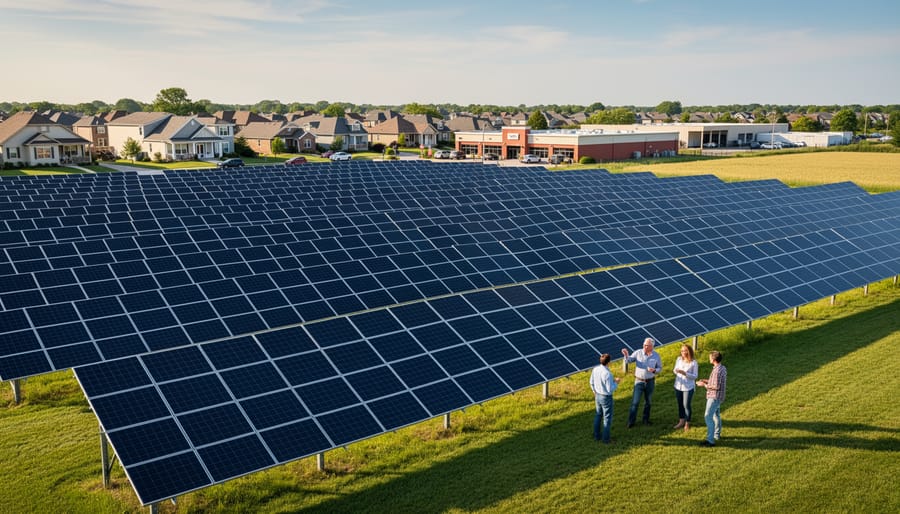
Community solar programs offer an innovative way for Illinois residents and businesses to access clean energy without installing panels on their own property. Unlike traditional rooftop solar systems that require suitable roof space, ownership, and significant upfront investment, community solar allows multiple participants to share the benefits of a single, larger solar array located elsewhere in their utility service area.
Here’s how it works: A solar developer builds a solar farm, often on unused land or commercial properties. Local homeowners, renters, and businesses then subscribe to a portion of that array’s energy production. The electricity generated flows into the regional power grid, and subscribers receive credits on their utility bills for their share of the clean energy produced. This arrangement means you don’t need a south-facing roof, you don’t have to own your home, and you avoid the maintenance responsibilities that come with rooftop installations.
The subscription model is straightforward. Participants typically pay a monthly fee that’s lower than the credit they receive, resulting in immediate savings on electricity costs. There are no installation costs, no equipment to maintain, and subscribers can often cancel or transfer their subscription if they move within the same utility territory.
For Illinois specifically, this model addresses critical barriers to solar adoption. Many residents live in multi-family buildings, have shaded properties, or lack the capital for individual installations. Community solar democratizes access to renewable energy across diverse communities. With Illinois’s progressive renewable energy policies supporting these programs, locally owned solar projects are expanding throughout the state, bringing economic benefits and clean energy access to neighborhoods that traditional solar models couldn’t serve effectively.
Who Benefits from Community Solar in Illinois?
Homeowners Without Ideal Roof Conditions
Not every Illinois home is suited for rooftop solar installation, even when homeowners want to embrace renewable energy. Significant shade from mature trees or nearby buildings can reduce panel efficiency dramatically. Older roofs may require expensive repairs or replacement before supporting solar equipment. Homes with north-facing roofs or unusual orientations often cannot capture adequate sunlight for effective energy production. Additionally, many homeowners associations maintain architectural restrictions that prohibit or severely limit solar panel installations on visible roof surfaces.
Community solar eliminates these barriers entirely. Rather than requiring installation on your property, you subscribe to a portion of a shared solar array located elsewhere. These professionally maintained facilities are built on optimal sites with maximum sun exposure and no physical limitations. You receive credits on your electricity bill for your share of the power generated, making solar accessible regardless of your home’s specific conditions or restrictions.
Renters and Apartment Dwellers
Community solar removes traditional barriers that have long prevented renters and apartment dwellers from accessing clean energy. Unlike rooftop solar systems that require property ownership, roof suitability, and significant upfront investment, community solar allows you to subscribe to a shared solar array located elsewhere. You receive credits on your electricity bill for your portion of the energy produced, typically saving 5-15% on monthly costs without any installation on your rental property. This locally owned approach means you can support renewable energy and reduce your carbon footprint regardless of where you live. When you move, your subscription can often transfer to your new address within the same utility service area, providing flexibility that matches your lifestyle. Community solar finally makes sustainable energy accessible to the nearly 40% of Illinois residents who rent their homes.
Small Businesses and Organizations
Small businesses and organizations across Illinois can significantly reduce operating expenses while advancing sustainability initiatives through community solar subscriptions. Unlike traditional solar installations that require substantial upfront capital and suitable roof space, community solar offers a flexible, accessible alternative. Businesses subscribe to a portion of a locally owned solar array and receive credits on their monthly electricity bills, typically saving 5-15% on energy costs without any installation or maintenance responsibilities. This arrangement proves particularly valuable for companies leasing their facilities or those with shaded or unsuitable rooftops. By participating in community solar, businesses demonstrate environmental leadership to customers and stakeholders while supporting clean energy development in their communities. The program aligns perfectly with corporate sustainability targets and provides predictable energy savings that improve bottom-line performance. Illinois businesses exploring renewable energy for businesses find community solar an ideal entry point into clean energy adoption.
How Illinois Community Solar Programs Work
The Subscription Process
Signing up for a community solar program is straightforward and typically takes just a few weeks from start to finish. Most Illinois community solar providers offer online enrollment, making the process convenient for both homeowners and businesses.
To get started, you’ll need basic information including your utility account number, recent electricity bills to determine your usage patterns, and contact details. The provider will review your average monthly electricity consumption to ensure your subscription size matches your needs. Most programs offer flexible subscription options, allowing you to subscribe to a portion of the solar array that aligns with your energy usage—typically ranging from 25% to 100% of your monthly consumption.
The enrollment timeline usually spans two to four weeks. After submitting your application, the community solar provider reviews your information and coordinates with your utility company to set up billing credits. Once approved, you’ll receive a subscription agreement outlining the discount rate you’ll receive on the solar energy credits, which typically ranges from 10% to 20% off your standard electricity rate.
No upfront costs or installation work is required at your property. Your existing utility service continues uninterrupted, with solar credits appearing as line items on your regular bill. Working with locally owned providers who have expertise in solar energy ensures you receive personalized guidance throughout the enrollment process.
Understanding Your Solar Credits
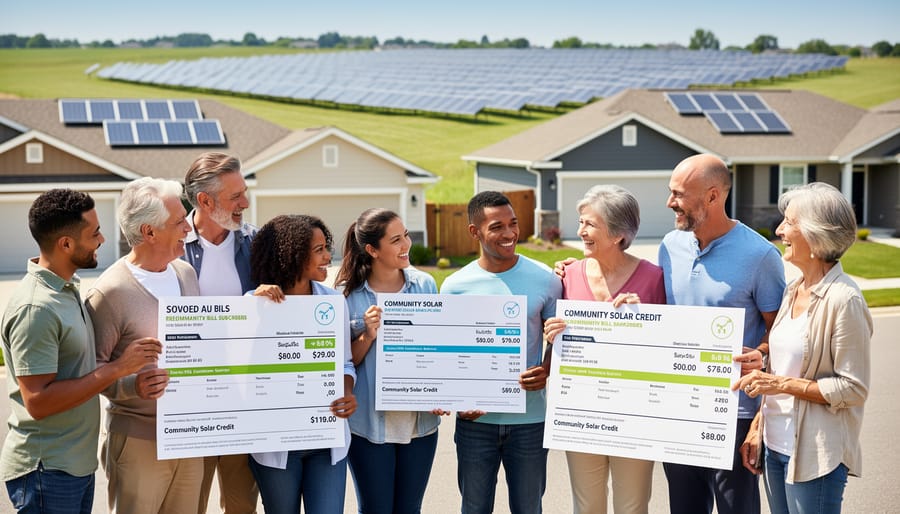
When you subscribe to a community solar program, understanding how your bill credits work is straightforward. Each month, your subscription generates solar energy credits that appear as line items on your utility bill, typically labeled as “community solar credits” or similar terminology. These credits directly reduce the amount you owe to your electric utility.
The process works like this: the solar farm generates electricity and feeds it into the grid. Based on your subscription share, you receive credits equivalent to the energy production from your portion of the array. These credits are measured in kilowatt-hours and are valued at the retail electricity rate set by your utility company.
On your monthly utility bill, you’ll see two key entries. First, your regular electricity charges for the power you consumed from the grid. Second, the community solar credits that offset those charges. Most subscribers in Illinois can expect to see savings ranging from 10-20% on their electricity costs, though actual savings depend on your subscription size and local utility rates.
It’s important to note that you’ll typically receive two separate bills: one from your utility company showing the credits applied, and another from your community solar provider for your subscription fee. The subscription fee is generally structured to be less than the value of the credits you receive, ensuring guaranteed savings. This locally owned approach to solar energy makes the financial benefits transparent and accessible, allowing Illinois residents and businesses to participate in clean energy without complex calculations or upfront investments.
The Role of Policy Advocacy in Expanding Community Solar Access
Illinois Solar for All and the Adjustable Block Program
Illinois has established two groundbreaking programs that have dramatically expanded community solar access across the state. The Illinois Solar for All (ILSFA) program, launched in 2018, specifically addresses energy equity by focusing on low-income households and environmental justice communities. This program removes financial barriers that traditionally prevented many residents from accessing solar energy benefits, offering incentives for community solar projects serving income-qualified participants.
The Adjustable Block Program (ABP) operates alongside ILSFA to support larger-scale distributed solar development throughout Illinois. This program purchases renewable energy credits from qualifying solar projects through a transparent block structure, with pricing that adjusts as capacity goals are met. The ABP includes specific categories for community solar projects, creating reliable revenue streams that make these developments financially viable for locally owned solar companies.
Together, these programs have transformed Illinois into a national leader in community solar deployment. They establish clear pathways for project development while ensuring that benefits reach diverse communities, including renters and those who cannot install rooftop panels. The Illinois solar incentives provided through both programs have catalyzed hundreds of megawatts of community solar capacity, creating local jobs and reducing energy costs for thousands of subscribers. By combining equity-focused provisions with market-based mechanisms, these complementary programs demonstrate how thoughtful policy design can expand clean energy access while supporting economic development in communities across the state.
What Advocacy Groups Are Fighting For
Advocacy organizations across Illinois are working to strengthen community solar programs through several key policy initiatives that benefit residents and businesses. Their primary focus centers on expanding income-qualified access, ensuring that low-to-moderate income households can participate in solar savings without requiring rooftop installations or upfront costs. These groups push for legislation that reserves program capacity specifically for income-qualified subscribers, often advocating for deeper discounts on electricity bills for those who need it most.
Consumer protections represent another critical priority. Advocates campaign for transparent subscription agreements, standardized disclosure requirements, and clear cancellation policies that protect subscribers from hidden fees or misleading terms. This includes pushing for stronger regulatory oversight of community solar providers to maintain program integrity and subscriber trust.
Program expansion efforts aim to increase the total capacity available for community solar projects statewide. Through community solar leadership, advocacy groups work to remove barriers that limit project development, such as streamlining interconnection processes and extending program timelines. They also advocate for geographic equity, ensuring rural and underserved communities receive adequate project allocation.
Additional priorities include advocating for policies that support locally owned solar projects, which keep economic benefits within Illinois communities. These organizations work with state legislators and the Illinois Power Agency to refine the Adjustable Block Program, ensuring it continues meeting diverse community needs while maintaining financial sustainability for project developers and maximum accessibility for Illinois residents and businesses.
Financial Benefits and Savings Potential
Community solar programs in Illinois offer substantial financial benefits without the barriers that typically accompany traditional rooftop solar installations. Perhaps the most appealing aspect is the elimination of upfront costs—subscribers don’t need to purchase equipment or invest thousands of dollars to start saving. Instead, you simply subscribe to a portion of a locally owned solar array and begin reducing energy costs immediately.
Illinois residents typically save between 5% and 15% on their monthly electricity bills through community solar participation. These savings accumulate over time, translating to hundreds of dollars annually for average households. Business owners and industries can realize even greater savings due to higher energy consumption patterns. The subscription model ensures predictable energy costs, protecting participants from utility rate fluctuations that have historically trended upward.
The long-term value proposition becomes particularly compelling when considering the typical subscription period of 20 to 25 years. Over this timeframe, cumulative savings can reach several thousand dollars for residential subscribers. Commercial participants with larger energy needs may see savings in the tens of thousands. Additionally, subscribers retain flexibility—if you move within your utility’s service territory, your subscription follows you, ensuring continuous savings without penalty.
Illinois solar energy incentives further enhance the value proposition. Community solar developers can access state and federal incentives, which translate into better subscription rates for participants. This locally owned approach keeps more money circulating within Illinois communities while delivering reliable financial benefits to subscribers. Unlike traditional solar installations that require property ownership, roof assessments, and maintenance responsibilities, community solar delivers financial advantages with minimal commitment and zero hassle.
Environmental Impact of Community Solar Programs
Community solar programs deliver measurable environmental benefits that extend far beyond individual participation. When Illinois residents and businesses join a community solar project, they collectively reduce carbon emissions and advance clean energy goals across the state.
A typical community solar project in Illinois offsets approximately 1,000 to 2,000 metric tons of carbon dioxide annually, depending on the array size. For perspective, this equals removing 200 to 400 passenger vehicles from Illinois roads each year or planting 25,000 to 50,000 tree seedlings. These equivalencies help illustrate the tangible impact of choosing solar energy over conventional power sources.
The environmental advantage multiplies through collective participation. Unlike individual rooftop installations that serve single properties, community solar arrays generate clean energy for dozens or hundreds of subscribers simultaneously. A single 2-megawatt community solar farm can power approximately 300 Illinois homes while preventing roughly 2,500 tons of carbon emissions annually. This shared approach maximizes environmental impact per acre of land developed.
Illinois community solar participants also contribute to the state’s climate goals outlined in the Climate and Equitable Jobs Act. Each subscription helps diversify the energy grid, reducing reliance on fossil fuel generation during peak demand periods. This collective shift toward renewable energy strengthens grid resilience while addressing climate concerns.
For Illinois property owners and businesses committed to sustainability, community solar offers an accessible pathway to environmental stewardship. The cumulative effect of widespread participation drives meaningful progress toward cleaner air and reduced greenhouse gas emissions statewide.
How to Choose the Right Community Solar Program in Illinois
Key Questions to Ask Providers
Before enrolling in a community solar program, take time to thoroughly evaluate potential providers. Start by asking about all associated fees, including enrollment costs, monthly subscription charges, and any administrative fees that might reduce your savings. Understanding the complete fee structure helps you accurately calculate your net benefit.
Inquire about cancellation policies and contract terms. Ask whether you can cancel without penalty if you move, sell your property, or experience financial hardship. Some providers require long-term commitments while others offer more flexible month-to-month arrangements.
Credit rates are crucial to your savings. Ask how the provider calculates credits on your utility bill and what discount percentage they guarantee off your standard electricity rate. Request examples of typical savings based on your current energy usage.
Verify the provider’s reputation by asking for references from current Illinois subscribers. Check how long they’ve operated in the state and whether they’re locally owned with expertise in solar energy. Ask about their experience with Illinois-specific regulations and ComEd or Ameren billing systems.
Finally, confirm the solar facility’s location and when it will begin generating power. Understanding these operational details ensures you partner with a reliable provider that delivers the promised benefits.
Red Flags to Watch For
When evaluating community solar offers in Illinois, stay alert for several warning signs. Be cautious of programs requiring large upfront payments or enrollment fees, as legitimate community solar subscriptions typically don’t demand significant initial costs. Watch for contracts with unusually long terms or confusing cancellation policies that lock you in without flexibility.
Verify that the program provider is transparent about savings calculations and billing procedures. Legitimate providers clearly explain how credits appear on your utility bill and provide realistic estimates rather than guaranteed savings percentages. Be wary of high-pressure sales tactics or representatives who can’t answer basic questions about the program structure or the physical solar array location.
Always confirm that the program is approved by your local utility and complies with Illinois community solar regulations. Request references from current subscribers and read reviews from independent sources. Scrutinize any claims about tax incentives or credits, ensuring they accurately reflect current Illinois and federal policies.
Red flags also include vague contract language, missing contact information for customer service, or providers unwilling to provide written documentation before requesting your commitment. A reputable locally owned provider should offer clear answers, transparent terms, and adequate time for you to review all materials before making a decision.
Getting Started with Community Solar in Illinois
Ready to join a community solar program in Illinois? Getting started is straightforward, and working with experienced local partners can simplify the process significantly.
First, research available community solar projects in your area. Illinois has numerous programs across the state, each with different subscription options and pricing structures. Check the Illinois Shines program website and the Illinois Power Agency’s approved projects list to see what’s available in your utility territory.
Next, evaluate your current electricity usage by reviewing recent utility bills. Understanding your monthly consumption helps you determine the appropriate subscription size. Most programs allow you to subscribe to a portion of a solar array that matches your energy needs, typically ranging from 25% to 100% of your usage.
Contact local solar providers who specialize in community solar subscriptions. Locally owned firms like Illinois Renewables bring valuable expertise in solar energy and understand the specific regulations and incentives available throughout Illinois. These knowledgeable partners can walk you through program options, explain contract terms, and help you compare savings estimates across different projects.
Review subscription agreements carefully before committing. Pay attention to contract length, cancellation policies, subscription fees, and how bill credits are calculated. Reputable providers will transparently explain all terms and answer your questions without pressure.
Consider timing your subscription. Some programs fill quickly due to high demand, while new projects regularly come online. Staying informed about upcoming opportunities ensures you don’t miss out on favorable terms.
For businesses, additional considerations include evaluating multiple-site subscriptions and understanding how community solar fits into broader sustainability goals. Local solar experts can help commercial subscribers navigate these complexities while maximizing financial and environmental benefits.
Taking these actionable steps positions you to make informed decisions and secure a community solar subscription that aligns with your energy and financial objectives.
Community solar programs represent a transformative opportunity for Illinois residents and businesses to participate in clean energy solutions, regardless of whether their property is suitable for traditional rooftop installations. Through continued policy advocacy and supportive legislation, these programs have expanded access to solar energy across the state, enabling renters, homeowners with shaded roofs, and businesses to reduce their electricity costs while supporting renewable energy development.
The success of community solar in Illinois demonstrates how thoughtful policy design can remove barriers to clean energy participation. As locally owned solar projects continue to emerge throughout the state, more communities gain access to affordable, sustainable electricity options. The subscription model makes solar energy accessible without requiring significant upfront investment or property modifications, creating opportunities for a diverse range of participants.
For those considering their clean energy options, now is an excellent time to explore community solar programs in your area. With expertise in solar energy solutions growing across Illinois, finding a program that fits your needs has become increasingly straightforward. Whether you’re a homeowner seeking to reduce your carbon footprint, a business owner looking to manage energy costs, or simply someone interested in supporting renewable energy development, community solar offers a practical pathway to participation.
By taking advantage of these programs today, you join a growing movement of Illinois residents and businesses contributing to a cleaner, more sustainable energy future for our state.
