
How Illinois Homeowners Are Cutting Energy Bills While Fighting Climate Change
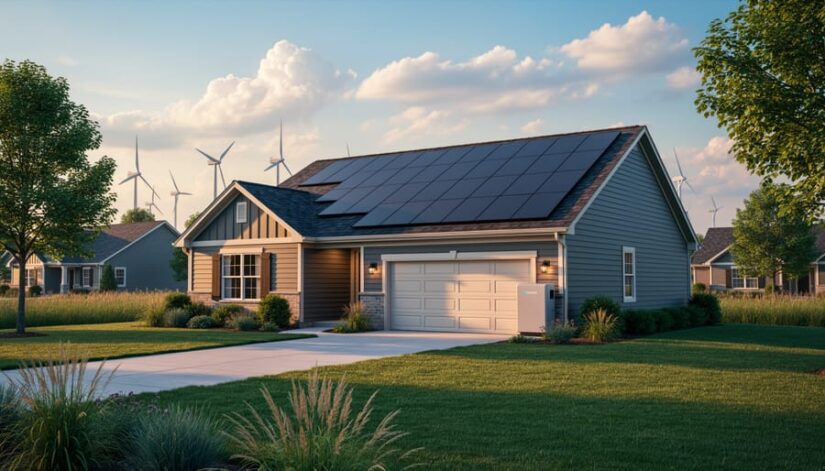
Climate change is fundamentally reshaping how Illinois generates and consumes electricity, creating unprecedented opportunities for property owners to reduce costs while contributing to environmental solutions. Rising temperatures, increasingly severe storms, and shifting precipitation patterns across the Midwest have accelerated the state’s transition away from fossil fuels, with Illinois now requiring 50% renewable energy by 2040 through the Climate and Equitable Jobs Act.
For homeowners and business owners throughout Illinois, this policy shift translates directly into financial incentives that make solar energy more accessible than ever. The state’s expanded renewable energy credit programs, combined with federal tax incentives, can cover up to 56% of installation costs, delivering immediate savings on energy bills while protecting against future utility rate increases that historically rise 3-4% annually.
Understanding the connection between climate policy and renewable energy isn’t just about environmental responsibility, it’s about recognizing a practical economic opportunity. As extreme weather events strain the traditional power grid, solar installations with battery storage provide energy independence and reliability that conventional electricity sources cannot guarantee. Illinois property owners who act now position themselves ahead of stricter building codes and energy requirements while maximizing available incentive dollars.
This locally owned solar expertise helps you navigate the evolving landscape where climate realities, state policies, and economic benefits converge, transforming renewable energy from a distant concept into an immediate, actionable investment in your property’s value and operational efficiency.
Why Illinois Renewable Energy Policies Are Evolving
Climate Challenges Facing Illinois Energy Infrastructure
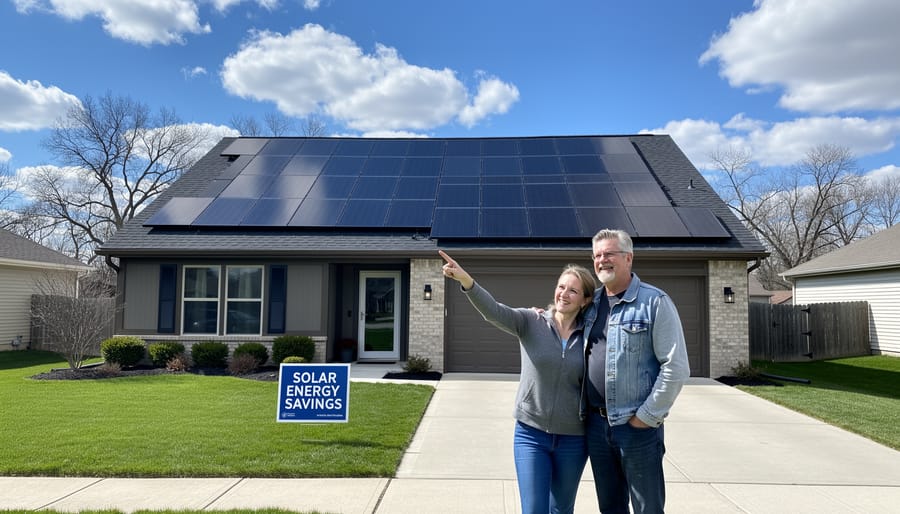
Illinois faces mounting challenges as climate change places unprecedented stress on our existing energy infrastructure. Recent years have seen a dramatic increase in extreme weather events across the state, from severe thunderstorms and flooding to prolonged heat waves that push our electrical grid to its limits.
During summer months, record-breaking temperatures drive electricity demand to peak levels as air conditioning units work overtime. In 2023, several Illinois communities experienced grid strain during consecutive days of temperatures exceeding 100 degrees Fahrenheit. These heat events not only increase demand but also reduce the efficiency of traditional power plants and transmission lines, creating a double burden on the system.
Winter brings its own challenges. Polar vortex events can freeze natural gas supplies and disable coal-fired plants when heating demand surges. Changing precipitation patterns, including intense rainfall and ice storms, damage transmission infrastructure and cause widespread outages. These disruptions highlight the vulnerability of centralized power systems that depend on consistent weather conditions.
These climate-driven challenges have accelerated the need for more resilient, distributed energy solutions. The growing urgency has shaped Illinois solar policy, encouraging homeowners and businesses to consider renewable alternatives that enhance energy independence and grid stability.
How Policy Adaptation Protects Your Energy Security
Climate-related extreme weather events like storms, flooding, and heat waves pose increasing threats to traditional centralized power grids. When a single large power plant or transmission line fails, thousands of customers can lose electricity for extended periods. Updated renewable energy policies in Illinois are addressing this vulnerability by encouraging distributed generation systems, particularly rooftop solar installations.
Local renewable energy solutions create more resilient energy networks. When you generate power on-site through solar panels, your property becomes less dependent on vulnerable transmission infrastructure. During grid disruptions, properties with solar and battery storage can maintain critical functions, protecting your home or business operations.
Illinois policies now support community solar projects and net metering programs that distribute energy generation across multiple locations. This decentralized approach means that damage to one area doesn’t cascade throughout the entire system. For property owners, these policy adaptations translate to improved energy reliability during increasingly common weather emergencies. The financial incentives available through state programs make it more accessible to participate in building this resilient energy future while reducing your long-term energy costs and environmental impact.
Key Policy Changes Making Solar More Accessible in Illinois
Enhanced Incentive Programs and Tax Credits
Illinois residents and businesses have access to robust financial programs that make solar energy adoption more affordable than ever. Understanding these incentives is key to maximizing your return on investment.
The federal Investment Tax Credit (ITC) allows property owners to deduct 30% of solar installation costs from their federal taxes, significantly reducing upfront expenses. This credit applies to both residential and commercial systems and remains at this level through 2032.
At the state level, Illinois solar incentives provide additional savings through the Adjustable Block Program, which offers renewable energy credits for solar production. Illinois Shines, the state’s flagship solar program, delivers rebates based on system size and project type, further offsetting installation costs.
Property tax exemptions ensure that adding solar panels doesn’t increase your property tax assessment, protecting you from additional expenses. Sales tax exemptions on solar equipment purchases provide immediate savings on materials.
When combined, these federal and state programs typically cover 40-50% of total installation costs. For a locally owned business investing in solar, this means faster payback periods and stronger long-term financial returns while contributing to Illinois’s clean energy goals.
Net Metering and Energy Storage Provisions
Net metering is a billing arrangement that allows solar panel owners to receive credit for excess electricity their system generates and sends back to the grid. Think of it as your electric meter spinning backwards when your panels produce more power than you’re using. In Illinois, net metering policies have evolved to support renewable energy adoption, making solar installations more financially attractive for homeowners and businesses. When your system produces surplus energy during sunny days, you build up credits that offset your electricity costs during periods of low production, such as nighttime or cloudy weather.
Recent policy updates have expanded provisions for battery storage systems, which work hand-in-hand with net metering to enhance your energy independence. Battery storage allows you to capture and store excess solar energy instead of immediately sending it to the grid. This stored power becomes available during grid outages, providing backup electricity when you need it most. For Illinois property owners, combining solar panels with battery storage means greater control over energy costs while maintaining power during severe weather events that are becoming more frequent due to climate change. These provisions represent a practical response to both environmental concerns and the need for reliable, resilient energy solutions.
Streamlined Permitting and Interconnection
One of the most significant barriers to solar adoption has historically been the lengthy approval process and complex interconnection requirements. Recognizing that climate change demands faster renewable energy deployment, Illinois has implemented streamlined permitting procedures that dramatically reduce installation timelines for property owners.
Recent policy updates have standardized application requirements across municipalities, eliminating redundant paperwork and creating clearer pathways for solar installations. What once took months of bureaucratic navigation can now be completed in weeks. The interconnection process, which connects your solar system to the electrical grid, has also been simplified with standardized technical requirements and faster utility review timelines.
For homeowners and business owners, these improvements translate to reduced soft costs and quicker returns on investment. Local solar installers with expertise in navigating Illinois-specific regulations can guide you through the simplified process, ensuring all documentation meets current standards. The state has also developed online portals that allow property owners to track their application status in real-time, providing transparency throughout the approval process.
These policy adaptations reflect Illinois’s commitment to removing obstacles that previously slowed renewable energy adoption, making it easier than ever for property owners to participate in the clean energy transition.
What Climate-Adapted Solar Systems Look Like Today
Weather-Resistant Design Standards
Modern solar energy systems installed across Illinois are specifically engineered to withstand the state’s challenging weather conditions. Panels undergo rigorous testing to ensure they can handle wind speeds exceeding 140 miles per hour, which surpasses even the most severe storms our region experiences. The mounting systems use heavy-duty aluminum frames and stainless steel hardware designed to resist corrosion from moisture and temperature fluctuations.
Snow load capacity is a critical consideration for Illinois installations. Solar panels are rated to support significant snow accumulation, typically 50 pounds per square foot or more, ensuring they remain secure during heavy winter storms. The smooth glass surface of panels actually helps snow slide off naturally, maintaining energy production throughout the season.
Hail resistance is another essential feature. Most solar panels are tested against one-inch hail traveling at 50 miles per hour, meeting strict industry standards. The tempered glass covering protects the photovoltaic cells beneath from impact damage.
These durability standards mean your solar investment is protected for decades. As a locally owned company with extensive expertise in solar energy, we ensure every installation meets or exceeds manufacturer specifications for Illinois weather conditions, giving you peace of mind alongside clean energy production.
Smart Energy Management Integration
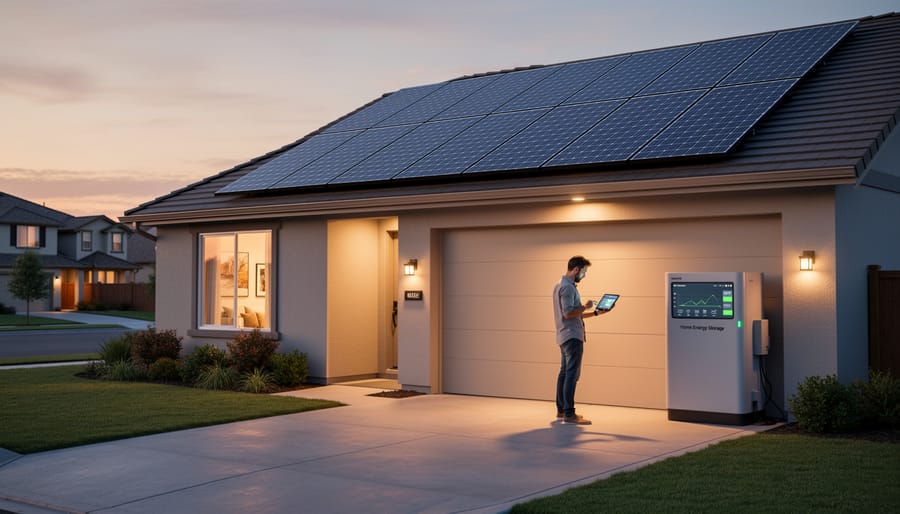
Modern solar systems have evolved far beyond simple panels on a rooftop. Today’s solar innovation seamlessly integrates with smart home technology and battery storage systems to create an intelligent energy management solution. These advanced systems monitor your electricity usage patterns in real-time, automatically directing power where it’s needed most.
When integrated with battery storage, your solar system can store excess energy generated during sunny days for use during evening peak demand hours or unexpected power outages. Smart energy management systems learn your household or business consumption habits, optimizing when to use stored solar energy versus drawing from the grid. This becomes particularly valuable during Illinois summers when air conditioning drives up energy costs during peak afternoon hours.
For Illinois property owners, this technology means greater energy independence and reduced utility bills. The system automatically switches to battery power during grid outages, keeping essential appliances running without interruption. As a locally owned solar company with extensive expertise in these integrated systems, we help Illinois residents and businesses design customized solutions that maximize their solar investment while providing reliable backup power when needed most.
Scalable Solutions for Different Property Types
Illinois’ evolving renewable energy policies recognize that no two properties have identical energy needs. Residential homeowners can benefit from net metering programs that credit excess solar production back to their utility bills, making rooftop installations financially viable even for smaller homes. Commercial properties, with their larger roof spaces and higher daytime energy consumption, can take advantage of accelerated depreciation schedules and commercial renewable energy credits that significantly improve return on investment. Industrial facilities face unique requirements, but Illinois policies now accommodate ground-mounted arrays and community solar participation for properties where on-site installation isn’t practical. Locally owned solar providers with expertise in solar energy understand these distinctions and can navigate the specific incentives available for each property type. This flexible approach ensures that whether you’re powering a single-family home, a retail storefront, or a manufacturing facility, there’s a solar solution designed to meet your operational needs while maximizing available policy benefits. The key is working with knowledgeable professionals who understand both the technical requirements and the policy landscape specific to Illinois.
Real Financial Benefits for Illinois Property Owners
Calculating Your Potential Savings
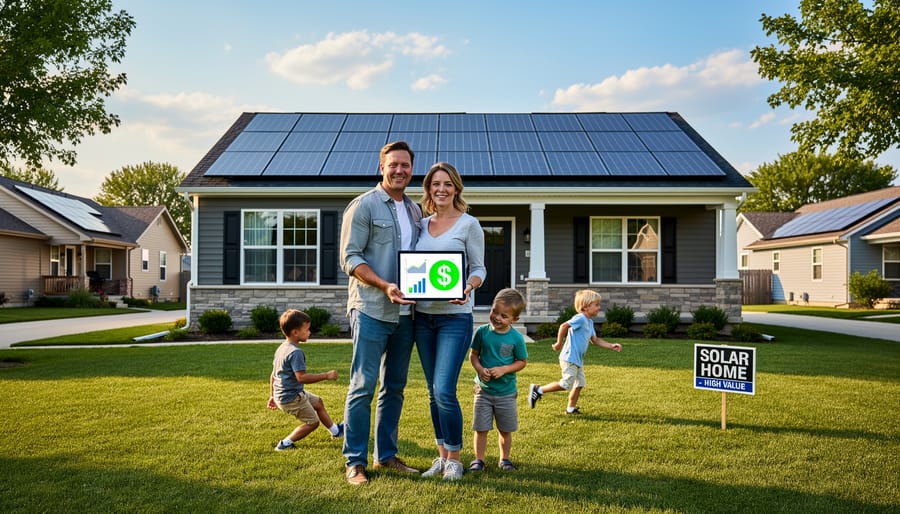
Understanding your potential savings from solar energy in Illinois starts with examining your current energy costs. Let’s walk through a straightforward example to illustrate how renewable energy policies translate into real financial benefits.
Consider an average Illinois home consuming 877 kWh monthly. With ComEd’s current residential rate of approximately 15.5 cents per kWh, your annual electricity bill totals around $1,630. A typical 6 kW solar system can offset 80-100% of this consumption.
The upfront investment for such a system ranges from $15,000 to $18,000 before incentives. However, Illinois offers substantial support through the Adjustable Block Program, providing Solar Renewable Energy Credits worth approximately $3,600 to $4,800 over four years. Combined with the 30% federal Investment Tax Credit, your net cost drops to roughly $7,000 to $9,000.
At these reduced costs, your system pays for itself in 5-7 years through eliminated or drastically reduced utility bills. Over the system’s 25-year lifespan, you could save between $30,000 and $40,000, depending on electricity rate increases.
For businesses with higher consumption, the savings multiply proportionally. A commercial operation using 3,000 kWh monthly could see annual savings exceeding $5,500, making solar an increasingly attractive hedge against rising energy costs while contributing to climate change mitigation efforts.
Property Value and Long-Term Investment
Investing in solar energy offers substantial financial benefits that extend well beyond monthly utility savings. Studies consistently show that homes equipped with solar panel systems sell for 3-4% more than comparable properties without solar installations. For Illinois homeowners, this translates to thousands of dollars in added property value while simultaneously reducing your carbon footprint.
The long-term investment advantages become even more compelling when you consider energy cost stability. Traditional electricity rates in Illinois have increased steadily over the past two decades, and this trend is expected to continue as aging infrastructure requires upgrades and conventional fuel costs fluctuate. Solar installations provide protection against these unpredictable rate hikes by locking in your energy costs for 25-30 years, the typical lifespan of quality solar panels.
Business owners particularly benefit from this predictability, as stable energy costs improve long-term financial planning and budgeting. With Illinois renewable energy policies offering incentives like net metering and federal tax credits, the initial investment becomes more accessible while the return on investment strengthens over time. As a locally owned solar provider with expertise in Illinois markets, we help property owners navigate these financial benefits while contributing to climate change mitigation through clean energy adoption.
Taking Action: Your Path to Climate-Smart Energy
Assessing Your Property’s Solar Potential
Before investing in solar energy, it’s essential to evaluate whether your Illinois property is well-suited for solar panels. Start by examining your roof’s condition and age. Most solar systems last 25-30 years, so your roof should be in good shape or due for replacement to avoid costly removal and reinstallation later.
Sun exposure is critical for maximizing energy production. South-facing roofs typically receive the most sunlight in Illinois, though east and west orientations can still work effectively. Consider any shading from trees, nearby buildings, or chimneys that might block sunlight throughout the day. Even partial shading can significantly reduce your system’s efficiency.
Next, review your energy usage patterns by examining past utility bills. Higher energy consumption generally means greater potential savings from solar. Illinois experiences seasonal variations, with increased energy use during hot summers and cold winters, making solar particularly valuable for offsetting peak demand periods.
The size and structure of your roof matter too. Solar panels require adequate space, and your roof must be strong enough to support the additional weight. As a locally owned company with expertise in solar energy, we conduct comprehensive site assessments to determine your property’s solar potential and design systems optimized for Illinois weather conditions and your specific energy needs.
Working With Local Illinois Solar Experts
Partnering with locally-owned Illinois solar experts offers distinct advantages when navigating the state’s evolving renewable energy landscape. Local firms possess intimate knowledge of Illinois-specific policies like the Illinois Shines program, Adjustable Block Program incentives, and county-level permitting requirements that can significantly impact your project timeline and savings. These professionals understand regional weather patterns, from Chicago’s lake-effect conditions to southern Illinois humidity concerns, ensuring your system is optimized for local performance.
Local solar companies also maintain established relationships with Illinois utility providers including ComEd and Ameren, streamlining interconnection processes and net metering arrangements. This expertise proves invaluable when maximizing your return on investment through available state and federal incentives. Beyond installation, locally-owned firms provide responsive maintenance and support, remaining accessible for system monitoring, warranty service, and future expansion needs.
Working with Illinois-based professionals contributes to community energy independence while supporting local economic growth. These experts deliver comprehensive service value through personalized consultations, accurate site assessments considering Illinois building codes, and ongoing education about emerging policy changes that could benefit your renewable energy investment. Their commitment to your community ensures long-term partnership rather than transactional service.
Illinois property owners stand at a pivotal moment where climate-driven policy changes have created exceptional opportunities to embrace solar energy. The state’s progressive renewable energy policies, combined with federal incentives, make transitioning to solar more accessible and financially beneficial than ever before. By adopting solar technology now, you can achieve meaningful energy independence, reduce monthly utility costs, and directly contribute to Illinois’s climate resilience goals. As a locally owned solar provider with deep expertise in Illinois regulations and installation requirements, we understand the unique advantages available to residents and businesses in our state. These incentives won’t last forever, and policy landscapes continue to evolve. We encourage you to explore your solar options today while programs like the Illinois Shines initiative and federal tax credits remain robust, ensuring you maximize both your financial savings and environmental impact for years to come.
