
Why Your Solar Panels Could Damage Your Roof (And How to Prevent It)
Roof uplift occurs when wind flows over your building and creates a powerful vacuum effect beneath your solar panels, potentially lifting them—and portions of your roof—away from the structure. In Illinois, where wind gusts regularly exceed 60 mph during severe storms, this isn’t a theoretical concern. It’s a critical engineering challenge that separates professional solar installations from potentially dangerous ones.
Understanding roof uplift begins with recognizing that solar panels act like airplane wings. As wind rushes across your roof’s surface, it accelerates over the panels, creating low pressure underneath while high pressure builds below. This pressure differential generates upward force that can exceed thousands of pounds across an entire solar array. Without proper engineering and installation techniques, this force can tear panels from mounting systems, damage roofing materials, or in extreme cases, compromise your building’s structural integrity.
The consequences extend beyond equipment damage. Inadequate uplift protection can void warranties, create insurance claim denials, and expose property owners to liability if panels detach during storms. For commercial buildings with low-slope roofs or residential properties in exposed areas, the risks multiply significantly.
Professional solar installers address roof uplift through structural calculations, appropriate ballasting or attachment methods, and adherence to local building codes. These engineering requirements aren’t optional safety features—they’re fundamental to responsible solar installation. Knowing how installers evaluate and mitigate uplift forces protects your investment and ensures your solar system performs safely for decades.
What Is Roof Uplift and Why Should You Care?
Roof uplift is the upward force that wind creates on your roof, and it’s a critical concern for any property with solar panels. When wind flows over your roof, it doesn’t just push down—it actually creates an upward sucking force, similar to how air moving over an airplane wing generates lift. This happens because wind moving across the roof’s surface creates lower air pressure above the roof compared to the higher pressure underneath, attempting to pull the roof upward.
For solar panel installations, understanding this phenomenon becomes even more important. Solar panels act like sails on your roof, catching wind and significantly increasing the uplift forces your roofing system must withstand. In Illinois, where we experience strong winds from thunderstorms and severe weather events throughout the year, these forces can be substantial.
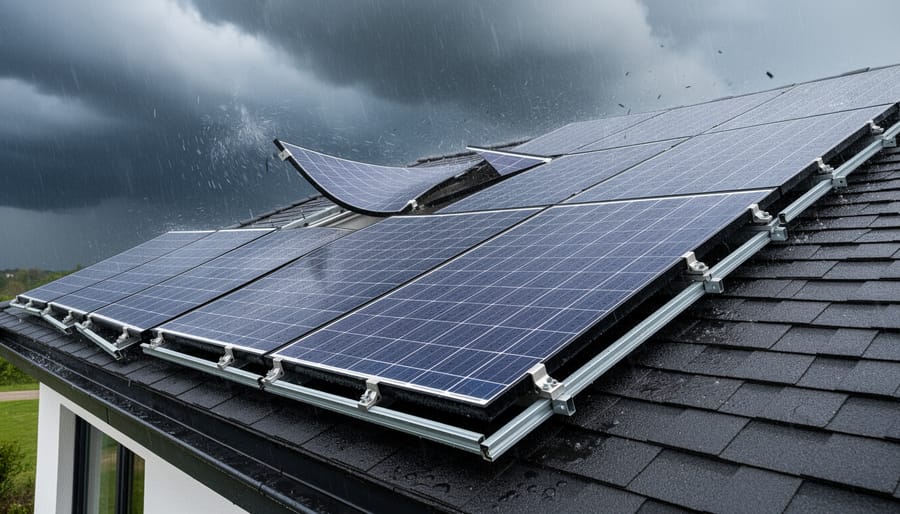
When roof uplift isn’t properly addressed during solar installation, the consequences can be serious. We’ve seen panels tear away from roofs during windstorms, taking roofing materials with them and leaving properties vulnerable to water damage. In some cases, poorly secured panels create a domino effect—one panel lifts, increasing stress on adjacent panels, leading to progressive failure across the entire array. Even if panels don’t completely detach, inadequate uplift protection can loosen mounting hardware over time, creating leaks and compromising your roof’s integrity.
Think of it this way: your roof might have handled decades of Illinois weather just fine, but adding solar panels changes the equation entirely. It’s like turning your roof into a giant kite. Professional installers calculate these uplift forces based on your specific roof design, local wind patterns, and building codes. They then use appropriate mounting systems, ballast weights, or attachment methods to ensure your investment stays safely in place. This engineering work happens behind the scenes, but it’s the difference between a solar installation that lasts 25-plus years and one that becomes a costly liability during the next major storm.
How Wind Affects Solar Panel Systems on Illinois Roofs
Wind Zones and Local Building Codes in Illinois
Illinois falls primarily within Wind Zone II according to the American Society of Civil Engineers (ASCE 7-16) standards, though some northern and western areas may experience Wind Zone III conditions. This classification means your solar installation must withstand wind speeds of 115 to 120 mph in most regions, with higher requirements in certain counties. The Illinois State Building Code adopts these standards, requiring solar panel mounting systems to meet specific load calculations that account for both downward pressure and uplift forces.
Local building codes in Illinois mandate that solar installations receive proper permits and engineering approval before installation. Your solar provider should conduct a structural analysis of your roof to ensure it can handle the additional weight and wind loads created by solar panels. This analysis considers factors like your roof’s age, material, pitch, and the building’s height and exposure to wind. Reputable installers understand these requirements and design mounting systems with appropriate ballast or attachment methods to prevent roof uplift. Working with locally owned solar companies familiar with Illinois-specific regulations ensures your system meets all code requirements while protecting your property investment from wind-related damage.
How Solar Panels Change Your Roof’s Wind Profile
When you install solar panels on your roof, you’re not just adding a clean energy source—you’re also changing how wind interacts with your building. Solar panels create what engineers call a “wind profile alteration,” which can significantly affect uplift forces across your roof surface.
Here’s what happens: when wind hits your roof, it naturally flows over and around the structure. Solar panels interrupt this flow, acting like small sails that catch and redirect air movement. The space between the panels and your roof creates a channel where wind can accelerate, much like water rushing through a narrowing stream. This acceleration increases pressure differences above and below your roof surface, leading to greater uplift forces than your roof would experience without panels.
The effect becomes most pronounced at roof edges, corners, and ridges—areas already vulnerable to high wind loads. In these zones, wind speeds can intensify by 50% or more when panels are present. This is why proper installation requires careful attention to mounting systems and panel placement in these critical areas.
Additionally, the raised profile of solar arrays can create turbulence that affects nearby roofing materials, potentially contributing to roof drainage issues and water pooling. Understanding these wind dynamics is essential for designing a solar installation that protects your investment and your building’s structural integrity, especially during Illinois’ severe weather seasons.
The Critical Importance of Edge Securement
Zones of Vulnerability on Your Roof
Not all areas of your roof face the same risk when it comes to wind uplift. Understanding these vulnerable zones is essential when planning a solar installation, especially here in Illinois where we experience strong winds, severe storms, and occasional tornadoes.
The corners and edges of your roof are the most susceptible to uplift forces. Wind doesn’t flow smoothly over these areas. Instead, it creates turbulence and pressure differentials that can generate forces up to three times stronger than on the central roof area. When solar panels are installed in these zones without proper reinforcement, they essentially become sails that catch the wind, amplifying the uplift effect.
Ridges and peaks also require special attention. These high points experience increased wind speeds and complex airflow patterns that create additional stress on both your roofing materials and solar mounting systems. The transition zones where your roof slope changes are particularly vulnerable because wind can accelerate through these areas.
During a professional solar installation, experienced installers account for these vulnerability zones by adjusting their mounting strategies. This might include using additional fasteners, reinforced flashing, or specialized hardware in high-risk areas. Some installers even modify panel placement to avoid the most extreme vulnerability zones entirely while still maximizing your energy production.
As a locally owned solar company with expertise in solar energy, we assess these risk factors during every roof evaluation to ensure your system can withstand Illinois weather conditions for decades to come.
Securement Methods That Actually Work
Protecting your solar investment from roof uplift requires proven attachment methods designed for Illinois weather conditions. Local solar installers use three main approaches, each suited to different roof types and building requirements.
Mechanical attachments remain the most common method for residential and commercial installations. This technique involves securing solar racking directly to your roof’s structural members using specialized hardware. Installers penetrate the roofing material and attach mounting rails to the underlying rafters or trusses. High-quality flashing then seals each penetration point to prevent water intrusion. When properly installed, mechanical attachments create a wind-resistant connection that can withstand Illinois storms, including our occasional severe wind events.
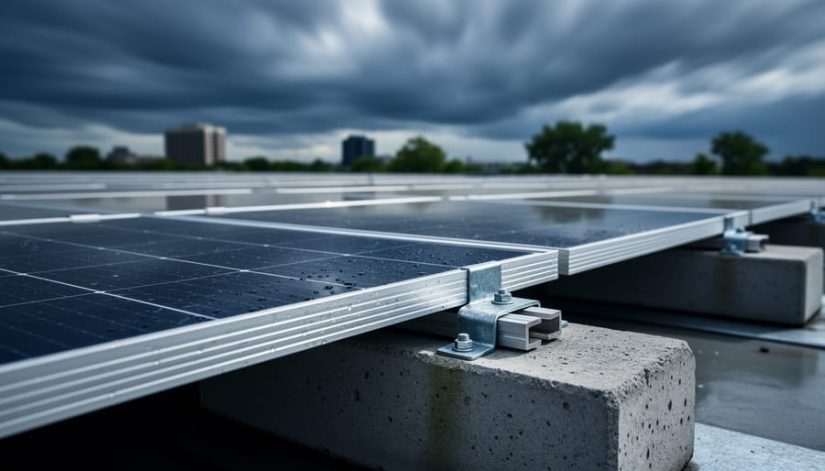
Ballasted systems offer an alternative for flat or low-slope commercial roofs where penetrations are undesirable. These systems use concrete blocks or weighted trays to hold solar arrays in place through sheer mass rather than fasteners. The weight counteracts uplift forces during high winds. However, ballasted systems require careful engineering to ensure your roof structure can support the additional load, and they may need supplemental attachments in high-wind zones.
Hybrid approaches combine both methods, using some mechanical attachments along the array perimeter where uplift forces concentrate most, while relying on ballast for interior sections. This strategy reduces roof penetrations while maintaining robust wind resistance.
Working with experienced local professionals ensures your system uses the right securement method for your specific roof type, building code requirements, and Illinois wind conditions. Proper engineering and installation make all the difference in long-term performance and safety.
Warning Signs Your Solar Roof May Have Uplift Issues
Catching roof uplift problems early can save you thousands in repair costs and protect your solar investment. Here’s what Illinois property owners should watch for when inspecting their solar installations.
Start by visually examining your solar panels from ground level after windy conditions. Look for panels that appear shifted, tilted, or sitting at uneven angles compared to neighboring modules. Even small movements can indicate inadequate attachment or underlying roofing challenges that need attention.
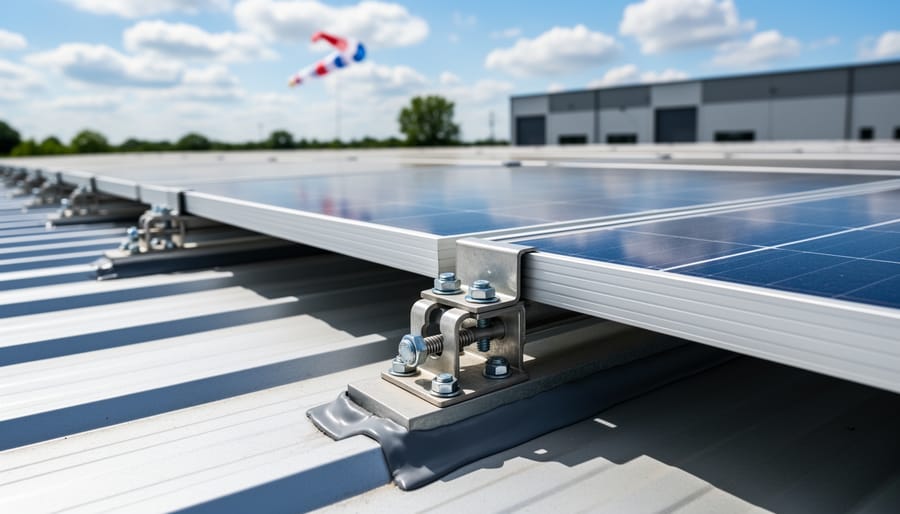
Check the roof membrane around mounting points for signs of damage. Bubbling, tearing, or separation of roofing material near solar hardware suggests that wind forces may be stressing these critical connection points. On standing seam metal roofs, inspect the seams themselves for distortion or spreading where clamps attach.
Examine fastener areas carefully. Loose bolts, missing hardware, or visible gaps between mounting rails and the roof surface all indicate potential uplift vulnerability. If you can see daylight under mounting brackets or notice water staining around attachment points, schedule a professional inspection immediately.
After severe weather events, conduct a thorough walk-around of your property. Illinois experiences significant wind events, particularly during spring and fall. Post-storm checks should include looking for displaced panels, damaged flashing, or debris accumulation that might signal structural stress.
Inside your building, watch for new water leaks near solar installations. Unexplained moisture or staining on ceilings below panel arrays can indicate that uplift forces have compromised waterproofing integrity.
If you notice any of these warning signs, contact a qualified solar professional familiar with Illinois weather conditions. Early intervention prevents minor issues from becoming major problems that threaten both your roof and your solar system’s performance.
How Professional Installation Prevents Uplift Damage
Engineering Analysis and Wind Load Calculations
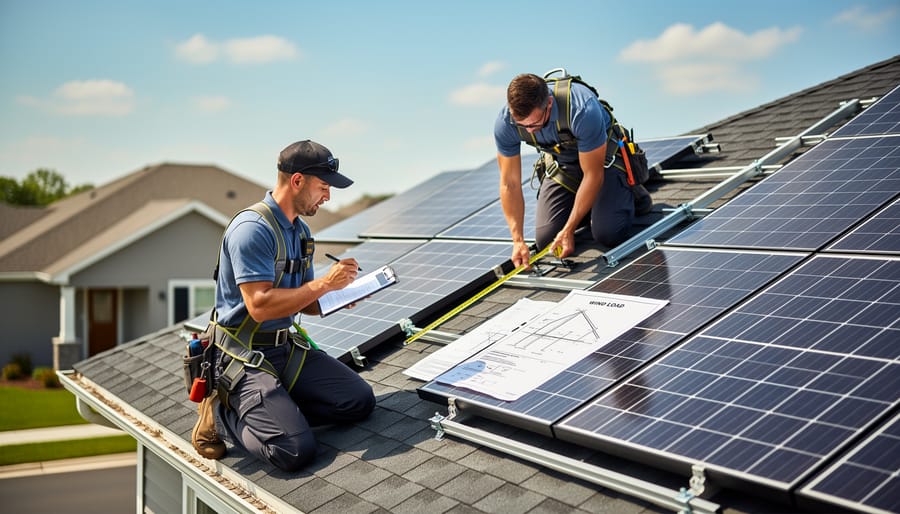
Before installing solar panels on your roof, professional engineers perform detailed calculations to ensure your system can withstand Illinois weather conditions, particularly high winds. This engineering analysis is essential for protecting your investment and preventing roof uplift.
Engineers begin by evaluating your specific location, considering factors like local wind speed data, building height, and terrain. In Illinois, wind loads vary significantly between Chicago’s lakeshore areas and rural farmland, so calculations must account for your property’s unique environment. They also assess your roof’s design, including its slope, shape, and existing structural capacity.
The calculation process determines how much upward force wind can exert on solar panels and designs a mounting system strong enough to resist it. Engineers consider both steady wind pressure and sudden gusts that create the most dangerous uplift conditions. They calculate the weight and number of attachment points needed, often requiring panels to be secured directly to roof rafters rather than just roof decking.
For ballasted systems on flat commercial roofs, engineers calculate precise weight requirements to counteract uplift without penetrating the roof membrane. These calculations ensure your solar installation meets building codes and manufacturer warranties while protecting your roof’s integrity for decades to come.
The Role of Roof Assessment in Solar Installation
Before installing solar panels on your Illinois property, a thorough roof condition assessment is essential to prevent uplift problems down the road. This evaluation examines both the structural integrity of your roof and its ability to support a solar array under various wind conditions.
A professional assessment identifies potential weak points in your roof’s structure, including deteriorated decking, compromised fasteners, or aging materials that may not withstand the additional stress of solar panels. This inspection also evaluates your roof’s remaining lifespan, which is crucial since removing and reinstalling panels for roof replacement is costly and time-consuming.
The assessment process includes analyzing your roof’s pitch, orientation, and exposure to prevailing winds common in Illinois. These factors determine the appropriate mounting system and attachment methods needed to resist uplift forces. Installers can then design anchoring solutions specific to your roof type, whether it’s asphalt shingle, metal, or flat membrane roofing.
Addressing existing roof issues before installation protects your investment and ensures your solar system performs safely for decades. A locally owned solar installer with expertise in Illinois weather patterns understands these regional considerations and can recommend necessary roof repairs or reinforcements that prevent future uplift complications.
What to Ask Your Solar Installer About Wind Uplift
When meeting with solar installers, asking the right questions about wind uplift protection can help you identify professionals who prioritize structural safety. Start by asking how they calculate wind loads for your specific location in Illinois. A qualified installer should reference local wind zone data and explain how factors like your roof height, pitch, and surrounding landscape influence their approach.
Request details about their mounting system specifications. Ask what attachment methods they use, how many attachment points they plan per panel, and whether they use engineered brackets designed for your roof type. Reputable installers will gladly discuss these technical details and explain why they’ve chosen specific products.
Inquire about permitting and engineering review processes. Ask whether a structural engineer will review your installation plans and if the permit application includes wind load calculations. Professional installers understand that proper permitting protects both you and them.
Check credentials carefully. Verify that your installer holds appropriate licenses for Illinois and ask about their experience with installations in high-wind areas. Request references from past clients, particularly those with similar roof types or building heights.
Watch for these red flags: installers who dismiss wind uplift concerns, promise the cheapest price without discussing structural considerations, or suggest skipping permits to save money. Be wary of contractors who can’t explain their attachment methods or who claim “one-size-fits-all” solutions work everywhere.
Ask about warranties covering both equipment and workmanship, and specifically whether wind damage is included. Finally, request documentation showing that their installation meets or exceeds manufacturer specifications and local building codes. A trustworthy installer will provide clear, detailed answers and documentation without hesitation.
Protecting your property from roof uplift isn’t just about meeting code requirements—it’s about safeguarding your solar investment and ensuring your system performs safely for decades to come. Illinois weather patterns, with their strong wind events and occasional severe storms, make proper wind uplift protection especially important for solar installations across the region.
The good news is that roof uplift is a well-understood engineering challenge with proven solutions. When you work with experienced local installers who understand Illinois-specific wind conditions, building codes, and regional construction practices, you can have confidence that your solar array is designed and installed to withstand whatever Mother Nature brings.
Proper attachment methods, appropriate ballasting for flat roofs, and careful attention to edge zones and roof corners make all the difference. These aren’t areas where shortcuts pay off. The modest additional investment in proper engineering and installation techniques protects against costly repairs, insurance claims, and system downtime that could result from wind damage.
As a locally owned company with deep expertise in solar energy, we understand the unique challenges Illinois property owners face. We’ve designed and installed countless systems across the state, always prioritizing structural integrity and long-term performance alongside energy production.
If you’re considering solar for your home or business, don’t leave wind uplift protection to chance. Contact us today for a consultation where we’ll evaluate your specific property conditions and design a system that’s built to last through every Illinois season.
