
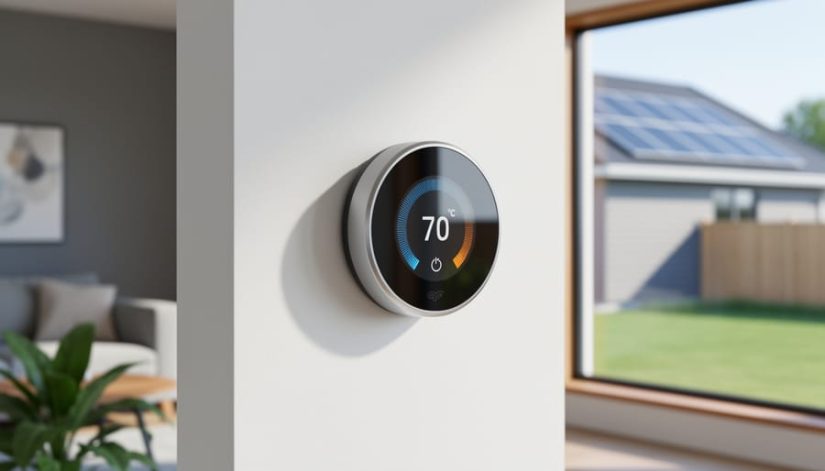
This Open Source Thermostat Turned My Solar Home Into a Money-Saving Machine
Program your open source smart thermostat to pre-heat or pre-cool your home during peak solar production hours, typically between 10 AM and 2 PM in Illinois, storing thermal energy in your home’s structure before the sun sets. This approach transforms your house into a thermal battery, reducing grid dependence by up to 40% during evening hours when solar panels stop generating power.
Connect your thermostat to your solar monitoring system through platforms like Home Assistant or OpenHAB, enabling real-time coordination between energy production and consumption. These open source solutions cost 60-80% less than proprietary alternatives while offering superior customization for Illinois climate patterns, where seasonal temperature swings demand flexible programming.
Configure temperature setpoints that align with your solar generation curve rather than traditional time-of-day schedules. When your system produces excess energy, increase heating to 72°F instead of your standard 68°F, or cool to 70°F rather than 74°F. Your home’s thermal mass maintains comfortable temperatures for 3-5 hours after solar production drops, eliminating expensive grid electricity during peak rate periods.
Open source thermostats like ESPHome-based devices or ecobee with custom firmware provide the granular control needed to maximize solar investment returns. Unlike closed systems, these platforms integrate seamlessly with battery storage and allow you to prioritize thermal storage when batteries reach capacity, ensuring every kilowatt-hour your panels generate delivers maximum value throughout Illinois’s diverse seasons.
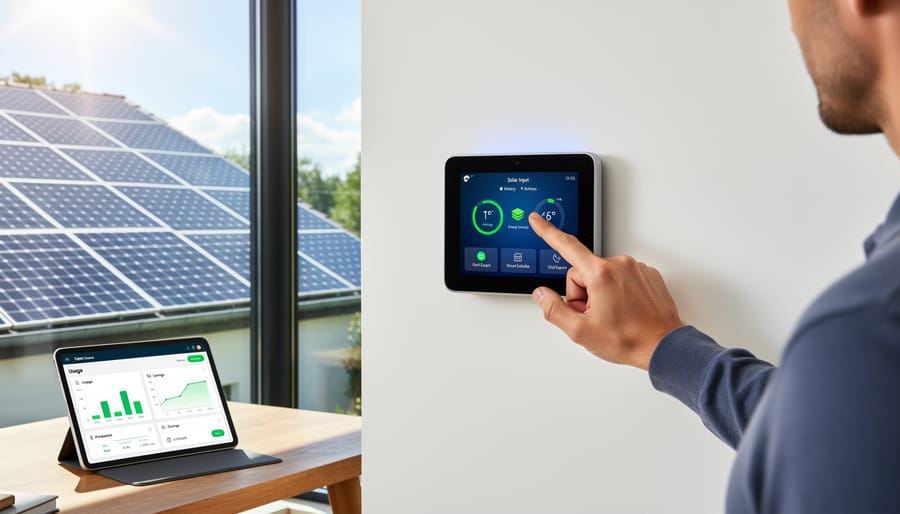
What Makes Open Source Thermostats Different (And Better for Solar Homes)
The Freedom to Optimize Around Your Solar Production
One of the most powerful advantages of open source smart thermostats is the ability to create custom programming that syncs your heating and cooling patterns with your solar energy production. Unlike proprietary AI-powered smart thermostats that operate within manufacturer limitations, open source platforms give you complete control to optimize energy use around when your solar panels generate the most electricity.
During Illinois summers, your solar array typically produces peak power between 10 AM and 3 PM. With open source thermostat programming, you can precool your home during these high-production hours, essentially storing that free solar energy as comfortable indoor temperatures. Your home acts as a thermal battery, maintaining coolness through the late afternoon and evening when solar production drops but electricity rates may be higher.
This same principle applies during heating season. You can program your system to warm your home when solar production is strong, then allow temperatures to drift slightly lower during evening hours without sacrificing comfort. The thermal mass of your home holds that heat, reducing the need to draw from the grid.
For Illinois homeowners with time-of-use electricity rates, this customization delivers real savings. You maximize self-consumption of your solar energy rather than selling it back to the utility at lower rates, then buying it back at premium prices. Open source platforms make this level of optimization accessible without requiring expensive proprietary systems.
Popular Open Source Thermostat Options
For homeowners looking to integrate open source control with their heating and cooling systems, several accessible platforms stand out. Home Assistant has become the most popular choice, offering compatibility with numerous smart thermostats and sensors while providing straightforward automation capabilities. This platform excels at connecting your thermostat with solar energy production data, allowing you to automatically adjust heating or cooling when your panels generate excess power.
OpenHAB represents another robust option, particularly valued for its flexibility in connecting different smart home devices. Both platforms work well with affordable hardware like Ecobee and certain Nest models, though you’ll maintain independent control through the open source software rather than relying solely on manufacturer apps.
For Illinois homeowners with solar installations, these platforms shine when coordinating thermal storage strategies. You can program your system to pre-heat or pre-cool your home during peak solar production hours, essentially storing that free energy as comfortable temperatures in your living space. This approach maximizes your solar investment without requiring expensive battery systems. The learning curve is manageable for most homeowners, with active online communities providing support and pre-built automation templates specifically designed for solar integration.
Understanding Smart Home Thermal Storage Integration
How Your Home Already Stores Energy (You Just Don’t Know It)
Your home is already storing energy every day—you just might not realize it. Think of your walls, floors, and even your water heater as natural batteries that hold heat or coolness for hours after your HVAC system stops running.
This concept is called thermal mass. Dense materials like concrete, brick, drywall, and water absorb temperature changes slowly. When your furnace heats your home in winter, these materials soak up that warmth and gradually release it back into your living space. The same happens in reverse during summer—your cooled walls and floors help maintain comfortable temperatures even after your air conditioner cycles off.
Your water heater is particularly effective at thermal storage. A standard 50-gallon tank heated during off-peak hours or when your solar panels are producing excess energy can provide hot water for many hours without additional electricity. Similarly, the floors in your home can retain warmth from afternoon sunshine or your heating system, keeping rooms comfortable well into the evening.
While home battery storage systems store electrical energy directly, thermal mass stores energy as temperature. An open source smart thermostat helps you maximize this free storage capacity by timing your heating and cooling strategically—running your system when electricity is cheapest or when your solar panels are generating power, then letting your home’s thermal mass coast through expensive peak hours.

Why This Matters for Illinois Solar Homeowners
Illinois solar homeowners face unique opportunities when combining open source smart thermostats with their renewable energy systems. Our state experiences distinct seasonal temperature swings, from humid summers requiring significant cooling to frigid winters demanding substantial heating. This climate variability creates ideal conditions for thermal storage strategies that capture excess solar production during peak generation hours.
ComEd and Ameren Illinois both offer time-of-use rate programs where electricity costs vary throughout the day. An open source thermostat can be programmed to pre-cool your home during midday when your solar panels generate maximum power and rates are lowest, then reduce cooling during expensive evening peak hours. This approach transforms your home’s thermal mass into a battery, storing “coolness” produced by your own solar energy.
Illinois solar installations typically see peak production between 10 AM and 3 PM during summer months. By aligning your HVAC operation with this production curve through intelligent programming, you maximize self-consumption of solar electricity rather than sending it back to the grid at lower compensation rates. For Illinois homeowners already invested in solar, an open source smart thermostat represents the next logical step in energy independence and cost savings.
How Open Source Thermostats Enable Thermal Storage
Pre-Heating and Pre-Cooling on Solar Power
One of the most effective strategies for maximizing your solar investment involves using an open source smart thermostat to pre-heat or pre-cool your home during peak solar production hours. This approach takes advantage of your home’s natural thermal mass, essentially treating your living space as a battery that stores energy in the form of comfortable temperatures.
Here’s how it works: During sunny afternoon hours when your solar panels generate the most electricity, your smart thermostat can run your heating or cooling system more aggressively than usual. In winter, you might heat your home to 72°F between noon and 3 PM when solar production peaks. The warmth absorbed by your walls, floors, and furnishings gradually releases throughout the evening, reducing the need to draw power from the grid during those expensive peak hours when the sun has set.
Similarly, in Illinois summers, you can pre-cool your home to 68°F during mid-day solar generation, then allow the temperature to drift upward slightly in the evening while still maintaining comfort. This thermal storage effect can reduce your reliance on grid electricity by 30-50% during morning and evening hours.
Open source thermostats excel at this strategy because you can program custom schedules that align precisely with your solar production patterns, local utility rate structures, and personal comfort preferences. Unlike proprietary systems with limited customization, open source solutions let you fine-tune temperature setpoints and timing windows to match Illinois’s seasonal variations and your specific solar array’s output characteristics.
Integrating with Your Solar System Data
Open source smart thermostats excel at integrating with your solar energy system to optimize energy usage throughout the day. Unlike proprietary systems with limited compatibility, open source platforms can connect directly to your solar inverter’s monitoring system to track real-time electricity production. This integration allows your thermostat to make intelligent decisions based on how much power your panels are currently generating.
When your solar system is producing excess energy during peak sunlight hours, an open source thermostat can automatically shift heating or cooling loads to capitalize on this free electricity. Through IoT energy management capabilities, these systems continuously monitor solar output and adjust temperature settings to pre-heat or pre-cool your home using available solar power rather than drawing from the grid later.
For Illinois homeowners, this means your thermal storage strategy becomes directly responsive to local weather patterns and seasonal solar production variations. The open source approach gives you complete visibility into how your heating and cooling cycles align with solar generation, helping you maximize self-consumption of the clean energy you produce while minimizing reliance on grid electricity during expensive peak-rate periods.
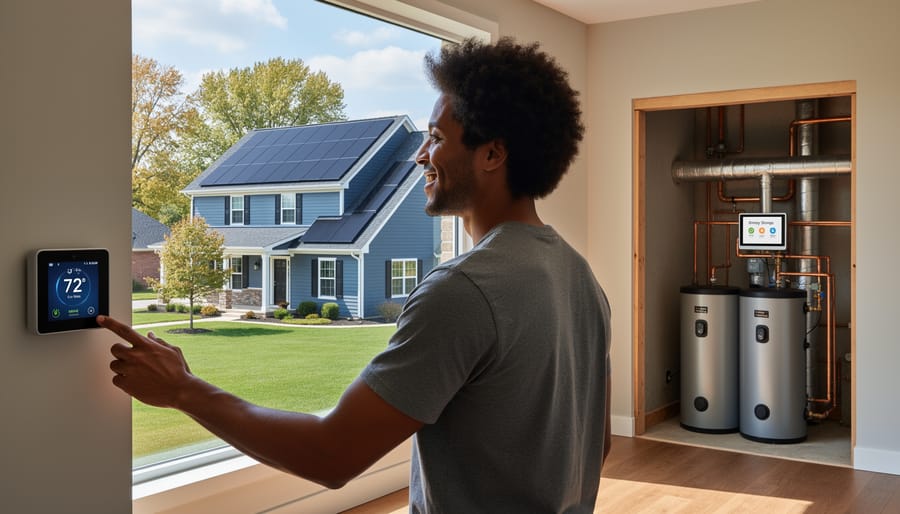
Real-World Benefits: What You Actually Save
Reducing Your Electric Bill Beyond Solar Alone
Pairing an open source smart thermostat with your solar installation can significantly reduce your electric bill through strategic load shifting. By pre-cooling or pre-heating your home during peak solar production hours (typically 10 AM to 3 PM in Illinois), you’re essentially storing energy as thermal mass in your home’s structure, flooring, and walls. This approach can reduce your grid electricity consumption by 15-30% compared to solar panels alone.
For an average Illinois home with a 6 kW solar array, this translates to approximately $200-$400 in additional annual savings. The smart thermostat learns your solar production patterns and automatically shifts your HVAC runtime to coincide with sunshine, minimizing reliance on expensive grid power during evening peak demand periods. When combined with smart AI energy systems, these savings can compound further through whole-home energy optimization. Open source platforms offer the flexibility to fine-tune these schedules based on your specific solar output, weather forecasts, and comfort preferences, maximizing your return on investment without costly proprietary solutions.
Maximizing Your Solar Investment
If you’ve invested in solar panels, you’re already generating clean energy during sunny Illinois days. But what happens when your panels produce more electricity than you’re currently using? Many homeowners send that excess power back to the grid, often receiving significantly lower compensation rates than what they pay for electricity during peak evening hours.
An open source smart thermostat integrated with thermal storage offers a smarter solution. By automatically running your heating or cooling system when your solar panels are producing peak power, you’re essentially storing that energy as heat or coolness in your home’s thermal mass. Your floors, walls, and air act as a battery, holding comfortable temperatures for hours after the sun sets.
This strategy means you’re using more of your own solar production instead of selling it back at reduced rates. For example, pre-heating your home on a winter morning or pre-cooling before a summer afternoon maximizes your self-consumption. You’re converting excess solar electricity into stored comfort, reducing the amount of grid power you’ll need during expensive peak hours. This approach can dramatically improve your solar investment’s return while maintaining your home’s comfort throughout the day.
Getting Started: What You Need to Know
Equipment and Compatibility Requirements
Before installing an open source smart thermostat for thermal storage optimization, you’ll need to verify several compatibility requirements. First, check that your HVAC system works with smart thermostat controls—most modern heating and cooling systems are compatible, but older equipment may require a professional assessment. Your home should have reliable WiFi coverage in the thermostat location to ensure consistent connectivity with your home automation system.
For optimal solar energy integration, you’ll need smart energy sensors that monitor your solar production and home energy consumption in real-time. A home automation hub compatible with your chosen open source platform is essential for coordinating your thermostat with other energy systems. Many Illinois homeowners pair their thermostats with platforms like Home Assistant or OpenHAB for comprehensive control.
Additionally, consider temperature sensors for different zones in your home to maximize thermal storage efficiency. If you’re integrating with solar thermal storage systems, ensure your thermostat can communicate with storage tank monitors. As locally owned solar experts, we recommend consulting with professionals familiar with Illinois climate conditions to determine the best sensor placement and system configuration for your specific setup.
Working with Your Solar Installer
Integrating an open source smart thermostat with your solar energy system works best when coordinated with professional expertise. While these thermostats offer incredible flexibility for DIY enthusiasts, professional integration ensures your system communicates seamlessly with your solar panels, battery storage, and HVAC equipment.
At Illinois Renewables, our locally owned team brings deep knowledge of how thermal storage strategies interact with Illinois-specific solar production patterns. We understand the seasonal variations in solar generation across our state and can help program your thermostat to maximize energy efficiency year-round. Our experience with comprehensive solar solutions means we can identify opportunities you might miss, like optimal pre-heating schedules during winter months when solar production peaks midday, or pre-cooling strategies for Illinois summers.
A professional installer can also navigate potential compatibility issues between different system components and ensure proper configuration of API connections that allow your thermostat to respond to real-time solar production data. This integration transforms your thermostat from a simple temperature controller into an intelligent energy management hub that actively reduces your electricity costs while maintaining comfort. Working with experienced professionals protects your investment and unlocks the full potential of combining open source thermostat technology with your solar energy system.
Open source smart thermostats represent a significant opportunity for Illinois homeowners who want to maximize their solar investments. By integrating these customizable devices with thermal storage systems, you can transform your home into an energy-efficient powerhouse that stores solar energy as heat when the sun shines and releases it exactly when needed. This intelligent approach to energy management doesn’t just reduce your utility bills—it fundamentally changes how you interact with your solar system, giving you unprecedented control over energy consumption patterns.
The flexibility of open source platforms means your thermostat can evolve alongside your energy needs and adapt to new technologies as they emerge. Unlike proprietary systems that lock you into limited features, open source solutions grow with you, offering continuous improvements and customization options that align perfectly with Illinois climate conditions and your household’s unique requirements.
For homeowners planning new solar installations or considering upgrades to existing systems, incorporating an open source smart thermostat with thermal storage should be part of the conversation from day one. The synergy between these technologies delivers measurable results—lower energy costs, reduced grid dependence, and greater energy independence.
Illinois Renewables brings locally owned expertise to help you navigate these integrated solutions. Our team understands the specific challenges Illinois homeowners face and can design comprehensive systems that combine solar panels, thermal storage, and smart controls into one cohesive package. Reach out to discuss how open source smart thermostats can unlock the full potential of your solar investment.
