
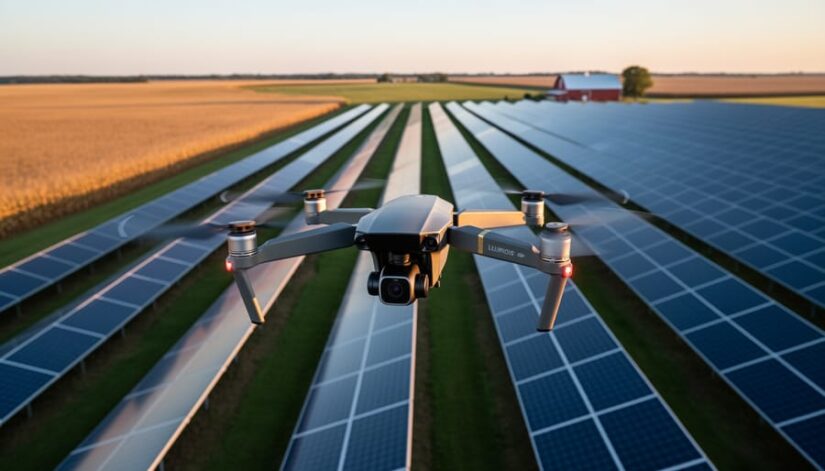
How Solar Drones Are Revolutionizing O&M for Illinois Solar Farms
Solar drones are transforming how Illinois solar system owners protect their energy investments through advanced aerial inspection technology. These unmanned aircraft equipped with thermal imaging cameras and high-resolution sensors can scan entire solar arrays in minutes, detecting problems invisible to ground-level inspections.
For homeowners and businesses managing solar installations across Illinois’s diverse climate conditions, drone inspections identify critical issues before they become costly failures. Hot spots indicating defective cells, microcracks from hail damage, and panel soiling patterns emerge clearly in thermal imagery, allowing precise maintenance interventions rather than guesswork.
The technology delivers substantial time and cost savings compared to traditional manual inspections. Where technicians might spend hours walking rooftops or navigating ground-mounted arrays, drones complete comprehensive scans in a fraction of the time while capturing data across every panel. This efficiency translates directly to lower maintenance costs and reduced system downtime.
Illinois solar owners face unique challenges from seasonal weather extremes, from heavy snow loads to summer storms. Regular drone inspections provide the proactive monitoring needed to maintain optimal performance year-round. The detailed thermal and visual data creates baseline documentation for warranty claims and helps prioritize repairs based on actual performance impact.
Understanding when drone inspections make sense for your system and how to integrate them into your maintenance schedule ensures maximum return on your solar investment while maintaining peak energy production throughout your system’s lifetime.
What Are Solar Drones and How Do They Work?
Solar drones are unmanned aerial vehicles specifically equipped with advanced cameras and sensors designed to inspect and monitor solar panel installations. Unlike standard recreational or photography drones, these specialized aircraft carry sophisticated imaging technology that can detect problems invisible to the naked eye, making them essential tools for maintaining solar energy systems across Illinois.
At their core, solar drones combine two primary technologies: thermal imaging cameras and high-resolution RGB (red, green, blue) cameras. The thermal imaging component is particularly valuable because it detects temperature variations across solar panels. Since malfunctioning or damaged solar cells generate different heat signatures than properly functioning ones, thermal cameras can pinpoint defects, hotspots, and underperforming panels quickly. The RGB cameras capture detailed visual images that help identify physical damage, debris accumulation, soiling, and structural issues.
What sets solar drones apart from standard drones is their specialized payload and flight capabilities. They’re programmed to fly systematic patterns over solar arrays, capturing consistent, overlapping images that create comprehensive maps of entire installations. Many integrate with AI-powered solar technology that automatically analyzes the collected data, identifying anomalies and generating detailed inspection reports.
These drones can cover large ground-mounted or rooftop solar installations in a fraction of the time required for manual inspections. Where traditional inspections might take days and require personnel to physically access each panel, a drone can survey hundreds or thousands of panels within hours, eliminating safety risks associated with climbing on roofs or navigating large solar farms.
For Illinois solar system owners, this technology means faster, more thorough inspections that catch problems early before they significantly impact energy production. The ability to conduct regular drone inspections helps maximize your solar investment by ensuring every panel operates at peak efficiency, particularly important during Illinois’s varying seasonal conditions.

The Illinois Solar Landscape: Why Drones Matter Here
Illinois is rapidly emerging as a significant player in the clean energy transition, with solar capacity expanding dramatically across the state. From large-scale solar farms in central Illinois to commercial rooftop installations in Chicago and residential systems in suburban communities, solar infrastructure is growing at an unprecedented rate. This growth brings exciting opportunities for solar energy savings, but it also creates new challenges for maintaining these systems efficiently.
Illinois presents unique environmental conditions that make advanced maintenance technologies particularly valuable. Our state experiences dramatic seasonal variations, from harsh winters with heavy snow accumulation to humid summers with intense storms. These weather patterns can stress solar panels, create potential damage points, and reduce system efficiency if not properly monitored. Spring thaw cycles and fall storms can introduce debris, moisture damage, and electrical issues that require prompt detection.
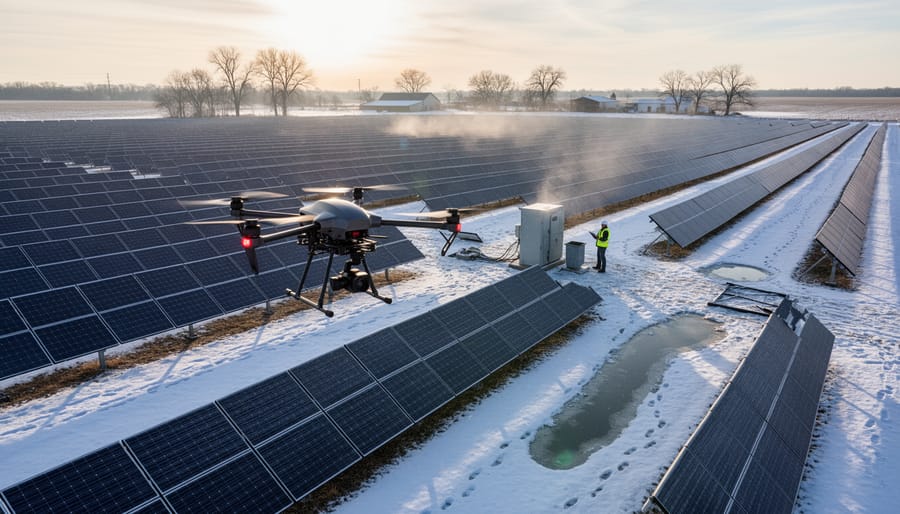
This is where drone technology becomes essential for Illinois solar operations. Traditional manual inspections can be difficult and dangerous during winter months when panels are covered in snow or ice. They’re also time-consuming for the growing number of large-scale installations across our prairie landscape. Drones offer a practical solution by enabling year-round inspections regardless of weather conditions, quickly scanning vast arrays, and identifying issues before they escalate into costly repairs.
For locally owned solar operations and businesses managing their own systems, drone inspections represent a cost-effective way to protect your investment. The technology allows maintenance teams to schedule inspections during optimal weather windows, document seasonal performance variations, and maintain detailed records of system health throughout Illinois’s challenging climate cycles. As our state’s solar infrastructure continues expanding, drone-based maintenance is becoming not just an option, but a necessity for efficient operations.
Key Benefits of Using Drones for Solar Panel Inspections
Speed and Efficiency Gains
Traditional manual inspections of solar installations require significant time and labor. A trained technician must physically walk the entire site, examining panels one by one with handheld equipment. For large commercial or industrial arrays, this process can take several days or even weeks to complete thoroughly. Weather delays, safety considerations, and the sheer physical demands of the work further extend inspection timelines.
Solar drones dramatically reduce these timeframes. A drone equipped with thermal imaging cameras can survey hundreds or even thousands of solar panels in just a few hours. What once took a crew days to inspect can now be accomplished in a single morning. For a typical commercial installation of 500 panels, drone inspections complete the task in approximately 2-3 hours compared to 2-3 days for manual inspection.
This efficiency gain means less downtime for your system and faster identification of issues. Business owners in Illinois benefit from quicker turnaround on inspection reports, allowing maintenance teams to address problems before they significantly impact energy production. The speed advantage becomes especially valuable during Illinois’s shorter fall and winter days, when inspection windows are limited.
Cost Savings for Solar Operators
Solar drones deliver substantial cost savings that make them an increasingly attractive option for Illinois solar system owners. Traditional manual inspections require multiple technicians, safety equipment, and significant time investment. With drone technology, a single operator can inspect an entire solar array in a fraction of the time, dramatically reducing labor expenses.
Equipment costs also decrease since drones eliminate the need for expensive lifts, scaffolding, or specialized climbing gear to access rooftop or ground-mounted systems. This streamlined approach means less equipment to rent, transport, and maintain.
Perhaps the most significant financial advantage comes from minimal downtime. Drone inspections are quick and non-invasive, allowing your solar system to continue generating power during the assessment. Manual inspections often require system shutdowns, resulting in lost energy production and revenue.
Early problem detection represents another crucial savings factor. Thermal imaging cameras on drones identify issues like hot spots, micro-cracks, and faulty connections before they escalate into major failures. Catching a defective panel early might cost hundreds in repairs, while waiting until complete failure could mean thousands in replacement costs and lost production.
For Illinois solar operators managing systems through varying seasonal conditions, these combined savings add up quickly, improving your overall return on investment while ensuring your system operates at peak efficiency year-round.
Enhanced Safety for Maintenance Teams
Traditional solar maintenance often requires workers to climb onto rooftops or walk through expansive ground-mounted solar arrays, creating significant safety hazards. Falls from heights remain one of the leading causes of workplace injuries in the solar industry, while navigating large arrays introduces risks of trips, equipment damage, and heat-related issues during Illinois summers.
Solar drones transform this dangerous equation by keeping maintenance teams safely on the ground. These aerial devices capture detailed thermal and visual data from above, eliminating the need for personnel to access potentially hazardous roof structures or traverse acres of solar panels. This is particularly valuable for commercial and industrial facilities with large installations where physical inspections would require hours of climbing and walking.
For Illinois solar system owners, drone-enabled maintenance means reduced liability exposure and greater peace of mind. Your locally owned solar maintenance provider can conduct comprehensive inspections without putting workers at risk, ensuring both equipment health and personnel safety while maintaining insurance compliance and workplace safety standards.
Superior Data Collection and Analysis
Solar drones equipped with thermal imaging and high-resolution cameras revolutionize how we identify problems in solar panel systems. While traditional inspections rely on visual checks that can miss critical issues, drone technology reveals problems completely invisible to the naked eye.
Thermal imaging cameras detect temperature variations across your solar array, pinpointing hot spots that signal failing cells or faulty connections. These hot spots, often differing by just a few degrees, indicate areas where panels are underperforming or at risk of failure. High-resolution cameras capture micro-cracks in solar cells—hairline fractures that reduce efficiency but can’t be seen during ground-level inspections.
Drones also document soiling patterns, showing exactly where dirt, bird droppings, or debris accumulate and block sunlight. This data helps you understand which panels need cleaning and whether your current maintenance schedule is adequate. When integrated with PV monitoring systems, drone inspection data provides a complete picture of your system’s health.
Our locally owned team uses this advanced technology to deliver precise diagnostics for Illinois solar installations. The detailed reports generated from drone inspections enable you to address small problems before they become costly repairs, protecting your solar investment and maximizing energy production year-round.
Common Solar Panel Issues Drones Can Detect
Solar drones equipped with thermal imaging and high-resolution cameras can identify a wide range of issues that might otherwise go unnoticed during ground-level inspections. Understanding these common problems helps Illinois solar system owners appreciate the value of drone technology for maintaining their investment.
Hot spots are among the most critical issues drones detect. These appear as unusually warm areas on thermal images and often indicate electrical failures, malfunctioning bypass diodes, or deteriorating connections within panels. If left unaddressed, hot spots can reduce energy production and potentially create safety hazards. Drones can pinpoint the exact location of these problems across large arrays in minutes.
Physical damage from Illinois weather conditions, including hail, high winds, and snow loads, shows up clearly in drone imagery. Cracks in glass surfaces, damaged frames, or broken junction boxes become visible through detailed photography. Even minor damage can allow moisture infiltration and accelerate panel degradation, making early detection essential.
Soiling and shading issues directly impact energy output. Drones can document dirt accumulation, bird droppings, or debris covering panels, helping you determine when cleaning is necessary. They also reveal unexpected shading patterns from growing vegetation or new nearby structures that may not have been apparent during installation.
Module degradation occurs naturally over time but sometimes happens prematurely. Drones capture visual evidence of discoloration, delamination, or cell damage that suggests manufacturing defects or accelerated wear. This documentation can be valuable for warranty claims.
Connection problems at junction boxes, combiner boxes, or between panel strings appear as temperature anomalies in thermal scans. Loose connections create resistance, generating heat that thermal cameras easily detect. Finding these issues early prevents energy losses and potential equipment failures that could be costly to repair during peak production months.

When Your Illinois Solar Installation Needs Drone Inspection
Knowing when to schedule a drone inspection helps you maintain optimal solar performance and protect your investment. Here’s when Illinois solar property owners should consider this advanced maintenance approach.
For routine preventive maintenance, plan drone inspections annually or bi-annually. These regular checkups identify small issues before they become costly problems. Commercial installations with larger arrays benefit from twice-yearly inspections, while residential systems typically perform well with annual assessments. Regular solar system monitoring data can help determine the ideal frequency for your specific situation.
Schedule immediate post-storm assessments after severe weather events common to Illinois, including hailstorms, high winds, or heavy snow loads. Even when damage isn’t visible from the ground, drones quickly identify compromised panels, mounting issues, or debris accumulation that affects performance.
When you notice unexpected performance drops, a drone inspection provides answers. If your energy production decreases by 10 percent or more without obvious explanation, thermal imaging from drones pinpoints defective cells, wiring problems, or shading issues that standard monitoring might miss.
Don’t overlook pre-warranty expiration checks. Most solar warranties cover 25 years, but specific components may have shorter coverage periods. Schedule a drone inspection 6-12 months before major warranty milestones to document any issues while you’re still covered. This proactive approach saves money on potential repairs.
For commercial properties, consider inspections before major financial reviews or when refinancing, as documented system health supports asset valuations. Property managers should also inspect before lease renewals to ensure optimal tenant value.
By following these inspection guidelines, you’ll maximize your solar system’s lifespan, maintain peak efficiency, and protect your long-term energy investment.
Choosing the Right Solar O&M Partner in Illinois
Selecting the right solar operations and maintenance partner in Illinois means looking beyond basic inspection services. While drone technology has transformed how solar systems are monitored, the real value comes from providers who integrate this advanced capability into comprehensive maintenance programs.
Start by verifying that potential partners employ FAA-certified drone operators with specific solar industry experience. Illinois weather conditions, from harsh winters to humid summers, require operators who understand how these factors affect both drone performance and solar system diagnostics. Ask about their flight history during different seasons and whether they maintain backup equipment for Illinois’s unpredictable weather.
The most effective solar maintenance providers use drone inspections as one component of complete service offerings. Look for companies that combine aerial thermal imaging with ground-level electrical testing, panel cleaning, inverter maintenance, and prompt repair services. A drone can identify a problem efficiently, but you need a team ready to fix it quickly. Partners who offer integrated solutions eliminate the delays and communication gaps that occur when inspection and repair services are separate.
Local expertise matters significantly in Illinois’s diverse solar landscape. Providers familiar with state-specific regulations, utility interconnection requirements, and regional installation practices can deliver more targeted recommendations. Locally-owned firms often provide faster response times and better understand the seasonal challenges Illinois solar systems face, from snow accumulation in northern regions to vegetation management in rural areas.
Request sample inspection reports to evaluate how clearly providers communicate findings. The best partners translate technical drone data into actionable insights you can understand, complete with prioritized repair recommendations and cost estimates. Ask about their reporting turnaround time and whether they provide ongoing performance tracking to help you maximize your solar investment over time.
Solar drones represent a significant leap forward in maintaining Illinois solar energy systems efficiently and cost-effectively. By combining advanced thermal imaging with aerial precision, these tools help system owners identify problems before they escalate into expensive repairs or significant energy losses. Whether you’re managing a residential rooftop installation or overseeing a large commercial solar array, drone-enabled inspections offer unmatched speed, safety, and accuracy compared to traditional maintenance methods.
For Illinois property owners who’ve invested in solar energy, protecting that investment means staying proactive about maintenance. Regular drone inspections can extend your system’s lifespan, maintain optimal energy production through every season, and provide peace of mind knowing your panels are performing as expected. The technology isn’t just for large operations—homeowners and small businesses can benefit equally from this innovative approach.
If you’re ready to maximize your solar system’s performance and safeguard your investment, now is the time to explore professional solar maintenance options that include drone technology. Our locally owned team brings expertise in solar energy specifically tailored to Illinois conditions, ensuring your system delivers reliable, clean energy for years to come. Contact us today to learn how drone-enabled operations and maintenance services can benefit your solar installation.
