
Why Your Illinois Solar System Needs Energy Storage (And How Long-Duration Batteries Change Everything)
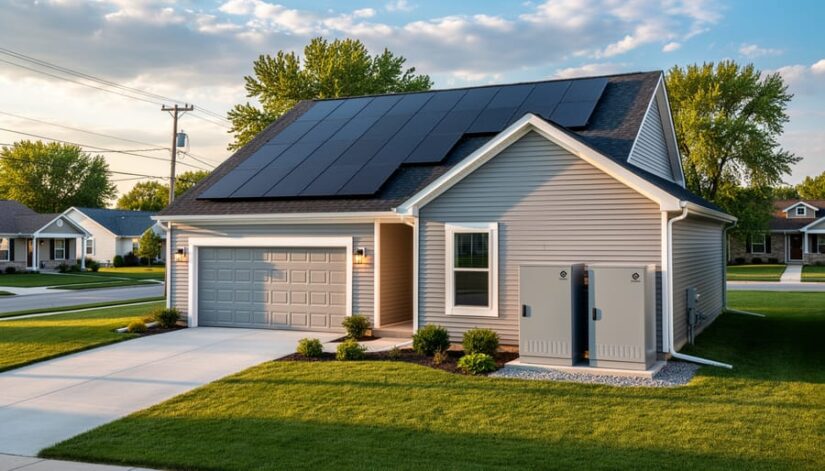
Illinois solar owners face a fundamental challenge: the sun doesn’t always shine when you need power most. Standard solar batteries typically store 4-10 hours of electricity, enough to get you through an evening but insufficient during multi-day weather events or extended grid outages that have become increasingly common across the state. Long-duration energy storage (LDES) changes this equation entirely by holding 10 hours to multiple days of backup power, transforming your solar investment from a daytime energy producer into a true energy independence system.
LDES technologies use advanced chemistry and mechanical systems to store significantly more energy at lower costs per kilowatt-hour than traditional lithium-ion batteries. For Illinois property owners, this means weathering the state’s unpredictable seasonal patterns, from summer storms that knock out power for days to winter deep freezes that strain the grid. The technology addresses a critical gap: while standard batteries handle daily solar storage efficiently, LDES provides the extended resilience Illinois’s climate demands.
The decision isn’t just about backup power. LDES systems unlock financial advantages through time-of-use rate arbitrage, storing cheap off-peak electricity and deploying it during expensive peak hours. As Illinois continues expanding renewable energy infrastructure and utility rate structures evolve, understanding whether long-duration storage makes practical and financial sense for your specific property becomes essential to maximizing your solar investment’s long-term value.
What Long-Duration Energy Storage Actually Means
When you install solar panels on your Illinois property, you’re probably already familiar with standard battery storage systems that can power your home for a few hours during an outage. Long-duration energy storage, or LDES, takes this capability much further. While traditional lithium-ion batteries typically provide 2-4 hours of backup power, LDES systems are designed to discharge electricity for 10 hours or more, with some technologies capable of storing energy for days or even weeks.
This extended storage window matters tremendously in Illinois for several practical reasons. Our state experiences distinct seasonal variations that affect solar production throughout the year. During summer months, your solar panels may generate surplus electricity that goes unused, while winter’s shorter days and frequent cloud cover can significantly reduce daily energy production. LDES systems can capture that abundant summer energy and store it for use during less productive periods, smoothing out these seasonal fluctuations.
Additionally, Illinois utility rate structures often include time-of-use pricing, where electricity costs more during peak demand hours, typically late afternoon and early evening. With long-duration storage, you can charge your system when solar production is high or utility rates are low, then discharge that stored energy during expensive peak hours. This strategy can substantially reduce your electricity bills over time.
The difference between 4 hours and 10-plus hours of storage might seem incremental, but it represents a fundamental shift in energy independence. A traditional battery gets you through dinner and bedtime during an outage. Long-duration storage can power your entire business operation through a multi-day weather event or help you avoid peak utility rates for extended periods, delivering both reliability and significant cost savings.
The Illinois Solar Challenge: Why Standard Batteries Fall Short
Illinois presents unique energy challenges that make standard solar batteries less effective than many homeowners and businesses initially expect. Understanding these local factors is essential before investing in battery storage.
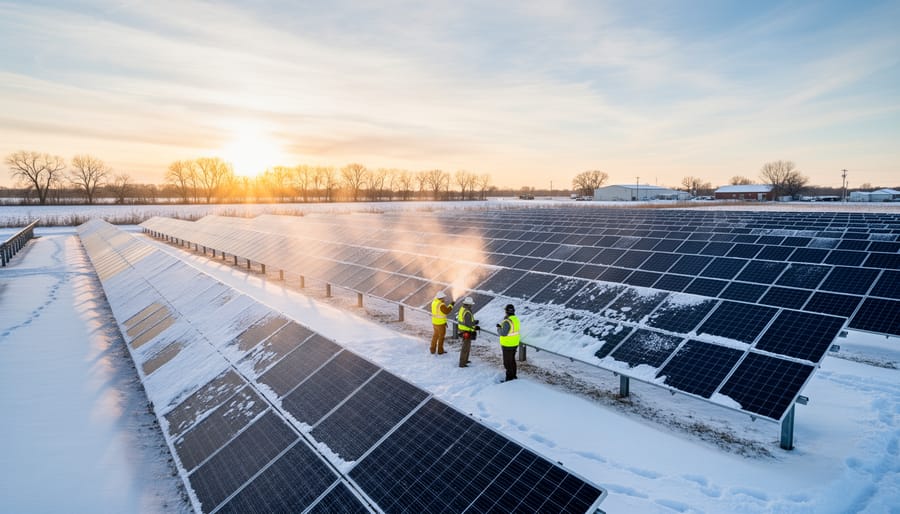
Our state experiences dramatic seasonal sunlight variation. Winter days in Illinois are significantly shorter, with some areas receiving less than half the solar energy available during summer months. When energy demand peaks during cold January mornings, your solar panels produce minimal power, and a standard 4-6 hour battery depleted overnight offers little help.
Winter energy demands compound this problem. Illinois residents and businesses consume substantially more electricity during winter months for heating, especially those using heat pumps or electric heating systems. A typical residential battery might provide backup power for essential loads during a brief outage, but it cannot bridge the gap between limited winter solar production and increased heating needs throughout the day.
Peak demand charges create another layer of complexity for commercial and industrial users. Many Illinois utilities impose steep charges based on your highest energy usage during specific periods. Standard batteries may help reduce some peak charges, but their limited capacity means they cannot cover extended high-demand periods, particularly during multi-day stretches of cloudy weather or seasonal low-production periods.
Time-of-use rates further expose the limitations of shorter-duration storage. Illinois utilities increasingly implement pricing structures where electricity costs vary throughout the day. While a 4-6 hour battery can shift some solar energy from afternoon to evening, it cannot store excess summer production for winter use or provide multi-day backup during extended grid outages or periods of low solar generation.
The reality is that standard batteries address only part of the energy independence equation. They work well for daily cycling and brief outages but fall short when facing Illinois’s seasonal challenges, extended cloudy periods, or the goal of true energy resilience. This is where long-duration energy storage technologies become valuable, offering solutions designed specifically for these extended timeframes.
Long-Duration Storage Technologies Available Today
Lithium-Ion Extended Duration Systems
While traditional lithium-ion batteries typically provide 4-6 hours of backup power, newer extended duration configurations are changing what’s possible for Illinois property owners. These advanced lithium-ion systems now offer 10-16 hours of storage capacity, bridging the gap between standard batteries and emerging long-duration technologies.
The key difference lies in system design. Extended duration lithium-ion setups use larger battery banks with optimized energy management systems that balance capacity with power output. For Illinois homes and businesses, this means having enough stored solar energy to cover evening peak usage, overnight consumption, and morning demand before your solar panels resume production.
These systems offer several practical advantages for Illinois properties. First, they leverage proven lithium-ion technology with established supply chains and installation expertise, making them more accessible than experimental alternatives. Second, their 10-16 year lifespan and decreasing costs make them increasingly affordable, with installed prices ranging from $800 to $1,200 per kilowatt-hour of storage capacity.
Extended duration lithium-ion systems work particularly well for Illinois commercial operations with predictable energy patterns, farms needing reliable power for critical equipment, and larger homes wanting comprehensive backup coverage. They’re ideal for properties that have already maximized their solar array size and want to capture more value from their solar investment by storing excess daytime production for use during ComEd’s higher evening rates.
As a locally owned solar provider with deep expertise in Illinois energy patterns, we can assess whether extended duration lithium-ion storage aligns with your specific consumption patterns and financial goals.
Flow Batteries for Commercial Applications
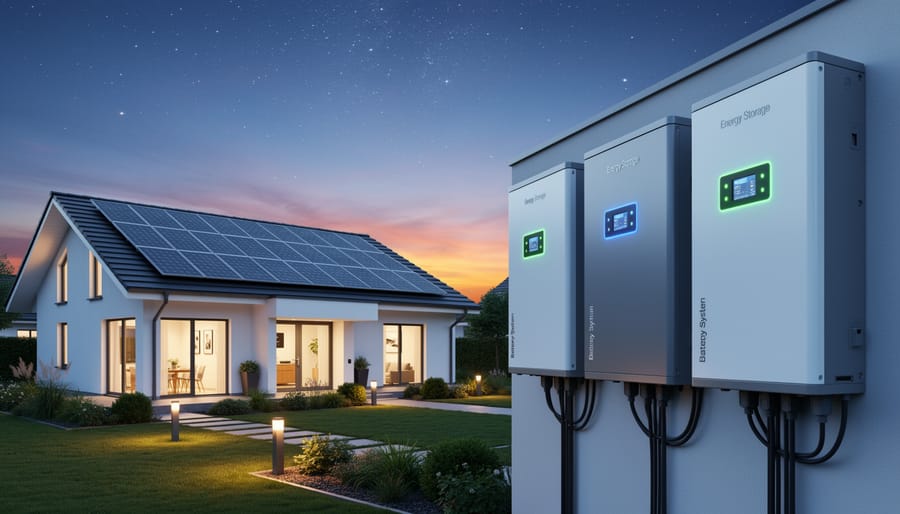
Flow batteries represent a promising advancement in long-duration energy storage, particularly for Illinois businesses and industrial facilities with substantial energy demands. Unlike conventional batteries that store energy in solid electrodes, flow batteries store energy in liquid electrolyte solutions contained in external tanks. This fundamental difference creates unique advantages for commercial applications.
The technology works by pumping two different electrolyte solutions through a cell stack where they exchange ions across a membrane, generating electricity. When charging, the process reverses. Think of it like two separate fuel tanks that can be refilled and scaled independently of the power output system.
The key advantage for Illinois businesses is exceptional scalability. Because energy capacity depends on tank size rather than the core battery unit, facilities can easily increase storage duration by simply adding larger tanks without replacing the entire system. This makes flow batteries ideal for operations requiring 8 to 12 hours of backup power or businesses looking to maximize solar energy use during Illinois’s variable weather patterns.
Flow batteries also offer longer lifespans than lithium-ion systems, typically lasting 20 years or more with minimal degradation. They’re inherently safer since the liquid electrolytes are non-flammable, an important consideration for manufacturing facilities and warehouses. Additionally, they perform reliably across Illinois’s temperature extremes without the efficiency losses common in other battery technologies.
For Illinois businesses evaluating long-duration storage options, flow batteries provide a scalable, safe, and durable solution that grows alongside your energy needs.
Emerging Technologies on the Illinois Horizon
While lithium-ion batteries currently dominate the Illinois storage market, several innovative technologies are advancing toward commercial viability. These emerging options could expand your choices for long-duration energy storage in the coming years.
Compressed air energy storage (CAES) works by using excess solar electricity to compress air into underground caverns or containers. When energy is needed, the compressed air is released to spin turbines and generate electricity. Illinois’ geology in certain regions may support this technology, making it an intriguing possibility for large-scale applications.
Gravity-based storage systems use surplus energy to lift heavy weights or materials to elevated positions. When electricity is needed, the weight descends, driving generators to produce power. These systems are mechanical, durable, and use abundant materials like concrete or soil.
Other technologies gaining attention include thermal storage, which stores energy as heat or cold, and advanced flow batteries that use liquid electrolytes. Hydrogen energy storage is also being explored, converting solar electricity into hydrogen fuel for later use.
While these technologies aren’t yet widely available for residential or commercial Illinois properties, they represent the future diversity of storage options. As they mature and costs decrease, they may complement or enhance traditional battery systems for Illinois solar adopters.
Thermal Storage Solutions
Thermal energy storage offers a practical approach to long-duration storage by capturing heat or cold for later use. This technology is particularly valuable in Illinois, where temperature extremes create significant heating and cooling demands throughout the year. When paired with solar systems, thermal storage can reduce energy costs during both harsh winters and hot, humid summers.
The process works by storing excess solar energy as heat in materials like water, sand, or phase-change substances. During sunny periods, your solar system heats these materials, which then release warmth when needed, such as overnight or during cloudy days. For cooling applications, the system can create ice or chilled water during off-peak hours when solar production is high, then use that stored cooling during peak demand periods.
For Illinois property owners, thermal storage provides an efficient way to manage seasonal energy needs without relying solely on battery systems. These solutions are especially effective for commercial buildings, agricultural operations, and industrial facilities with consistent heating or cooling requirements. The technology extends the value of your solar investment by maximizing energy use efficiency across different seasons, helping you maintain comfortable temperatures while reducing dependence on the grid during Illinois’s unpredictable weather patterns.
Real Benefits for Illinois Solar Owners
Energy Independence During Illinois Winters
Illinois winters present unique challenges for solar energy systems. With shorter daylight hours—sometimes just nine hours of sunlight in December—and frequent cloud cover, solar panels naturally produce less energy during winter months. This is precisely when heating demands push electricity consumption to its highest levels.
Long-duration energy storage addresses this seasonal mismatch by storing excess energy generated during longer summer days for use throughout winter. Unlike standard batteries that typically provide just a few hours of backup power, LDES systems can store energy for days or even weeks, creating a buffer against both seasonal production dips and unexpected grid outages.
During severe winter storms that have caused widespread power disruptions across Illinois in recent years, LDES-equipped properties maintained essential operations. For example, a business with LDES can continue running critical systems like heating, refrigeration, and communications even during multi-day outages. Homeowners benefit similarly, keeping furnaces, medical equipment, and refrigerators operational when the grid fails.
As a locally owned company with expertise in solar energy, we’ve seen firsthand how LDES transforms winter energy independence for Illinois properties, turning solar from a summer-focused solution into year-round reliable power.
Maximizing Your Solar Investment
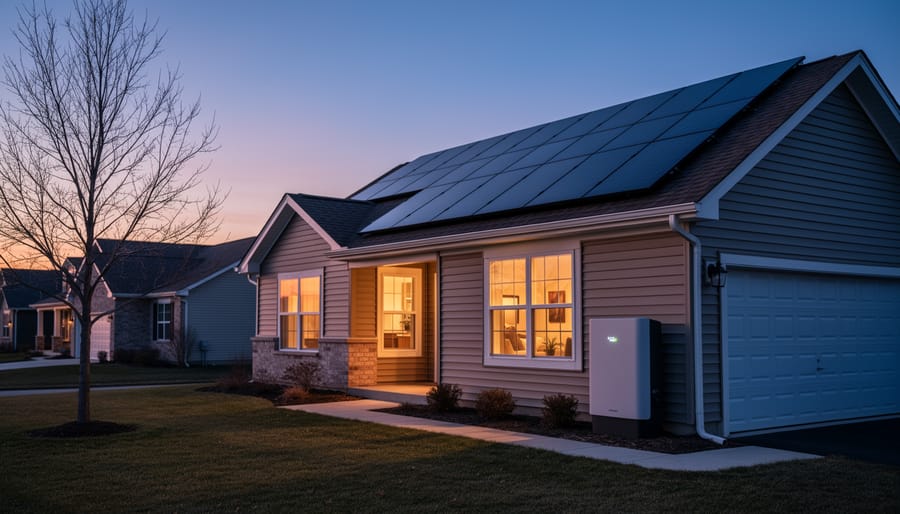
Long-duration energy storage transforms your solar system from a daytime power generator into a 24/7 energy solution, unlocking significant financial advantages tailored to Illinois utility structures. By storing excess solar energy during peak production hours, you can strategically deploy that power during evening peak demand periods when electricity rates are highest, directly reducing your utility bills through time-of-use rate optimization.
Illinois homeowners and businesses served by major utilities like ComEd and Ameren Illinois face time-of-use pricing structures where electricity costs more during peak evening hours. LDES systems allow you to draw from your stored solar power instead of the grid during these expensive periods, maximizing your solar energy savings. Commercial and industrial customers benefit even more dramatically by avoiding demand charges, which penalize businesses for their highest power usage during billing periods. A well-designed LDES system can shave these costly peaks by supplementing grid power with stored solar energy.
Additionally, LDES significantly increases your self-consumption rate, meaning you use more of the solar energy you generate rather than sending it back to the grid at lower compensation rates. This becomes increasingly valuable as net metering policies evolve.
Grid Resilience and Backup Power
Illinois experiences severe weather events throughout the year, from intense summer storms to winter ice accumulations that can leave power grids vulnerable. Long-duration energy storage systems provide crucial protection during extended outages, offering multi-day backup capability that standard batteries simply cannot match. While conventional solar batteries typically provide 4-8 hours of power, LDES systems can keep essential systems running for 24-72 hours or more, ensuring your home or business maintains operations during prolonged grid failures.
For Illinois property owners, this extended backup capacity means refrigerators stay cold, heating systems continue operating during winter storms, and critical business operations remain functional when neighbors face extended blackouts. As our locally owned team has observed, climate patterns are producing more frequent severe weather events, making resilient power systems increasingly valuable. LDES technology transforms your solar investment from simple electricity generation into comprehensive energy security, providing peace of mind knowing your property can weather whatever Illinois storms bring.
Is Long-Duration Storage Right for Your Property?
Deciding whether long-duration energy storage makes sense for your property depends on several key factors specific to your situation and location in Illinois.
For homeowners, the primary consideration is your typical energy usage pattern and backup power needs. If you frequently experience extended power outages or want multi-day backup capability beyond what standard batteries provide, LDES becomes more attractive. Properties with high evening and overnight energy consumption, especially during Illinois winters when solar production is limited, benefit most from extended storage. Consider your current electric bills and whether you could offset peak-rate charges by storing daytime solar energy for later use. While upfront costs for LDES systems remain higher than conventional batteries, they often provide better value per kilowatt-hour of storage capacity over their lifetime.
Business owners should evaluate their operational requirements differently. Facilities that cannot afford downtime, such as healthcare providers, food processors, or data centers, may find LDES essential for business continuity. Manufacturing operations with predictable energy demand patterns can use LDES to shift consumption away from expensive peak hours, significantly reducing utility bills. Warehouse and agricultural operations with large roof spaces for solar arrays can maximize their investment by pairing panels with sufficient storage to cover extended periods of high demand.
Sizing your system correctly is crucial. Working with experienced installers who understand Illinois weather patterns and seasonal variations ensures your storage capacity matches your actual needs rather than being over or under-sized. Consider available Illinois energy incentives that can offset installation costs, making LDES more financially accessible.
As a locally owned company with deep expertise in solar energy, we help Illinois property owners analyze their specific situations to determine if LDES aligns with their energy goals and budget. The right storage solution balances your backup requirements, usage patterns, and financial considerations to deliver meaningful long-term value.
What to Expect: Installation and Integration
Installing long-duration energy storage in Illinois involves several key steps that property owners should understand before beginning their project. The timeline typically ranges from four to eight weeks from initial consultation to system activation, though this can vary based on equipment availability and permitting requirements.
The process begins with a comprehensive site assessment by your local solar installer. During this phase, professionals evaluate your existing solar system, electrical infrastructure, and energy usage patterns to determine the optimal battery configuration. For properties without solar panels, LDES installation often occurs simultaneously with solar array installation, streamlining the overall process.
Integration with existing solar systems is generally straightforward, particularly for systems installed within the last decade. Your installer will connect the battery storage to your solar inverter and electrical panel, enabling seamless energy flow between your panels, battery, and home. This integration works alongside smart grid integration capabilities, allowing your system to respond intelligently to changing energy needs and utility signals.
Permitting in Illinois requires working with local building departments and utility companies. Your solar installer handles most permitting paperwork, including electrical permits and utility interconnection agreements. Processing times vary by municipality, typically taking two to four weeks. Some jurisdictions have streamlined approval processes for energy storage systems paired with solar installations.
When selecting an installer, prioritize locally owned companies with proven expertise in solar energy. They understand Illinois-specific requirements, from Chicago’s urban installation challenges to rural property considerations. Your installer should provide detailed proposals, handle all permitting, coordinate utility interconnection, and integrate solar monitoring systems that track both production and storage performance, giving you complete visibility into your energy independence.
Long-duration energy storage represents a fundamental shift in how Illinois property owners can approach solar energy. Rather than viewing solar panels as simply a daytime power source, LDES transforms your investment into a comprehensive energy solution that works around the clock. For homeowners and businesses across Illinois, this means greater energy independence, protection against rate increases, and the ability to maximize the value of every kilowatt-hour your system produces—even during our notoriously cloudy winter months.
Whether you’re considering your first solar installation or looking to upgrade an existing system, the right energy storage solution depends on your specific usage patterns, budget, and long-term goals. Illinois’s unique climate conditions, seasonal demand variations, and utility structures require a customized approach that generic solutions simply can’t provide.
The technology continues to evolve rapidly, with new options becoming more accessible and affordable each year. Now is the ideal time to explore how long-duration energy storage can work for your property. We encourage you to connect with a locally owned solar expert who understands Illinois’s specific energy landscape and can assess your storage needs with precision and care.
