
How AI-Powered Linear Actuators Are Making Solar Panels Smarter in Illinois
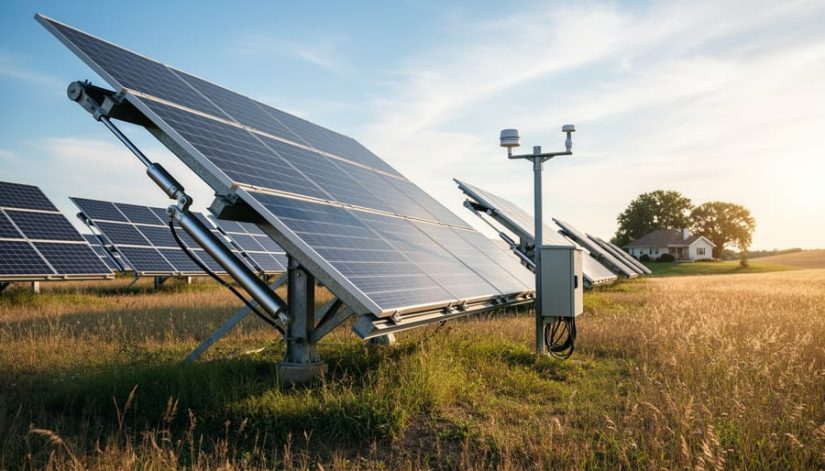
Maximize your solar panel efficiency by installing linear actuators that automatically adjust panel angles throughout the day, capturing up to 40% more sunlight than fixed systems. These electric motors extend and retract smoothly, tilting panels to follow the sun’s path from dawn to dusk, making them particularly valuable in Illinois where seasonal sun angles vary dramatically between summer and winter months.
Choose between single-axis tracking systems that follow east-to-west movement or dual-axis systems that also adjust for seasonal elevation changes, with AI-driven controllers now analyzing weather data, cloud cover, and energy demand patterns to optimize positioning in real-time. For residential solar installations, single-axis tracking typically offers the best cost-to-benefit ratio, adding $500-$1,500 per panel array while increasing annual energy production by 25-35%.
Evaluate whether tracking systems make sense for your situation by considering available ground space, local weather patterns, and electricity rates. Fixed-tilt systems remain more practical for rooftop installations due to weight and structural concerns, while ground-mounted arrays with ample space benefit most from actuator-based tracking. Illinois property owners with net metering agreements gain additional value from increased production during peak demand hours when the sun tracking advantage is greatest.
AI integration takes these systems further by learning seasonal patterns specific to your location, predicting maintenance needs before actuator failure occurs, and automatically adjusting for local microclimates that affect solar exposure throughout the year.
What Linear Actuators Do for Your Solar Panel System
Single-Axis vs. Dual-Axis Solar Tracking
Solar tracking systems using linear actuators come in two main configurations, each offering distinct advantages depending on your energy goals and budget.
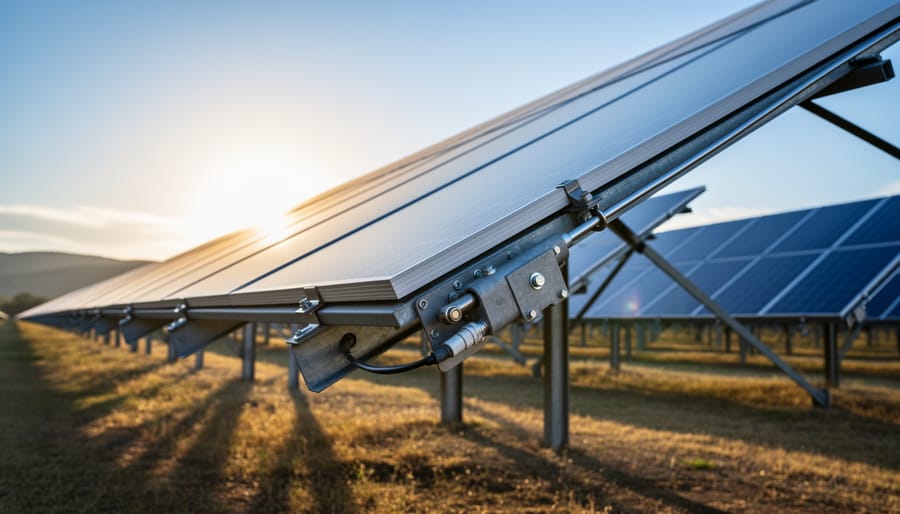
Single-axis tracking systems follow the sun’s movement from east to west throughout the day using one linear actuator. This configuration rotates the solar panels horizontally along a single plane, capturing significantly more sunlight than fixed installations. In Illinois, where we experience considerable seasonal variation, single-axis trackers typically increase energy production by 25-35% compared to stationary panels. They’re mechanically simpler, require less maintenance, and cost less upfront, making them an attractive option for homeowners and businesses testing the waters with tracking technology.
Dual-axis tracking systems add a second linear actuator to adjust the panel’s tilt angle, accounting for the sun’s seasonal height changes in addition to daily east-to-west movement. This means your panels can optimize their position both horizontally and vertically throughout the year. The result is impressive: dual-axis systems can boost energy capture by 35-45% compared to fixed installations. However, this enhanced performance comes with higher equipment costs, more complex installation requirements, and additional maintenance considerations due to the extra moving components.
For Illinois property owners, the choice often depends on available space, budget, and energy needs. Single-axis systems offer excellent value for larger installations where multiple panels can share tracking infrastructure, while dual-axis systems maximize output per panel, which can be beneficial when roof or ground space is limited.
The AI Advantage: Smart Solar Tracking That Learns
Weather-Adaptive Positioning
Illinois weather is notoriously unpredictable, with conditions shifting rapidly throughout the day. This is where AI-driven weather-adaptive positioning becomes invaluable for solar panel systems. By continuously analyzing real-time weather data from local meteorological sources, AI algorithms can make intelligent decisions about panel positioning that go far beyond simple sun tracking.
When cloud cover moves across your property, the AI doesn’t just give up on energy production. Instead, it calculates the optimal angle to capture diffuse sunlight that penetrates through clouds. During partly cloudy conditions common in Illinois springs and falls, the system can anticipate cloud movement patterns and adjust positioning to maximize exposure during clear intervals.
Protection is equally important. Illinois experiences severe thunderstorms and high winds, particularly during spring and summer months. AI monitoring systems detect approaching storms through weather service integrations and automatically position panels into a protective flat or angled position to reduce wind resistance. This proactive approach prevents damage that could cost thousands in repairs.
During winter months, when snow and ice accumulation can block sunlight, the system can adjust angles to encourage natural shedding. The AI learns from local weather patterns over time, becoming increasingly effective at predicting the best positioning strategies for your specific location. This intelligent adaptation means your solar investment continues producing energy efficiently regardless of what Illinois weather throws at it, all while protecting your panels from environmental damage.
Predictive Maintenance and Monitoring
Modern AI-driven solar tracking systems bring significant peace of mind through intelligent predictive maintenance capabilities. Rather than waiting for a linear actuator to fail unexpectedly, artificial intelligence continuously monitors performance metrics to catch problems before they escalate into costly repairs or system downtime.
The AI system tracks several key indicators of actuator health. It measures electrical current draw during movement, monitors response times to adjustment commands, and analyzes vibration patterns. When an actuator starts requiring slightly more power to move or takes marginally longer to respond, these subtle changes often indicate early-stage wear on mechanical components or developing resistance in the drive mechanism. For homeowners and business owners, this early warning system prevents the frustration of discovering a non-functioning tracker during peak solar production hours.
Advanced algorithms compare current performance against historical baselines specific to your installation. In Illinois, where seasonal temperature swings can affect mechanical components differently throughout the year, this localized learning proves especially valuable. The system distinguishes between normal cold-weather resistance and genuine mechanical degradation.
When the AI detects concerning patterns, it sends automated alerts through email or smartphone notifications. Many systems even predict remaining service life, allowing you to schedule maintenance during convenient times rather than dealing with emergency repairs. This proactive approach typically reduces maintenance costs by 20-30% compared to reactive repair strategies, while maximizing your solar system’s uptime and energy production throughout the year.
Energy Production Forecasting
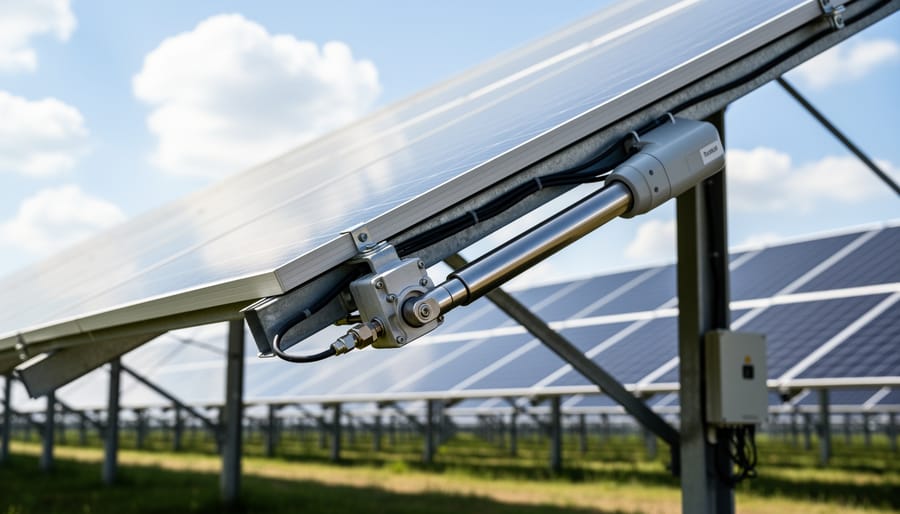
Artificial intelligence transforms how solar panel systems predict energy production by analyzing vast amounts of historical performance data alongside real-time weather conditions. When integrated with linear actuator solar tracking systems, AI algorithms learn patterns specific to Illinois weather—accounting for seasonal cloud cover, temperature fluctuations, and atmospheric conditions that affect solar output. The system examines years of data from similar installations, current weather forecasts, and even factors like anticipated snow accumulation during winter months.
For business owners, these accurate forecasts enable strategic power usage planning. If AI predicts a high-energy production day, businesses can schedule energy-intensive operations like equipment maintenance or manufacturing processes to coincide with peak solar generation. This reduces reliance on grid electricity during expensive peak-rate hours, maximizing cost savings. Homeowners benefit too, knowing when to run appliances or charge electric vehicles using solar-generated power rather than drawing from the utility company.
The forecasting accuracy continues improving as the AI learns your specific system’s performance characteristics and local microclimate conditions. This intelligence helps Illinois residents make informed decisions about battery storage investments and understand realistic return-on-investment timelines based on actual projected energy generation rather than generic estimates.
Real-World Benefits for Illinois Solar Installations
Increased Energy Capture in Illinois Climate
In Illinois, where sunlight intensity and angle vary significantly throughout the year, solar tracking systems equipped with linear actuators can capture substantially more energy than fixed panels. Studies consistently show that single-axis tracking systems increase energy production by 20-25% annually, while dual-axis systems can boost output by 30-40% compared to stationary installations.
These gains are particularly valuable during Illinois’ shoulder seasons—spring and fall—when the sun’s path changes rapidly. Fixed panels are typically optimized for a single angle, meaning they perform ideally only during specific times of year. In contrast, actuator-driven tracking systems continuously adjust panel orientation to maintain optimal sun exposure throughout the day and across seasons.
For commercial solar systems, this translates to significant financial returns. A business installing a 100-kilowatt tracking array could generate 20,000-40,000 additional kilowatt-hours annually compared to fixed panels—enough to power multiple homes. Even during Illinois’ cloudy winter months, tracking systems maximize capture of available diffuse sunlight by positioning panels perpendicular to incoming rays. This consistent performance advantage makes linear actuator technology especially worthwhile for operations seeking maximum return on their solar investment in our Midwest climate.
Return on Investment Considerations
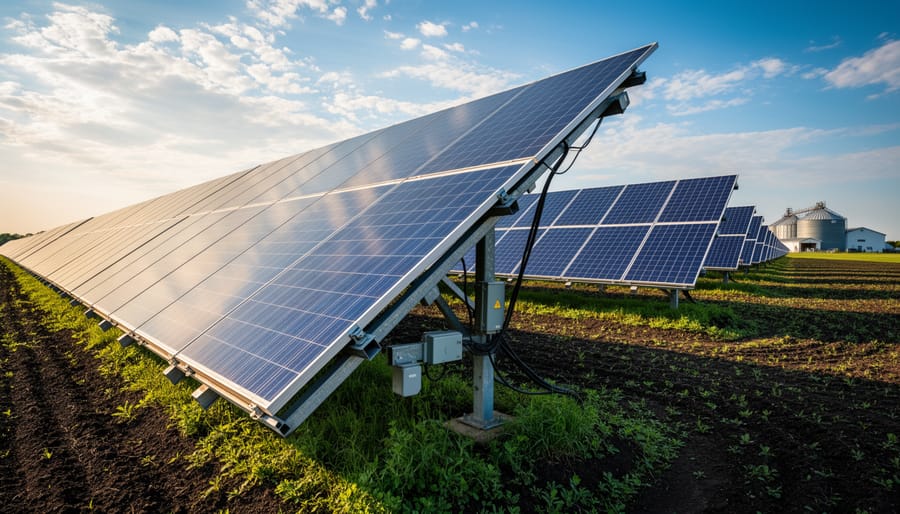
Before investing in linear actuator solar tracking systems, it’s important to understand when they deliver genuine value. For most residential installations in Illinois, fixed-tilt panels combined with maximizing solar savings through net metering often provides sufficient return without the added complexity of tracking systems.
The math changes with scale. Commercial and industrial properties with larger arrays typically see better returns from tracking systems because the 15-35% energy gain multiplies across more panels. A warehouse with 200 panels might justify the investment, while a home with 20 panels may not recover the additional upfront costs within a reasonable timeframe.
Consider these factors when evaluating tracking systems: Initial equipment costs run 40-60% higher than fixed systems. Maintenance requirements increase due to moving parts, though modern linear actuators are quite reliable. Your available space matters too—tracking systems need more clearance for panel movement, so properties with limited roof space may not benefit.
Illinois-specific considerations include our seasonal weather patterns. Tracking systems provide the greatest advantage during long summer days when panels can follow the sun’s arc. However, snow, ice, and wind can temporarily limit tracking functionality during winter months.
Our team evaluates each property individually to recommend solutions that truly maximize your investment. Sometimes the smartest choice is optimizing panel placement on a fixed system rather than adding tracking technology. We prioritize honest assessments over upselling equipment that won’t deliver meaningful returns for your specific situation.
Installation Considerations: What You Need to Know
Space and Structural Requirements
Linear actuator solar tracking systems require significantly more space than fixed-tilt installations. These ground-mounted systems need clearance areas around each tracker to accommodate the panel movement throughout the day, typically requiring 20-30% more land than stationary arrays. For Illinois homeowners, this means dedicating a larger portion of your property to the solar installation.
Foundation requirements are more substantial with tracking systems. Each tracker needs concrete footings or ground screws to support the mechanical components and withstand wind loads during panel movement. The foundation must account for the dynamic weight distribution as panels tilt and rotate, which differs from the static loads of fixed systems.
Tracking systems are generally not suitable for rooftop installations due to their weight, mechanical movement, and structural demands. The added load of actuators and tracking mechanisms, combined with the dynamic forces during operation, exceeds most residential roof capacity ratings. Additionally, rooftop placement limits the tracking range and can create clearance issues with roof edges and obstructions.
Illinois property owners considering tracking systems should evaluate available ground space, soil conditions for foundation work, and local setback requirements. While tracking systems maximize energy production, they demand adequate land and proper site preparation to function safely and effectively.
Maintenance and Durability
Linear actuator systems powering solar tracking technology require minimal upkeep, but regular attention ensures optimal performance. Basic solar panel maintenance applies here too—keeping panels clean and checking electrical connections periodically. The actuators themselves typically need inspection twice yearly to verify proper movement and lubrication of mechanical components.
Illinois weather presents unique challenges for these systems. Quality actuators designed for outdoor use feature sealed housings that protect against moisture, dust, and temperature fluctuations. They must withstand winter conditions including snow accumulation, ice formation, and temperatures well below freezing, as well as summer heat exceeding 100 degrees Fahrenheit. Reputable manufacturers build actuators with weather-resistant materials and corrosion-proof coatings specifically for these extremes.
Modern linear actuator systems typically last 15 to 25 years when properly maintained, often matching or exceeding the operational life of solar panels themselves. AI-enhanced tracking systems can actually extend component life by reducing unnecessary movements and optimizing positioning based on real-time conditions, minimizing wear on mechanical parts while maximizing energy production throughout Illinois’s varied seasons.
Is AI-Driven Solar Tracking Right for Your Property?
Determining whether AI-driven solar tracking with linear actuators makes sense for your property depends on several key factors specific to your situation and location in Illinois.
For commercial facilities and industrial properties with extensive ground space, tracking systems offer the most compelling advantages. If you have open land not suitable for building but ideal for solar arrays, the 25-35% energy boost from tracking can justify the additional investment. Manufacturing plants, warehouses with adjacent land, and distribution centers often see strong returns because their daytime energy consumption aligns perfectly with peak solar production.
Agricultural operations represent another excellent fit. Farms across Illinois increasingly use solar tracking systems because they have available acreage and high daytime electricity needs for irrigation, grain handling, and climate control. The mechanical simplicity of linear actuators also appeals to farmers familiar with maintaining equipment. Some agricultural properties successfully integrate solar arrays with grazing or crop production beneath elevated panels.
Rural properties with ample space and high energy consumption can benefit significantly. If your property has minimal shading, south-facing exposure, and you’re seeking maximum energy production from available land, tracking systems deserve serious consideration.
However, typical residential rooftop installations rarely justify the added complexity and cost of tracking systems. Rooftops lack the space for ground-mounted trackers, and the structural requirements make installation impractical. Fixed-tilt rooftop arrays remain the most cost-effective residential solution, offering excellent performance without moving parts.
The decision ultimately comes down to available space, energy needs, and budget. Properties with at least a quarter-acre of usable land, substantial daytime electricity consumption, and minimal shading constraints are prime candidates. For smaller residential lots or limited budgets, fixed systems provide reliable, maintenance-free solar energy without sacrificing overall value.
Linear actuators combined with AI-driven solar tracking systems represent a significant advancement in solar technology, offering Illinois property owners enhanced energy production and system efficiency. These intelligent systems automatically adjust panel angles throughout the day, maximizing sunlight capture even during challenging Midwest weather conditions. While the initial investment is higher than fixed installations, the improved energy yields can justify the cost for properties with adequate space and specific energy requirements.
As a locally owned company with deep expertise in solar energy, Illinois Renewables understands that every property has unique needs. Our team evaluates factors like site orientation, shading patterns, energy consumption, and budget constraints to recommend the most cost-effective solution. For some installations, AI-enhanced tracking systems deliver exceptional value, while others achieve optimal results with strategically positioned fixed arrays.
The decision to incorporate linear actuators and tracking technology should be based on thorough professional assessment rather than assumptions. We encourage homeowners and business owners to consult with experienced solar professionals who can analyze your specific situation and design a system that maximizes your return on investment while supporting Illinois’s clean energy future.
