
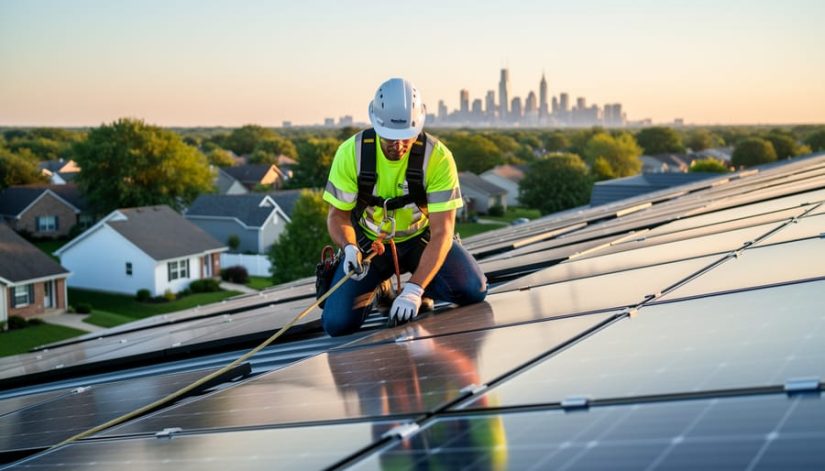
How NABCEP Certification Opens Doors in Illinois’s Booming Solar Industry
The North American Board of Certified Energy Practitioners (NABCEP) stands as the gold standard for solar professional certification, offering credibility that separates qualified installers from untrained contractors in Illinois’s rapidly expanding solar market. This nationally recognized credential validates technical expertise, ensures adherence to safety standards, and provides homeowners and businesses with confidence that their solar investment is in capable hands.
NABCEP certification comes in two primary levels: the entry-level Associate credential and the advanced Professional certification for installers, designers, and technical sales specialists. Each pathway requires specific combinations of education, hands-on experience, and rigorous examination, with Professional certifications demanding at least 58 hours of specialized training and documented field work. For Illinois residents considering solar installations, working with NABCEP-certified professionals means partnering with practitioners who’ve demonstrated mastery of electrical codes, system design principles, and installation best practices.
The certification process typically spans several months to years depending on your starting experience level. Candidates must complete approved training courses, accumulate verifiable installation hours, and pass comprehensive exams covering photovoltaic system fundamentals, site assessment, component selection, and grid interconnection requirements. This structured approach ensures certified professionals understand both universal solar principles and region-specific considerations like Illinois’s net metering policies and varying weather conditions.
Whether you’re a solar industry professional seeking career advancement or a property owner evaluating potential installers, understanding NABCEP certification clarifies what separates qualified experts from general contractors dabbling in renewable energy.
What is NABCEP Certification and Why It Matters in Illinois
The NABCEP Difference: Industry Recognition
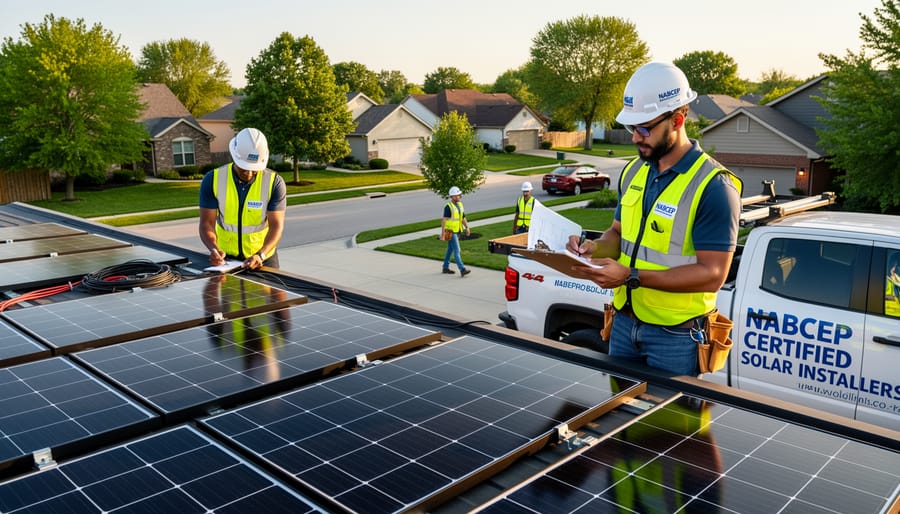
In Illinois’s competitive solar industry, NABCEP certification serves as the gold standard that sets professionals apart. When homeowners and business owners invest in solar energy systems, they want assurance they’re working with qualified experts. NABCEP certification provides that assurance through rigorous testing and proven field experience requirements.
Employers throughout Illinois actively seek NABCEP-certified professionals when building their teams. The certification demonstrates a commitment to excellence and mastery of industry best practices that goes beyond basic training. Many solar companies, including locally owned businesses, prioritize hiring certified installers and designers because it reduces liability risks and enhances their reputation in the marketplace.
For customers, NABCEP certification translates directly into confidence. The credential signals that a professional has met nationally recognized standards for competency and ethics. This becomes especially important when making significant financial decisions about solar installations. Illinois homeowners researching solar options frequently ask about installer credentials, and NABCEP certification often becomes a deciding factor when comparing proposals.
The certification also matters for regulatory compliance and incentive programs. Some jurisdictions and utility rebate programs require or prefer work completed by NABCEP-certified professionals, ensuring installations meet quality and safety standards that protect both property owners and the broader electrical grid.
Illinois Solar Growth and Workforce Demand
Illinois is experiencing remarkable growth in solar energy, driven by ambitious state policies and increasing consumer demand. The Climate and Equitable Jobs Act has set a target for Illinois to achieve 40% renewable energy by 2030 and 50% by 2040, creating unprecedented opportunities in the solar industry. This expansion has generated a surge in demand for qualified solar professionals who can design, install, and maintain photovoltaic systems safely and effectively.
The state’s commitment to clean energy has resulted in thousands of new solar installations across residential, commercial, and utility-scale projects. However, this rapid growth has created a talent gap, with employers increasingly seeking workers who hold recognized credentials. NABCEP certification has become the industry standard, demonstrating that professionals possess the technical knowledge and practical skills necessary to deliver quality solar installations.
For those looking to launch your solar career, obtaining NABCEP certification opens doors to better job opportunities and higher earning potential. As Illinois continues investing in renewable energy infrastructure, certified installers and designers will be essential to meeting installation goals while maintaining safety and performance standards. This growing market presents an ideal time for aspiring solar professionals to pursue certification and contribute to Illinois’s clean energy future.
NABCEP Certification Pathways: Which Route is Right for You?
PV Installation Professional Certification
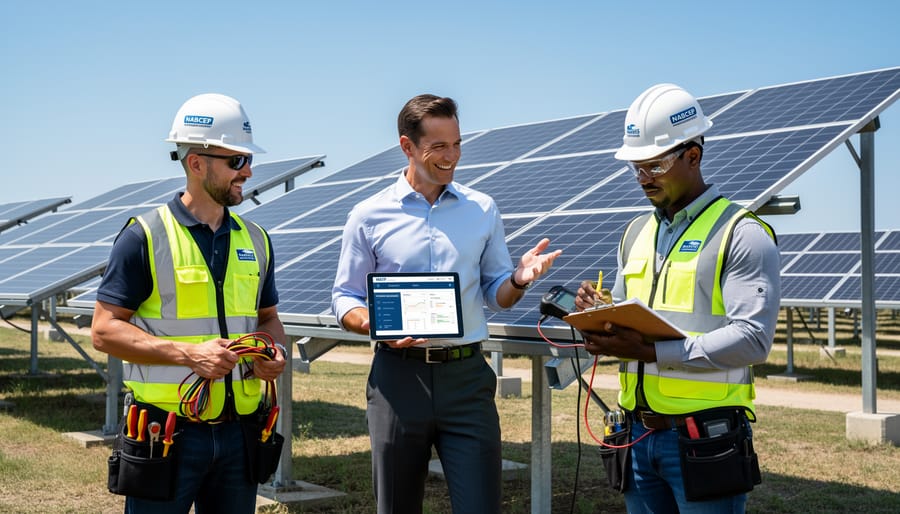
The NABCEP PV Installation Professional Certification represents the gold standard for solar installers across the United States, including Illinois. This credential is designed for experienced professionals who design, install, and commission photovoltaic systems for residential and commercial applications.
This certification is ideal for electricians, contractors, and solar technicians who have hands-on installation experience and want to demonstrate their expertise to employers and customers. To qualify, candidates must have at least one year of documented solar installation experience or complete a combination of training and verified installation hours.
The certification exam covers essential topics including site assessment, system design, electrical requirements, building codes, and safety protocols. Test-takers must demonstrate thorough knowledge of proper installation techniques, equipment selection, and compliance with National Electrical Code standards. The exam also addresses Illinois-specific considerations like local permitting requirements and utility interconnection procedures.
Earning this certification opens significant career opportunities in Illinois’s growing solar market. Certified professionals often command higher salaries and gain preference in hiring decisions. Many locally owned solar companies specifically seek NABCEP-certified installers because they bring verified expertise and inspire customer confidence. For residential and commercial clients, working with certified professionals provides assurance that their solar investment will be properly designed and safely installed.
The certification requires renewal every three years through continuing education, ensuring professionals stay current with evolving technology and installation best practices. This ongoing commitment to learning helps certified installers maintain their competitive edge in the marketplace.
PV Technical Sales Certification
The PV Technical Sales Certification serves professionals who work directly with customers to design and manage solar installations from the sales and consulting perspective. This credential is ideal for solar consultants, sales professionals, and project managers who need to understand system design principles without performing hands-on installation work. The certification demonstrates your ability to assess customer energy needs, recommend appropriate system configurations, and manage projects effectively from initial consultation through completion.
To qualify for this certification, candidates must have at least one year of solar sales experience and demonstrate knowledge of system design, financial analysis, site assessment, and customer communication. The exam covers topics including solar energy fundamentals, system components, permitting requirements, and financing options. For Illinois professionals working with residential and commercial clients, this certification shows you understand local building codes, utility interconnection procedures, and available incentive programs. Many locally owned solar companies in Illinois value this certification because it ensures their sales teams can accurately assess customer needs and design systems that maximize energy production and financial returns. This pathway provides a balanced approach for those who want to demonstrate expertise in solar energy without pursuing the more technically intensive installer certification.
PV System Inspector Certification
The PV System Inspector Certification is designed for professionals focused on quality assurance rather than installation. This credential validates expertise in evaluating solar installations for code compliance, safety standards, and proper system performance. Inspectors play a crucial role in ensuring that solar arrays meet National Electrical Code requirements and manufacturer specifications before they’re commissioned.
This certification path appeals to building inspectors, quality control specialists, and professionals transitioning from electrical or construction inspection backgrounds. The certification requires understanding photovoltaic technology, electrical systems, and applicable codes without necessarily having hands-on installation experience. In Illinois, where solar installations must meet state building codes and utility interconnection standards, certified inspectors provide essential verification services.
Candidates must demonstrate knowledge of system design evaluation, installation assessment, and documentation review. The certification process involves passing a comprehensive exam covering inspection procedures, safety protocols, and regulatory compliance. For Illinois professionals working with locally owned solar companies or municipal building departments, this credential establishes credibility and ensures consistent quality across the growing solar market. The inspector certification complements other NABCEP credentials by focusing specifically on the verification and compliance aspects of solar project completion.
Entry-Level PV Associate Credential
For those just beginning their journey in solar energy, NABCEP offers an Entry-Level PV Associate Credential that serves as an accessible starting point. This credential is designed specifically for newcomers who may be exploring entry-level solar positions or career transitions into the renewable energy sector.
Unlike the professional certifications that require extensive hands-on experience, the PV Associate credential focuses on foundational knowledge rather than practical field work. Candidates need to demonstrate understanding of solar energy fundamentals, basic system components, and safety practices through a comprehensive exam. This makes it ideal for recent graduates, career changers, or those working in solar-adjacent roles who want to formalize their knowledge.
The credential requires no prior solar installation experience, though candidates must complete a NABCEP-approved training program or possess relevant education in electrical systems or renewable energy. For Illinois professionals, this credential can open doors to positions with local solar companies while you build the hands-on experience needed for higher-level certifications. It demonstrates your commitment to industry standards and provides a solid foundation for advancing your solar career.
Requirements and Prerequisites for NABCEP Certification
Experience Requirements by Certification Level
NABCEP certification requirements vary based on the credential level you’re pursuing. For the PV Associate credential, which serves as an entry point into the solar industry, you’ll need at least 40 hours of solar-related training but no prior work experience. This makes it accessible for career changers or those new to the field.
The PV Installation Professional certification requires significantly more experience. You must document 58 hours of solar-specific instruction plus a minimum of 4,000 hours of hands-on solar installation work. This experience should be accumulated within three years prior to applying. Illinois solar professionals can count various installation activities toward this requirement, including mounting systems, electrical connections, and commissioning work.
For the PV Design Specialist certification, candidates need the same 58 hours of instruction but must demonstrate 4,000 hours of solar design work instead. This includes creating system layouts, performing site assessments, and developing electrical plans.
The PV Technical Sales Professional certification requires 24 hours of training and 2,000 hours of solar sales experience within the past five years. Work that counts includes customer consultations, system sizing, and proposal development.
It’s important to note that different types of solar work count differently toward each certification. Installation hours won’t qualify you for design certification and vice versa. Documentation is essential, so Illinois solar workers should maintain detailed records of their work hours and training from the beginning of their careers.
Educational and Training Pathways in Illinois
Illinois offers several educational pathways for those pursuing NABCEP certification. Community colleges across the state provide renewable energy programs that align with NABCEP’s education requirements. Institutions like Midwest Renewable Energy Association and Solar Energy International offer approved training courses that cover photovoltaic system design, installation, and maintenance fundamentals.
Many Illinois training programs combine classroom instruction with hands-on experience, ensuring students gain practical skills alongside theoretical knowledge. These programs typically cover electrical theory, building codes, safety protocols, and system design principles essential for NABCEP certification.
Local solar companies often partner with educational institutions to provide apprenticeship opportunities, helping students accumulate the required installation hours. Online courses through NABCEP-approved providers also complement in-person training, offering flexibility for working professionals.
When selecting a program, verify it meets NABCEP’s approved provider criteria and covers relevant exam topics. Some programs specifically prepare students for the NABCEP PV Installation Professional or PV Technical Sales certifications, tailoring coursework to exam requirements. Community colleges may also offer continuing education units needed to maintain certification after achieving it.
The NABCEP Exam: What to Expect and How to Prepare
Exam Format and Content Breakdown
NABCEP certification exams vary by credential level, but all follow a rigorous format designed to test practical knowledge and real-world application. The NABCEP PV Installation Professional exam consists of 50 multiple-choice questions that you must complete within two hours. Questions cover eight main topic areas: site assessment and survey, system design, installation and commissioning, operation and maintenance, safety, codes and standards, stakeholder communications, and system performance analysis.
The PV Technical Sales certification exam also features 50 questions with a two-hour time limit, focusing on customer needs assessment, site evaluation, system design fundamentals, proposal development, and product knowledge. The passing score for NABCEP exams is 70 percent, meaning you need to answer at least 35 questions correctly.
Entry-level PV Associate exams contain 60 questions with a 90-minute time limit and cover foundational solar concepts including basic system components, installation principles, and safety practices. All NABCEP exams use scenario-based questions that reflect actual situations professionals encounter in the field, rather than purely theoretical knowledge. This practical approach ensures certified professionals in Illinois can confidently handle real installations and customer consultations. Question difficulty is regularly reviewed and updated to reflect current industry practices and technological advances in solar energy systems.
Study Resources and Preparation Strategies
Preparing for NABCEP certification requires dedication and the right resources. Start with the NABCEP Candidate Handbook, which outlines exam content and specifications for your chosen certification path. This free resource serves as your roadmap throughout the preparation process.
Many aspiring solar professionals benefit from structured training courses offered by community colleges, technical schools, and solar training centers. These programs often include hands-on installation experience, which reinforces theoretical knowledge. Online courses provide flexibility for working professionals, though they should include practical components to meet experience requirements.
Practice exams are invaluable preparation tools. They familiarize you with question formats and help identify knowledge gaps. Several training organizations offer NABCEP-specific practice tests that mirror actual exam conditions.
Certified professionals recommend creating a study schedule spanning several months rather than cramming. Focus on areas where you have less field experience, and join study groups or online forums where candidates share resources and insights.
Investing in reference materials like the National Electrical Code and manufacturer installation manuals strengthens your practical understanding. Illinois-based solar companies with certified staff often provide mentorship opportunities, allowing you to learn from experienced professionals who’ve successfully navigated the certification process while understanding local installation considerations and building codes.
Costs and Investment: Is NABCEP Certification Worth It?
Understanding the financial investment required for NABCEP certification helps you make an informed decision about your solar career path. While costs vary depending on the certification level you pursue, the investment typically pays dividends through expanded career opportunities and higher earning potential.
Application and exam fees represent the primary upfront costs. NABCEP’s entry-level Solar PV Associate certification costs approximately $300 for the exam. Professional-level certifications, such as the PV Installation Professional or PV Technical Sales Professional, require higher investments, with exam fees ranging from $600 to $800. Additionally, you’ll need to budget for prerequisite training programs, which can cost between $500 and $2,000 depending on the provider and course depth.
Beyond initial certification, renewal costs occur every three years. Maintaining your certification requires continuing education credits and renewal fees ranging from $50 to $300, ensuring you stay current with evolving solar technology and installation practices.
The return on investment makes these costs worthwhile for most solar professionals. Certified installers in Illinois typically earn 10 to 20 percent more than non-certified counterparts, with NABCEP credential holders commanding premium rates. Many Illinois employers specifically seek certified professionals, giving you access to high-paying energy careers that might otherwise remain unavailable.
Beyond immediate salary increases, certification opens doors to supervisory roles, independent contracting opportunities, and positions with established solar companies seeking qualified team members. For Illinois professionals committed to long-term careers in renewable energy, NABCEP certification represents a strategic investment that typically recovers its cost within the first year through increased earning potential and expanded job opportunities.
Maintaining Your NABCEP Certification
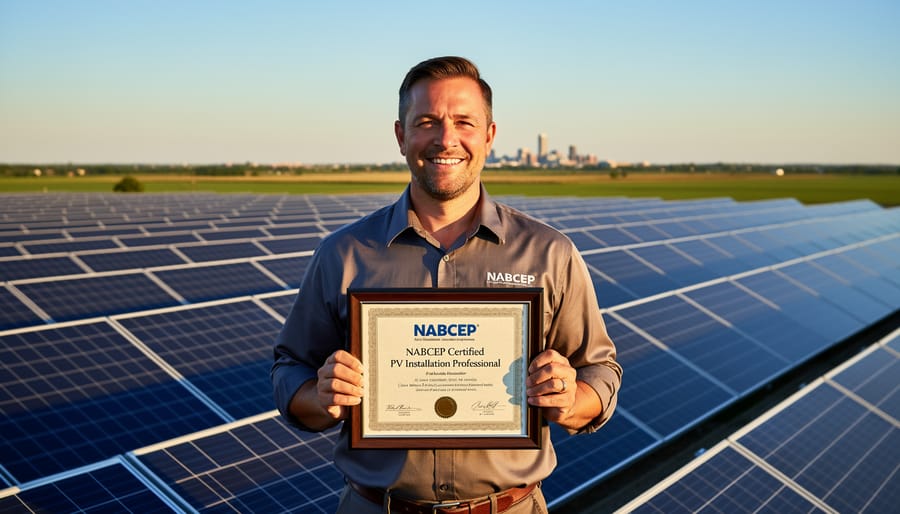
Earning your NABCEP certification is an important achievement, but maintaining it requires ongoing commitment to professional development. NABCEP certifications aren’t lifetime credentials—they require renewal every three years to ensure certified professionals stay current with evolving industry standards, technologies, and regulations.
To maintain your certification, you’ll need to earn continuing education credits through approved learning activities. NABCEP requires 18 professional development hours during each three-year renewal period. These hours can be earned through various activities including attending industry conferences, completing online courses, participating in manufacturer training sessions, or teaching solar-related classes. Many locally owned solar companies in Illinois offer training opportunities that qualify for these credits.
Staying current with code changes is particularly important for Illinois solar professionals. The National Electrical Code updates every three years, and local jurisdictions may adopt additional requirements. Understanding these changes ensures your installations remain compliant and safe. NABCEP’s continuing education requirements help you track these evolving standards without falling behind.
The renewal process itself is straightforward. You’ll submit documentation of your professional development hours along with a renewal fee through NABCEP’s online portal. Starting this process early in your renewal cycle prevents last-minute scrambling to accumulate credits.
Beyond meeting minimum requirements, ongoing professional development demonstrates your commitment to excellence in solar energy. As technology advances and Illinois continues expanding its renewable energy initiatives, staying educated positions you as a knowledgeable resource for homeowners and business owners investing in solar solutions. This continuous learning ultimately benefits both your career growth and the clients you serve.
NABCEP certification represents a significant professional achievement for Illinois solar professionals, demonstrating a commitment to quality workmanship and industry best practices. Whether you’re currently working in the solar field or considering a career change, pursuing certification elevates your expertise and positions you as a trusted professional in this growing industry. The investment in training, study time, and examination fees pays dividends through enhanced credibility, increased earning potential, and the satisfaction of meeting rigorous national standards.
If you’re ready to begin your certification journey, start by reviewing NABCEP’s website to determine which credential aligns with your experience level and career goals. Connect with local training providers, join professional networks, and dedicate yourself to thorough preparation. Illinois’s expanding solar market needs qualified professionals who can deliver reliable, code-compliant installations.
For homeowners and business owners in Illinois exploring solar energy solutions, working with NABCEP-certified professionals provides peace of mind. Certified installers bring verified knowledge and proven experience to your project, ensuring your solar system is designed and installed correctly from the start. When evaluating solar installation companies, asking about NABCEP credentials helps you identify professionals dedicated to excellence in this important investment for your property and the environment.
