

How Solar Companies and Local Partners Are Building Illinois’ Clean Energy Workforce
Cross-sector collaboration in Illinois’s solar workforce development has become a critical catalyst for sustainable energy growth, bringing together diverse stakeholders to address the pressing demand for skilled solar professionals. As the state’s solar industry experiences unprecedented expansion, with installations growing by 250% since 2019, traditional workforce development approaches no longer suffice. Business leaders, educational institutions, and government agencies are forging innovative partnerships that bridge expertise gaps, create specialized training programs, and establish clear career pathways in the renewable energy sector.
By combining resources, knowledge, and infrastructure across sectors, these collaborative efforts are transforming how we develop and maintain a skilled solar workforce. Local businesses provide real-world experience and job placement opportunities, while educational institutions deliver technical training and certification programs. Meanwhile, government agencies offer funding support and policy frameworks that enable these partnerships to thrive. This integrated approach ensures that Illinois remains at the forefront of renewable energy adoption while creating sustainable employment opportunities for its residents.
The Current State of Illinois’ Solar Workforce
Skills Gap and Workforce Challenges
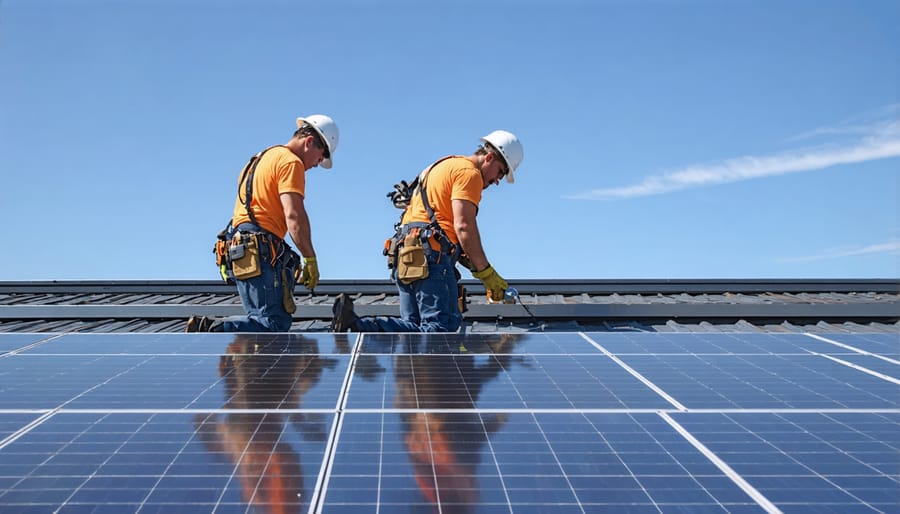
The solar energy sector in Illinois faces significant workforce challenges as demand for solar installations continues to grow. Current estimates indicate a substantial gap between available skilled workers and industry needs, with solar companies reporting difficulties in finding qualified technicians, installers, and project managers.
Key challenges include the need for specialized technical skills in solar panel installation, electrical work, and system maintenance. Many potential workers lack the necessary certifications and hands-on experience required for solar jobs. Additionally, there’s a growing demand for professionals who understand both renewable energy technology and business operations.
The skills gap is particularly pronounced in rural areas of Illinois, where access to training programs may be limited. Current workforce requirements encompass not only technical expertise but also soft skills such as customer service, project management, and problem-solving abilities.
To meet industry demands, workers need training in areas including electrical theory, safety protocols, and specific solar technologies. The rapid evolution of solar technology means that workforce development must be ongoing, with regular updates to training programs to keep pace with innovations in the field.
Key Partners in Solar Workforce Development
Educational Institutions
Educational institutions play a vital role in developing Illinois’ solar workforce through specialized renewable energy training programs. Community colleges, trade schools, and vocational centers across the state are adapting their curricula to meet growing industry demands. These institutions serve as essential training grounds, providing hands-on experience with solar installation techniques, system design, and maintenance procedures. They also facilitate important connections between students and potential employers, often partnering with local solar companies to offer internships and apprenticeships. Many institutions have developed accelerated certification programs to help address immediate workforce needs while maintaining high training standards.

Construction Industry Partners
Our partnerships with leading construction firms and contractors in Illinois have been instrumental in expanding solar workforce capabilities. These collaborations enable seamless integration of solar installations into both new construction and renovation projects. Local contractors bring valuable expertise in building codes, structural requirements, and safety protocols, while our solar specialists provide technical guidance on optimal system design and installation.
Through joint training programs and shared project experience, construction teams develop proficiency in solar-specific requirements, from roof load calculations to electrical integration. This synergy has resulted in more efficient project completion times and higher quality installations. We regularly work with both residential and commercial contractors, creating a strong network of skilled professionals capable of meeting Illinois’s growing demand for solar energy solutions.
Government and Policy Support
Illinois’s state government actively supports cross-sector collaboration through key legislation and funding programs. The Future Energy Jobs Act initiatives have created a foundation for workforce development, providing grants and incentives for solar training programs. Local governments complement these efforts by partnering with community colleges and vocational schools to develop targeted training curricula. Additionally, municipalities offer tax incentives to businesses that participate in apprenticeship programs or hire locally trained solar professionals. These policy measures have proven essential in bridging the gap between educational institutions, industry employers, and job seekers while fostering sustainable growth in Illinois’s solar sector.
Successful Collaboration Models
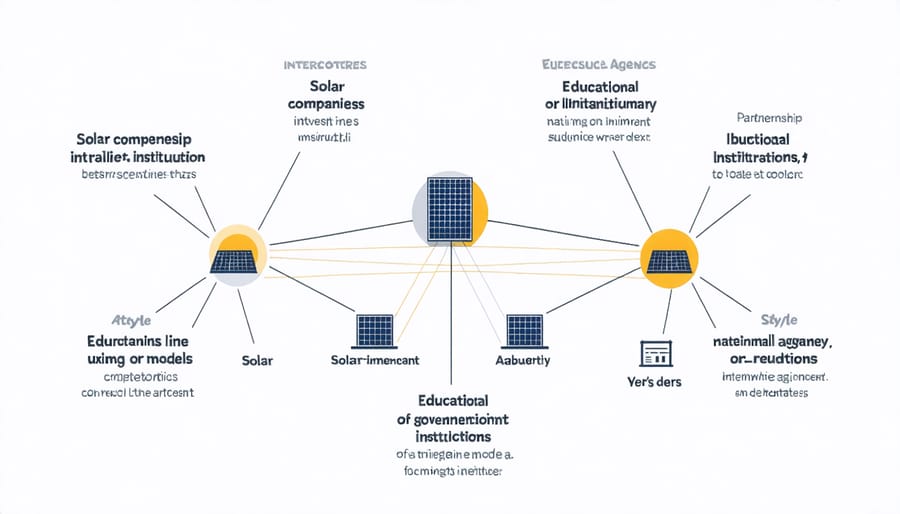
Several successful collaboration models in Illinois demonstrate how cross-sector partnerships can effectively address solar workforce challenges. The Illinois Solar for All program showcases a powerful partnership between utilities, community organizations, and training institutions. This initiative has created over 400 solar jobs while ensuring that 40% of projects benefit low-income communities.
The Solar Pipeline Training Program, developed by ComEd and local community colleges, exemplifies effective industry-education collaboration. This program has achieved an 85% job placement rate by combining hands-on training with direct employer connections. Graduates receive industry-recognized certifications and immediate job opportunities with local solar companies.
Another standout example is the Solar Workforce Development Coalition, which brings together solar installers, manufacturers, and workforce development agencies. This partnership has created standardized training curricula and established clear career pathways for entry-level workers. The coalition’s mentorship program pairs experienced professionals with new entrants, resulting in higher retention rates and improved job satisfaction.
The Chicago Solar Business Accelerator demonstrates successful public-private collaboration, connecting small solar businesses with larger corporations for mentorship and resource sharing. This model has helped create over 50 new solar businesses in the greater Chicago area, with 70% owned by minorities or women.
These partnerships succeed by leveraging each sector’s strengths: education providers contribute training expertise, businesses provide real-world experience and job opportunities, and government agencies ensure program accessibility and funding support. Regular communication, clear goals, and shared accountability have been key factors in their success.
Benefits of Cross-Sector Training Programs
Cross-sector training programs offer substantial advantages for all participants in the solar energy ecosystem. For businesses, these programs provide access to a skilled workforce specifically trained to meet local industry needs. Illinois solar companies benefit from reduced recruitment costs and shorter onboarding periods when hiring graduates from these collaborative programs.
Workers gain valuable cross-disciplinary skills that enhance their career mobility and earning potential. By learning from experts across different sectors, participants develop a comprehensive understanding of solar energy systems, from technical installation to business operations. This broad knowledge base makes them more adaptable and valuable to employers throughout the renewable energy sector.
Communities experience multiple benefits from these training initiatives. Local economic growth is stimulated through job creation and increased workforce participation. As more skilled solar professionals enter the market, homeowners and businesses gain access to higher quality installation services and maintenance support. This leads to more reliable solar energy systems and greater community adoption of renewable energy solutions.
The collaborative nature of these programs also fosters innovation and knowledge sharing between sectors. When educational institutions work directly with solar companies and utilities, training curricula stay current with industry developments and technological advances. This ensures that workforce development efforts remain aligned with actual market needs and continue to serve Illinois’s growing solar energy sector effectively.
The path forward for solar workforce development in Illinois lies in strengthening cross-sector partnerships. By uniting businesses, educational institutions, and government agencies, we can create sustainable solutions for our growing solar industry. We invite organizations across sectors to join this collaborative effort. Whether you’re a business looking to expand your workforce, an educational institution interested in developing training programs, or a community organization focused on workforce development, your participation is vital. Together, we can build a robust solar workforce that drives Illinois’s clean energy future. Take the first step today by reaching out to local solar organizations, attending industry events, or connecting with existing partnerships in your region. The success of our solar industry depends on the strength of our collaborative networks.
