

Smart Office Lighting That Slashes Your Energy Bills (While Boosting Productivity)
Transform your office space with intelligent lighting solutions that slash energy costs while enhancing employee productivity and wellness. Modern smart lighting systems leverage IoT sensors, automated controls, and LED technology to create responsive workspaces that adapt to natural light levels, occupancy patterns, and specific task requirements. Beyond the impressive 75% energy savings compared to traditional lighting, smart office lighting systems provide valuable data insights about space utilization and create more comfortable work environments through customizable lighting scenes and automated scheduling. Illinois businesses are increasingly adopting these systems to meet sustainability goals, reduce operational costs, and create more attractive workplaces that help attract and retain top talent. Learn how integrating smart lighting can revolutionize your office environment while delivering measurable returns on investment through reduced energy consumption and improved workplace efficiency.
How Smart Office Lighting Actually Works
Essential Components
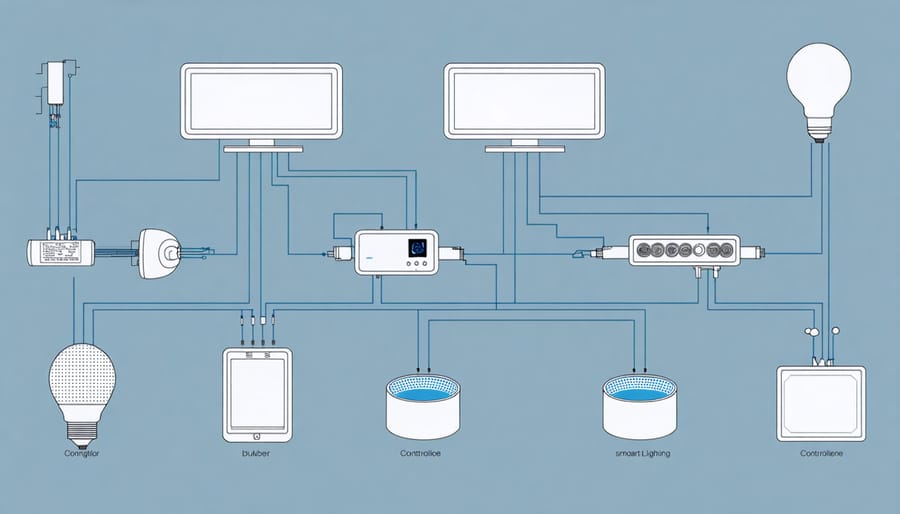
Smart office lighting systems consist of three primary components working together seamlessly. LED fixtures serve as the foundation, offering superior energy efficiency and longevity compared to traditional lighting. These modern fixtures can adjust their brightness and color temperature to match natural daylight patterns throughout the day.
Smart sensors form the intelligence network of the system, continuously monitoring occupancy, ambient light levels, and movement patterns. These sensors collect real-time data about space usage and environmental conditions, enabling automatic adjustments to light levels based on actual needs.
Controllers act as the system’s brain, processing data from sensors and managing light fixtures accordingly. Whether through wall-mounted switches, mobile apps, or centralized building management systems, controllers allow both automated operation and manual overrides when needed. They can integrate with other building systems and often include features like scheduling, scene setting, and energy usage reporting to maximize efficiency and user comfort.
Integration Capabilities
Modern smart lighting systems excel at seamlessly integrating with other building management technologies, creating a unified and efficient workspace environment. Through IoT-enabled energy control systems, office lighting can automatically adjust based on data from occupancy sensors, thermostats, and natural light detectors. This integration extends to calendar systems, automatically illuminating conference rooms before scheduled meetings and dimming unused spaces.
The system can also work in harmony with HVAC controls, optimizing both lighting and temperature based on real-time occupancy patterns. For businesses using solar power, smart lighting can adjust consumption based on solar generation levels, maximizing the use of renewable energy during peak production hours. Compatible with most building automation protocols, these systems can be controlled through centralized dashboards or mobile apps, allowing facility managers to monitor and adjust settings remotely while tracking energy usage patterns across the entire facility.
Real Energy Savings in Illinois Offices
Cost Reduction Analysis
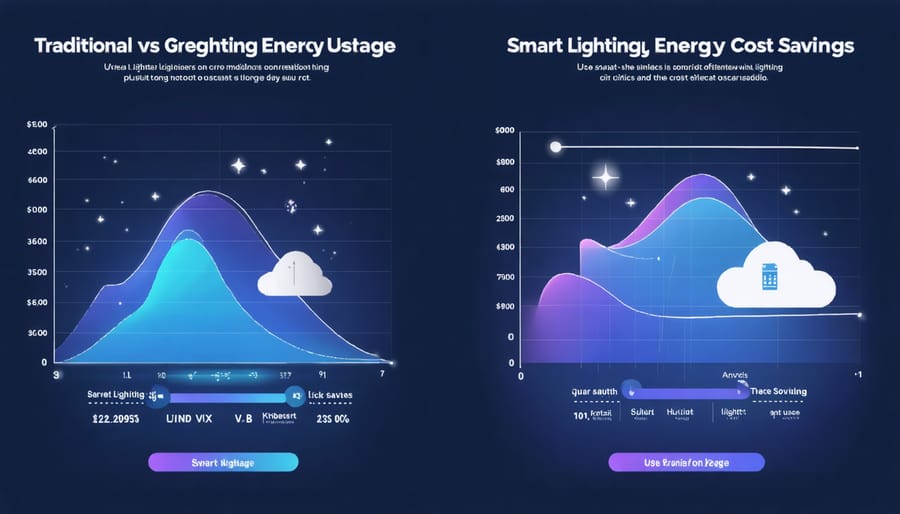
Smart lighting systems typically deliver 50-75% reduction in lighting energy costs for Illinois businesses, with many organizations seeing complete ROI within 24-36 months. The initial investment varies based on facility size and system complexity, but most mid-sized offices (10,000 sq ft) can expect costs between $15,000-$25,000 for a complete smart lighting installation.
A detailed cost analysis shows that combining smart lighting with energy storage solutions can maximize savings during peak rate periods. For example, a typical Illinois office building operating 12 hours daily can save approximately $0.12-0.15 per square foot annually through automated dimming and occupancy detection alone.
Additional savings come from reduced maintenance costs, with LED smart fixtures lasting 15-20 years compared to 2-3 years for traditional bulbs. The system’s ability to track usage patterns and automatically adjust to natural light levels typically results in an additional 10-15% reduction in overall energy consumption. When factoring in available state and utility incentives, businesses can often reduce their initial investment by 20-30%, further accelerating their return on investment.
Local Incentives and Rebates
Illinois businesses can take advantage of several local incentives and rebates when upgrading to smart lighting systems. ComEd’s Smart Business Solutions program offers cash incentives of up to 50% on qualified smart lighting installations, including LED fixtures and advanced controls. The Illinois Energy Now Program provides additional rebates for public sector facilities that implement energy-efficient lighting solutions.
The Illinois Clean Energy Community Foundation grants cover up to 75% of smart lighting project costs for qualifying non-profit organizations and local governments. Small businesses can benefit from the Illinois Department of Commerce and Economic Opportunity’s energy efficiency grants, which specifically support smart technology adoption.
For companies in Chicago, the Commercial and Industrial Retrofit Program offers per-fixture rebates and bonus incentives for installing networked lighting controls. Many local utilities throughout Illinois also provide custom incentive programs for large-scale commercial lighting upgrades.
Remember to consult with certified lighting professionals who can help identify all available incentives and ensure your project meets the specific requirements for each program. Most rebates require pre-approval and professional installation to qualify.

Productivity Benefits Beyond Energy Savings
Automated Daylight Harvesting
Automated daylight harvesting represents one of the most efficient features of modern office smart lighting systems. This technology uses sophisticated light sensors to continuously monitor natural light levels entering through windows and skylights. As daylight increases, the system automatically dims artificial lighting to maintain optimal illumination while minimizing energy usage.
The smart sensors are strategically placed throughout the office space to create lighting zones that respond independently to changing daylight conditions. When bright sunlight streams through windows, fixtures near these areas will dim more significantly than those deeper within the space. This graduated response ensures consistent light levels across the entire office while maximizing energy savings.
During cloudy periods or as evening approaches, the system gradually increases artificial lighting to compensate for diminishing natural light. This seamless transition happens without any manual intervention, maintaining proper light levels for employee comfort and productivity. Studies show that effective daylight harvesting can reduce lighting energy consumption by 20-60%, making it a valuable investment for Illinois businesses looking to reduce operating costs and enhance their sustainability efforts.
Occupancy-Based Controls
Occupancy-based controls represent a cornerstone of modern smart lighting systems, automatically adjusting illumination based on whether spaces are in use. These intelligent sensors detect movement and presence within different areas of your office, ensuring lights are only active when needed. When employees enter a room, the system automatically brightens the space to predetermined levels, and after a set period of inactivity, the lights dim or switch off completely.
Advanced occupancy sensors can distinguish between different types of movement and even count the number of occupants in a space, allowing for more precise lighting control. For example, in conference rooms, the system can maintain full brightness during meetings but dim the lights during presentation mode when fewer lights are needed.
These controls can be particularly effective in areas with irregular usage patterns, such as break rooms, storage areas, and private offices. By eliminating unnecessary lighting in vacant spaces, businesses typically see energy savings of 20-40% on lighting costs. Additionally, modern occupancy-based systems can integrate with other building management systems, creating a comprehensive energy-efficient environment that adapts to your office’s unique patterns of use.
Implementation Steps for Your Office
Assessment and Planning
Before implementing a smart lighting system in your office, conducting a thorough assessment of your current lighting setup and future needs is essential. Start by evaluating your existing lighting infrastructure, including fixture types, wiring conditions, and control systems. Document areas with different lighting requirements, such as workstations, conference rooms, and common areas.
Consider your office’s operating hours, occupancy patterns, and natural light availability throughout the day. This information helps determine where motion sensors and daylight harvesting systems will be most effective. Take note of any specific lighting requirements for different tasks or departments within your workspace.
Create a detailed implementation plan that outlines your goals, whether they’re focused on energy savings, employee comfort, or both. Set measurable objectives, such as targeted reduction in energy consumption or improved employee satisfaction rates. Consider your budget constraints and prioritize areas that will provide the most immediate impact.
Work with qualified lighting professionals familiar with Illinois energy codes and requirements. They can help you select compatible smart lighting components and develop a phased implementation approach if needed. Consider starting with a pilot program in a smaller area to test different solutions and gather feedback from employees.
Remember to plan for staff training and system maintenance. A successful smart lighting implementation requires user buy-in and proper ongoing management to maximize its benefits.
Installation and Integration
Installing smart lighting in your office requires careful planning and systematic implementation to ensure optimal performance. Start by conducting a thorough assessment of your existing lighting infrastructure and identifying key areas where smart building automation will provide the most benefit.
Begin with selecting compatible smart bulbs or fixtures that work with your chosen control system. Most modern systems use either WiFi, Bluetooth, or Zigbee protocols. For larger offices, a dedicated hub or gateway device is recommended to ensure reliable connectivity throughout the space.
The physical installation typically involves:
1. Replacing traditional bulbs with smart alternatives
2. Installing occupancy sensors at strategic locations
3. Setting up the central control hub
4. Configuring the network connectivity
5. Installing the management software
For optimal results, consider working with certified installers familiar with Illinois building codes and energy regulations. They can ensure proper integration with existing electrical systems and help maximize energy efficiency benefits.
After installation, take time to program schedules, create lighting zones, and set up automation rules. Train your staff on basic system operation and troubleshooting. Regular maintenance checks and software updates will help maintain system performance and security over time.
Remember to document your setup configuration and keep backup copies of all programming settings for future reference.
Smart lighting systems represent a significant leap forward in office technology, offering compelling benefits that go beyond simple illumination. From substantial energy savings and enhanced employee productivity to improved building management and sustainability, the advantages are clear and measurable. By implementing smart lighting solutions in your office space, you’re not just investing in better lighting – you’re investing in your company’s future. The time to act is now, as energy costs continue to rise and employees increasingly expect modern, comfortable workspaces. Take the first step toward transforming your office environment by consulting with local lighting experts who can design a custom solution tailored to your specific needs. The return on investment, both in terms of cost savings and workplace enhancement, makes smart lighting a smart choice for forward-thinking Illinois businesses.
