

Transform Your Building into a Power Plant: BIPV Solar Integration Made Simple
Building-integrated photovoltaics (BIPV) represent a revolutionary shift in sustainable architecture, seamlessly merging solar power generation with modern building design. Unlike traditional solar panels mounted on existing structures, BIPV systems serve as actual building materials – from solar glass windows to photovoltaic roof tiles – while simultaneously producing clean energy. This dual functionality not only maximizes space utilization but also significantly reduces overall construction costs and enhances property aesthetics.
For Illinois property owners and developers, BIPV technology offers a compelling solution to meet both energy efficiency requirements and architectural design goals. With the state’s growing emphasis on renewable energy and recent improvements in solar technology efficiency, BIPV systems now deliver superior performance while maintaining the structural integrity and visual appeal of buildings. These systems can generate up to 40% of a building’s energy needs while serving as weather-resistant building elements, effectively paying for themselves through energy savings and increased property value.
As the construction industry evolves toward net-zero energy buildings, BIPV stands at the forefront of sustainable building practices, offering a practical path to meet stringent energy codes while creating architecturally striking structures that actively contribute to a cleaner energy future.
How BIPV Revolutionizes Building Design
Solar Roof Tiles vs. Traditional Panels
When considering solar solutions for your Illinois property, the choice between solar roof tiles and traditional panels presents distinct advantages. Solar roof tiles, also known as solar shingles, seamlessly integrate with your existing roof design, offering a sleek, aesthetically pleasing appearance that maintains your home’s architectural integrity. These tiles function as both roofing material and solar panels, potentially reducing overall installation costs by serving dual purposes.
Traditional solar panels, while more visibly prominent, typically offer higher energy efficiency and lower installation costs compared to solar tiles. They’re also easier to maintain and replace if needed, making them a practical choice for many Illinois properties. The proven track record of traditional panels in our climate, including their performance during harsh winters and resistance to severe weather, makes them a reliable option.
Cost considerations vary significantly between the two options. Solar roof tiles generally have a higher upfront cost but may increase property value due to their aesthetic appeal. Traditional panels, while more affordable, require additional mounting hardware and might affect your roof’s appearance.
For Illinois homeowners, the decision often comes down to priorities: aesthetic integration versus maximum energy production and initial cost versus long-term value. Both options qualify for local and federal solar incentives, making either choice a viable investment in sustainable energy for your property.

Solar Windows and Facades
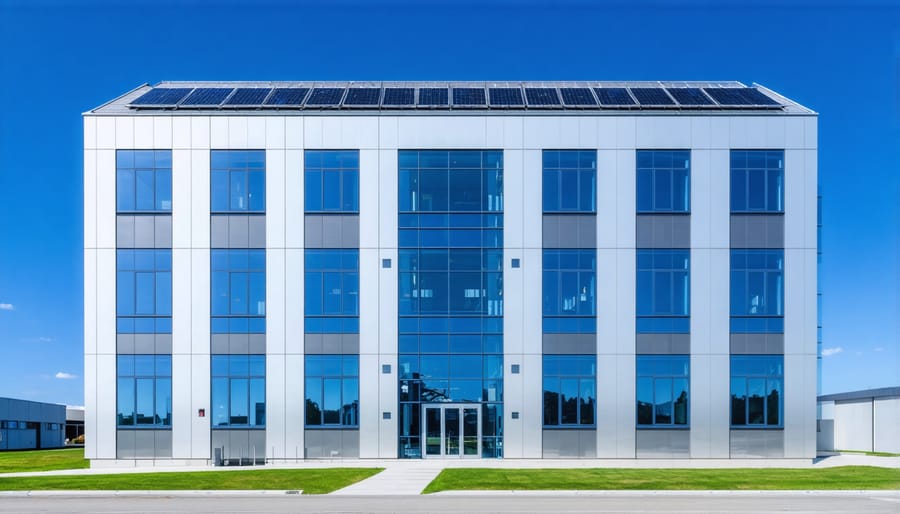
Solar windows and facades represent one of the most innovative developments in building-integrated photovoltaics, offering property owners the ability to generate clean energy while maintaining the aesthetic appeal of their buildings. These transparent and semi-transparent solar solutions integrate seamlessly into windows, curtain walls, and building facades, transforming ordinary glass surfaces into power-generating assets.
The technology behind solar windows uses specialized photovoltaic glass that allows visible light to pass through while capturing invisible solar energy. This is achieved through various methods, including thin-film solar cells, organic photovoltaic materials, or microscopic solar cells embedded within the glass layers. The transparency levels can be customized based on specific needs, typically ranging from 20% to 70% visible light transmission.
For Illinois property owners, these solutions offer particular advantages during our hot summers and cold winters. The solar windows not only generate electricity but also provide additional insulation and help reduce cooling costs by filtering out infrared radiation. During winter months, they continue to generate power while allowing natural light to warm interior spaces.
Business owners and architects appreciate that these systems can contribute to LEED certification points while maintaining a modern, professional appearance. The technology is especially suitable for commercial buildings with large glass surfaces, where traditional rooftop solar panels might not provide sufficient space for desired energy generation capacity.
The Business Case for BIPV in Illinois
Local Incentives and Tax Benefits
Illinois offers several attractive financial incentives for property owners considering BIPV installations. The Illinois Solar for All program provides significant subsidies for low-income households and communities, covering up to 100% of installation costs in qualifying cases. The Adjustable Block Program (ABP) offers renewable energy credits (RECs) that can substantially offset installation expenses.
Property owners can also benefit from the federal Solar Investment Tax Credit (ITC), which allows them to deduct 30% of their BIPV system costs from their federal taxes. At the local level, many Illinois municipalities offer property tax exemptions for solar installations, ensuring that your property taxes won’t increase despite the added value of your BIPV system.
ComEd and other Illinois utilities provide net metering programs, allowing BIPV system owners to receive credits for excess energy production. Several Illinois counties also offer specialized grants and rebates for commercial BIPV installations, particularly for buildings incorporating innovative solar designs.
The Illinois Green Energy Loan Fund provides low-interest financing options specifically for renewable energy projects, including BIPV installations. Additionally, businesses can take advantage of accelerated depreciation through the Modified Accelerated Cost Recovery System (MACRS), allowing them to recover their solar investment through tax deductions over a five-year period.
To maximize these benefits, property owners should consult with local solar installers and tax professionals familiar with Illinois renewable energy incentives.
Energy Cost Reduction Analysis
In Illinois, building-integrated photovoltaics (BIPV) can significantly reduce energy costs while enhancing property value. A typical 5,000-square-foot commercial building in Chicago implementing BIPV roof tiles can generate approximately 30,000 kWh annually, potentially saving $3,600 to $4,200 in yearly electricity costs based on current local rates.
Real-world examples demonstrate impressive returns. The Willis Tower’s BIPV window installation reduced its annual energy consumption by 2%, translating to roughly $100,000 in yearly savings. A mid-sized office building in Springfield achieved a 40% reduction in cooling costs during summer months by implementing BIPV glass facades, which not only generate power but also provide superior insulation.
For homeowners, a 2,000-square-foot residential BIPV installation can offset 80-90% of annual electricity usage. With average Illinois household electricity costs at $1,800 annually, homeowners can save approximately $1,440-$1,620 per year. When combined with available federal tax incentives and Illinois Solar Renewable Energy Credits (SRECs), property owners can maximize your solar investment returns within 7-10 years.
The cost-benefit analysis becomes even more favorable when considering rising utility rates. Historical data shows Illinois electricity rates increasing by an average of 2.5% annually. BIPV systems effectively lock in electricity rates, protecting property owners from future price increases while providing reliable clean energy for 25+ years.
Installation costs have decreased by 60% over the past decade, making BIPV increasingly accessible. Current prices range from $5-$7 per watt installed, varying based on system type and complexity.
Project Management Considerations
Integration with Existing Systems
Building-integrated photovoltaics seamlessly connect with existing building systems through carefully planned integration protocols. The process typically begins with an evaluation of your current electrical infrastructure, including the main service panel and wiring system. A professional solar installer will assess your building’s electrical capacity and determine if upgrades are necessary to accommodate the BIPV system.
The integration process involves installing specialized inverters that convert the DC power generated by solar panels into AC power used by building systems. Modern BIPV systems often include smart monitoring capabilities that interface with building management systems (BMS), allowing property owners to track energy production and consumption in real-time.
For optimal performance, BIPV systems are designed to work in harmony with other building components such as HVAC systems, lighting controls, and energy storage solutions. In Illinois, where weather conditions can vary significantly, integration often includes automated systems that adjust energy distribution based on seasonal demands and peak usage times.
Safety features are paramount in system integration, including rapid shutdown capabilities that comply with local electrical codes and automatic disconnects that activate during power outages to prevent backfeeding into the grid. The installation also includes proper grounding systems and surge protection devices to safeguard both the BIPV components and existing building infrastructure.
Many Illinois properties now incorporate energy management software that optimizes the interplay between BIPV generation and building energy consumption, maximizing efficiency and reducing utility costs.

Installation and Maintenance
The successful implementation of building-integrated photovoltaics requires careful attention to quality installation practices and regular maintenance to ensure optimal performance. Installation should begin with a thorough assessment of the building’s structure and orientation, followed by careful integration of PV components during construction or renovation phases.
Professional installers in Illinois must follow local building codes and electrical requirements while ensuring proper weatherproofing and structural integrity. Special attention should be paid to sealing and flashing around BIPV components to prevent water infiltration. The installation process typically involves coordinating with multiple trades, including roofers, electricians, and general contractors.
Maintenance requirements for BIPV systems are generally minimal but essential. Regular inspections should be conducted to check for debris accumulation, damage to panels or mounting systems, and proper electrical connections. In Illinois’s climate, snow removal may be necessary during winter months to maintain system efficiency. Monitoring systems should be installed to track performance and quickly identify any issues that require attention.
Annual professional inspections are recommended to ensure all components are functioning correctly and safely. This includes checking inverters, wiring connections, and mounting hardware. Clean panels periodically with appropriate solutions to maintain optimal energy production, especially during pollen season or after storms.
Future-Proofing Your Investment
Emerging BIPV Technologies
The field of building-integrated photovoltaics continues to evolve with breakthrough innovations that are transforming Illinois’ solar landscape. Among the most promising emerging solar technologies are perovskite solar cells, which offer improved efficiency and lower production costs compared to traditional silicon cells. These next-generation cells can be printed directly onto building materials, making installation simpler and more cost-effective.
Color-customizable solar panels are another exciting development, allowing architects and designers to maintain aesthetic appeal while incorporating renewable energy solutions. These panels can match existing building materials or create striking visual effects without compromising energy generation capacity.
Transparent solar cells are revolutionizing window integration, enabling glass surfaces to generate power while maintaining natural light transmission. This technology is particularly valuable for Illinois’ commercial buildings with large window facades.
Smart BIPV systems featuring AI-driven optimization and real-time monitoring are becoming increasingly common, maximizing energy production based on weather conditions and usage patterns. Additionally, researchers are developing flexible solar materials that can conform to curved surfaces, expanding installation possibilities for uniquely designed structures.
These advancements are making BIPV systems more efficient, aesthetically pleasing, and easier to integrate into both new construction and renovation projects across Illinois.
Sustainability Benefits
Building-integrated photovoltaics offer significant environmental advantages that go beyond traditional solar panel installations. By seamlessly incorporating solar technology into building materials, BIPV systems reduce the need for additional construction materials, effectively lowering the overall carbon footprint of your project from the start. In Illinois, where sustainable building practices are increasingly valued, BIPV installations can help properties achieve higher ratings in green building certification programs like LEED and ENERGY STAR.
These systems contribute to reduced greenhouse gas emissions and decreased dependence on fossil fuels, making them an environmentally responsible choice for Illinois property owners. A typical BIPV installation can offset several tons of carbon dioxide emissions annually, equivalent to planting hundreds of trees.
BIPV systems also address the growing concern of urban heat islands in cities like Chicago by reducing the building’s heat absorption and lowering cooling needs during hot summers. The dual functionality of these materials – serving as both building components and power generators – minimizes waste and maximizes resource efficiency.
Furthermore, BIPV installations support local sustainability goals and can help businesses meet corporate environmental responsibilities while demonstrating their commitment to green practices to environmentally conscious customers and stakeholders.
Building-integrated photovoltaics represent a transformative approach to sustainable architecture and energy generation in Illinois. By seamlessly incorporating solar technology into building materials, property owners can achieve both aesthetic appeal and significant energy savings. The benefits extend far beyond mere cost reduction – BIPV systems enhance property values, demonstrate environmental leadership, and contribute to a more sustainable future for our communities.
As Illinois continues to embrace renewable energy solutions, BIPV technology offers a practical pathway for businesses and homeowners to participate in this transformation. The initial investment in BIPV systems is offset by long-term energy savings, available tax incentives, and increased property marketability. Moreover, these systems provide reliable power generation while preserving valuable space and maintaining architectural integrity.
The time to act is now. With advancing technology, decreasing installation costs, and growing support for renewable energy in Illinois, BIPV systems have never been more accessible or practical. Whether you’re planning a new construction project or considering a building upgrade, integrating photovoltaic technology into your property’s design can position you at the forefront of sustainable architecture while securing long-term energy independence.
Take the first step toward a more sustainable future by exploring BIPV solutions for your property. Connect with local experts who understand Illinois’s unique climate and regulatory environment to develop a customized solution that meets your specific needs and goals.
