

What Solar Developers in Illinois Must Know About Clean Water Act Permits
Understand that the Clean Water Act regulates discharges into wetlands and waterways, requiring federal permits for solar projects that disturb protected water resources—even small-scale installations near streams or drainage areas may trigger Section 404 permitting requirements. Review your property’s proximity to jurisdictional waters before breaking ground, as the U.S. Army Corps of Engineers maintains authority over these determinations and can halt construction that proceeds without proper authorization.
Conduct a preliminary wetland delineation if your solar site includes low-lying areas, seasonal ponds, or vegetation indicating saturated soils, since Clean Water Act jurisdiction extends beyond obvious water features to include wetlands that connect to navigable waters. This assessment prevents costly project delays and redesigns after construction begins.
Coordinate Clean Water Act compliance with Illinois renewable energy standards and local permitting requirements, as solar developers in Illinois must navigate multiple regulatory layers simultaneously. Many commercial and utility-scale projects require individual permits, while residential installations may qualify for streamlined general permits if ground disturbance remains minimal.
Partner with experienced solar developers who incorporate environmental compliance into project planning from day one. Illinois Renewables brings locally owned expertise to assess Clean Water Act implications during site selection, securing necessary permits before equipment arrives and preventing the regulatory delays that can derail solar timelines and budgets. Our understanding of federal water regulations alongside Illinois-specific requirements ensures your renewable energy project moves forward efficiently while protecting the waterways our communities depend on.
The Clean Water Act: Foundation for Renewable Project Compliance
Key Provisions That Impact Solar Installations
When planning a solar installation in Illinois, two specific provisions of the Clean Water Act typically come into play, depending on your project’s location and scope.
Section 402 establishes the National Pollutant Discharge Elimination System, commonly known as NPDES permits. These permits are necessary when your solar project involves construction activities that disturb one or more acres of land. During ground preparation and installation, soil disturbance can lead to stormwater runoff carrying sediments into nearby waterways. The NPDES permit requires you to develop and implement a stormwater pollution prevention plan that outlines how you’ll minimize erosion and prevent contaminants from entering Illinois waters. Even smaller projects under one acre may need coverage if they’re part of a larger common development plan.
Section 404 addresses permits for dredging and filling activities in waters of the United States, including wetlands. If your proposed solar site contains wetlands or other jurisdictional waters, you’ll need authorization before placing fill material or otherwise altering these areas. This often applies to ground-mounted solar arrays requiring grading or foundation work in or near protected water features. The U.S. Army Corps of Engineers administers these permits, working alongside the Environmental Protection Agency.
Understanding which provision applies to your property is essential for planning timelines and budgets effectively. Some projects may require both permit types, while others might qualify for general permits that streamline the approval process for activities with minimal environmental impact.
Who Enforces These Requirements in Illinois
In Illinois, three primary agencies work together to enforce Clean Water Act requirements for solar energy projects and other developments. The U.S. Environmental Protection Agency (EPA) maintains oversight authority and sets national water quality standards that state programs must meet. The EPA can step in directly when state enforcement is inadequate.
The U.S. Army Corps of Engineers administers Section 404 permits for any project that involves dredging or filling wetlands and other waters of the United States. This includes solar installations that may impact streams, ponds, or wetland areas. The Corps evaluates permit applications to ensure minimal environmental impact and may require mitigation measures.
At the state level, the Illinois Environmental Protection Agency (Illinois EPA) handles Section 401 Water Quality Certifications and administers the state’s own water protection programs. The Illinois EPA reviews projects to confirm they won’t violate state water quality standards. This certification is typically required before the Army Corps can issue a 404 permit.
For solar developers and property owners, understanding which agency has jurisdiction over your project is essential, just as knowing zoning permit requirements is critical for project approval. Working with experienced partners who understand these regulatory relationships helps streamline the compliance process and prevents costly delays.
When Your Solar Project Needs Clean Water Act Permits
Ground-Mounted Solar Systems and Land Disturbance
When planning a ground-mounted solar installation, understanding land disturbance regulations under the Clean Water Act is essential for staying compliant and avoiding project delays. The amount of land your project disturbs during construction directly determines whether you need federal and state permits.
The Clean Water Act requires a National Pollutant Discharge Elimination System (NPDES) permit for construction activities that disturb one acre or more of land. This threshold includes all clearing, grading, excavation, and equipment staging areas combined. For solar projects, site preparation typically involves removing vegetation, leveling ground, creating access roads, and installing mounting structures—all activities that count toward your total disturbed acreage.
Even if your solar array footprint seems modest, additional areas like equipment laydown zones, temporary roads, and utility trenches can quickly push your project over the one-acre threshold. In Illinois, projects meeting this criterion must file a Notice of Intent (NOI) with the Illinois Environmental Protection Agency and develop a Stormwater Pollution Prevention Plan (SWPPP) before breaking ground.
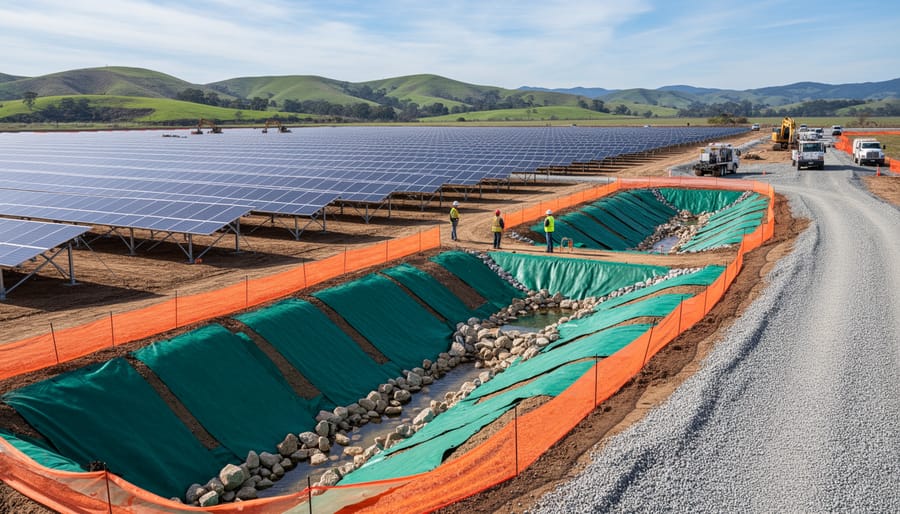
The SWPPP outlines erosion control measures such as silt fencing, sediment basins, and stabilization practices to prevent soil runoff into nearby waterways during and after construction. These requirements work alongside Illinois solar zoning laws to ensure responsible development.
For projects disturbing less than one acre, permit requirements may be less stringent, but erosion control best practices remain important. Our team helps property owners navigate these regulations efficiently, ensuring your solar investment proceeds smoothly while protecting local water resources.
Projects Near Wetlands and Water Bodies
If your solar project is located near streams, rivers, lakes, or wetlands in Illinois, understanding your proximity to regulated waters is essential. The Clean Water Act’s Section 404 requires permits for any work that involves placing fill material or dredging in “waters of the United States,” which includes wetlands that connect to larger water systems.
Start by reviewing your property’s characteristics. If you notice standing water, marsh-like vegetation, or your site is within 500 feet of a visible water body, you may need further assessment. The U.S. Army Corps of Engineers maintains maps of jurisdictional waters, and consulting these early helps avoid project delays.
Section 404 permits become necessary when ground-disturbing activities for equipment pads, access roads, or trenching for electrical lines affect wetlands or waterways. Even small seasonal streams can be regulated. For solar installations, typical scenarios requiring permits include grading that redirects water flow, filling wetland areas for panel placement, or constructing access routes across streams.
Working with environmental consultants who can conduct wetland delineations provides clarity on your obligations. Illinois property owners benefit from understanding these requirements upfront, as permit applications can take several months to process. Planning ahead ensures your renewable energy project moves forward smoothly while protecting local water resources.
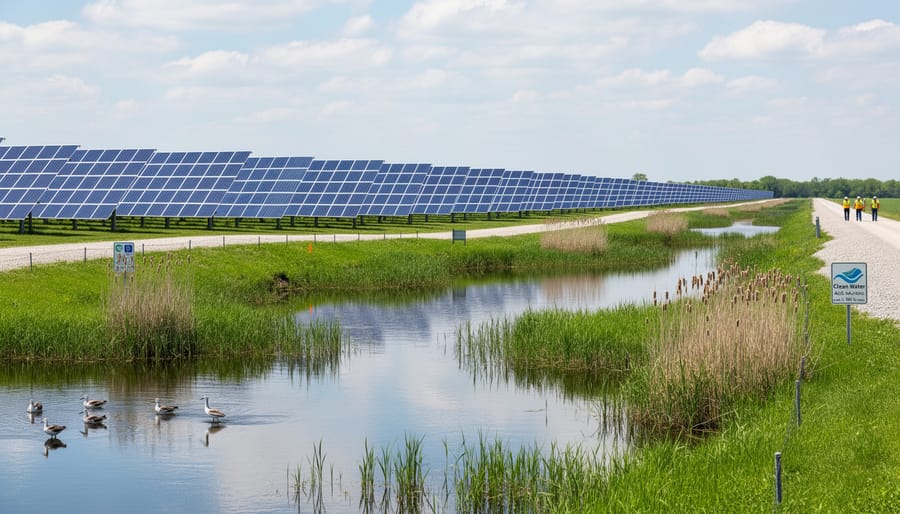
The NPDES Permit Process for Solar Construction
Illinois’s General Construction Stormwater Permit
If your solar energy project in Illinois involves ground disturbance of one acre or more, you’ll need coverage under the Illinois Environmental Protection Agency’s General Construction Stormwater Permit. This permit, formally known as the Illinois General NPDES Permit for Stormwater Discharges from Construction Site Activities, helps protect local waterways from sediment and pollutants during construction.
The eligibility requirements are straightforward. Your project qualifies if construction activities disturb at least one acre of land, including smaller sites that are part of a larger common plan of development. This applies to solar installations where grading, excavation, or soil disturbance occurs during panel mounting or infrastructure development.
To obtain coverage, you’ll need to file a Notice of Intent with Illinois EPA before construction begins. The NOI process requires detailed information about your project site, including location, acreage, estimated start and completion dates, and the types of stormwater controls you’ll implement. You’ll also need to develop a Stormwater Pollution Prevention Plan that outlines specific erosion and sediment control measures for your site.
The NOI filing typically takes several weeks for approval, so planning ahead is essential to avoid project delays. Illinois EPA reviews each submission to ensure compliance with Clean Water Act standards and state regulations. Once approved, permit coverage remains active until construction is complete and the site is stabilized, at which point you’ll file a Notice of Termination to close out the permit.
Creating Your Stormwater Pollution Prevention Plan
If your solar project disturbs one acre or more of land, you’ll need to develop a Stormwater Pollution Prevention Plan (SWPPP). This document outlines how you’ll prevent soil, sediment, and other pollutants from leaving your construction site and entering nearby waterways. While it might sound complex, understanding the basics can help you work more effectively with your solar installer and ensure your project stays compliant.
The SWPPP serves as your roadmap for managing stormwater throughout construction and operation. It identifies potential pollution sources at your site and describes the specific measures you’ll take to control them. For Illinois solar installations, this typically includes erosion control practices like installing silt fences around the perimeter, placing rock check dams in drainage channels, and establishing temporary or permanent vegetation to stabilize exposed soil.
Best management practices for solar sites differ somewhat from traditional construction projects. Since solar arrays have minimal ground disturbance after installation, your plan should emphasize preserving existing vegetation where possible and quickly establishing ground cover beneath and around panels. Many Illinois solar projects use native prairie grasses and pollinator-friendly plants, which provide excellent erosion control while supporting local ecosystems.
Your SWPPP must also include regular inspection schedules and maintenance procedures. During construction, weekly inspections help identify problems early, before small erosion issues become major sediment releases. After installation, periodic checks ensure your control measures remain effective through changing seasons and weather conditions.
Working with experienced solar professionals familiar with Illinois regulations makes this process significantly easier. They understand local soil conditions, typical weather patterns, and inspector expectations, helping ensure your SWPPP meets all requirements while remaining practical and cost-effective for your specific site conditions.
Protecting Illinois Wetlands During Renewable Development
Wetland Delineation and Jurisdictional Determinations
If your solar project site contains areas with standing water, saturated soils, or water-loving plants like cattails and willows, you may have wetlands that require special attention under the Clean Water Act. Identifying these areas early in your project planning is essential to avoid delays and compliance issues.
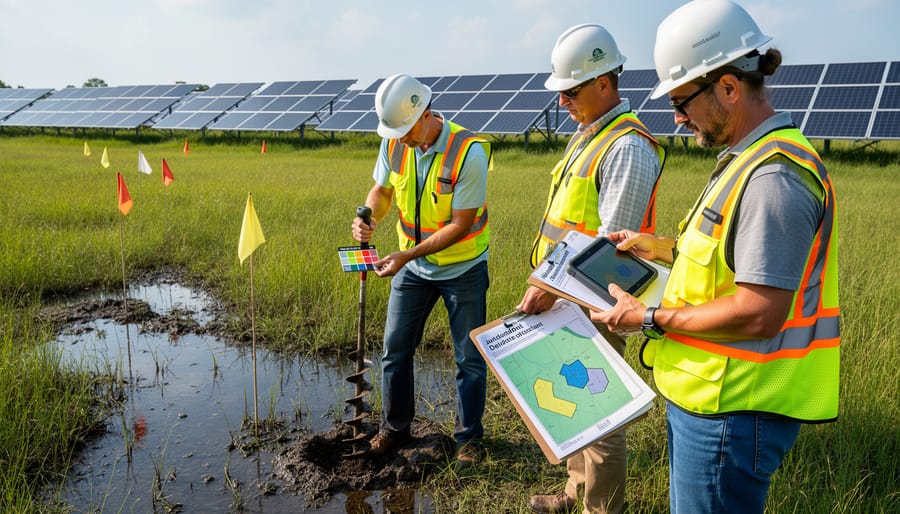
Wetland delineation is the process of mapping the exact boundaries of wetlands on your property. This technical assessment examines three criteria: hydrology (water presence), hydric soils (waterlogged soil types), and hydrophytic vegetation (water-adapted plants). While property owners can conduct preliminary assessments, official determinations must come from the U.S. Army Corps of Engineers.
To obtain a jurisdictional determination, you’ll submit documentation to your local Corps district office, including site maps, photographs, and wetland delineation reports prepared by qualified environmental consultants. The Corps offers two types: preliminary determinations (non-binding, faster) and approved determinations (official, legally binding but more time-intensive).
For Illinois solar projects, understanding wetland boundaries helps you design installations that minimize impacts, potentially avoiding the need for permits altogether. If wetlands cannot be avoided, early identification allows time to secure necessary authorizations without derailing construction timelines. Working with experienced professionals familiar with Illinois wetland conditions streamlines this process and ensures accurate results that regulatory agencies will accept.
Mitigation Options and Alternatives Analysis
If your solar project could impact wetlands or waterways, the Clean Water Act requires exploring ways to avoid or minimize those impacts first. This is where mitigation planning becomes essential. The process follows a clear hierarchy: avoid impacts whenever possible through thoughtful site design, minimize unavoidable impacts by adjusting project layouts or construction methods, and finally compensate for remaining impacts through wetland restoration or creation.
For solar installations, avoiding impacts often means repositioning panel arrays, access roads, or utility connections away from sensitive water features. Sometimes simple adjustments during the design phase can eliminate the need for permits entirely, saving both time and money.
When impacts cannot be avoided, wetland mitigation banking offers a practical solution. These are established wetland restoration sites where developers can purchase credits to offset impacts at their project location. In Illinois, this option provides regulatory certainty and often streamlines the permitting process compared to creating compensatory wetlands on-site.
Working with experienced professionals during project planning helps identify potential water resource concerns early. This proactive approach prevents costly redesigns later and demonstrates good faith efforts to regulatory agencies, which can expedite permit approvals and keep your renewable energy project on schedule.
Common Compliance Challenges and How to Avoid Them
Timeline Planning for Permit Approval
Understanding realistic timelines is essential when planning your solar project in Illinois. Clean Water Act permit processing times vary significantly depending on your project’s scope and potential water impact. For most residential and small commercial solar installations with minimal ground disturbance, expect the permitting process to take between 30 to 90 days once your application is complete.
Larger projects requiring individual permits or extensive stormwater management systems may need 6 to 12 months for full approval. The U.S. Army Corps of Engineers and Illinois EPA review timelines depend on application completeness, environmental assessments, and public comment periods when required.
To keep your solar project on schedule, start the permit process early in your planning phase. Submit comprehensive applications with detailed site plans, erosion control measures, and stormwater management strategies. Incomplete applications cause the most significant delays, often adding months to approval times.
Coordinate your Clean Water Act permits with other required approvals, including Illinois energy code compliance and local building permits. Working with experienced solar installers familiar with Illinois regulations helps streamline this coordination and ensures all documentation meets regulatory standards from the start, preventing costly project delays.
Inspection Requirements and Record Keeping
Once your solar project begins, maintaining Clean Water Act compliance requires regular monitoring and thorough documentation. Site inspections are essential throughout the construction phase to verify that erosion control measures remain effective and stormwater management practices function properly. Most projects require weekly inspections during active construction periods, with additional checks following significant rainfall events of half an inch or more within 24 hours.
During each inspection, document the condition of sediment barriers, inlet protection devices, and any areas where soil disturbance occurs. Take dated photographs showing erosion control installations and note any areas requiring maintenance or adjustment. If inspections reveal control measures that need repair or replacement, address these issues promptly—typically within seven days or before the next storm event, whichever comes first.
Your SWPPP must include inspection reports detailing observations, corrective actions taken, and dates of implementation. Keep all records accessible on-site and maintain them for at least three years after project completion. For Illinois property owners working with experienced solar installers, these compliance requirements become streamlined, as knowledgeable partners handle documentation systematically while keeping you informed of your project’s environmental performance throughout construction.
Working With Experienced Partners for Seamless Compliance
Navigating Clean Water Act compliance doesn’t have to slow down your solar project. Working with experienced renewable energy partners who understand federal and state permitting requirements can make the difference between a delayed installation and one that proceeds smoothly from start to finish.
At Illinois Renewables, our locally owned team has developed comprehensive knowledge of Clean Water Act regulations as they apply to solar installations across Illinois. We handle the entire permitting process, from initial site assessment to final approval, so you can focus on the benefits your solar system will bring rather than worrying about regulatory paperwork.
Our project management approach includes conducting thorough environmental reviews before construction begins, identifying potential wetlands or water resources that may require permits, and preparing all necessary documentation for submission to the U.S. Army Corps of Engineers and Illinois EPA. We maintain ongoing relationships with regulatory agencies, which helps us anticipate requirements and address questions quickly.
When you partner with a company that has expertise in solar energy and regulatory compliance, you benefit from streamlined timelines and reduced risk of costly delays. We coordinate with environmental consultants when needed, ensure all mitigation measures are properly implemented, and maintain detailed records throughout the project lifecycle.
Our comprehensive approach means your solar installation meets all Clean Water Act requirements while staying on schedule and within budget. We’ve successfully guided numerous residential, commercial, and industrial solar projects through the permitting process, and we’re ready to do the same for you.
Navigating Clean Water Act compliance might seem complex, but it’s an essential step that protects Illinois’s valuable water resources while keeping your solar project on track. By understanding when permits are required and addressing these requirements early in your planning process, you can avoid costly delays and ensure your renewable energy investment moves forward smoothly. Compliance isn’t just about meeting regulations—it’s about being a responsible steward of the environment while transitioning to clean energy.
Whether you’re a homeowner exploring rooftop solar or a business owner planning a large-scale ground-mounted installation, working with experienced solar professionals makes all the difference. As a locally owned company with expertise in solar energy, we understand Illinois-specific permitting requirements and can guide you through every step of the process. From initial site assessments to permit applications and construction, we ensure your project meets all environmental regulations while maximizing your clean energy benefits. Contact us early in your solar journey to discuss how we can help make your transition to renewable energy seamless and compliant.
