
Why Solar Panels Make Roof Drainage Problems Worse (And How to Fix It)
Inspect your roof’s drainage patterns before scheduling a solar panel installation to identify potential water pooling areas, paying special attention to how Illinois’s heavy spring rains and winter snow melt currently flow across your roofing surface. Poor drainage planning can lead to water accumulation around panel mounting systems, causing leaks, structural damage, and voided warranties that cost thousands in repairs.
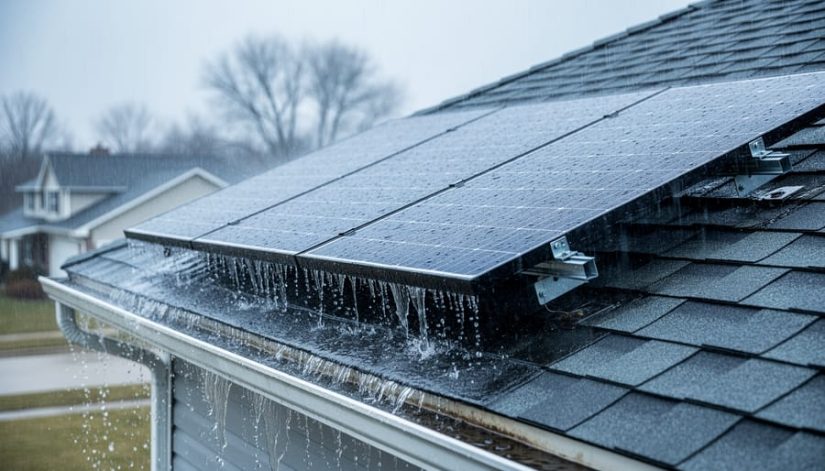
Examine existing gutters and downspouts to ensure they can handle the redirected water flow that solar panels create. Panels act as barriers, channeling rainwater and snowmelt into concentrated streams rather than allowing even distribution across your roof. This intensified flow often overwhelms undersized drainage systems, particularly on commercial flat roofs and residential structures with complex rooflines common throughout Illinois.
Verify that your solar installer accounts for proper flashing installation around all mounting points and maintains adequate clearance between panels and roof edges. Water must flow freely beneath and around the array without creating dams or backflow situations. Professional installers evaluate roof pitch, material composition, and regional weather patterns to design systems that enhance rather than compromise your building’s water management.
Address drainage concerns during the planning phase rather than after installation completion. Retrofitting drainage solutions around existing solar arrays requires expensive panel removal, structural modifications, and extended system downtime. A locally owned solar company with Illinois-specific expertise understands how our state’s freeze-thaw cycles, summer storms, and seasonal precipitation patterns impact long-term roof performance, ensuring your investment protects both energy production and building integrity.
How Solar Panels Change Your Roof’s Water Flow
The Blocking Effect: When Panels Become Barriers
When you install solar panels on your roof, they’re mounted several inches above the roofing surface to allow for airflow and cooling. While this spacing serves an important purpose for panel efficiency, it creates an unintended consequence for water management. Your roof was originally designed with a specific drainage pattern in mind, with water flowing smoothly from higher points to gutters and downspouts.
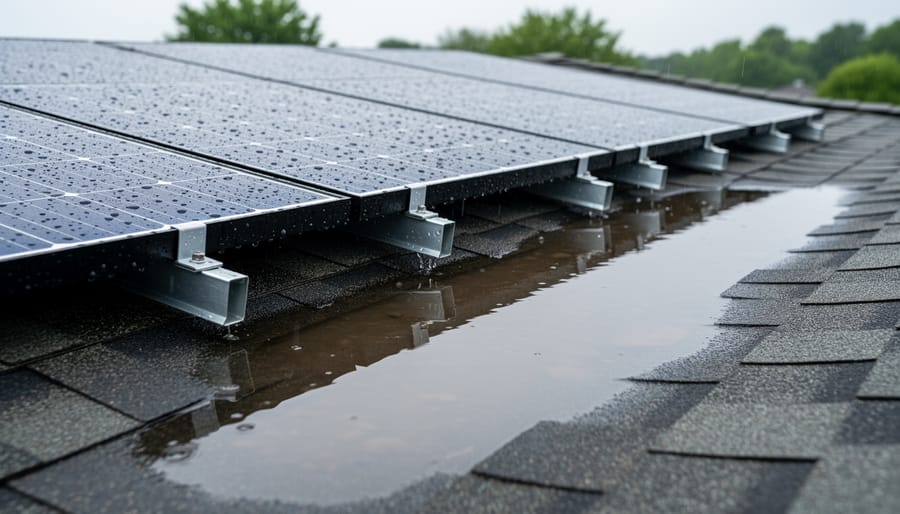
Solar panel arrays disrupt this natural flow by acting as physical barriers. As rainwater moves across your roof, it encounters the raised edges of panel frames and mounting rails. Instead of continuing its intended path, water accumulates in the spaces behind and between panels. This pooling effect is especially problematic on low-slope roofs common in Illinois commercial buildings, where gravity alone provides minimal drainage assistance.
The blocking becomes more severe with larger solar installations. Multiple rows of panels create a stepped barrier effect, forcing water to change direction repeatedly. During heavy Midwest storms, this interrupted flow can overwhelm the roof’s drainage capacity, causing water to back up under shingles or membrane seams where it shouldn’t go.
Concentrated Water Flow and New Stress Points
When solar panels are installed on your roof, they fundamentally change how water moves across your property. Instead of rainwater spreading evenly across the entire roof surface, the panels create barriers that redirect water into narrow channels between and around the panel arrays. This concentrated flow is similar to how a funnel works, collecting water from a large area and directing it through a small opening.
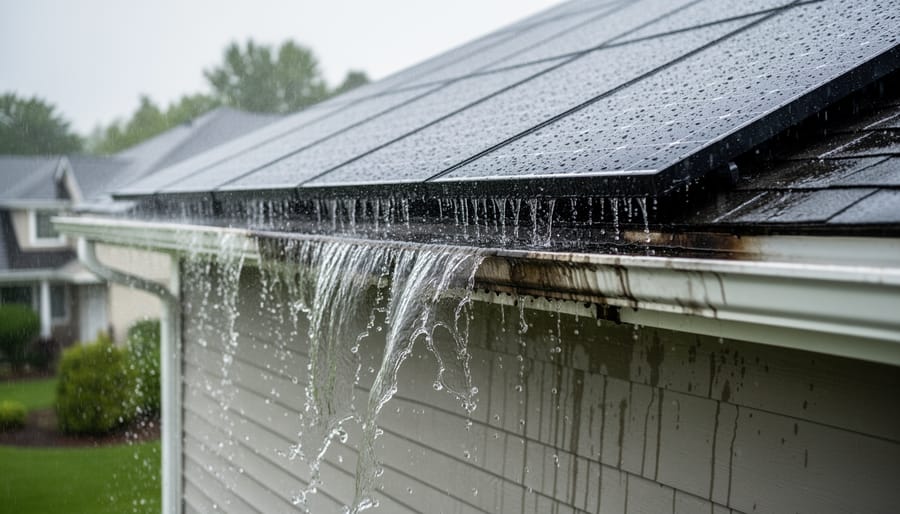
This channeling effect can quickly overwhelm your existing gutter system, especially during Illinois’s heavy spring rains or summer thunderstorms. Gutters designed to handle distributed water flow may struggle when faced with sudden surges from concentrated streams. The result can be overflowing gutters, water cascading over the sides, and pooling near your foundation.
Additionally, these concentrated streams create new stress points on your roof. Areas where water repeatedly flows with increased volume and velocity can experience accelerated wear on shingles, flashing, and underlayment. Over time, this erosion can compromise your roof’s integrity. The edges of solar panel installations become particularly vulnerable, as water rushing off the panels hits these transition zones with greater force than typical rainfall would generate across an unobstructed roof surface.
The Real Risks of Water Ponding on Solar Roofs
Roof Damage and Structural Issues
Standing water on your roof isn’t just unsightly—it’s a serious threat to your property’s long-term health. When water pools on flat or low-slope roofs, particularly common on commercial buildings throughout Illinois, it begins breaking down roofing materials within just 48 hours. The constant moisture penetrates protective membranes, causing them to crack, blister, and eventually fail.
This deterioration creates pathways for leaks that can damage insulation, electrical systems, and interior spaces below. For businesses, this means potential inventory loss, operational disruptions, and costly emergency repairs. The problem becomes even more critical when solar panels are installed, as drainage issues can compromise both your roof warranty and solar investment.
Illinois weather makes proper drainage especially important. Our freeze-thaw cycles cause standing water to expand and contract, accelerating structural damage. Over time, the accumulated weight of pooled water—roughly five pounds per square foot per inch of depth—can stress roof supports and compromise your building’s structural integrity.
If you’re planning a solar installation or already have panels in place, addressing drainage problems before they escalate protects both your roof and your energy system. Professional assessment ensures your roof can safely support solar equipment while maintaining proper water flow for decades to come.
Solar Panel Performance Problems
When water collects on your roof around solar panels, it creates several serious performance and safety concerns that Illinois property owners need to understand. Ponding water reduces your solar panel efficiency by creating shadows and blocking sunlight from reaching the photovoltaic cells. Even a thin layer of standing water can decrease energy production by 5-25%, directly impacting your return on investment.
Beyond reduced efficiency, standing water poses electrical hazards. Solar panels generate electricity whenever exposed to light, and water pooling near mounting hardware, wiring, or junction boxes increases the risk of electrical shorts and corrosion. This moisture exposure can damage critical system components and create dangerous conditions that require immediate professional attention.
Perhaps most concerning for your financial protection, many solar panel manufacturers will void warranties if drainage problems contribute to equipment damage. Installation defects that allow water accumulation are specifically excluded from most warranty coverage. This means you could face significant out-of-pocket repair or replacement costs if drainage issues aren’t identified and corrected early.
Proper roof drainage planning before installation is essential. Working with experienced solar professionals who understand Illinois weather patterns and building requirements ensures your system maintains peak performance while protecting your investment through every season.
Freeze-Thaw Cycles in Illinois Climate
Illinois experiences some of the most challenging freeze-thaw conditions in the country, with temperatures regularly crossing the freezing point throughout winter and early spring. When water becomes trapped on your roof due to poor drainage around solar panels, it creates a serious problem. As temperatures drop, that standing water freezes and expands, potentially cracking roofing materials, damaging flashing, and stressing solar panel mounting hardware. When it thaws, the water seeps deeper into any cracks created, only to freeze again and cause further damage. This repetitive cycle can quickly deteriorate even high-quality roofing materials and compromise the structural integrity of your solar installation. For Illinois property owners, addressing proper water drainage during solar panel installation isn’t just about preventing immediate leaks—it’s essential for protecting your long-term investment from our region’s harsh seasonal temperature swings.
Designing Proper Water Drainage for Solar Roofs
Pre-Installation Roof Assessment
Before beginning the solar installation process, a thorough roof assessment is essential to prevent future drainage problems. A qualified solar installer will evaluate several key factors to ensure your roof can handle both solar panels and proper water management.
The assessment starts with a detailed slope analysis. Your roof’s pitch determines how quickly water flows off the surface. In Illinois, where we experience significant rainfall and snowmelt, adequate slope is crucial for preventing water pooling around solar equipment. Installers measure the angle and direction of water flow to identify the best panel placement.
Next, professionals review your existing drainage system, including gutters, downspouts, and any current water diversion features. They’ll check for signs of wear, clogs, or inadequate capacity that could worsen with solar panels installed.
The evaluation also identifies potential problem areas such as low spots, valleys, or sections where water naturally accumulates. These zones require special attention during installation planning. Additionally, inspectors look for existing roof damage, deteriorating flashing, or areas where water has previously caused issues.
This comprehensive pre-installation assessment allows installers to design a system that works with your roof’s natural drainage patterns rather than against them.
Strategic Panel Placement and Spacing
Proper solar panel placement plays a crucial role in preserving your roof’s drainage system. When planning your solar installation, think of it as working with your roof rather than against it. The key is maintaining natural water flow paths that already exist on your property.
Your solar installer should position panels to leave strategic channels between arrays, allowing rainwater and snowmelt to follow their intended drainage routes. On sloped roofs, this typically means aligning panel rows to complement the pitch direction rather than blocking water’s downward path. For flat commercial roofs common throughout Illinois, creating adequate spacing prevents water from pooling behind panel arrays.
Existing roof features like valleys, ridge lines, and downspouts should guide panel layout decisions. Experienced installers will identify these critical drainage points during site assessment and design the array accordingly. For example, panels near roof valleys should be positioned to direct water into these natural channels rather than away from them.
The spacing between panel rows also matters. Adequate gaps allow water to evaporate after rainfall and provide access for routine roof maintenance. This thoughtful approach prevents the common problem of trapped moisture that can lead to premature roof deterioration. Working with a locally owned solar company familiar with Illinois weather patterns ensures your system design accounts for our region’s heavy spring rains and winter snow loads.
Enhanced Drainage Solutions
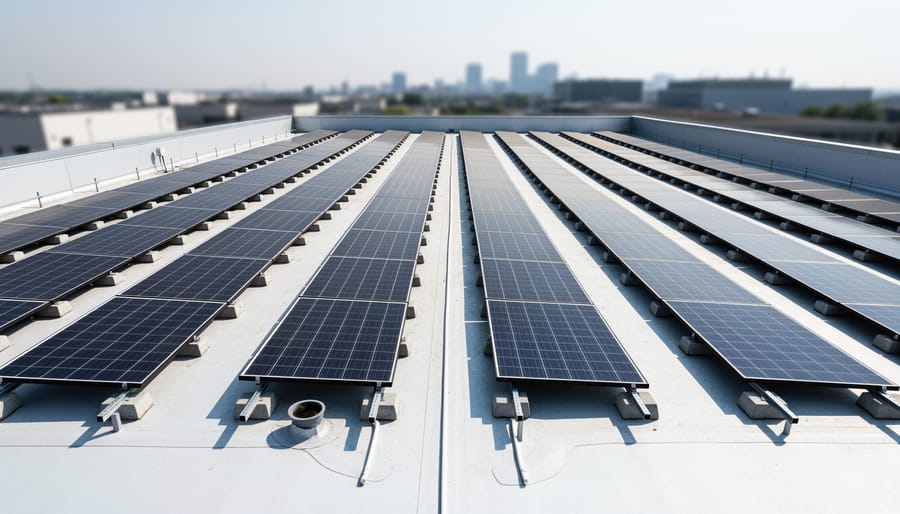
When solar panels alter your roof’s water flow patterns, standard drainage systems may need reinforcement to handle the redirected water effectively. Additional scuppers, which are openings in parapet walls or roof edges, can provide crucial secondary drainage points where water tends to accumulate around solar arrays. These supplementary outlets help prevent pooling and reduce stress on your primary drainage system.
Modified gutters designed specifically for solar installations feature wider channels and strategic positioning to capture increased water volume from panel edges. Unlike conventional gutters, these enhanced systems account for the concentrated water streams that solar panels create as rainwater sheets off their smooth surfaces.
Drainage channels offer another effective solution, particularly for flat or low-slope roofs common in Illinois commercial buildings. These shallow troughs can be installed between panel rows to intercept and redirect water before it overwhelms existing drains. Some systems include debris guards to prevent leaves and other materials from causing blockages.
Working with a locally owned solar installer who understands Illinois weather patterns ensures your drainage enhancements match your specific needs. Professional assessment helps determine which combination of scuppers, modified gutters, or channels will protect your investment while maintaining efficient water management year-round.
Flat Roof vs. Sloped Roof Drainage Considerations
Flat and Low-Slope Commercial Roofs
Flat and low-slope commercial roofs require special attention when planning solar installations because they’re particularly vulnerable to water pooling, also known as ponding. Unlike residential pitched roofs where water naturally runs off, flat roofs depend entirely on proper drainage systems to prevent water accumulation that can compromise both your roof and solar equipment.
When installing commercial solar roofing systems, you’ll typically choose between two mounting approaches: ballasted systems that use weighted blocks to hold panels in place, or attached systems that penetrate the roof membrane. Ballasted systems are popular because they minimize roof penetrations, but they can inadvertently create low spots where water collects if not designed carefully. Your installation team must account for the added weight and ensure it doesn’t affect the roof’s natural pitch toward drains.
The key to successful flat roof solar installations is maintaining adequate slope toward drainage points, typically a minimum of one-quarter inch per foot. Even small disruptions to drainage patterns can lead to ponding water, which increases roof load, accelerates membrane deterioration, and can damage solar equipment. Professional installers will conduct thorough roof surveys and may recommend drainage improvements before mounting panels to protect your investment long-term.
Residential Sloped Roofs
Sloped roofs on Illinois homes present unique drainage considerations when installing residential solar systems. The pitch of your roof naturally directs water toward gutters, but solar panels can alter flow patterns and create new challenges if not properly planned.
Gutter capacity becomes especially important with solar installations. Panels concentrate water runoff along their edges, increasing the volume flowing into existing gutters. Your drainage system must handle this concentrated flow during Illinois’s heavy spring rains and summer storms. Undersized gutters can overflow, causing water to back up under panels or damage your home’s foundation.
Valley areas where roof planes meet require careful attention. Solar panels should never block these critical drainage pathways, as valleys channel significant water volume. Professional installers strategically position panels to maintain clear valley routes while maximizing energy production.
Ice dam prevention is crucial for Illinois winters. Proper panel mounting creates adequate airflow beneath arrays, allowing heat to escape and preventing the freeze-thaw cycles that form ice dams. Snow sliding off panels can also accumulate near gutters, so proper flashing and drainage planning protect your roofing system year-round. Working with experienced local installers ensures your solar investment enhances rather than compromises your home’s water management.
Warning Signs Your Solar Roof Has Drainage Problems
Visual Indicators to Watch For
Regular roof inspections can help you catch drainage problems before they cause serious damage to your property or solar installation. After rainfall, check your roof for pooling water that remains 24-48 hours later, particularly in flat or low-slope areas. This standing water signals inadequate drainage that could compromise your roof’s integrity and solar panel performance.
Look for visible staining or discoloration on your roof surface, as these dark streaks often indicate where water repeatedly collects. Inside your building, water marks on ceilings or walls near the roofline suggest drainage issues affecting the structure. Pay attention to sagging or dipping sections of your roof, which can create unintended low points where water accumulates.
If you notice moss or algae growth in certain areas, this points to persistent moisture from poor drainage. Ice dams forming along roof edges during Illinois winters also reveal drainage concerns that need addressing before solar installation or as part of ongoing maintenance.
When to Call a Professional
While minor drainage issues might resolve with simple maintenance, certain warning signs demand immediate professional attention. If you notice water pooling that persists for more than 48 hours after rainfall, interior ceiling stains, or visible sagging in your roof structure, contact a roofing expert right away. These symptoms often indicate underlying damage that can worsen quickly and potentially compromise your solar panel system.
For solar installations, drainage concerns become especially critical. A qualified professional inspection should evaluate your roof’s current drainage capacity, assess how solar panel placement affects water flow, and identify any existing or potential problem areas. The inspector will examine flashing integrity around panels, gutter alignment, and downspout functionality. As a locally owned company with expertise in solar energy, we understand how Illinois weather patterns impact roof drainage. Our specialists can determine whether your drainage issues require immediate repair or if preventive measures will protect your investment long-term.
Working with Experienced Solar Installers on Drainage
When installing solar panels on your roof, the quality of your installation depends on more than just understanding solar technology. Your installer needs to grasp how roofing systems work, particularly water drainage. This dual expertise makes a significant difference in preventing costly water damage and ensuring your solar investment lasts for decades.
At Illinois Renewables, our team brings together comprehensive knowledge of both solar energy systems and roofing infrastructure. We assess your existing drainage patterns before installation begins, identifying potential problem areas that could lead to water pooling or flow disruption. This proactive approach means we can adjust mounting strategies to work with your roof’s natural drainage rather than against it.
Working with experienced solar installers who understand drainage systems means fewer surprises down the road. We consider factors like roof pitch, gutter placement, and local Illinois weather patterns when designing your solar array. Our locally owned company has installed systems across various roof types throughout Illinois, giving us practical experience with the drainage challenges specific to our region’s climate.
During installation, we maintain proper flashing around all roof penetrations and ensure water can flow freely beneath and around panel arrays. This attention to detail protects your roof’s integrity while maximizing your solar production. If drainage concerns arise after installation, our team can quickly identify solutions because we understand how all the components work together as a complete system.
When planning your solar installation in Illinois, addressing water drainage isn’t something to consider after the fact—it’s an essential part of the design process from day one. Many homeowners and business owners don’t realize that solar panels can significantly affect how water flows across their roof, potentially creating problems that could have been easily prevented with proper planning.
The good news is that drainage challenges are entirely manageable when you work with experienced professionals who understand both solar technology and roofing systems. Before moving forward with your installation, ask your solar installer specific questions: How will the panel layout affect existing drainage patterns? What modifications might be necessary to maintain proper water flow? Will flashing be installed correctly to prevent leaks around mounting hardware? These conversations should happen during the planning phase, not after panels are already on your roof.
Remember that a quality solar installation considers your entire roofing system as an integrated whole. Proper planning means your panels will generate clean energy for decades while your roof continues to shed water effectively, protecting your investment and your property.
If you’re considering solar energy for your Illinois home or business, don’t hesitate to reach out to locally owned professionals with expertise in solar energy who understand the unique weather challenges our region faces. A consultation with experienced installers can provide peace of mind that your solar investment will deliver benefits without creating new problems. Taking the time to address drainage properly from the start ensures your solar system performs exactly as intended—efficiently, reliably, and worry-free.
