

Your Electric Car Could Power Your Illinois Home (And Save You Money)
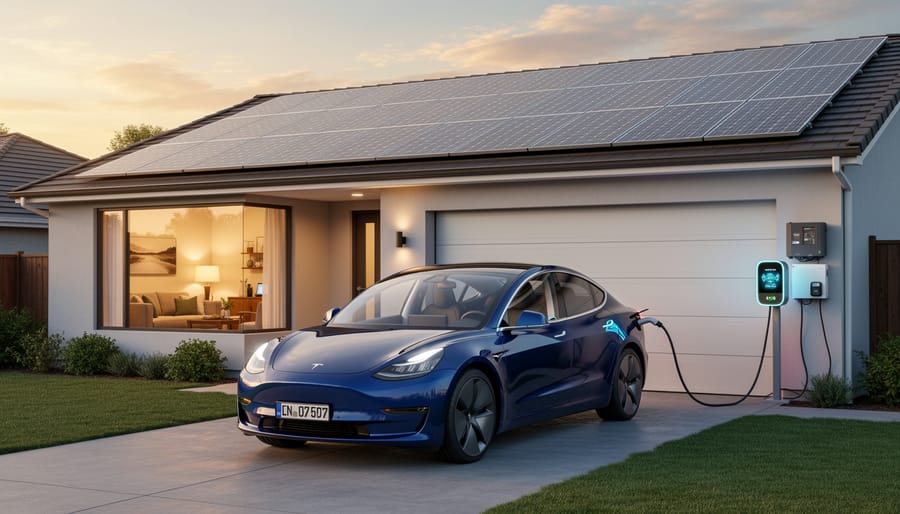
Your electric vehicle can do more than just drive—it can power your home, stabilize Illinois’ electrical grid, and generate income while parked in your driveway. Vehicle-to-grid (V2G) technology transforms your EV battery into a two-way energy storage system, allowing electricity to flow from the grid to your vehicle when charging, and back to the grid or your home when needed. This bidirectional capability becomes especially powerful when paired with rooftop solar panels, creating a complete energy ecosystem that reduces your dependence on traditional utilities.
Illinois homeowners and businesses are uniquely positioned to benefit from V2G integration. The state’s aggressive renewable energy targets, coupled with net metering policies and evolving grid modernization initiatives, create favorable conditions for early adopters. When your solar panels generate excess electricity during peak production hours, that energy can charge your EV. Later, during high-demand periods or at night, your vehicle can discharge stored power back to your property or the grid, potentially earning credits or payments through utility programs.
The technology addresses a critical challenge facing solar adopters: energy storage. Rather than purchasing a separate stationary battery system, V2G leverages the substantial battery capacity already sitting in your EV—typically 60-100 kilowatt-hours—to store solar energy for later use. This integration maximizes your solar investment while adding resilience during power outages and grid emergencies increasingly common in Illinois weather patterns.
What Is Vehicle-to-Grid Technology?
How V2G Works with Your Solar System
Vehicle-to-grid technology creates a powerful partnership between your electric vehicle, rooftop solar panels, and the electrical grid. Here’s how these components work together to maximize your energy independence and savings in Illinois.
During sunny days, your solar panels generate electricity that can simultaneously power your home, charge your EV battery, and send excess energy back to the grid. When your EV is plugged in and fully charged, it essentially becomes one of your home’s energy storage systems. The V2G technology allows that stored solar energy to flow back into your home or the grid when needed most.
This integration proves especially valuable in Illinois, where seasonal variations create distinct energy patterns. During summer months, your solar system produces peak output while your EV battery captures and stores this clean energy. When evening demand spikes and your panels stop producing, your EV can discharge stored power to run your home or support the grid during high-demand periods.
In winter, when Illinois experiences shorter days and increased heating demands, V2G technology helps balance your energy needs. You can charge your EV during off-peak hours when electricity rates are lower, then use that stored power during expensive peak times or unexpected outages.
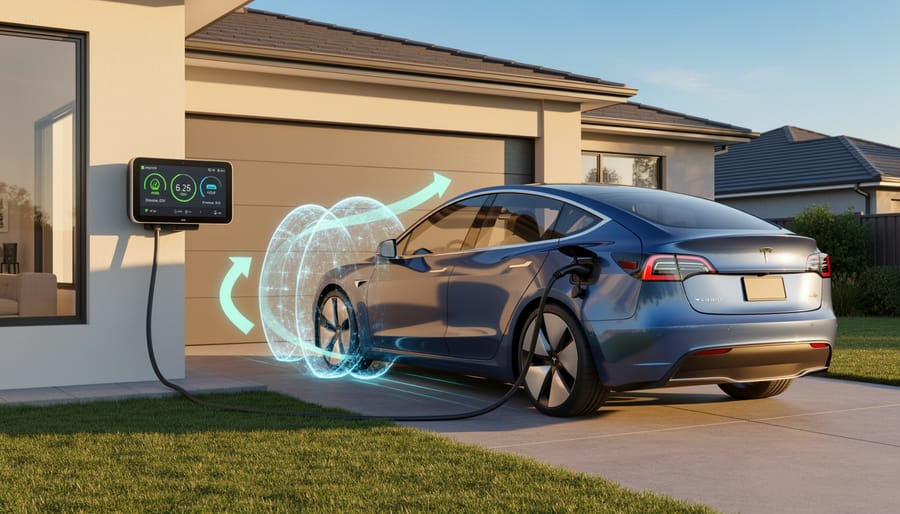
The system operates through a bidirectional charger that manages energy flow in both directions. Smart software monitors your driving needs, home energy consumption, grid demands, and solar production to optimize when your EV charges and discharges. You maintain control over minimum battery reserves for driving, ensuring your vehicle is always ready when you need it while still contributing to grid stability and reducing your energy costs.
The Equipment You’ll Need
Getting started with vehicle-to-grid technology requires three essential components working together. First, you’ll need a bidirectional charger, which allows electricity to flow both ways—into your EV’s battery when charging and back to your home or the grid when needed. Unlike standard EV chargers that only push power one direction, bidirectional chargers are the core technology enabling V2G functionality.
Second, you’ll need a compatible electric vehicle. Not all EVs currently support bidirectional charging, though more manufacturers are adding this capability. Popular models with V2G compatibility include the Ford F-150 Lightning, Nissan Leaf, and several newer EV models entering the market. Before investing in V2G infrastructure, verify your vehicle’s compatibility or consider this feature when purchasing your next EV.
Third, you’ll need integration equipment to connect everything safely. This includes a home energy management system that coordinates power flow between your solar panels, EV battery, home electrical system, and the utility grid. Similar to smart inverter rebates available for solar installations, these management systems ensure safe, efficient operation while maximizing your financial benefits.
In Illinois, working with experienced local installers is crucial. They’ll ensure your equipment meets utility requirements, handles proper permitting, and optimizes your system for Illinois-specific programs. Professional installation typically costs between $3,000 and $10,000 depending on your existing infrastructure, though incentives can significantly reduce upfront expenses.
Why Illinois Is Perfect for Vehicle-to-Grid Solar Integration
Illinois Energy Policy and Incentives
Illinois has positioned itself as a leader in clean energy adoption through comprehensive legislation that directly supports vehicle-to-grid technology and solar integration. The landmark Climate and Equitable Jobs Act (CEJA), signed into law in 2021, sets ambitious goals for renewable energy while creating substantial financial incentives for residents and businesses.
Under CEJA, Illinois commits to 100% clean energy by 2050 and significantly expands the state’s solar programs. The Illinois Shines program, administered through the Adjustable Block Program, provides incentives for solar installations that can integrate with V2G systems. Property owners installing solar arrays with battery storage or V2G-capable EV charging infrastructure may qualify for enhanced incentive levels.
The state also offers rebates through the Illinois Environmental Protection Agency for electric vehicle charging equipment, which can include bidirectional chargers necessary for V2G functionality. These Illinois energy incentives can significantly reduce upfront costs, making advanced solar and V2G integration more accessible.
Additionally, net metering policies allow solar-plus-V2G system owners to receive credit for excess electricity sent back to the grid. Commercial and industrial users may benefit from demand charge reductions when using V2G technology to manage peak electricity usage.
Working with locally owned solar providers familiar with these programs ensures you maximize available incentives while navigating the application process efficiently. These policies create a favorable environment for implementing cutting-edge V2G solar integration across Illinois.
Net Metering Opportunities
Illinois net metering policies create significant financial opportunities for homeowners and businesses using vehicle-to-grid technology. When your electric vehicle isn’t needed for transportation, V2G systems allow you to send stored solar energy back to the utility grid, earning credits on your electricity bill. This is particularly valuable during peak demand periods when electricity prices are highest, typically on hot summer afternoons when air conditioning usage spikes across Illinois.
The state’s net metering framework works seamlessly with smart grid integration, automatically tracking the energy you export and applying credits to offset your consumption. For every kilowatt-hour your V2G system sends to the grid, you receive a credit at the retail electricity rate. These credits roll over month-to-month, providing year-round savings even during seasons when your solar production and EV usage vary.
Illinois utilities are increasingly recognizing V2G participants as valuable grid resources. Some programs offer additional incentives for providing power during critical demand periods, creating multiple revenue streams beyond standard net metering credits. This makes V2G technology not just an environmental choice, but a smart financial investment for property owners seeking to maximize their solar energy returns.
Real Benefits for Illinois Homeowners and Businesses
Emergency Backup Power During Outages
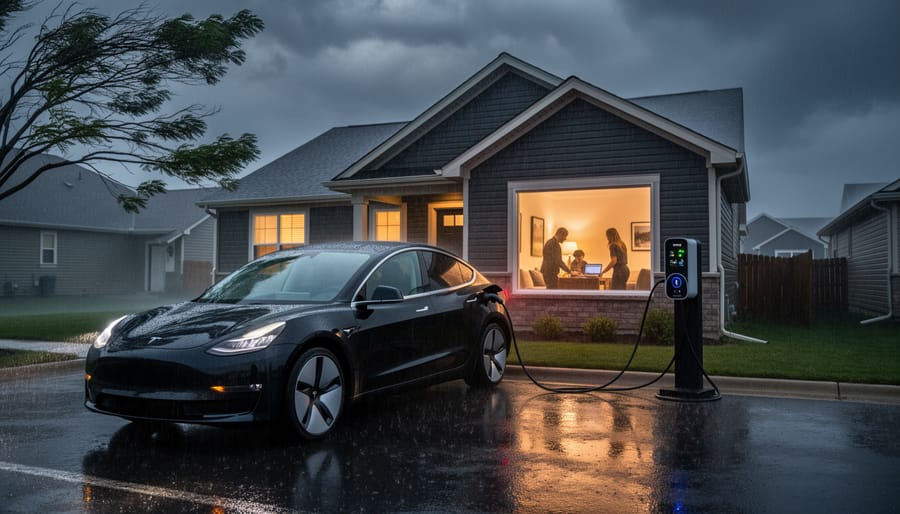
Illinois residents know firsthand how severe weather can disrupt power reliability. Winter storms, ice accumulation, and summer severe weather events regularly strain the electrical grid, sometimes causing outages that last hours or even days. Vehicle-to-grid technology offers a practical solution to these reliability concerns by transforming your EV into a backup power source during emergencies.
When combined with solar panels and battery storage through hybrid solar systems, V2G-capable vehicles provide an additional layer of energy security. During a grid outage, your EV can discharge stored electricity to power essential home systems like heating, refrigeration, medical equipment, and communications devices. A typical EV battery holds 60-100 kWh of energy, enough to run an average Illinois home for several days when managed efficiently.
This capability proves especially valuable during winter freezes when heating systems are critical, or during summer storms when cooling and food preservation become priorities. Rather than relying solely on traditional generators or waiting for grid restoration, homeowners and businesses gain immediate access to clean, quiet backup power. This energy independence represents a significant advantage in Illinois’s unpredictable climate, where weather-related outages remain a consistent concern for property owners across the state.
Reducing Your Energy Bills
Vehicle-to-grid technology offers Illinois residents multiple pathways to reduce energy costs while supporting grid stability. By strategically timing when your EV charges and discharges, you can take advantage of pricing structures that reward smart energy management.
Time-of-use rates in Illinois provide substantial savings opportunities. ComEd’s time-of-use pricing, for example, charges significantly less during off-peak hours—typically overnight when demand is low. You can charge your EV when rates are cheapest, then discharge stored energy back to your home during expensive peak periods, typically weekday afternoons from 2-7 PM when rates can be two to three times higher. A typical EV battery storing 60-80 kWh could offset several dollars daily during peak periods.
Demand charge reduction represents another significant benefit for business owners. Commercial facilities in Illinois often face demand charges based on their highest power consumption within a billing period. By using your EV battery to smooth out consumption spikes, you can reduce these charges substantially—potentially saving hundreds of dollars monthly depending on your facility size.
Selling energy back to the grid during peak pricing periods creates an additional revenue stream. While Illinois is still developing comprehensive vehicle-to-grid programs, early participants report earning credits that offset charging costs. The Illinois Power Agency continues exploring compensation mechanisms for distributed energy resources, making this an evolving opportunity.
Combined with solar energy generation, these savings compound significantly. Your solar panels generate power during the day, which you can store in your EV and strategically discharge when it’s most valuable financially.
Environmental Impact
Vehicle-to-grid technology offers significant environmental benefits for Illinois residents and businesses. By enabling electric vehicles to discharge stored solar energy back to the grid during peak demand hours, V2G systems reduce reliance on fossil fuel power plants that typically ramp up during these periods. In Illinois, where coal and natural gas still generate a substantial portion of electricity, V2G integration with solar can directly displace carbon-intensive generation.
Studies show that widespread V2G adoption could reduce carbon emissions by up to 30% compared to conventional grid operations in states with similar energy profiles. For the average Illinois household pairing solar with V2G-capable vehicles, this translates to eliminating approximately 2-4 tons of carbon dioxide annually—equivalent to planting 50-100 trees each year.
This technology directly supports Illinois’ Climate and Equitable Jobs Act goals of achieving 100% clean energy by 2050. By maximizing solar energy utilization and reducing grid stress, V2G helps decrease the need for new power plant construction while improving local air quality. Illinois communities adopting V2G systems experience tangible benefits including reduced smog-forming emissions and better public health outcomes, particularly during summer months when demand peaks.
Is Your Property Ready for V2G Integration?
Evaluating Your Current Solar Setup
Before integrating vehicle-to-grid technology with your property, you’ll need to assess whether your current or planned solar installation can handle the additional demands. This evaluation ensures your system operates efficiently and maximizes the benefits of V2G technology.
Start by examining your solar system size. A typical residential V2G setup works best with a solar array generating at least 5-10 kilowatts, though your specific needs depend on your household energy consumption and EV charging requirements. Review your solar production data over the past year to understand your system’s capacity and any seasonal variations common in Illinois.
Next, check your inverter compatibility. V2G technology requires bidirectional inverters that can both receive power from your EV and send power back to your home or the grid. Many older solar installations use standard inverters that only convert DC power from panels to AC power for household use. You may need to upgrade to a hybrid inverter designed specifically for V2G applications.
Evaluate your panel capacity and available roof space. If you’re planning to add V2G capabilities, consider whether your existing panels can generate enough surplus energy to charge your vehicle while meeting your home’s needs. Illinois experiences considerable seasonal sunlight variation, so factor in winter production levels when calculating capacity.
Finally, examine your electrical panel and service capacity. V2G systems typically require 200-amp electrical service to handle the additional load safely. A locally owned solar provider with expertise in Illinois installations can perform a comprehensive assessment and recommend necessary upgrades to support your V2G goals.
Electric Vehicle Compatibility
Currently, several electric vehicle models support bidirectional charging, essential for vehicle-to-grid integration. The Ford F-150 Lightning leads the market with robust V2G capabilities, followed by the Nissan Leaf (select models), Volkswagen ID.4, and Hyundai Ioniq 5 and 6. The Chevrolet Silverado EV and GMC Sierra EV, both assembled in the United States, are launching with bidirectional capability. Future models from Ford, GM, and other manufacturers will increasingly include this technology as standard equipment.
For Illinois drivers, cold weather battery performance deserves careful consideration. Winter temperatures can reduce EV battery efficiency by 20-40%, affecting both driving range and available power for grid support. However, modern thermal management systems help maintain battery performance. When planning V2G integration, factor in that your vehicle may deliver less power to your home during cold snaps when you need it most for heating.
The good news is that V2G systems can be programmed to prioritize your driving needs first, ensuring adequate range for daily commutes regardless of weather. Working with locally owned solar installers who understand Illinois climate conditions helps optimize your system configuration for year-round reliability while maximizing the financial benefits of bidirectional charging during peak demand periods.
Installation and Integration Process
Working with Local Solar Experts
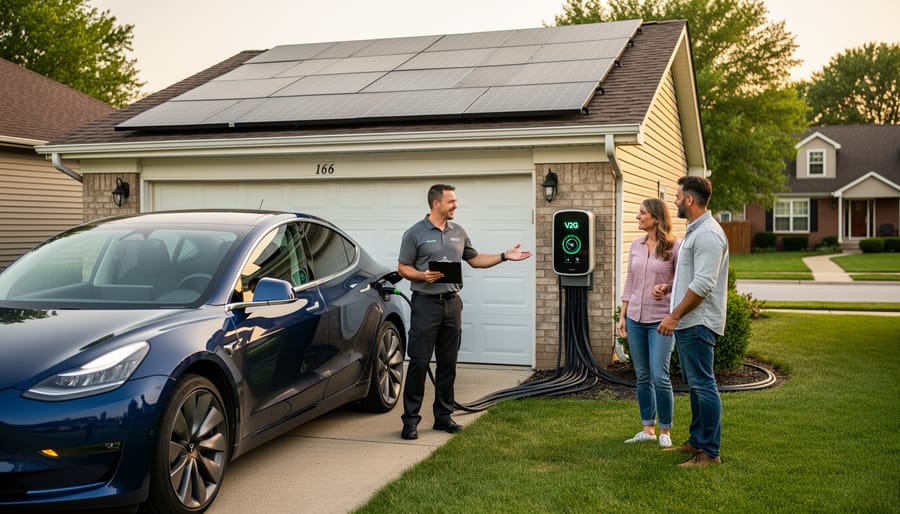
Implementing vehicle-to-grid technology alongside solar panels requires specialized knowledge that goes far beyond standard electrical work. This is where partnering with locally owned Illinois solar companies makes a significant difference. Local experts bring firsthand understanding of state-specific regulations, utility interconnection requirements, and the unique challenges posed by Illinois weather patterns and building codes.
When you work with local solar professionals, you’re getting a team that knows how Illinois utilities handle bidirectional energy flow and what permits are necessary for V2G installations. They understand the nuances of coordinating between solar installation, electrical system upgrades, and potential construction modifications your property might need. This coordination is essential because V2G systems must seamlessly integrate your solar array, home electrical panel, EV charger, and utility connection.
Local companies also stay current with Illinois-specific incentive programs and can help you maximize available rebates and tax credits. They’re familiar with regional electrical codes and have established relationships with local inspectors, which can streamline the approval process and prevent costly delays.
Additionally, choosing a locally owned company means you’ll have accessible support if issues arise. Your installer will be nearby to handle maintenance, troubleshooting, or system expansions. They have a vested interest in your satisfaction and their reputation within the community.
When evaluating solar companies for your V2G project, look for those with demonstrated experience in both solar installations and EV charging infrastructure. Ask about their familiarity with Illinois utility requirements and their process for managing complex, multi-system integrations.
Timeline and What to Expect
Implementing vehicle-to-grid technology in Illinois typically takes three to six months from initial consultation to system activation, though timelines vary based on project complexity and local requirements. The process begins with a technical assessment of your solar system, EV compatibility, and electrical infrastructure, which usually takes one to two weeks.
Permitting requirements differ across Illinois municipalities. Most communities require electrical permits for bidirectional charger installation, with approval times ranging from two to six weeks. Some jurisdictions may also require building permits or inspections. Working with a locally owned solar installer familiar with regional permitting processes can significantly expedite this phase.
Utility approval represents a critical step, as ComEd and Ameren Illinois must review and approve your V2G system’s interconnection. This process typically takes four to eight weeks, depending on current application volumes and system specifications. Your installer will submit all necessary documentation on your behalf.
After permits and utility approvals are secured, physical installation of bidirectional charging equipment and necessary electrical upgrades generally takes one to three days. Following installation, a final inspection and utility activation complete the process. During peak permit season, expect longer timelines. Planning your project during fall or winter months often results in faster completion, allowing you to start benefiting from bidirectional energy flow sooner.
Overcoming Common Concerns
If you’re considering vehicle-to-grid technology, you might have some understandable concerns. Let’s address the most common hesitations with current evidence.
Battery degradation tops the list of worries for many EV owners. The good news is that recent studies show V2G participation has minimal impact on battery life when properly managed. Modern battery management systems control discharge rates and depth, and many V2G programs limit battery cycling to protect longevity. In fact, some research suggests that keeping batteries in moderate charge ranges through V2G use may actually benefit battery health compared to staying at full charge for extended periods.
Cost concerns are also valid, but the financial picture has improved significantly. While initial equipment investment exists, Illinois incentives and utility programs often offset these costs. Many participating EV owners report earning $500 to $1,500 annually through grid services, with minimal additional wear on their vehicles. As the technology matures and becomes more widespread, equipment costs continue to decrease.
Complexity worries are becoming outdated. Today’s V2G systems use smartphone apps and automated scheduling to handle everything behind the scenes. You set your driving needs and preferences once, and the system ensures your vehicle is charged when you need it while optimizing grid interaction during other times.
Reliability has proven strong in pilot programs across the country and internationally. V2G systems include multiple safeguards to prioritize your transportation needs first. Your vehicle will always maintain the charge level you specify for upcoming trips. Additionally, working with experienced local installers who understand Illinois conditions ensures proper system design and ongoing support for optimal performance.
Vehicle-to-grid solar integration represents a forward-thinking approach to energy management that’s becoming increasingly relevant for Illinois residents and businesses. As our state continues expanding renewable energy infrastructure and EV adoption grows, V2G technology offers a practical way to maximize your solar investment while contributing to grid stability. The combination of Illinois’ supportive policy environment, including beneficial net metering programs and clean energy incentives, makes this an opportune time to explore how V2G could work for your specific situation.
Every property has unique energy needs, roof characteristics, and usage patterns that influence whether V2G integration makes sense right now or in the near future. Rather than navigating these considerations alone, partnering with experienced professionals who understand both the technical requirements and Illinois-specific regulations ensures you make informed decisions aligned with your goals.
We encourage you to connect with locally owned Illinois solar experts who can conduct a comprehensive assessment of your property, evaluate your current and projected energy usage, and determine the best pathway for integrating V2G technology with your solar system. Take the next step toward energy independence by scheduling a consultation with professionals who know Illinois solar inside and out.
