

Why Your Solar Workforce Needs Digital Sustainability Training (Before They Install Another Panel)
Digital transformation sustainability merges technology-driven training solutions with environmental responsibility, creating workforce development programs that reduce carbon footprints while building essential skills for the renewable energy sector. For Illinois solar companies and businesses committed to clean energy, this approach replaces resource-intensive traditional training methods with digital platforms that eliminate paper waste, reduce travel emissions, and minimize energy consumption.
The solar industry faces a unique challenge: preparing workers for cutting-edge technology installation and maintenance while maintaining alignment with core environmental values. Traditional classroom training requires physical materials, commuter travel, and facility energy use that contradicts sustainability missions. Digital transformation solves this by delivering virtual instructor-led sessions, interactive simulations, and mobile learning modules that employees access remotely. This shift cuts training-related emissions by up to 90 percent compared to conventional methods.
Illinois businesses adopting digital training platforms gain competitive advantages beyond environmental benefits. Remote accessibility expands talent pools across the state’s diverse regions, from Chicago’s urban centers to rural communities. Real-time skill assessments track employee progress more effectively than paper-based evaluations. Updated content deploys instantly when solar technology advances or regulations change, ensuring workforce readiness without reprinting materials.
As Illinois accelerates renewable energy adoption, workforce training programs must reflect the same sustainability principles driving solar expansion. Digital transformation provides the framework for scalable, environmentally conscious employee development that supports business growth while honoring commitments to protecting our planet for future generations.
What Digital Transformation Sustainability Really Means for Solar Teams

The Environmental Cost of Traditional Training Methods
Traditional training methods in the solar industry carry a significant environmental burden that often goes unexamined. Paper-based training materials, including technical manuals, certification documents, and instructional guides, contribute substantially to deforestation and waste. A single comprehensive solar installation training program can generate hundreds of pages per participant, multiplied across an entire workforce. These materials frequently become outdated as technology advances, leading to disposal and reprinting cycles that compound the environmental impact.
In-person only training sessions present another considerable challenge. When solar professionals must travel to centralized training facilities, the associated carbon emissions from transportation can be substantial. For Illinois-based solar companies, sending technicians to out-of-state certification programs or regional training centers means air travel, hotel stays, and ground transportation, all of which increase the carbon footprint of workforce development.
The outdated certification process adds another layer of waste. Physical certificates, laminated credentials, and mailed renewal notices contribute to ongoing paper consumption and shipping emissions. Additionally, maintaining physical training facilities requires energy for heating, cooling, and lighting, often powered by conventional energy sources rather than renewable alternatives.
For businesses committed to clean energy solutions, these traditional training methods create a contradiction between the values they promote and the practices they employ. The environmental cost extends beyond materials to include the broader energy consumption and resource use required to maintain conventional training infrastructure, making digital transformation not just a convenience but an environmental necessity.
How Digital Tools Make Training Greener
The solar industry’s commitment to sustainability extends beyond installing panels—it includes how we train our workforce. Digital tools are revolutionizing training programs while significantly reducing environmental impact.
Virtual learning platforms eliminate the need for physical classrooms and daily commutes. When installers and technicians can complete certifications from home or job sites, we save fuel, reduce vehicle emissions, and cut down on facility energy consumption. For Illinois-based solar companies, this means training teams across the state without requiring travel to a central location.
Digital documentation replaces mountains of printed materials. Training manuals, safety guidelines, and technical specifications now live in cloud-based systems accessible from any device. This shift saves trees, reduces printing costs, and ensures everyone accesses the most current information instantly. Updates happen in real-time rather than requiring new printed versions.
Remote certifications and assessments further minimize environmental footprint. Installers can demonstrate competencies through video submissions and virtual evaluations, reducing the need for in-person testing centers. Cloud-based knowledge management systems create searchable libraries of training resources, eliminating redundant materials and ensuring efficient knowledge sharing across teams.
These digital solutions align perfectly with solar energy values. By reducing paper waste, transportation emissions, and facility energy use, training programs practice the same environmental stewardship they promote through renewable energy installation.
Building a Sustainable Digital Training Program for Solar Installers
Essential Digital Training Components
Modern solar training programs rely on several key digital components that make learning more effective while reducing environmental impact. These digital training tools transform how installers learn their craft without the carbon footprint of traditional methods.
E-learning platforms serve as the foundation, delivering coursework on electrical systems, panel specifications, and local Illinois building codes through online modules. Trainees can access lessons from anywhere, eliminating commute emissions while learning at their own pace. These platforms track progress automatically and adjust content based on individual performance.
Virtual reality simulations represent a breakthrough in hands-on training. Instead of practicing on physical rooftops, installers experience realistic scenarios in VR environments. They learn to navigate roof pitches, identify structural concerns, and practice safety procedures without waste or risk. This technology proves particularly valuable for training on different roof types common throughout Illinois, from Chicago bungalows to rural barn installations.
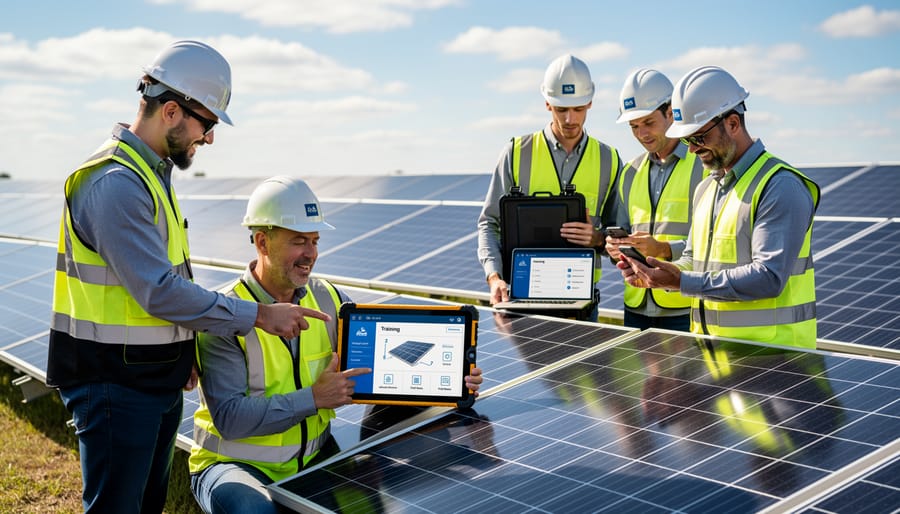
Mobile-first training apps extend learning beyond the classroom. Field technicians access installation guides, troubleshooting resources, and safety checklists directly on smartphones or tablets. These apps include photo documentation features, allowing teams to share solutions instantly and build a digital knowledge base.
Digital safety protocols integrate seamlessly with these platforms. Interactive modules cover fall protection, electrical hazards, and proper equipment use through engaging video content and quizzes. Automated certification tracking ensures compliance with Illinois safety regulations while eliminating paper-based recordkeeping.
Together, these components create a comprehensive training ecosystem that prepares solar professionals effectively while supporting the sustainability values central to renewable energy work. The digital approach reduces material waste, minimizes travel requirements, and delivers consistent, high-quality education across all skill levels.
Measuring the Sustainability Impact
Tracking the environmental impact of your digital training programs provides concrete data that demonstrates your commitment to sustainability. For Illinois solar businesses, measuring these benefits helps justify the investment while showcasing your dedication to environmental responsibility.
Start by calculating travel emission reductions. When employees attend training from their homes or offices instead of traveling to centralized locations, you eliminate vehicle emissions. A simple calculation multiplying miles saved by average emissions per mile provides clear numbers. For example, if ten employees each save a 100-mile round trip, that prevents approximately 840 pounds of carbon dioxide emissions per training session.
Paper waste elimination offers another measurable benefit. Digital training materials replace printed manuals, handouts, and certificates. Track the number of pages saved per training program and convert this to environmental impact using standard metrics. One ton of recycled paper saves approximately 17 trees and 7,000 gallons of water.
Energy efficiency gains require monitoring your digital infrastructure. Modern learning management systems consume significantly less energy than maintaining physical training facilities with heating, cooling, and lighting needs. Compare the energy consumption of your digital platform against the utilities required for in-person training spaces.
Consider implementing tracking dashboards that display these metrics quarterly. This transparency reinforces your environmental values and provides tangible proof that your digital transformation supports broader sustainability goals. These measurements also help Illinois businesses qualify for green business certifications and demonstrate alignment with state renewable energy initiatives.
Real-World Benefits for Illinois Solar Companies
Cost Savings That Add Up
Digital transformation in workforce training delivers measurable financial benefits that directly support your bottom line while advancing sustainability goals. By transitioning to digital training platforms, solar companies and businesses across Illinois can eliminate significant costs associated with printed training materials, reducing both expenses and paper waste. This shift means no more printing hundreds of pages of technical manuals, safety guidelines, or installation procedures for each new employee.
Travel expenses also decrease dramatically when digital training replaces in-person sessions. Instead of sending trainers across Illinois or requiring employees to travel to central training locations, teams can access comprehensive educational content remotely. This approach cuts fuel costs, vehicle wear, and lodging expenses while reducing your company’s carbon footprint.
Perhaps most importantly, digital platforms accelerate workforce onboarding times. New solar installers and technicians can begin training immediately upon hiring, progressing at their own pace through interactive modules. What traditionally took weeks of scheduled classroom sessions now happens in days, getting qualified workers into the field faster. For locally owned solar businesses competing in Illinois’s growing renewable energy market, these combined savings create financial flexibility to invest in equipment upgrades, expanded service areas, or additional team members.
Better Trained Installers, Better Installations
Digital training programs are revolutionizing how solar installers learn their craft, resulting in consistently better workmanship across the industry. Unlike traditional methods that rely on individual mentors or outdated manuals, digital platforms deliver standardized, current information to every team member simultaneously. When equipment specifications change or new installation techniques emerge, updates reach all installers instantly, ensuring everyone works with the same accurate knowledge.
This consistency translates directly to fewer mistakes on your property. Installers trained through interactive digital modules retain information more effectively than those who simply read printed materials. Video demonstrations, virtual simulations, and step-by-step digital guides help technicians understand exactly how components should be positioned, connected, and secured before they ever arrive at your home or business.
For Illinois property owners, this means higher quality installations that perform as promised from day one. Better-trained installers complete work more efficiently, reducing the time your property is disrupted. They catch potential issues before they become problems, properly weatherproof connections for our variable Midwest climate, and understand local building codes thoroughly.
The result is fewer callbacks for adjustments or repairs, which saves you time and ensures your solar system operates at peak efficiency immediately. When your installer arrives with comprehensive digital training backing their expertise, you benefit from the solar industry’s commitment to continuous improvement and professional excellence.
Implementing Green Digital Training Practices at Your Solar Company
Start Small: Low-Cost Digital Training Solutions
Beginning your digital transformation journey doesn’t require a massive investment. For Illinois solar companies looking to embrace sustainable training practices, several low-cost solutions can deliver immediate environmental and operational benefits.
Start by converting existing paper-based training manuals and safety documentation into PDF format. This simple step eliminates printing costs while making materials easily accessible on tablets or smartphones in the field. Your technicians can reference installation guides or troubleshooting procedures without carrying bulky binders to job sites.
Next, consider creating basic video tutorials using smartphones or affordable recording software. Short videos demonstrating proper panel installation techniques, system maintenance procedures, or safety protocols can be more effective than written instructions. These videos reduce training time and can be reused indefinitely, eliminating the need for repeated in-person demonstrations.
Implementing a basic learning management system represents another accessible starting point. Free or low-cost platforms allow you to organize training materials, track employee progress, and ensure certification requirements are met. These systems eliminate the need for physical record-keeping and streamline compliance documentation.
Many platforms offer templates specifically designed for technical industries, making setup straightforward even for small teams without dedicated IT support. As your comfort level grows, you can gradually add more sophisticated features like quizzes, interactive modules, or virtual reality simulations. Starting small allows you to build confidence while immediately reducing your training program’s environmental footprint.

Choosing Energy-Efficient Digital Platforms
When building a sustainable digital training program, the platforms you choose matter just as much as the content itself. Not all software and cloud services operate with the same environmental footprint, so selecting energy-efficient options aligns your workforce development with your commitment to renewable energy.
Start by researching training platforms that openly report their energy consumption and carbon footprint. Many leading providers now publish sustainability reports detailing their environmental initiatives. Look for platforms hosted on cloud infrastructure powered by renewable energy sources like solar or wind. Major cloud providers including Google Cloud, Microsoft Azure, and Amazon Web Services have made significant investments in renewable energy, though their commitment levels vary.
Consider locally owned technology partners when possible, as they often have stronger connections to regional sustainability goals and can provide more transparent information about their energy sources. Illinois businesses benefit from working with providers who understand the state’s renewable energy landscape and can align their services accordingly.
Evaluate the efficiency of the platforms themselves. Well-designed software requires less processing power, which translates to lower energy consumption per user. Features like optimized video compression, efficient data storage, and streamlined code reduce the computational resources needed for training delivery.
Ask potential vendors specific questions about their data center locations, cooling methods, and renewable energy usage. Companies serious about sustainability will welcome these inquiries and provide clear answers. This due diligence ensures your digital transformation genuinely supports environmental responsibility rather than simply shifting your energy consumption elsewhere.
The Future of Sustainable Solar Workforce Development
The solar industry stands at the intersection of technological innovation and environmental responsibility, making digital training solutions increasingly vital for future workforce development. As we look ahead, artificial intelligence and machine learning will personalize training experiences, adapting to individual learning styles while minimizing resource consumption. Virtual reality technology will continue advancing, allowing technicians to practice complex installations in simulated environments that require zero materials or transportation.
Cloud-based platforms will become more sophisticated, enabling real-time collaboration between Illinois solar companies and their distributed teams while reducing the carbon footprint associated with traditional training facilities. Mobile learning applications will provide just-in-time training accessible from job sites, eliminating unnecessary travel and paper-based materials.
The integration of renewable energy sources to power digital training infrastructure will become standard practice, ensuring that the methods used to train solar professionals align with the industry’s core mission. Data analytics will help companies measure and optimize their training programs’ environmental impact, creating transparent sustainability metrics that resonate with environmentally conscious clients.
For Illinois homeowners and businesses partnering with locally owned solar companies, these advances mean access to better-trained installers who understand both cutting-edge technology and sustainable practices. This commitment to continuous improvement ensures that workforce training evolves alongside solar technology itself, maintaining the highest standards while protecting our environment for future generations.
Digital transformation sustainability in workforce training isn’t just a modern trend—it’s a natural extension of the core mission that drives solar energy companies forward. When organizations commit to renewable energy, they’re making a promise to reduce environmental impact at every level. This commitment should extend beyond the solar panels themselves to include how teams are trained, how knowledge is shared, and how expertise is developed within the company.
At Illinois Renewables, we recognize that sustainable training practices strengthen our ability to serve communities across the state. By embracing digital learning platforms, reducing paper waste, and implementing energy-efficient training methods, we’re reinforcing the environmental values that brought many of our clients to solar energy in the first place. Our locally owned approach means we understand the unique needs of Illinois businesses and homeowners, and we’re dedicated to delivering exceptional service while maintaining the highest environmental standards.
As you consider solar installation for your home or business, look beyond the panels and inverters. Ask potential providers about their training practices, their commitment to sustainability, and how they’re preparing their workforce for the future. Companies that invest in sustainable digital transformation demonstrate a deeper commitment to environmental responsibility—one that translates into better service, more knowledgeable technicians, and installations that truly reflect renewable energy values. Choose partners who walk the talk on sustainability, from the products they install to how they prepare their teams to serve you.
