

How Illinois Solar Incentives Can Cut Your Energy Bills in Half
Transform your Illinois home into a clean energy powerhouse while saving thousands through powerful solar incentives available right now. The federal Solar Investment Tax Credit offers a 30% reduction in your solar system costs, while Illinois’ Smart Solar Program provides additional rebates up to $10,000 for qualifying installations. When combined with net metering policies and Solar Renewable Energy Credits (SRECs), homeowners can recover up to 60% of their initial investment. Financing your solar installation has never been more accessible, with local utilities and municipalities offering zero-down programs and low-interest loans specifically designed for Illinois residents. These incentives, available through 2024, make solar adoption not just environmentally conscious but financially shrewd for Illinois property owners looking to secure long-term energy savings.
Federal Solar Tax Credits Available in Illinois
Understanding the Federal Solar Tax Credit
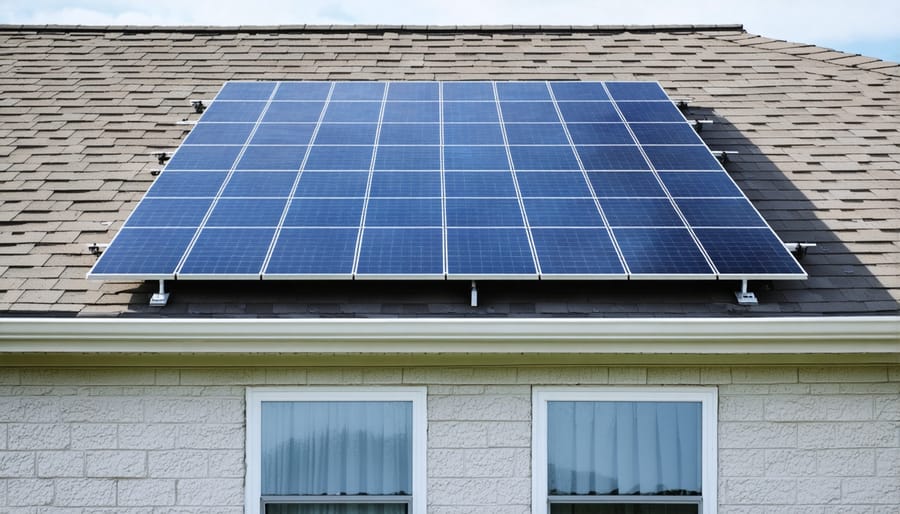
The federal solar tax credit, also known as the Investment Tax Credit (ITC), offers Illinois property owners a significant financial incentive to switch to solar energy. This program allows you to deduct 30% of your total solar installation costs from your federal taxes, with no upper limit on the credit amount. The tax credit applies to both residential and commercial installations, covering equipment, labor, and even battery storage systems.
To qualify, you must own your solar system (leased systems don’t qualify), and the installation must be completed by December 31, 2032. The credit applies to both primary residences and second homes. If your tax liability is less than the credit amount in the first year, you can carry forward the remaining credit to future tax years.
For example, if your solar installation costs $20,000, you could receive a $6,000 tax credit. This incentive, combined with Illinois state programs, makes solar energy particularly attractive for property owners in the Prairie State. Remember to consult with a tax professional and keep detailed records of your installation costs to maximize this benefit.
How to Claim Your Federal Solar Credit
To claim your federal solar tax credit, start by completing IRS Form 5695 (Residential Energy Credits) during your annual tax filing. First, gather all documentation related to your solar installation, including receipts and contracts. Calculate your total eligible solar expenses and enter this amount on Form 5695. Transfer the credit amount to your Form 1040 Schedule 3, then carry the final figure to your Form 1040. If you can’t use the entire credit in one year, you can roll over the remaining amount to future tax years. Remember to retain all documentation for at least three years after claiming the credit. For maximum benefit, consult with a tax professional who can ensure you’re claiming every eligible expense and following proper procedures.
Illinois-Specific Solar Incentives
Illinois Shines Program Benefits
The Illinois Shines program, also known as the Adjustable Block Program (ABP), stands as one of the state’s most significant solar incentives. This program rewards solar energy system owners through Solar Renewable Energy Credits (SRECs), which represent the environmental benefits of solar power generation. For every megawatt-hour (MWh) of electricity your solar panels produce, you earn one SREC that you can sell in the market.
The value of SRECs varies based on market conditions and system size, but homeowners can typically expect to receive payments for 15 years after installation. These credits can significantly offset the initial investment in solar panels, often covering 30-40% of the system’s cost. For income-eligible households, the Illinois Solar For All program offers even greater benefits, including additional incentives and low-to-no upfront costs.
What makes Illinois Shines particularly attractive is its straightforward application process and guaranteed payment structure. Once approved, your SREC payments are locked in at a fixed rate, providing predictable returns on your solar investment. The program also ensures consumer protection through approved vendors and installers, giving homeowners peace of mind that their solar installation meets quality standards and will perform as expected.
Property Tax Breaks for Solar Installation
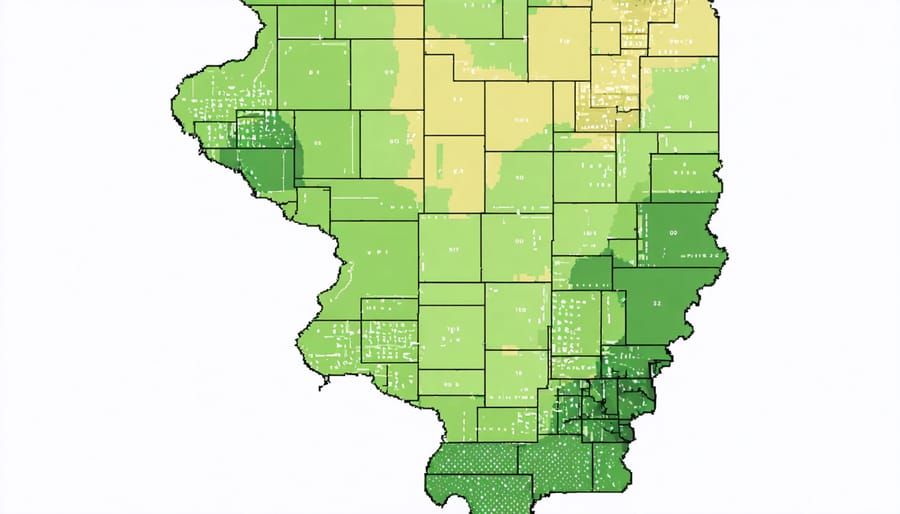
Illinois property owners can benefit from special assessment provisions that help reduce the tax impact of installing solar energy systems. Under Illinois law, solar installations are assessed at a lower rate than other property improvements, effectively reducing the property tax burden associated with these renewable energy upgrades.
When you install a solar energy system on your property, the value it adds to your home or business is assessed at no more than the value that would be added by a conventional energy system. This means you won’t face higher property taxes just because you’ve chosen to go solar. The assessment policy ensures that the increased property value from solar installations doesn’t result in a significant tax hike.
For commercial properties, this special assessment can represent substantial savings over time, as the full market value of commercial solar installations could otherwise lead to considerable property tax increases. Residential property owners also benefit from this provision, making solar energy systems more financially attractive in the long term.
To qualify for this special assessment, property owners must ensure their solar installation meets local building codes and obtain necessary permits. It’s recommended to work with certified solar installers who are familiar with Illinois property tax regulations and can help ensure your installation qualifies for these tax benefits.
Local Utility Company Rebates
Net Metering Benefits
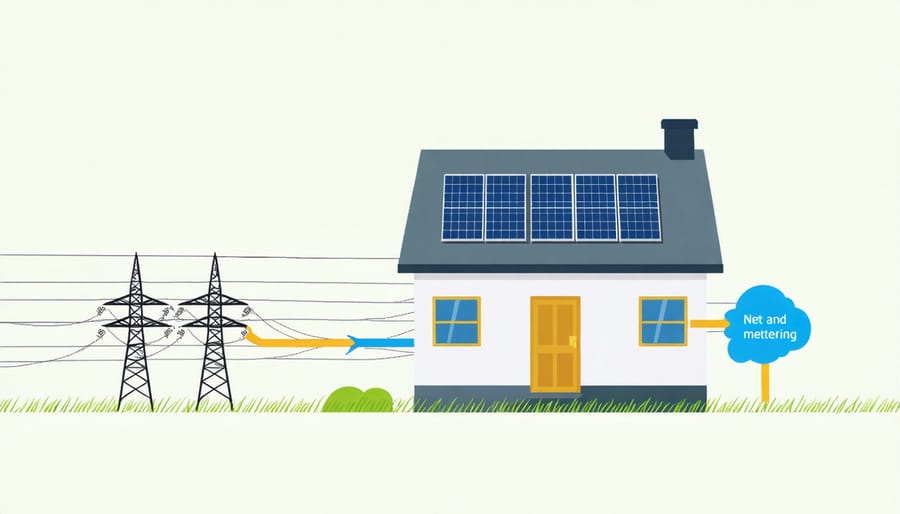
Net metering is one of the most valuable benefits available to Illinois solar energy system owners. This program allows you to receive credits on your electricity bill for excess power your solar panels generate and send back to the grid. When your system produces more electricity than you’re using, your meter actually runs backward, banking these credits for future use.
During times when your solar panels aren’t producing enough power, such as at night or on cloudy days, you can use these accumulated credits to offset your electricity consumption. This effectively makes the power grid act like a giant battery for your solar energy system, maximizing your savings year-round.
In Illinois, utilities are required to provide net metering to customers with solar installations, and these credits are valued at the full retail rate of electricity. This means you’ll save the same amount per kilowatt-hour whether you’re using solar power directly or drawing from your credits. For most homeowners, this can lead to significant reductions in annual electricity costs, often resulting in utility bills that are close to zero during high-production months.
Available Utility Company Programs
Several Illinois utility companies offer valuable incentives for solar adoption. ComEd, the state’s largest utility provider, offers net metering programs that credit customers for excess energy production. Ameren Illinois provides similar benefits through their available solar rebates and net metering options. To qualify, customers must have a grid-connected system and submit proper documentation, including interconnection agreements. MidAmerican Energy and Mt. Carmel Public Utility also participate in solar incentive programs, though specific offerings may vary by service area. Contact your local utility provider directly to learn about current program availability and eligibility requirements, as these programs are updated periodically to reflect changing energy policies and market conditions.
Maximizing Your Solar Savings
To maximize your solar savings in Illinois, it’s essential to strategically combine multiple incentive programs. Start by taking advantage of the federal Solar Investment Tax Credit (ITC), which offers a substantial 30% tax credit on your total solar installation costs. This federal incentive can be paired with Illinois’ state-level programs for compounded benefits.
Next, enroll in the Illinois Shines program to earn Solar Renewable Energy Credits (SRECs) for the energy your system produces. By carefully timing your installation, you can secure higher SREC values, as rates tend to decrease as more systems are installed statewide.
Consider participating in net metering through your utility provider, which allows you to earn credits for excess energy production. These credits can significantly reduce your monthly electricity bills, especially during high-production summer months.
For businesses, take advantage of accelerated depreciation through the Modified Accelerated Cost Recovery System (MACRS), which can be combined with the federal ITC. Additionally, check with your local municipality for property tax exemptions and other local incentives that can further reduce your overall costs.
Remember to work with a qualified solar installer who can help you navigate the application process for multiple incentives. Some programs have specific deadlines or requirements that must be met to qualify. By carefully coordinating these various programs, you can potentially reduce your solar installation costs by 50-70%.
Illinois solar incentives present a compelling opportunity for homeowners and businesses to embrace clean energy while achieving significant cost savings. By combining federal tax credits, state rebates, and local incentives, you can substantially reduce your initial investment and accelerate your return on investment. The time to act is now, as many of these incentives have deadlines or declining benefit schedules. Taking advantage of these programs not only helps you save money but also contributes to Illinois’s clean energy goals and environmental sustainability. Contact a local solar provider today to learn how these incentives can make your solar transition both affordable and rewarding. With the right combination of incentives, you could be generating your own clean energy and enjoying reduced utility bills sooner than you think.
