Financial and Economic Aspects

What Illinois Solar Owners Pay When the Grid Isn’t Ready for Your System

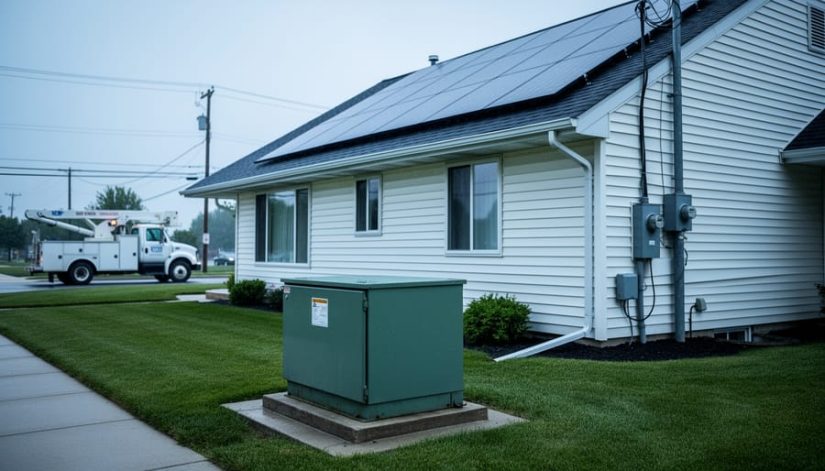
Understanding your interconnection agreement before signing saves thousands in unexpected upgrade costs. This legally binding contract between you and your utility company establishes the terms for connecting your solar system to the electrical grid, but hidden within its technical language are provisions that can significantly impact your project economics.
Illinois solar customers often discover upgrade requirements only after their utility conducts a detailed system impact study. These upgrades—ranging from simple meter replacements costing a few hundred dollars to transformer installations exceeding $50,000—become your …

Financial and Economic Aspects

How Illinois Shines Turns Your Solar Panels Into a Revenue Stream

Understand that Illinois Shines offers you two revenue streams from your solar investment: immediate electricity savings on your utility bills and additional income through Renewable Energy Credits (RECs). Every 1,000 kilowatt-hours your solar panels generate creates one REC that the state purchases upfront or over time, putting thousands of dollars directly into your pocket beyond what you save on electricity costs.
Calculate your potential REC payment by multiplying your system size…

Financial and Economic Aspects

Illinois Solar Farm Co-ops: Your Path to Profitable Clean Energy Investment

Solar farm investments in Illinois have emerged as a powerhouse opportunity, offering returns between 10-20% annually while contributing to the state’s ambitious renewable energy goals. The Prairie State’s combination of available land, favorable solar policies, and growing demand for clean energy creates an ideal environment for both small and large-scale solar investments.
Recent legislation, including the Climate and Equitable Jobs Act (CEJA), has supercharged Illinois’s solar market by mandating 40% renewable energy by 2030 and providing substantial financial incentives for solar development. Property owners …

Financial and Economic Aspects

How Solar Project Risks Impact Your Illinois Investment (And Ways to Protect It)

Solar energy investments in Illinois face unique challenges that demand careful risk assessment and strategic planning. While the promise of renewable energy independence and financial returns attracts many property owners, understanding the complete risk landscape is crucial for long-term success.
From fluctuating material costs and evolving state regulations to installation complications and maintenance requirements, solar projects require thorough due diligence to protect your investment. Illinois’ diverse weather patterns, including severe storms, heavy snow loads, and extreme temperature variations, create additional …

Financial and Economic Aspects

Protect Your Illinois Solar Farm Investment: Smart Risk Management Strategies That Work

Illinois’s solar farm landscape is transforming the Prairie State into a renewable energy powerhouse, with over 2,000 megawatts of solar capacity either operational or under development. As farmland transitions into solar arrays, property owners and investors are discovering unprecedented opportunities to generate sustainable income while contributing to the state’s ambitious goal of 100% clean energy by 2050. These utility-scale installations, ranging from 100 acres to several thousand, are strategically positioned across central and southern Illinois, leveraging the region’s abundant sunlight and flat terrain.

Financial and Economic Aspects

How Illinois Net Metering Puts Real Money Back in Solar Homeowners’ Pockets

Net metering policies in Illinois are reshaping the economics of solar energy, offering homeowners and businesses a powerful way to slash electricity costs while contributing to a greener grid. Under current Illinois regulations, utility companies must credit solar system owners for every kilowatt-hour they send back to the grid at the same retail rate they charge for electricity consumption. This dollar-for-dollar credit system has transformed solar investments from a long-term environmental choice into an immediate financial opportunity.
For property owners across the Prairie State, net metering serves as a critical financial …

Financial and Economic Aspects

Solar Leasing in Illinois: Real Savings Without the Upfront Costs

Transform your energy expenses into long-term savings with solar power – a proven investment that delivers both immediate financial benefits and lasting environmental impact. Illinois homeowners who switch to solar energy typically save $1,200-1,800 annually on electricity costs while increasing their property values by an average of 4.1%. With federal tax credits covering 30% of installation costs and Illinois’ robust solar incentive programs, including Solar Renewable Energy Credits (SRECs), the financial barriers to adoption have never been lower.
Beyond monthly utility savings, solar installations protect against …

Financial and Economic Aspects

Federal Solar Funding Creates Major Opportunities for Illinois Property Owners

Federal and state initiatives are transforming solar power from a luxury into an accessible energy solution for Illinois residents and businesses. The Department of Energy’s recent $12 billion investment in renewable energy programs, combined with Illinois’ Smart Solar program, creates unprecedented opportunities for property owners to transition to solar power while significantly reducing installation costs.
Through strategic government funding, Illinois homeowners can now offset up to 30% of their solar installation costs through the Federal Solar Tax Credit, while additional state incentives can cover another 20-35% …

Financial and Economic Aspects

Solar Energy Jobs Are Powering Illinois’ Economic Growth (Here’s How)

Solar energy’s economic impact in Illinois extends far beyond reduced electricity bills, driving a powerful renewable energy transformation that’s reshaping our state’s financial landscape. In 2023, the solar industry contributed over $3.2 billion to Illinois’ economy, creating more than 10,000 high-paying jobs and attracting significant business investment across the supply chain. For homeowners, the average solar installation now delivers $18,000 in …

Financial and Economic Aspects

Solar Panel Storage in Illinois: Real Savings vs Investment Costs

Making the switch to solar energy represents a significant financial decision that demands careful analysis of both immediate costs and long-term benefits. For Illinois property owners, solar panel investments have become increasingly attractive due to falling installation costs, rising electricity rates, and generous state incentives. A thorough cost-benefit analysis reveals that the average Illinois homeowner can recoup their solar investment within 5-8 years, while enjoying decades of reduced energy bills and environmental benefits.
Recent data shows Illinois residents who install solar panels save an average of $1,200 annually …

Financial and Economic Aspects

Solar Power ROI in Illinois: What Property Owners Actually Earn

Transform your property’s energy future with solar power investments that deliver remarkable returns in Illinois. Recent data shows homeowners achieving 8-12% ROI through strategic solar installations, outperforming many traditional investment vehicles while slashing monthly utility costs by up to 90%.
Illinois’ robust solar incentives create an unprecedented opportunity for property owners. The state’s Solar Renewable Energy Credits (SRECs), combined with the federal Investment Tax Credit (ITC) of 30%, can offset up to 70% of initial installation costs. Factor in rising electricity rates and improved property …

Financial and Economic Aspects

Solar Panel Warranties in Illinois: What Your Coverage Actually Protects

Navigating solar warranties in Illinois requires strategic planning to protect your solar investment for decades to come. Quality solar panel systems typically include three essential warranty components: a 25-year performance guarantee ensuring minimum power output, a 10-15 year equipment warranty covering manufacturing defects, and a 5-10 year workmanship warranty protecting against installation issues. Illinois homeowners face unique warranty considerations due to extreme weather conditions, …

Financial and Economic Aspects

Solar Financing That Makes Illinois Contractors More Competitive

Transform your contracting business into a solar powerhouse by partnering with proven solar financing solutions that help customers say “yes” to clean energy. Leading solar contractors in Illinois capture 40% more projects by offering flexible payment options through established finance partners, turning cost objections into closing opportunities. These partnerships eliminate the need for in-house financing infrastructure while providing contractors with competitive …

Financial and Economic Aspects

Calculate Your Solar Panel ROI in Illinois (And Actually Save Money)

Calculate your solar panel ROI in Illinois with precision by understanding three critical factors: upfront investment, energy production potential, and available incentives. While the average Illinois homeowner invests $15,000-$25,000 in solar installation, the robust federal tax credit of 30% and Illinois Shines program can reduce costs significantly. Most Illinois property owners achieve complete ROI within 5-8 years, making solar a compelling long-term investment.
Solar panels in Illinois typically generate 1,200-1,400 kilowatt-hours per installed kilowatt annually, translating to substantial utility savings. With electricity …

Financial and Economic Aspects

Community Solar in Illinois: Save Money While Powering Your Neighborhood

Community solar programs in Illinois empower residents to harness clean energy savings without installing panels on their property. Through the state’s expanding renewable energy initiatives, subscribers typically save 10-15% on their electricity bills while supporting local clean energy development. These shared solar facilities eliminate common barriers to solar adoption, including upfront costs, roof requirements, and maintenance responsibilities, making sustainable energy…