
Smart Energy Insights: How Personalized Analytics Are Transforming Illinois Home Power Usage
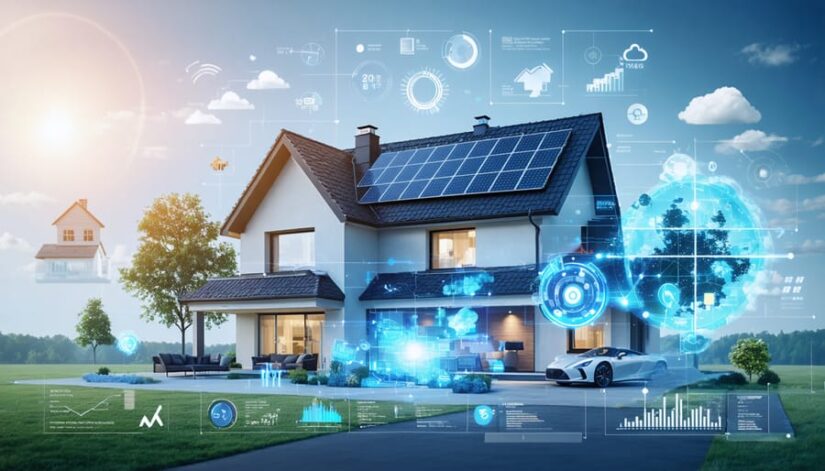
Transform your energy usage patterns into personalized insights with today’s sophisticated smart home analytics and AI-driven consumption tracking. As Illinois homeowners and businesses increasingly demand tailored energy solutions, consumer personalization has evolved from a luxury into a necessity, revolutionizing how we monitor, manage, and optimize our power consumption.
Modern energy personalization combines real-time data analysis, predictive algorithms, and automated optimization to deliver custom-fitted solutions for every property’s unique needs. From adaptive thermostats that learn your schedule to solar monitoring systems that adjust output based on your daily routines, these technologies are reshaping the relationship between consumers and their energy infrastructure.
The surge in personalized energy solutions comes at a crucial time, as Illinois residents seek more control over their utility costs while contributing to sustainability goals. By leveraging advanced analytics and machine learning, property owners can now receive tailored recommendations that consider factors like local weather patterns, historical usage data, and individual lifestyle preferences to create truly personalized energy management strategies.
This shift toward personalization isn’t just about convenience – it’s driving measurable results, with smart energy solutions delivering average savings of 15-30% on monthly utility bills while providing unprecedented insight into consumption patterns.
Real-Time Energy Monitoring Gets Personal
Smart Meter Integration
Smart meters are revolutionizing how Illinois homeowners and businesses understand and manage their energy consumption. These advanced devices provide real-time data about energy usage patterns, enabling unprecedented levels of personalization in energy management. Instead of relying on monthly estimates, users can track their consumption hour by hour, identifying peak usage times and opportunities for optimization.
By collecting detailed usage data, smart meters help create personalized energy profiles that reflect individual lifestyle patterns and business operations. This information allows consumers to make informed decisions about when to run energy-intensive appliances or shift operations to off-peak hours for cost savings. The technology also enables dynamic rate programs, where utilities can offer lower rates during specific times, helping consumers save money by adjusting their usage patterns.
For solar energy users, smart meters are particularly valuable as they provide detailed insights into solar production and consumption patterns. This data helps optimize solar panel performance and ensures maximum benefit from renewable energy investments. The integration of smart meters with home energy management systems creates a comprehensive platform for monitoring and controlling energy use, making it easier than ever to achieve energy efficiency goals.
Mobile Apps and Dashboard Customization
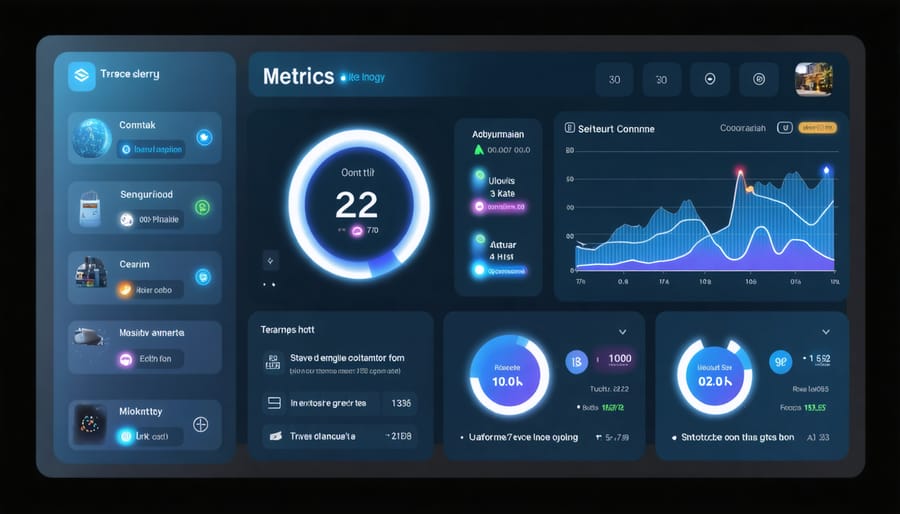
Today’s energy consumers have unprecedented access to their usage data through sophisticated smart home energy control systems right at their fingertips. Modern mobile apps offer intuitive interfaces that display real-time energy consumption, solar production, and cost savings in easy-to-understand formats. Users can track their energy patterns through customizable dashboards featuring colorful graphs, daily usage breakdowns, and predictive analytics.
These user-friendly platforms allow homeowners to set personalized goals, receive alerts about unusual consumption patterns, and make informed decisions about their energy use. Many apps now integrate weather forecasts to help optimize solar panel efficiency and suggest the best times for high-energy activities. Dashboard customization options let users focus on metrics that matter most to them, whether that’s carbon footprint reduction, cost savings, or peak usage times.
The convenience of mobile access means Illinois residents can monitor and adjust their energy usage anywhere, anytime, making it easier than ever to maintain efficient household energy management while maximizing their solar investment.
AI-Powered Usage Predictions
Weather-Based Consumption Forecasting
Advanced AI systems are revolutionizing how we predict and manage household energy consumption by incorporating detailed weather data analysis. These smart systems continuously monitor local weather patterns, temperature fluctuations, and seasonal changes to anticipate individual household energy needs with remarkable accuracy.
For Illinois homeowners, this technology is particularly valuable due to the state’s diverse weather conditions. The system analyzes historical weather data alongside real-time forecasts to predict when your home might require more cooling during humid summer days or additional heating during harsh winters. This predictive capability enables automated adjustments to your energy consumption patterns, ensuring optimal comfort while maximizing energy efficiency.
The AI considers multiple weather factors, including temperature, humidity, cloud cover, and wind patterns, to create personalized energy consumption profiles. For homes with solar installations, these systems are especially beneficial as they can predict solar generation potential based on upcoming weather conditions and adjust energy usage accordingly.
The technology goes beyond simple temperature-based predictions. It learns from your household’s unique patterns and preferences, combining this information with weather forecasts to make intelligent decisions. For example, it might suggest pre-cooling your home before a predicted heat wave or adjusting your solar system’s storage strategy based on an upcoming stretch of cloudy days.
This weather-based forecasting helps homeowners optimize their energy use, reduce costs, and maintain comfort regardless of external conditions.
Behavioral Pattern Analysis
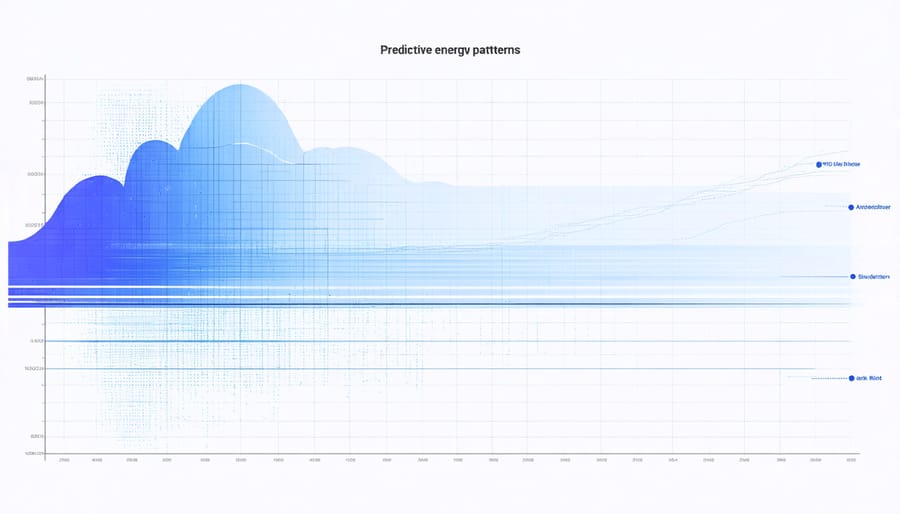
Modern AI systems are revolutionizing how we understand and respond to household energy consumption patterns. These intelligent systems continuously monitor and learn from daily routines, analyzing when residents typically use major appliances, adjust thermostats, or activate lighting systems. By collecting and processing this data, AI creates detailed profiles of household behaviors that become increasingly accurate over time.
For example, the system might recognize that your family typically runs the dishwasher after dinner, uses more air conditioning on weekday afternoons, or requires extra heating in specific rooms during morning hours. This learning process extends beyond simple scheduling, incorporating factors like seasonal changes, weekend variations, and even holiday patterns.
The real power of behavioral pattern analysis lies in its predictive capabilities. Once the AI understands your household’s unique energy fingerprint, it can anticipate needs and automatically adjust systems for optimal efficiency. This might mean pre-cooling your home before peak afternoon hours or suggesting the best times to use energy-intensive appliances based on solar panel production and utility rates.
For Illinois homeowners, this technology is particularly valuable during extreme weather conditions, where smart predictions can help maintain comfort while maximizing energy savings. The system can also identify unusual patterns that might indicate equipment problems or opportunities for additional energy optimization, providing proactive recommendations for improved efficiency.
Solar Integration and Optimization
Production vs. Consumption Insights
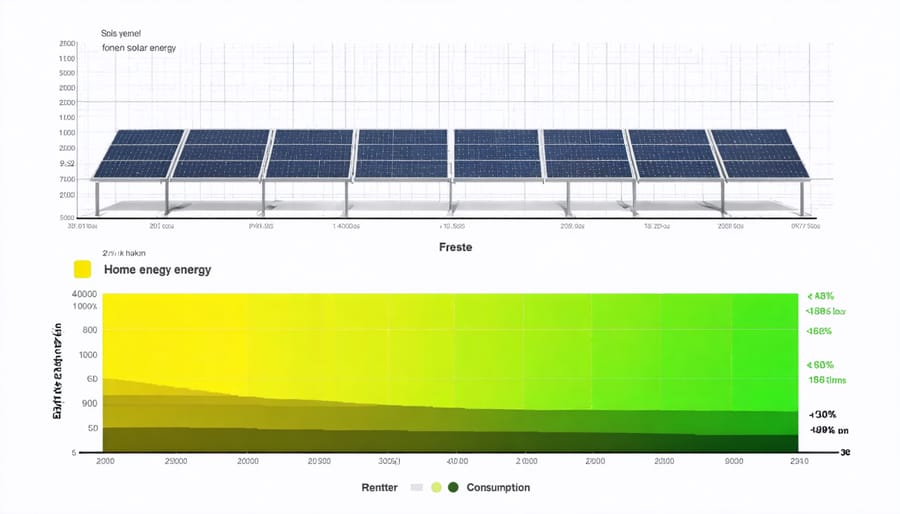
Modern solar energy systems excel at providing detailed insights into both energy production and consumption patterns. Through IoT-enabled solar monitoring, homeowners can track their solar panel performance alongside their household energy usage in real-time. This dual analysis reveals valuable patterns that help optimize energy efficiency and maximize solar investment returns.
By comparing production peaks with consumption habits, users can identify opportunities to shift high-energy activities to times of peak solar generation. For example, running appliances like dishwashers and laundry machines during sunny afternoon hours can significantly reduce reliance on grid power. The system also alerts users to unexpected changes in production or consumption, helping detect potential equipment issues or energy waste early.
Illinois residents particularly benefit from this technology during seasonal variations. Understanding how winter snow coverage affects panel production or how summer air conditioning impacts consumption allows for smarter energy planning throughout the year. This data-driven approach enables homeowners to make informed decisions about energy storage solutions and adjust their usage patterns to maximize their solar investment while maintaining comfort and convenience.
Peak Usage Optimization
Modern energy analytics platforms help homeowners and businesses maximize their solar investment by identifying and optimizing peak usage patterns. By analyzing historical consumption data and real-time weather forecasts, these systems create personalized schedules that align energy-intensive activities with peak solar production hours.
Smart algorithms can automatically adjust device operations to coincide with solar generation peaks, ensuring maximum utilization of clean energy. For example, running dishwashers, charging electric vehicles, or cooling spaces during prime sunlight hours maximizes direct solar consumption and reduces reliance on grid power.
Implementing solar energy storage solutions further enhances peak usage optimization by storing excess energy for use during non-peak hours. This stored energy can be strategically deployed during evening hours or cloudy days when solar production is lower but energy demand remains high.
Advanced monitoring systems provide real-time notifications and suggestions for optimal energy use timing, helping consumers make informed decisions about their power consumption. These personalized insights often lead to significant cost savings while maximizing the environmental benefits of solar investments, making it easier for Illinois residents to achieve their sustainability goals while managing energy costs effectively.
Cost Savings Through Personalization
Through advanced data analytics and smart home technology, homeowners and businesses across Illinois are discovering powerful ways to reduce energy costs through personalized consumption insights. By analyzing individual usage patterns, these systems create tailored recommendations that can lead to significant savings.
For example, smart thermostats learn your daily routines and automatically adjust temperatures to optimize comfort while minimizing energy waste. These devices can save households an average of 10-15% on heating and cooling costs annually. When integrated with solar systems, they become even more effective by timing energy-intensive activities to coincide with peak solar production.
Similarly, automated lighting systems use occupancy data and natural light sensors to create personalized lighting schedules. These systems can cut lighting-related energy costs by up to 40% by ensuring lights are only active when needed and at appropriate brightness levels.
Smart appliance monitoring provides another layer of savings by identifying energy-hungry devices and suggesting optimal usage times. For instance, running your dishwasher or laundry during off-peak hours can save 20-30% on associated energy costs. The system might notice you typically run your dishwasher right after dinner and suggest shifting this to later evening hours when rates are lower.
For businesses, personalized analytics have proven even more impactful. By analyzing operational patterns, companies can optimize HVAC scheduling, equipment usage, and lighting controls based on actual occupancy and activity levels. Some Illinois businesses report saving up to 25% on their energy bills after implementing these personalized solutions.
The real power comes from combining these various systems. When smart thermostats, lighting controls, and appliance monitoring work together with solar production data, they create a comprehensive energy management system that adapts to your specific needs while maximizing solar energy utilization. This integrated approach typically results in 30-40% greater energy savings compared to traditional conservation methods.
As we look to the future of energy management in Illinois, personalized energy analytics continues to revolutionize how homeowners and businesses interact with their power consumption. The integration of smart technology with solar energy systems has created unprecedented opportunities for customized energy solutions that adapt to individual needs and usage patterns.
The benefits of personalized analytics are clear: households using these systems typically see 15-20% reductions in energy costs, improved system efficiency, and better-informed decision-making about their energy consumption. For solar energy users, this translates to optimized panel performance, strategic energy storage, and maximum return on investment.
Looking ahead, we can expect even more sophisticated personalization features. Artificial intelligence and machine learning will continue to enhance prediction accuracy, while integration with smart home devices will become more seamless. The emergence of community solar projects in Illinois will introduce new opportunities for neighborhood-level energy optimization and shared benefits.
For Illinois residents and businesses, embracing these personalization trends means staying ahead of the curve in energy management. As local solar experts, we’re committed to helping our community leverage these advances to create more sustainable and cost-effective energy solutions. The future of energy is not just clean – it’s personalized, intelligent, and adapted to your specific needs.
