How Solar-Powered Urban Farms Are Transforming Illinois Communities
Urban farming operations in Illinois face a critical challenge: energy-intensive climate control, irrigation systems, and vertical growing setups can consume 30-50% of operational budgets, threatening the economic viability of even the most productive urban agriculture ventures. Solar energy infrastructure offers a transformative solution, converting rooftops, vertical walls, and adjacent spaces into power-generating assets that directly offset these costs while enhancing sustainability credentials.
The integration of renewable energy into urban farming represents more than environmental responsibility—it creates a competitive advantage. Illinois urban farmers who implement solar systems typically reduce energy expenses by 60-80%, freeing capital for expansion, improved growing technology, or increased community access. State and federal incentives, including the Illinois Solar for All program and the federal Investment Tax Credit, can cover 40-60% of installation costs, dramatically shortening payback periods to 4-7 years for agricultural operations.
The technical requirements for agricultural solar installations differ significantly from standard commercial systems. Urban farms need solutions that accommodate irregular roof structures, integrate with greenhouse operations, and provide reliable power for climate-sensitive growing environments. Ground-mounted arrays can coexist with outdoor growing spaces, while building-integrated photovoltaic systems maximize limited urban real estate without compromising growing area.
For Illinois urban farmers, the path forward combines agricultural expertise with renewable energy infrastructure, creating resilient operations that serve communities while generating their own power. This dual-purpose approach transforms urban agriculture from energy-dependent to energy-independent, establishing a sustainable foundation for local food production.
Why Urban Farms Need Dedicated Energy Infrastructure
The Real Energy Costs of Growing Food in Cities
Understanding the actual energy requirements of urban farming helps Illinois growers make informed decisions about their operations and renewable energy needs. Different growing methods have vastly different power demands, and knowing these numbers is essential for right-sizing your solar installation.
A typical rooftop garden with basic drip irrigation consumes approximately 500-800 kilowatt-hours annually, making it one of the most energy-efficient options. These systems primarily use electricity for water pumps and occasional supplemental lighting during shorter winter days. Chicago-area community gardens often fall into this category, with minimal energy overhead.
Indoor vertical farms represent the opposite end of the spectrum. A 2,000-square-foot vertical farming operation in Illinois typically requires 40,000-80,000 kilowatt-hours per year. LED grow lights account for roughly 50-60 percent of this consumption, while climate control systems, dehumidifiers, and ventilation make up most of the remainder. These facilities essentially recreate optimal growing conditions year-round, which demands substantial continuous power.
Greenhouse operations in Illinois fall somewhere in the middle, consuming 15,000-30,000 kilowatt-hours annually for a mid-sized facility. Heating during cold months drives much of this demand, though modern smart energy systems can optimize heating cycles and reduce waste significantly.
For aquaponics systems combining fish farming with plant cultivation, expect energy needs around 20,000-35,000 kilowatt-hours yearly. Water circulation pumps, aeration systems, and temperature regulation for both fish tanks and growing areas require reliable, continuous power. Understanding these specific consumption patterns allows you to design solar arrays that truly match your urban farming ambitions.
When Grid Power Holds Your Farm Back
Urban farming operations face unique challenges when relying exclusively on conventional grid electricity. Energy costs can fluctuate unpredictably throughout the year, making it difficult to maintain consistent operating budgets for essential systems like climate control, irrigation pumps, and LED grow lights. For Illinois farmers already managing thin profit margins, these price swings create financial uncertainty that complicates long-term planning.
Beyond economics, traditional grid power carries a substantial carbon footprint that conflicts with the sustainability values central to urban farming. When your mission centers on growing food responsibly and reducing environmental impact, depending on fossil fuel-generated electricity creates an uncomfortable contradiction.
Reliability presents another concern. Power outages, whether from severe weather or grid maintenance, can devastate crops requiring precise environmental conditions. Automated watering systems, temperature controls, and supplemental lighting all depend on consistent electricity. Even brief interruptions can result in significant crop losses, particularly for controlled-environment agriculture operations.
These limitations highlight why many forward-thinking urban farmers throughout Illinois are exploring renewable energy alternatives that offer greater control, predictability, and alignment with their environmental commitments while supporting their operational needs year-round.
Solar Energy Solutions Built for Urban Agriculture
Rooftop Solar Systems That Work with Growing Operations
Rooftop solar panels and urban farming can successfully coexist on the same structure, creating a powerful combination of food and energy production. The key is understanding how these two systems can work together rather than compete for valuable rooftop space.
For growing operations with existing rooftop farms, elevated solar panel systems offer an effective solution. By installing panels on raised mounting structures several feet above crops, you maintain growing space while generating clean energy. This approach works particularly well for low-growing vegetables and herbs that thrive in partial shade. Some crops actually benefit from the filtered sunlight beneath solar arrays, reducing heat stress during Illinois summers.
Alternatively, you can dedicate separate rooftop zones to each function. Many commercial buildings have sufficient square footage to accommodate both full-sun growing areas and solar installations. A professional assessment helps determine the optimal layout based on your roof’s dimensions, load capacity, and sun exposure patterns.
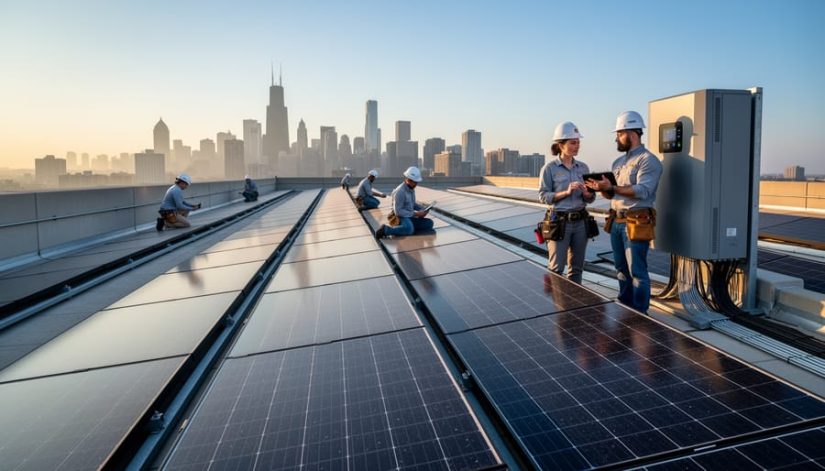
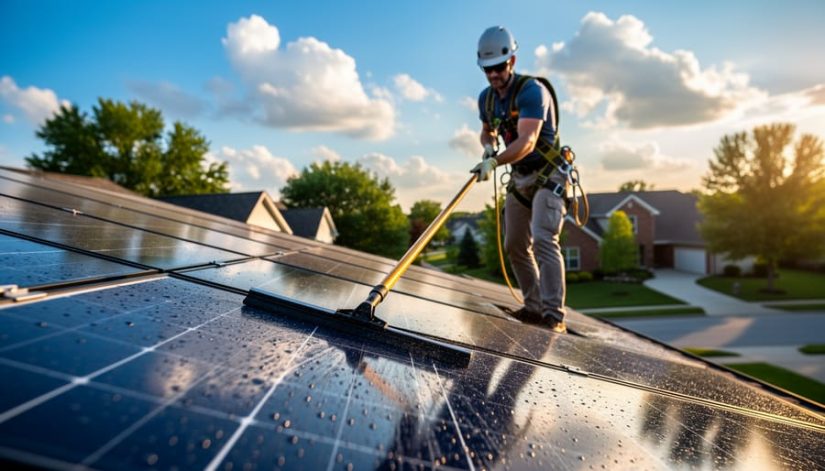
Structural considerations are essential before combining these systems. Both rooftop farms with soil-filled growing beds and solar panel arrays add significant weight to buildings. Working with locally owned solar experts who understand Illinois building codes ensures your installation meets safety standards and maximizes available space.
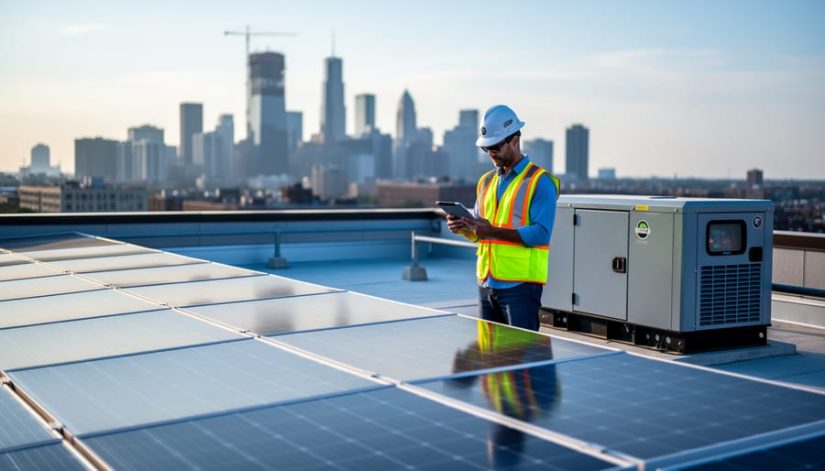
The dual-use approach delivers multiple benefits: reduced energy costs for greenhouse climate control and irrigation pumps, lower carbon footprint, and improved building insulation from both systems. For urban farming operations looking to enhance sustainability while controlling operational expenses, integrating rooftop solar represents a practical step toward energy independence.

Ground-Mounted and Agrivoltaic Approaches
When space isn’t limited to rooftops, ground-mounted solar systems open new possibilities for urban farming operations with available land. These installations offer flexibility in panel orientation and easier maintenance access compared to rooftop alternatives, making them practical for commercial-scale urban agricultural projects across Illinois.
Ground-mounted arrays work particularly well for farms with open areas that might be underutilized or unsuitable for direct crop production. The systems can be positioned for optimal sun exposure throughout the year, and unlike rooftop installations, they don’t require structural assessments of existing buildings. Similar to portable solar solutions, ground-mounted systems provide dedicated power generation, though at a much larger scale suited for irrigation systems, climate-controlled greenhouses, and processing facilities.
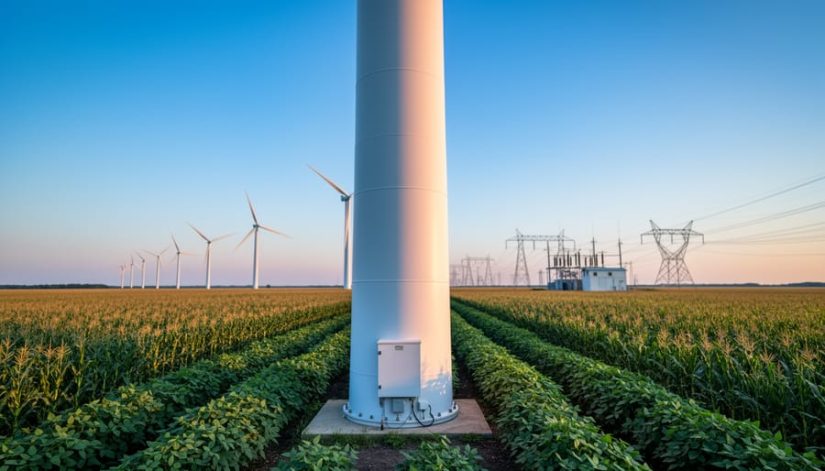
Agrivoltaic systems take this concept further by elevating solar panels on taller mounting structures, creating dual-use space where crops grow directly beneath. Research shows certain crops actually thrive in the partial shade provided by solar panels, particularly leafy greens and herbs common in urban farming. The panels reduce water evaporation from soil, lower ambient temperatures during hot Illinois summers, and protect crops from excessive sun exposure.
This approach maximizes land productivity by generating both food and energy from the same footprint. Early adopters in Illinois have successfully grown lettuce, spinach, and other shade-tolerant vegetables beneath solar arrays while producing enough electricity to power their entire operations. The elevated design allows standard farming equipment to move freely beneath the panels, maintaining operational efficiency. For urban farms looking to scale sustainably, agrivoltaic installations represent an innovative way to increase revenue streams while advancing environmental goals.

Making the Numbers Work: Financing and ROI for Illinois Projects
Illinois Solar Incentives That Apply to Agricultural Operations
Illinois farmers and urban agriculture operations can access substantial financial incentives that make solar energy investments highly attractive. At the federal level, the Investment Tax Credit (ITC) allows agricultural businesses to claim 30% of solar installation costs as a direct tax credit, significantly reducing upfront expenses. This credit applies to both traditional farms and urban farming facilities, making solar power accessible to operations of all sizes.
The state’s Illinois Shines program offers additional incentives through its Adjustable Block Program, which provides renewable energy credits to solar system owners. Agricultural operations benefit from enhanced credit rates, particularly for systems that incorporate battery storage or participate in Illinois energy sharing initiatives. Urban farms in underserved communities may qualify for even higher credit values through the program’s equity-focused provisions.
The USDA Rural Energy for America Program (REAP) provides grants covering up to 25% of project costs and loan guarantees for agricultural producers investing in renewable energy systems. These grants can be combined with federal tax credits, potentially covering more than half of total installation expenses.
Illinois farmers can also explore property tax exemptions for solar installations through the Special Assessment for Solar Energy Systems, which assesses solar equipment at agricultural land rates rather than commercial property values. Additionally, accelerated depreciation through MACRS allows businesses to recover solar investment costs over five years, providing significant tax advantages. Working with locally owned solar experts familiar with these programs ensures agricultural operations maximize available incentives while building sustainable energy infrastructure.
Real Payback Timelines for Urban Farm Solar Installations
Understanding real numbers helps urban farmers make informed decisions about solar investments. For a typical urban farm greenhouse or vertical growing operation in Illinois, a 10-kilowatt solar system costs approximately $25,000 to $30,000 before incentives. With the federal Investment Tax Credit reducing costs by 30 percent and Illinois Shines incentives adding another $5,000 to $8,000, the net investment drops to $12,000 to $16,000.
Given Illinois energy rates averaging 13 to 15 cents per kilowatt-hour, this system generates annual savings of $1,200 to $1,800, depending on your operation’s energy consumption patterns. For urban farms with controlled environment agriculture requiring year-round climate control and lighting, payback periods typically range from 7 to 10 years. Operations with seasonal energy needs may see slightly longer timelines of 10 to 12 years.
The key to maximizing your solar investment lies in properly sizing your system to match your actual energy needs. Urban farms with energy-intensive operations like hydroponic pumps, LED grow lights, or refrigeration systems see faster payback periods due to higher baseline consumption offsetting more utility costs from day one.
Building Your Green Energy Infrastructure: The Complete Process
Starting with an Energy Assessment
Before investing in green energy infrastructure for your urban farm, start with a comprehensive energy assessment to understand your operation’s specific needs. Begin by documenting your current energy consumption patterns, including lighting for greenhouse operations, water pumping systems, climate control equipment, and any processing facilities. Track usage across different seasons, as urban farms often experience significant variation between growing and dormant periods.
Next, evaluate your site conditions. Walk your property to identify suitable locations for solar installations, considering factors like available roof space, ground area, and shading from nearby buildings or trees. In Illinois, south-facing installations with minimal shade typically yield the best results. Understanding your solar potential helps determine system size and expected energy production.
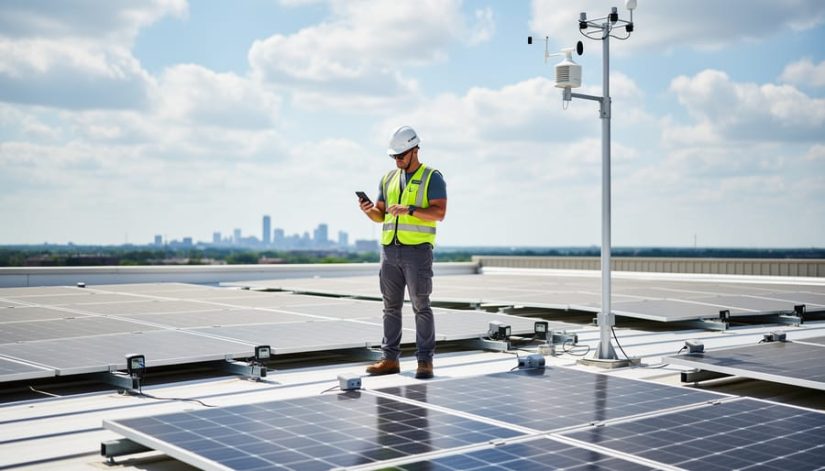
Project your future energy needs as your operation grows. Will you add automated irrigation systems, expand greenhouse space, or incorporate vertical farming equipment? Modern energy monitoring solutions can help you track consumption patterns in real-time, providing valuable data for sizing your solar system appropriately. This upfront assessment ensures your renewable energy infrastructure aligns with both current demands and long-term agricultural goals, maximizing your return on investment while supporting sustainable urban farming practices.
System Design Considerations for Agricultural Applications
Designing solar energy systems for urban farming requires consideration of agricultural-specific factors that differ from standard commercial installations. Understanding seasonal growing patterns is essential—greenhouses and indoor farms operate year-round with consistent energy demands, while outdoor operations may see dramatic fluctuations between growing and dormant seasons. Your system should be sized to accommodate peak growing season needs while accounting for reduced winter consumption.
Equipment load profiles in agricultural settings present unique challenges. High-wattage grow lights, climate control systems, irrigation pumps, and refrigeration units often run simultaneously during critical growing periods. A thorough energy audit helps identify these peak demand windows and ensures your solar array can handle concurrent loads without drawing heavily from the grid.
Expansion planning is particularly important for agricultural operations. Many urban farms start small and scale up as they establish market presence. Working with locally owned solar experts familiar with agricultural growth trajectories allows you to install a foundational system with expansion capacity built in. This might include oversized inverters, additional roof or ground space allocation, and electrical infrastructure that accommodates future panels. Proper initial planning prevents costly retrofits and ensures your green energy infrastructure grows alongside your farming operation.
Installation and Integration with Your Farm Operations
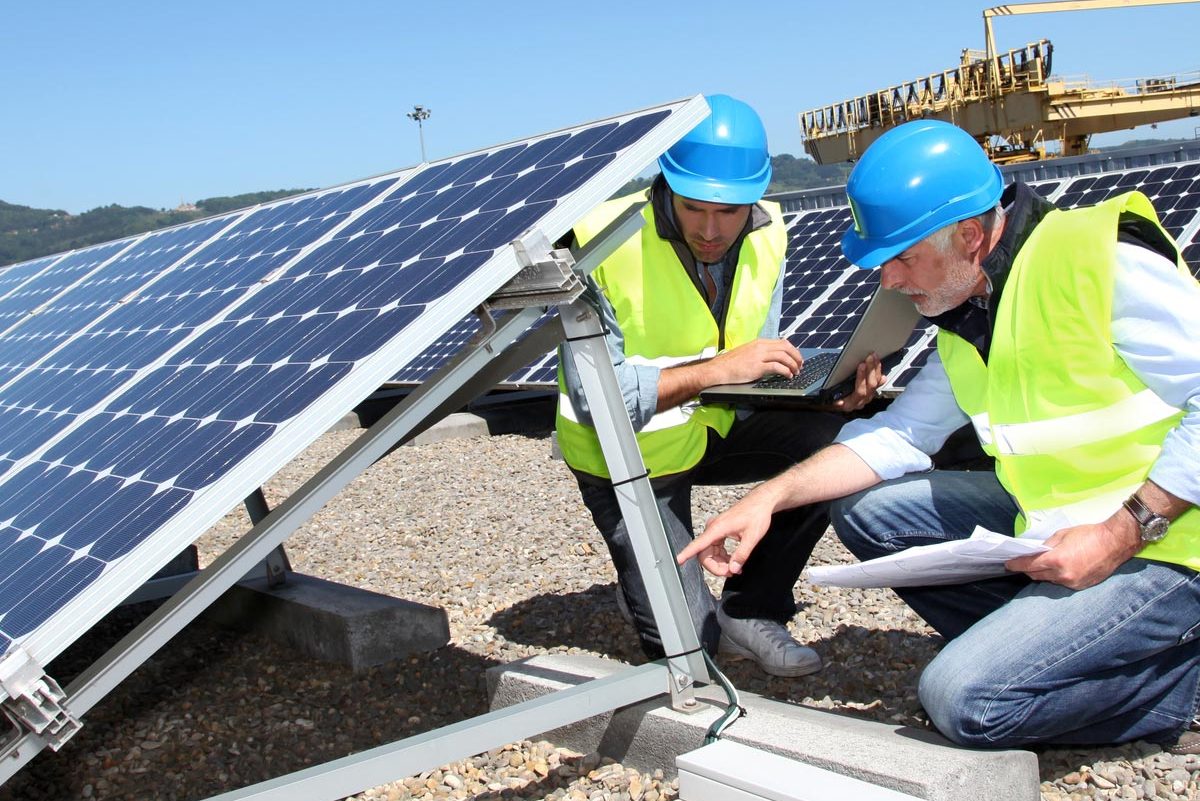
Installing solar energy infrastructure at your urban farm typically follows a straightforward timeline of 8-12 weeks from initial assessment to activation. The process begins with a comprehensive site evaluation by experienced solar professionals who understand agricultural operations. They’ll assess your roof structures, available ground space, and electrical requirements specific to greenhouse operations, irrigation systems, and climate control equipment.
During installation, most farming activities continue with minimal interruption. Solar panels are typically installed on barn roofs, greenhouse structures, or unused ground areas, allowing crops and daily operations to proceed normally. Ground-mounted systems can be positioned strategically to avoid prime growing areas while providing partial shade for heat-sensitive crops.
Working with a locally owned solar installer familiar with Illinois agricultural operations ensures your project meets state building codes and agricultural zoning requirements. Professional installers coordinate closely with your schedule, often conducting major work during slower farming periods or off-peak hours. The electrical integration happens quickly, usually within a day or two, with backup power options available to maintain critical systems like irrigation controls and refrigeration.
Post-installation support includes monitoring system performance and ensuring your farming operations benefit immediately from reduced energy costs, allowing you to reinvest savings into expanding your urban agriculture initiatives.

Success Stories: Illinois Urban Farms Already Running on Solar
Illinois urban farms are already proving that solar energy and agriculture make a powerful combination. These real-world examples demonstrate how local operations have successfully reduced their energy costs while advancing their sustainability goals.
The Plant Chicago, a nonprofit food business incubator in the Back of the Yards neighborhood, has integrated solar panels into its circular economy model. By installing a rooftop solar array, the facility now powers its indoor growing systems, refrigeration units, and processing equipment with clean energy. The organization reports a 40% reduction in utility costs, allowing them to redirect funds toward community programming and supporting local food entrepreneurs. Their experience shows that even heritage buildings can be retrofitted with solar infrastructure.
Windy City Harvest, which operates multiple urban farm sites across Chicago, partnered with locally owned solar installers to add solar panels to their Youth Farm in Englewood. The installation powers their greenhouse operations and irrigation systems throughout the growing season. The project serves a dual educational purpose, teaching young farmers about both sustainable agriculture and renewable energy technology. Since going solar, the site has achieved energy independence during peak daylight hours, eliminating concerns about power interruptions during critical growing periods.
In Springfield, Green Heart Gardens incorporated ground-mounted solar panels into their two-acre urban farm design. This approach maximized their limited space by positioning panels on the perimeter while keeping prime growing areas unobstructed. The farm now generates surplus energy during summer months, which offsets winter energy needs for their heated greenhouse. The owners emphasize that working with solar professionals who understand agricultural operations made the installation process seamless.
These success stories share common lessons: proper system sizing matters, understanding your farm’s energy patterns is essential, and choosing installers with expertise in solar energy ensures optimal results. Each operation benefited from Illinois solar incentives, making their investments financially viable while contributing to cleaner energy infrastructure statewide.
The partnership between solar energy and urban farming represents more than just an environmental choice—it’s a practical investment in the future of sustainable agriculture in Illinois. By powering greenhouses, irrigation systems, and climate control equipment with clean solar energy, urban farming operations can significantly reduce operating costs while minimizing their carbon footprint. The financial benefits become even more attractive when you factor in Illinois-specific incentives and rebates that make solar installations increasingly affordable.
Whether you’re managing a community garden, operating a commercial urban farm, or exploring rooftop agriculture for your business, integrating solar power into your operation creates a resilient, self-sufficient farming environment. The technology has matured to the point where solar solutions can be customized to meet the unique energy demands of agricultural operations, from small-scale community projects to large commercial ventures.
If you’re ready to explore how solar energy can transform your urban farming initiative, working with a locally owned solar provider offers distinct advantages. Local expertise means understanding Illinois regulations, weather patterns, and available incentives. It also ensures ongoing support and maintenance from professionals who know your community. Take the first step toward energy independence and sustainable farming by consulting with solar experts who can assess your specific needs and design a system that maximizes both your harvest and your energy savings.