

How Your Home Theater Is Secretly Draining Your Solar Investment
Calculate your entertainment system’s energy draw by adding up the wattage of your TV, gaming console, streaming devices, and sound system—most Illinois homes run 300-500 watts during active use, which translates to $15-25 monthly on your electric bill. Install smart power strips to eliminate phantom loads from devices in standby mode, which can account for 10-20% of your entertainment center’s total energy consumption even when you think everything is off. Time your heaviest entertainment usage during peak solar production hours (typically 10 AM to 3 PM in Illinois) if you have solar panels, maximizing self-consumption and reducing grid dependence. Upgrade to ENERGY STAR certified equipment when replacing devices—a modern LED TV uses 60% less power than older LCD models, and efficient streaming devices consume as little as 2 watts compared to older cable boxes that can draw 30 watts continuously. Right-sizing your solar system requires accounting for all household loads including entertainment, ensuring your energy production matches your actual consumption patterns throughout the year.
The Real Energy Cost of Modern Home Entertainment
Phantom Power Drains You’re Probably Ignoring
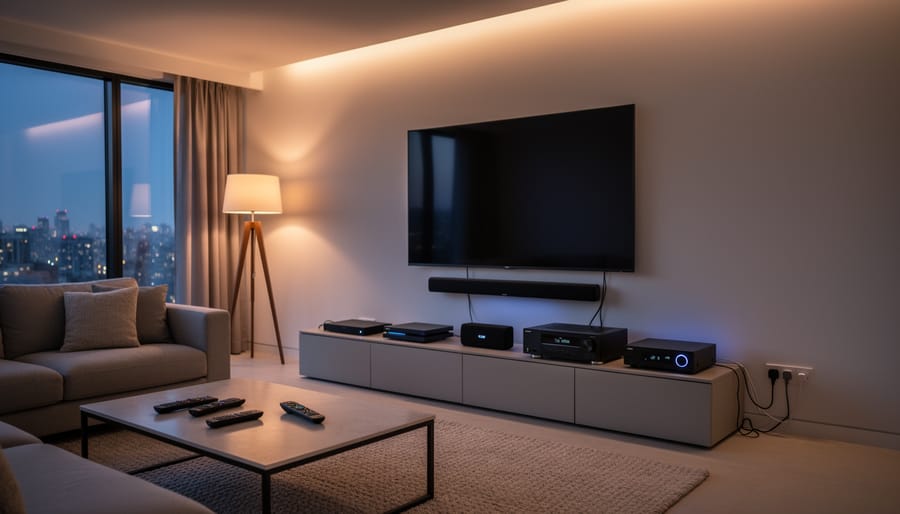
Your entertainment system could be quietly draining electricity 24/7, even when you think it’s off. This phantom power consumption, also called standby power, occurs because many devices never truly shut down—they’re just waiting for your next command.
Gaming consoles are notorious energy vampires, drawing 10-15 watts in standby mode. That seemingly small amount adds up to roughly $15-20 annually per console. Smart TVs, cable boxes, and streaming devices collectively can consume 20-40 watts continuously, costing Illinois homeowners $50-100 each year for the convenience of instant-on features.
Sound systems and AV receivers often draw 5-20 watts while sitting idle, maintaining settings and awaiting remote signals. Even powered-off devices with digital displays or LED indicators continue sipping electricity.
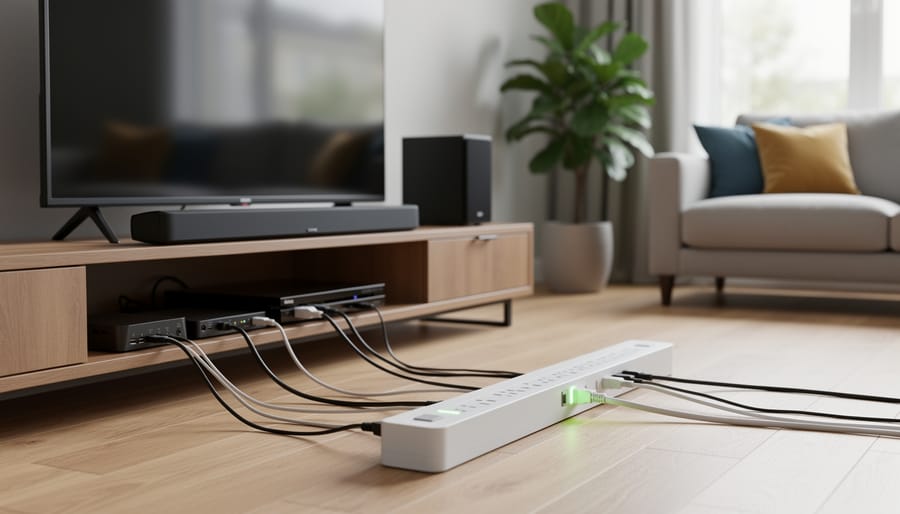
For solar-powered homes, these phantom loads represent wasted energy production during peak sunlight hours. The solution is simple: use smart power strips that completely cut power to devices when not in use, or unplug entertainment equipment during extended absences. These small changes can reduce your entertainment system’s energy consumption by 5-10 percent annually, maximizing your solar investment and lowering overall electricity costs.
Peak Usage Times and Solar Production Mismatches
Solar panels generate the most electricity during midday hours when the sun is strongest, typically between 10 a.m. and 3 p.m. However, most households fire up their home entertainment systems during evening hours—exactly when solar production drops significantly or stops completely. This timing mismatch means your TVs, gaming consoles, and sound systems are likely drawing power from the grid rather than directly from your solar panels.
For Illinois homeowners with solar installations, this creates an interesting challenge. Your entertainment devices consume considerable energy during peak usage times around 6 p.m. to 10 p.m., when your panels produce little to no electricity. While net metering allows you to draw credits from excess daytime solar production, understanding this timing gap helps you make smarter energy decisions. Consider shifting some entertainment activities to afternoon hours when possible, or explore battery storage solutions that capture midday solar energy for evening use. As a locally owned solar provider with extensive expertise in solar energy, we help Illinois residents optimize their systems to better match their actual consumption patterns, including entertainment usage, throughout the day.
Building an Energy-Conscious Entertainment Setup
Smart Device Selection for Solar Homes
When outfitting your solar-powered home with entertainment equipment, selecting devices with strong Energy Star ratings makes a significant difference in your overall energy consumption. Energy Star certification indicates that a product meets strict energy efficiency guidelines set by the EPA, typically using 25-30% less energy than standard models.
For televisions, look beyond screen size and picture quality. LED and OLED models consume considerably less power than older plasma screens. Check the yellow EnergyGuide label to compare annual operating costs between models. Modern 55-inch Energy Star TVs can operate on as little as 60 watts during typical viewing, while older or inefficient models might draw 150 watts or more.
Sound systems and speakers should feature automatic power-down modes that activate after periods of inactivity. Soundbars generally consume less energy than traditional surround sound systems with multiple components. Gaming consoles vary widely in power consumption, with some drawing over 100 watts during gameplay. Select models with efficient standby modes and consider energy-saving settings within the console’s menu.
Just as you would research energy-efficient appliances for your kitchen, apply the same scrutiny to entertainment purchases. For Illinois homeowners with solar installations, choosing efficient devices means your panels can power more of your home’s needs, potentially reducing the size of system required or allowing surplus energy generation during peak sunlight hours.
Optimal Configuration and Settings
Optimizing your entertainment system settings can significantly reduce energy consumption while maintaining the viewing and listening experience you enjoy. Start by adjusting screen brightness to match your room’s ambient lighting. Most televisions and monitors ship with brightness levels set much higher than necessary, often consuming 30-40% more energy than optimal settings. Reducing brightness to a comfortable level can cut your display’s power draw substantially without compromising picture quality.
Enable power-saving modes available on most modern devices. These eco-modes automatically adjust backlighting, optimize processor performance, and reduce standby power consumption. While manufacturers sometimes disable these features by default to showcase maximum performance, activating them typically saves 10-25% on energy costs with minimal impact on your experience.
Configure auto-sleep or standby timers to ensure devices don’t run unnecessarily. Set your television to power down after 30-60 minutes of inactivity, and enable similar features on gaming consoles, streaming devices, and audio equipment. Many households waste considerable energy leaving devices running overnight or while away from home.
For Illinois homeowners with solar installations, these optimizations become even more valuable. By reducing your entertainment system’s baseline consumption, you maximize the percentage of your home’s energy needs met by your solar panels. During peak entertainment hours in the evening when solar production decreases, efficient device settings help minimize grid dependency and ensure your system performs optimally year-round. These simple configuration changes complement your renewable energy investment while lowering overall consumption.
Smart Power Management Solutions
Integrating Entertainment Systems with Solar Monitoring
For Illinois homeowners with solar installations, connecting your entertainment systems to solar monitoring creates opportunities to maximize the value of your generated power. Modern solar monitoring platforms allow you to track real-time energy production throughout the day, helping you identify peak generation hours when you can run entertainment equipment using your own clean energy rather than drawing from the grid.
Many smart home energy systems now integrate directly with solar inverters, enabling automatic scheduling of high-consumption activities during solar production peaks. This means your home theater system, gaming consoles, or charging stations can activate when your panels are generating surplus power. Some energy monitoring apps even provide alerts when production exceeds household consumption, signaling ideal times to power entertainment devices.
This integration is particularly valuable for Illinois residents given our seasonal sunshine variations. During summer months with extended daylight hours, you can strategically time entertainment usage to coincide with peak production, reducing grid dependence and increasing your return on solar investment while enjoying guilt-free entertainment powered by sunshine.
The Solar Battery Storage Advantage for Entertainment
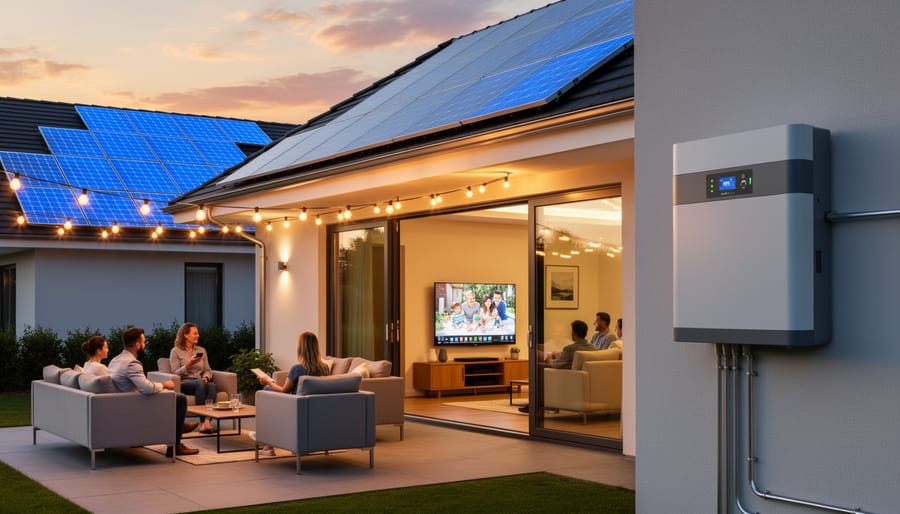
Battery storage systems transform how Illinois homeowners enjoy their entertainment while maximizing their solar investment. While solar panels generate power during daylight hours, most families watch television, stream movies, and play video games during evening hours when the sun isn’t shining. Without battery storage, your home draws power from the grid precisely when your entertainment system demands it most, meaning you’re buying electricity instead of using the clean energy your panels produced earlier.
A properly sized battery storage system captures excess solar energy generated during the day and stores it for evening use. When you settle in for movie night or fire up your gaming console after dinner, your home taps into this stored solar power rather than pulling from the grid. This approach dramatically reduces your dependence on utility companies and ensures you’re getting maximum value from every kilowatt-hour your panels produce.
For Illinois residents, this advantage becomes even more significant during peak rate periods. Many utility companies charge higher rates during evening hours when demand increases. By using stored solar energy for your entertainment needs, you avoid these premium charges while maintaining the same viewing and gaming experience you enjoy.
The financial benefits extend beyond monthly utility savings. Battery systems also provide backup power during outages, ensuring your entertainment continues even when grid power fails. This reliability matters for Illinois homeowners who experience weather-related disruptions.
As communities explore energy sharing initiatives and grid modernization, battery-equipped homes position themselves at the forefront of energy independence. Your entertainment remains uninterrupted while your investment in solar technology delivers consistent returns year after year.
Calculating Your Entertainment System’s Solar Impact
Understanding how much of your solar capacity goes toward entertainment doesn’t require complex calculations. Illinois homeowners can estimate this impact with a straightforward approach.
Start by listing your entertainment devices and their wattage, which you’ll find on product labels or user manuals. A typical home theater might include a 150-watt TV, 50-watt soundbar, 15-watt streaming device, and 200-watt gaming console. Add these together to get your total entertainment wattage—in this example, 415 watts.
Next, estimate daily usage hours. If your family watches TV for four hours daily and games for two hours, calculate the energy consumption. Multiply device wattage by usage hours: a 150-watt TV running four hours uses 600 watt-hours, or 0.6 kilowatt-hours daily.
To see the bigger picture, multiply your daily entertainment consumption by 30 for monthly usage. A household using 2 kilowatt-hours daily for entertainment consumes roughly 60 kilowatt-hours monthly.
When sizing your solar array, consider that entertainment typically represents 10-15 percent of total household energy use. Most residential systems in Illinois range from 5 to 10 kilowatts, producing enough to cover entertainment loads plus other household needs.
As a locally owned solar provider, we help Illinois homeowners design systems that match their complete energy profile, including entertainment. Our expertise ensures your system sizing accounts for both current usage and future needs, maximizing your investment’s value.
Small adjustments to your entertainment energy habits can make a meaningful difference in your solar investment returns. By identifying phantom loads, upgrading to energy-efficient equipment, and implementing smart power management strategies, you’re not just reducing your electricity consumption—you’re maximizing the value of every kilowatt-hour your solar panels produce. These changes work together to lower your energy bills and help your solar system meet more of your home’s needs. Take time to assess your current entertainment setup and consider how much energy you could be saving. As a locally owned company with deep expertise in solar energy, Illinois Renewables can help you optimize your entire home energy system, from initial solar installation to comprehensive energy management solutions tailored to Illinois homeowners and businesses.
