
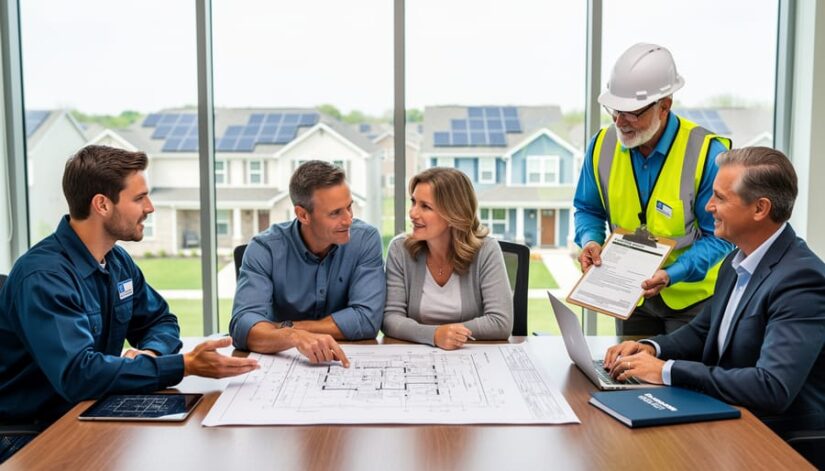
Why Your Solar Project Fails Before It Starts (And Who Actually Needs a Say)
Identify every person or organization with influence over your solar installation by mapping decision-makers, financial stakeholders, technical experts, and regulatory authorities before breaking ground. Your Illinois solar project’s success hinges on recognizing that stakeholders extend far beyond the property owner—they include utility companies like ComEd or Ameren Illinois, local permitting offices, your chosen solar installer, financing institutions, and even neighbors affected by installation logistics. Document each stakeholder’s specific interests, concerns, and approval requirements early in your planning phase to prevent costly delays and misaligned expectations.
Understanding stakeholder roles transforms solar project management from chaotic to streamlined. Commercial property owners must additionally account for tenants, board members, and corporate sustainability teams, while residential projects typically involve family members sharing financial responsibility, homeowners association representatives, and mortgage lenders. Create a simple spreadsheet listing each stakeholder’s name, role, communication preferences, and decision-making authority to maintain clarity throughout your project timeline. This systematic approach ensures you address Illinois-specific requirements—from interconnection agreements to local zoning compliance—while keeping everyone informed and engaged from initial assessment through system activation.
What Makes Someone a Stakeholder in Your Solar Project?
In the world of solar energy projects, a stakeholder is anyone who either influences the project’s direction or experiences its effects—whether positive or negative. This definition might seem broad at first, but it’s intentionally inclusive. Understanding who your stakeholders are from the beginning helps prevent delays, budget overruns, and community pushback that can derail even the most well-planned solar installation.
There are two primary categories of stakeholders to consider. The first group includes those who have decision-making power or influence over your project. These are people or organizations whose approval, expertise, or resources you need to move forward. For a residential solar installation in Illinois, this might include your local utility company, municipal permitting offices, your homeowners association, and the solar installation company you choose to work with.
The second category encompasses those affected by your project’s outcomes. This extends beyond just the property owner who benefits from reduced energy costs. Your neighbors might be impacted by the visual appearance of panels or construction activity. Your family members will experience changes in energy reliability and costs. If you’re a business owner, your employees and customers become stakeholders when you install commercial solar systems.
What separates a stakeholder from a casual observer is the presence of a genuine interest or concern. A stakeholder has something at stake—whether that’s financial investment, regulatory responsibility, environmental impact, or day-to-day quality of life. In Illinois, where local regulations and incentive programs vary by municipality, understanding this framework helps you identify everyone who should have a voice in your solar planning process.
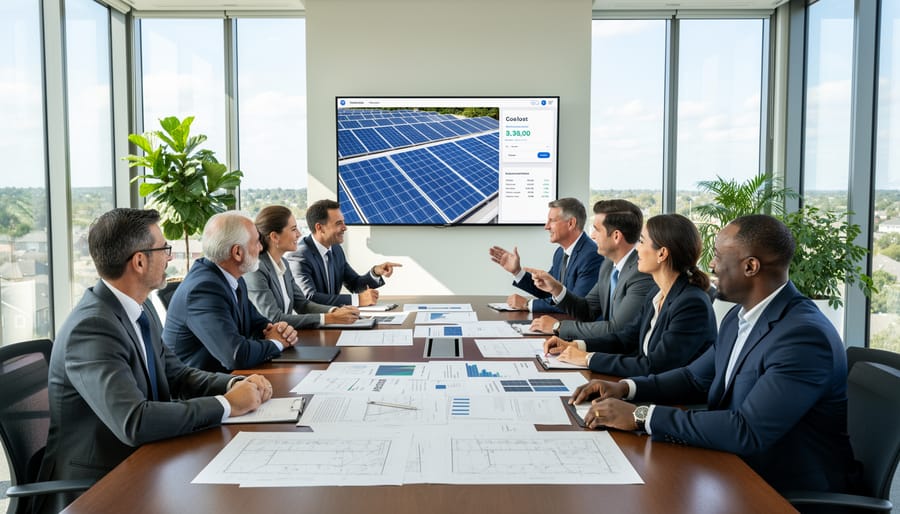
The Core Players: Internal Stakeholders Who Drive Your Solar Installation
Property Owners and Decision Makers
Property ownership type significantly influences stakeholder dynamics in solar projects. Residential homeowners typically make decisions independently or with their spouse, creating a straightforward approval process. Their primary concerns center on roof condition, aesthetic impact, upfront costs, and long-term savings on electricity bills. Homeowners usually work directly with solar installers and utility companies, with fewer stakeholders involved overall.
Commercial and industrial property owners face more complex decision-making structures. Multi-stakeholder approval processes often include property owners, facility managers, financial officers, and boards of directors. These projects require coordination between building management, tenants who benefit from reduced energy costs, and corporate sustainability teams. Commercial properties must also consider lease agreements, tenant energy usage patterns, and potential impacts on business operations during installation.
Industrial facilities add another layer with environmental compliance officers, operations managers, and supply chain stakeholders who depend on uninterrupted power. The scale of commercial and industrial installations in Illinois means longer timelines, more extensive permitting requirements, and coordination with multiple utility representatives. Understanding your ownership structure helps identify all necessary decision makers early, preventing delays and ensuring everyone’s concerns are addressed from project inception.
Operations and Maintenance Teams
The people who will actually operate and maintain your solar system deserve a seat at the planning table from day one. Whether you’re a business owner with facility managers or a homeowner who handles property upkeep yourself, understanding the daily operational realities of solar panels matters immensely.
Operations and maintenance teams bring practical insights about roof access, electrical system layouts, and seasonal weather challenges specific to Illinois. They can identify potential obstacles before installation begins, like drainage issues during spring storms or snow accumulation patterns in winter. Their input helps determine optimal panel placement that balances energy production with realistic maintenance access.
For commercial properties, involving your maintenance staff early means they’ll understand system monitoring, basic troubleshooting, and when to call your solar installer for support. This early engagement reduces downtime and protects your investment over the system’s 25-plus year lifespan. Even homeowners benefit from understanding what routine maintenance looks like before making installation decisions.
Financial Stakeholders
Financial stakeholders play a critical role in determining whether your solar project moves forward. These individuals—typically CFOs, accountants, financial advisors, and budget managers—evaluate the project’s return on investment, cash flow implications, and financing options. For homeowners, this might be a family member who manages household finances or a trusted financial advisor. Business owners should involve their accounting team early to assess how solar impacts operating budgets, tax obligations, and available Illinois solar incentives like the state’s Adjustable Block Program. Financial stakeholders help identify funding sources, whether through cash purchases, solar loans, or power purchase agreements. They also track performance metrics after installation to ensure projected savings materialize. In Illinois, where solar incentives can significantly reduce upfront costs, having financial expertise on your stakeholder team ensures you maximize available benefits while maintaining fiscal responsibility throughout the project lifecycle.
External Stakeholders That Can Make or Break Your Timeline
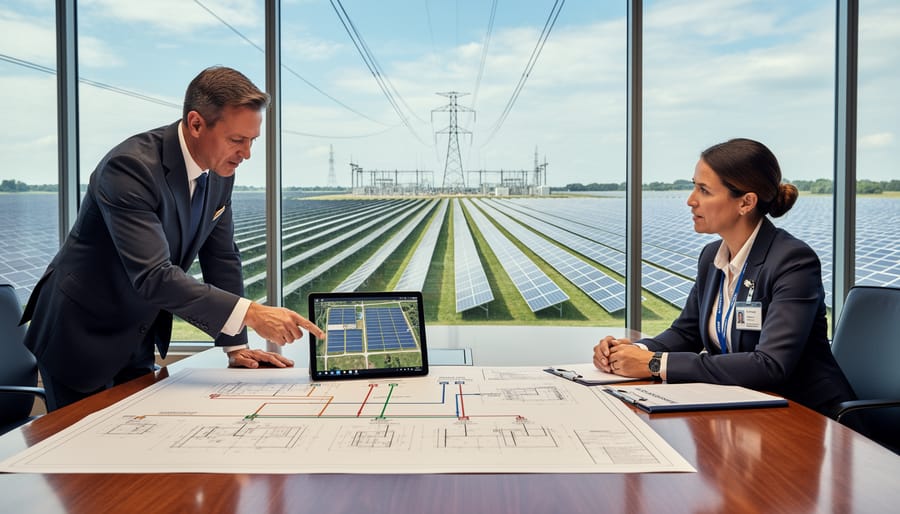
Illinois Utility Companies and Grid Operators
Illinois utility companies play a crucial role as key stakeholders in any solar project, serving as your partners in connecting your system to the electrical grid. Companies like ComEd and Ameren Illinois manage the infrastructure that allows your solar panels to feed excess energy back into the grid while drawing power when needed.
When planning your solar installation, you’ll work directly with your local utility through several essential processes. First, utility interconnection agreements establish the technical and legal framework for connecting your system safely to the grid. These agreements protect both you and the broader electrical network.
Your utility provider also administers Illinois’s net metering program, which credits you for the surplus electricity your solar panels generate. Understanding your utility’s specific net metering policies and billing procedures ensures you maximize your solar investment’s financial benefits.
The approval process typically involves submitting system specifications, safety documentation, and installation plans to your utility for review. Response times and requirements vary by provider, so engaging with them early in your project timeline prevents delays. Regional grid operators like PJM Interconnection may also be involved for larger commercial or industrial installations, coordinating broader grid stability and power distribution across the region.
Local Government and Permitting Authorities
Local government agencies play a critical role in bringing your solar project from concept to reality. In Illinois, you’ll need to work with several municipal and county-level authorities to secure the necessary approvals. Your municipal building department reviews construction plans and issues building permits, ensuring your solar installation meets local safety codes and structural requirements. Zoning boards verify that your solar array complies with local land use regulations, setback requirements, and aesthetic guidelines specific to your community.
Illinois has state-specific regulatory bodies that oversee renewable energy projects as well. The Illinois Commerce Commission regulates utility interconnections, which is essential when connecting your solar system to the electrical grid. Additionally, some counties have their own environmental review processes for larger commercial or industrial installations. Identifying these government stakeholders early prevents costly delays and redesigns. Each municipality in Illinois may have slightly different requirements, so connecting with your local building department at the project’s outset helps you understand exactly what documentation, fees, and timelines to expect. These authorities aren’t obstacles—they’re partners ensuring your solar investment is safe, compliant, and properly integrated into your community’s infrastructure.
Neighbors and Community Members
For commercial and larger residential solar installations in Illinois, neighbors and community members become important stakeholders who can significantly influence project success. Adjacent property owners may be affected by visual changes, construction activity, or equipment placement, making their awareness and acceptance valuable from the start.
In commercial settings, community stakeholders extend beyond immediate neighbors to include local business associations, municipal officials, and community groups. Their concerns often center on aesthetics, property values, and how the installation aligns with neighborhood character. Addressing these concerns proactively prevents delays and opposition during permitting phases.
Illinois solar projects benefit greatly from early community engagement. building community support through transparent communication helps identify potential issues before they become obstacles. For businesses, positive community relationships can even become marketing advantages, demonstrating environmental leadership and local commitment.
Consider hosting informal meetings or providing project information to nearby stakeholders. This approach is particularly important for ground-mounted commercial systems or installations in historic districts where community input may be required during approval processes. Taking time to address neighbor concerns early creates smoother project implementation and stronger long-term relationships within your Illinois community.
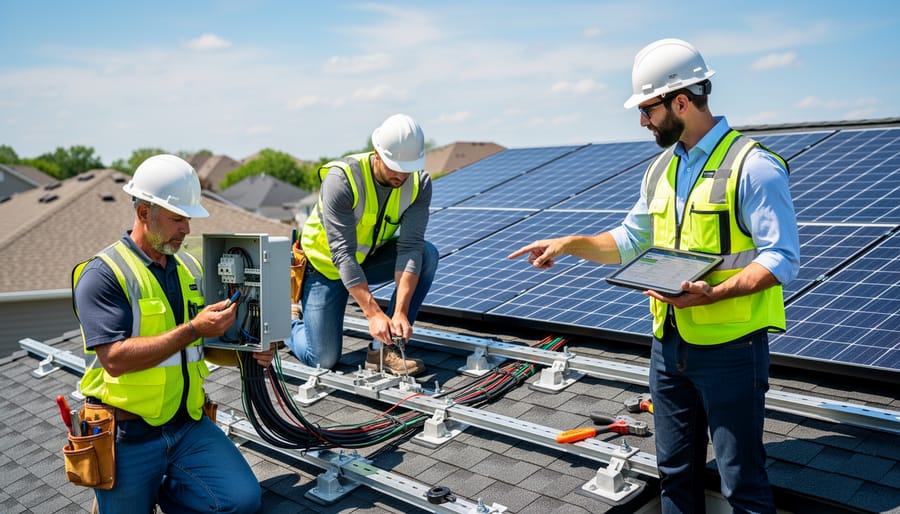
The Professional Team: Your Solar Project Partners
Your Solar Installation Company
Your solar installation company serves as the central coordinator throughout your project, bringing together all stakeholders and ensuring smooth collaboration from initial design through final activation. Companies like Illinois Renewables act as your primary point of contact, managing the technical complexities while keeping you informed at every stage.
As a locally owned solar installer, your chosen company handles critical responsibilities including system design tailored to your property’s specific conditions, securing necessary permits, ordering equipment, and managing the physical installation. They coordinate directly with your utility company to ensure proper interconnection, work alongside local building inspectors to pass required safety checks, and communicate with your financing provider if applicable.
Beyond the technical work, your installation company educates you on system operation, maintenance requirements, and monitoring capabilities. They also serve as advocates, helping you navigate Illinois-specific incentive programs and resolve any challenges that arise during the project timeline. This comprehensive approach ensures that all stakeholder interests align toward a successful outcome, protecting your investment while maximizing your solar system’s performance and longevity.
Additional Contractors and Specialists
Beyond your primary solar installation team, successful projects often require specialized technical professionals who ensure your system meets all safety and structural requirements. These additional contractors play crucial roles at different project phases.
Roofing contractors assess whether your roof can support solar panel weight and may perform necessary repairs or reinforcements before installation begins. This step is particularly important for older Illinois homes where winter snow loads must be carefully considered alongside solar equipment weight.
Licensed electricians connect your solar system to your home’s electrical panel and ensure proper grounding and safety protocols. They work closely with your solar installer to guarantee seamless integration with your existing electrical infrastructure.
Structural engineers may evaluate your building’s capacity to handle solar installations, especially for commercial projects or ground-mounted systems. Their expertise becomes essential when dealing with flat commercial roofs common throughout Illinois or when installing larger arrays.
Additional specialists might include tree service professionals for clearing shade-causing branches, permit expeditors who navigate local building departments, and土地 surveyors for ground-mounted installations. Identifying these specialists early in your planning process prevents delays and ensures your solar project proceeds smoothly from start to finish. Your solar installer can typically recommend trusted local professionals who understand Illinois-specific requirements.
How to Map Your Specific Stakeholders: A Practical Framework
Identifying every stakeholder in your solar project doesn’t have to be complicated. By following a systematic approach, you can ensure no important voice gets left out of the planning process.
Start with the immediate circle. Ask yourself: Who will be directly affected by this installation? For homeowners, this includes family members who share the property, your mortgage lender, and your insurance provider. Business owners should consider employees who work in areas where panels will be installed, building tenants if applicable, and property management teams. Industrial facilities need to include operations managers, maintenance staff, and safety officers from the start.
Next, expand outward to regulatory and utility stakeholders. In Illinois, you’ll need to coordinate with your local utility company for interconnection agreements. Contact your municipal building department to understand permitting requirements, which can vary significantly between Chicago suburbs, downstate communities, and rural areas. Don’t forget your homeowners association if you have one—they often have architectural review requirements that must be addressed early.
Consider the financial stakeholders next. Who approves the budget? For residential projects, this might be a spouse or financial advisor. Commercial projects typically require sign-off from CFOs, board members, or property investors. Remember that in Illinois, various incentive programs through organizations like the Illinois Solar Energy Association may involve additional stakeholders who oversee rebate compliance.
Use these practical questions to uncover hidden stakeholders: Who has veto power over this project? Who controls the budget? Who will maintain the system long-term? Whose daily routine will be affected during installation? Who needs to approve contracts or sign legal documents?
Create a simple stakeholder matrix. List each person or organization in one column, note their interest level in another, and document their influence on project decisions in a third. This visual tool helps you prioritize communication efforts and ensures accountability.
Finally, don’t overlook future stakeholders. If you plan to sell your property, future owners become stakeholders. For businesses, consider future tenants or expansion plans that might affect solar system design. Taking time upfront to map everyone involved prevents costly delays and builds the foundation for a successful solar installation that serves your Illinois property for decades.
Red Flags: Stakeholders You Might Be Forgetting
Even with careful planning, some stakeholders slip through the cracks during Illinois solar projects. These oversights can delay installations, increase costs, or even halt projects entirely.
Homeowners associations (HOAs) are frequently overlooked until late in the process. If your property falls under HOA jurisdiction, their architectural review board must approve your solar installation. Some HOAs have specific aesthetic requirements or placement restrictions that can significantly impact your project design. Review your association’s covenants early to avoid surprises.
Historic preservation societies and local landmark commissions deserve attention if your property sits in a designated historic district. Many Illinois communities, particularly in Chicago and Springfield, have preservation ordinances that regulate exterior modifications to historic buildings. These organizations can provide guidance on compliant installation methods that respect architectural integrity while meeting your energy goals.
Environmental and conservation groups may have interest in your project, especially for larger commercial or industrial installations. In Illinois, organizations focused on prairie restoration, wetland protection, or wildlife habitat may become engaged stakeholders if your installation affects sensitive areas. Proactively consulting these groups can smooth permitting and demonstrate environmental responsibility.
Future property occupants represent another commonly forgotten stakeholder category. Whether you plan to sell your home or lease commercial space, the next occupant will inherit your solar system. Their needs and expectations matter, particularly regarding system warranties, maintenance agreements, and utility arrangements. Documenting these details protects everyone involved.
Local school districts and educational institutions near commercial projects sometimes have legitimate interests in solar installations, from safety concerns to educational opportunities. Incorporating comprehensive risk assessment strategies from the start helps identify these less obvious stakeholders before they become project obstacles.
Identifying all relevant stakeholders before breaking ground on your solar project isn’t just good practice—it’s essential for avoiding expensive delays, regulatory headaches, and community conflicts down the road. When you map out everyone who has a stake in your project early on, you create a foundation for smooth permitting, efficient timelines, and successful long-term operation. This upfront investment in stakeholder identification pays dividends throughout your project’s lifespan, from initial planning through decades of clean energy generation.
For Illinois property owners and businesses, navigating the local stakeholder landscape requires knowledge of state-specific regulations, utility requirements, and community dynamics. Rather than learning through costly trial and error, partnering with experienced solar professionals who understand Illinois’s unique energy environment makes all the difference. These experts know which stakeholders to engage, when to involve them, and how to address their concerns effectively.
Ready to move forward with your solar project? Connect with locally owned Illinois solar professionals who bring deep expertise in stakeholder management and project planning. Their understanding of local regulations, utility protocols, and community considerations will help transform your solar vision into reality while keeping your project on schedule and within budget.
