
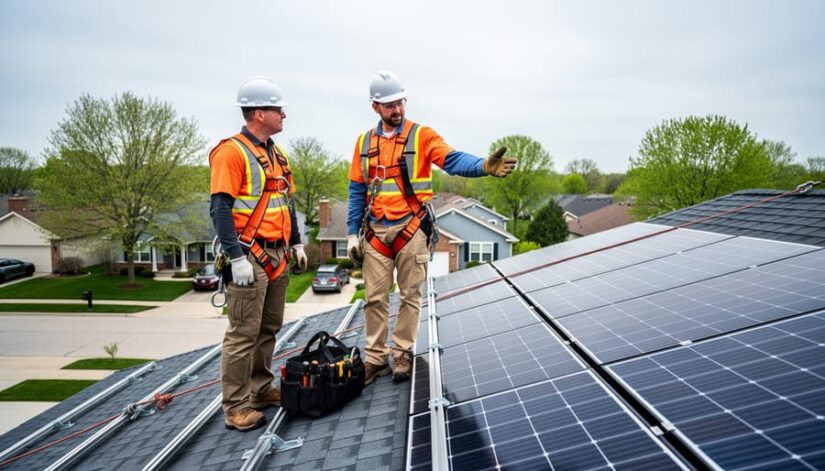
Why Illinois Solar Installers Need Safety Training Before Their First Rooftop Job
Pursue nationally recognized certification through the North American Board of Certified Energy Practitioners (NABCEP), which validates your expertise in photovoltaic system installation and serves as the industry’s gold standard. Illinois employers prioritize NABCEP-certified professionals when hiring, making this credential essential for anyone serious about entering the field.
Complete hands-on training at accredited community colleges or technical schools offering solar photovoltaic programs that combine electrical theory with practical rooftop installation experience. These programs typically span 6-12 months and cover critical topics including electrical code compliance, system design, safety protocols, and equipment handling specific to Illinois weather conditions and building requirements.
Obtain proper licensing credentials including an Illinois electrical contractor license for commercial installations, as state law requires licensed electricians to perform interconnection work on solar systems. This legal requirement protects both installers and property owners while ensuring installations meet National Electrical Code standards and local utility regulations.
Participate in manufacturer-specific training programs offered by major solar equipment suppliers, which provide detailed knowledge about installing and troubleshooting their products while often resulting in installer certifications that boost your marketability. Many manufacturers require these certifications before honoring equipment warranties, making them valuable for both individual installers and solar companies.
The demand for qualified professionals continues rising as solar installation jobs in Illinois expand rapidly under the state’s Climate and Equitable Jobs Act. Proper training protects workers, ensures code compliance, maximizes system performance, and builds customer confidence in this growing renewable energy sector.
The Growing Demand for Trained Solar Installers in Illinois
Illinois is experiencing significant growth in the solar energy sector, creating an urgent need for qualified solar installation professionals. As the state works toward Illinois’ renewable energy goals, including generating 40% of its electricity from renewable sources by 2030 and achieving 100% clean energy by 2050, the demand for trained installers continues to rise.
This expansion represents more than just environmental progress. It translates into real career opportunities for individuals seeking stable, well-paying jobs in a growing field. Property owners across Illinois, from homeowners to large commercial enterprises, are increasingly investing in solar systems. However, these installations require professionals who understand both the technical aspects of solar technology and the critical safety protocols that protect workers and property.
The complexity of modern solar installations demands comprehensive training. Installers must be proficient in electrical systems, understand proper mounting techniques for various roof types, and follow strict safety guidelines when working at heights and with high-voltage equipment. They also need knowledge of local building codes, permitting requirements, and interconnection standards specific to Illinois.
Without properly trained installers, the risks multiply. Poorly executed installations can lead to system failures, fire hazards, structural damage, and even serious injuries. This is why employers and property owners should prioritize working with professionals who have completed recognized training programs and maintain current certifications.
As locally owned solar companies in Illinois continue to expand their operations, they seek team members with verified expertise in solar energy. This growing job market offers promising prospects for those willing to invest in proper training and certification.
Essential Safety Training Components for Solar Installation
Fall Protection and Rooftop Safety
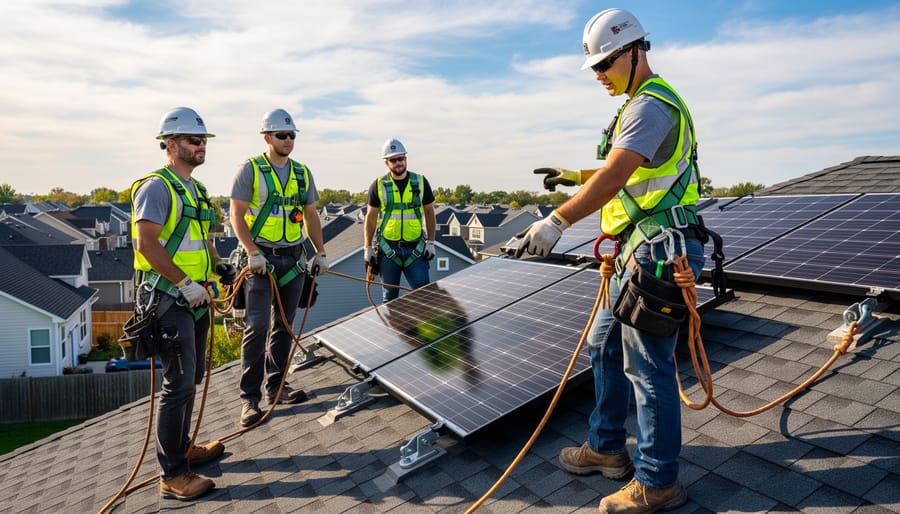
Working at heights is one of the most significant hazards in solar installation, making fall protection training absolutely essential for anyone entering this field. In Illinois, where residential and commercial solar projects often involve rooftop installations, proper safety training can mean the difference between a successful project and a serious accident.
Solar installation training programs must include comprehensive instruction on personal fall arrest systems, which are required whenever workers are exposed to falls of six feet or more. This training covers the correct selection, inspection, and use of full-body harnesses, connecting devices, and anchor points. Trainees learn how to properly don and adjust harnesses to ensure they fit securely and will function correctly in the event of a fall.
Understanding anchor points is particularly important in solar work. Installers must be able to identify or create secure anchoring locations that can support the required loads, which is often challenging on various roof types common throughout Illinois. Training includes recognizing when to use temporary anchor systems, permanent roof anchors, or alternative solutions like guardrail systems.
Ladder safety receives special attention since most rooftop solar installations begin with safe ladder access. Proper setup, climbing techniques, three-point contact maintenance, and securing ladders against movement are all covered extensively. Additionally, trainees learn about weight capacity limits, inspection procedures, and when to use ladder stabilizers or standoffs.
Many Illinois training providers incorporate hands-on practice with fall protection equipment in realistic scenarios, allowing students to experience proper techniques before facing actual rooftop conditions. This practical experience builds confidence and muscle memory that proves invaluable during real installations.
Electrical Safety and Arc Flash Protection
Solar installation training must include comprehensive electrical safety instruction because solar systems present unique hazards that differ from conventional electrical work. Understanding these risks protects both installers and system owners throughout the installation process and the system’s lifetime.
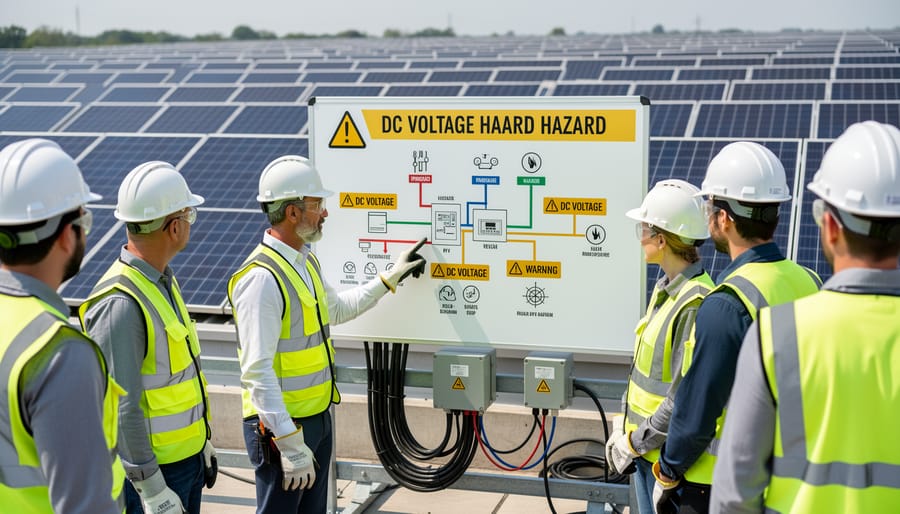
One of the most critical concepts in solar safety is recognizing that photovoltaic systems generate DC (direct current) voltage whenever sunlight hits the panels, even during installation. Unlike AC electrical systems that can be switched off completely, solar arrays continuously produce power during daylight hours. This means installers must work with live electrical components under certain conditions, making proper safety protocols absolutely essential.
Lockout/tagout procedures form the foundation of electrical safety in solar installation. These procedures ensure that all energy sources are properly isolated and tagged before maintenance or installation work begins. Installers learn to identify all disconnect points, verify zero energy states using appropriate testing equipment, and maintain clear communication with team members about system status.
Arc flash protection is another vital training component. An arc flash occurs when electrical current travels through air between conductors, creating an explosive release of energy. Solar installations, particularly commercial-scale systems with higher voltages, carry arc flash risks that require specific personal protective equipment. Training covers how to assess arc flash boundaries, select appropriate flame-resistant clothing, use insulated tools, and wear proper eye and face protection.
Illinois employers should verify that their installation teams receive hands-on training in these safety protocols, including recognition of electrical hazards specific to rooftop work environments and proper emergency response procedures.
Equipment Operation and Material Handling
Proper equipment handling stands as one of the most critical components of solar installation training. Solar panels, while durable once installed, require careful handling during transport and mounting. A standard residential solar panel weighs between 40 and 50 pounds and features glass surfaces that can crack under improper pressure or impact. Training programs teach installers how to carry panels using proper grip points along the aluminum frame, typically requiring two-person teams for safe transport across rooftops.
Lifting techniques follow OSHA-approved methods to prevent back injuries and strains. Installers learn to bend at the knees rather than the waist, keep loads close to their bodies, and avoid twisting motions while carrying heavy equipment. These fundamentals become especially important when working on sloped surfaces or climbing ladders with tools and materials.
Tool operation training covers both power and hand tools specific to solar installation. Installers must understand how to safely operate drills, impact drivers, wire strippers, and torque wrenches. Each tool serves specific purposes in the installation process, from securing mounting rails to making proper electrical connections. Training emphasizes wearing appropriate personal protective equipment, including safety glasses, gloves, and steel-toed boots.
Material staging represents another key skill. Proper organization of panels, inverters, mounting hardware, and conduit on job sites reduces unnecessary movement and potential damage. Illinois-based training programs often incorporate real-world scenarios that reflect the weather conditions and building types common throughout the state, ensuring installers understand how environmental factors affect material handling decisions.
Illinois-Specific Compliance and Certification Requirements
State Licensing and Trade Certifications
In Illinois, solar installers must navigate both state electrical licensing requirements and industry-recognized certifications to legally and safely perform installation work. The Illinois Department of Financial and Professional Regulation requires that anyone performing electrical work, including solar panel installations, hold the appropriate electrical license. For residential and commercial solar projects, installers typically need either an Electrician’s License or must work under a Licensed Electrician’s supervision, depending on the scope of work.
Beyond state requirements, the North American Board of Certified Energy Practitioners (NABCEP) certification represents the gold standard in the solar industry. NABCEP PV Installation Professional certification demonstrates that an installer has comprehensive knowledge of photovoltaic systems, safety protocols, and installation best practices. While not legally required in Illinois, this credential signals to customers that their installer has met rigorous industry standards and committed to ongoing professional development.
When choosing a solar installation company, homeowners and business owners should verify that the crew holds proper electrical licenses and inquire about additional certifications. These credentials aren’t just paperwork—they ensure installers understand the National Electrical Code, local building requirements, and manufacturer specifications. Properly trained installers reduce the risk of system failures, safety hazards, and code violations that could void warranties or create liability issues.
Working with a locally owned company that prioritizes certified, licensed installers means you’re getting professionals who understand both Illinois-specific regulations and the latest solar technology advancements. This combination of state licensing and voluntary industry certifications creates accountability and ensures quality workmanship throughout your solar project.
OSHA Standards for Solar Installation Work
Solar installation work in Illinois falls under multiple OSHA regulations that protect workers and ensure safe project completion. Understanding these standards helps property owners verify that their chosen installer maintains proper safety protocols and training credentials.
OSHA’s construction industry standards (29 CFR 1926) form the foundation for solar installation safety requirements. These regulations cover fall protection, electrical safety, personal protective equipment, and ladder safety—all critical elements when installing rooftop solar systems. Fall protection becomes particularly important since most residential solar installations occur at heights exceeding six feet, triggering OSHA’s fall protection requirements.
The 10-hour OSHA construction safety training serves as the baseline requirement for solar installation workers in many situations. This training covers hazard recognition, fall prevention, electrical safety, and proper equipment use. For supervisors and lead installers, OSHA’s 30-hour construction training provides more comprehensive safety education and is often preferred by reputable solar companies.
Illinois requires proper documentation of all safety training. Installers should maintain their OSHA training cards and employers must keep records of completed training courses. These documents prove compliance during inspections and demonstrate a company’s commitment to worker safety.
Electrical safety standards under OSHA 1926 Subpart K specifically address the unique hazards of working with photovoltaic systems. Installers must understand proper lockout/tagout procedures, arc flash protection, and safe electrical connections. This specialized knowledge protects both installation crews and the building occupants who will use the solar system for years to come.
Property owners should always ask potential solar installers about their OSHA training certifications and safety record before signing any contracts.
Where to Get Quality Solar Installation Training in Illinois
Illinois offers several excellent pathways for individuals seeking to enter the solar installation field. Whether you’re looking to start a new career or expand your business’s capabilities, multiple options exist across the state to gain the knowledge and hands-on experience needed for this growing industry.
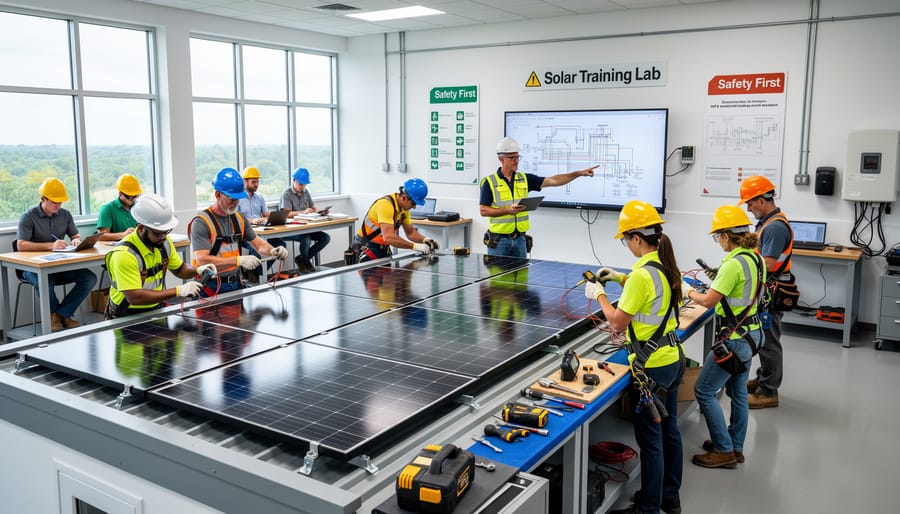
Community colleges throughout Illinois provide comprehensive training programs that cover both the theoretical foundations and practical skills required for solar installation. Schools like Prairie State College, City Colleges of Chicago, and Wilbur Wright College offer renewable energy programs that include photovoltaic system design, installation techniques, electrical fundamentals, and safety protocols. These programs often combine classroom instruction with laboratory work, giving students hands-on experience with actual solar equipment.
Trade schools and apprenticeship programs provide another valuable route into solar installation. The International Brotherhood of Electrical Workers (IBEW) and the National Electrical Contractors Association (NECA) offer apprenticeships that include solar-specific training alongside general electrical work. These programs allow you to earn while you learn, gaining real-world experience under the supervision of licensed professionals.
Industry organizations also deliver specialized professional solar training. The Midwest Renewable Energy Association regularly conducts workshops in Illinois, covering topics from basic solar electric systems to advanced installation techniques. These shorter-format courses work well for professionals already in related trades who want to add solar expertise to their skill set.
When evaluating training providers, look for programs that prepare students for NABCEP certification and emphasize Illinois-specific electrical codes and permitting requirements. Quality programs should include instruction on roof assessment, system sizing, electrical connections, and safety standards. Many locally owned solar companies in Illinois also value hiring installers who’ve completed recognized training programs, as this demonstrates commitment to quality workmanship and adherence to industry best practices.
How Proper Training Protects Your Investment and Reputation
When you’re considering solar installation for your Illinois home or business, choosing properly trained installers isn’t just about getting the job done—it’s about protecting your significant investment and ensuring long-term performance.
Hiring installers with quality solar workforce training directly impacts your bottom line. Properly trained professionals make fewer costly mistakes during installation, reducing the likelihood of system failures, roof damage, or electrical issues that could require expensive repairs down the road. A well-installed system operates at peak efficiency from day one, maximizing your energy production and return on investment.
From a liability perspective, certified installers carry appropriate insurance and follow established safety protocols, protecting you as the property owner from potential accidents or workplace injuries on your premises. This peace of mind is invaluable, especially for business owners who must consider workers’ compensation and liability concerns.
Installation quality directly affects your system’s longevity and performance. Trained professionals understand proper mounting techniques, electrical connections, and local building codes specific to Illinois weather conditions. They know how to account for our region’s snow loads, wind patterns, and temperature fluctuations, ensuring your system withstands our varied climate for its expected 25-30 year lifespan.
Perhaps most importantly, working with certified professionals enhances your confidence throughout the installation process. You can trust that your installer understands the latest industry standards, manufacturer specifications, and safety requirements. This expertise translates to smoother permitting, reliable warranties, and a solar system that performs as promised. For businesses, demonstrating that you’ve chosen qualified installers also strengthens your own reputation for quality and responsible decision-making.
Safety training isn’t just a box to check—it’s the foundation of Illinois’ growing solar industry. As more homeowners and businesses across the state embrace clean energy, the demand for qualified installers continues to rise. Working with properly trained professionals protects your investment, ensures code compliance, and guarantees that your system will perform safely and efficiently for decades to come.
When you choose a locally owned solar company committed to workforce development and ongoing safety education, you’re supporting quality workmanship and the future of renewable energy in Illinois. At Illinois Renewables, our dedication to comprehensive installer training means every project meets the highest standards of safety and performance. Properly trained solar professionals don’t just install panels—they create reliable, long-lasting energy solutions that power our communities forward while keeping workers and property owners safe throughout every phase of installation.
