

How Solar Energy Cleans Illinois Air (Even Though Ohio Gets the Funding)
Clean air and renewable energy intersect powerfully through state-level financing programs, with Ohio’s Air Quality Development Authority serving as a pioneering model since 1970. This unique quasi-governmental agency provides low-interest loans and tax-exempt bonds to businesses investing in pollution control equipment and energy efficiency projects, including solar installations. By reducing the financial barriers to clean energy adoption, such authorities directly contribute to measurable air quality improvements—cutting particulate matter, nitrogen oxides, and sulfur dioxide emissions that harm public health.
While Illinois doesn’t operate an identical air quality financing authority, the state offers robust solar incentives through programs like Illinois Shines and Solar Renewable Energy Credits (SRECs) that achieve similar environmental outcomes. Every solar panel installed displaces fossil fuel generation, preventing approximately 8,000 pounds of carbon dioxide annually per residential system. For Illinois homeowners and businesses exploring solar, understanding how clean energy investment translates to cleaner air—alongside substantial utility savings—makes the decision both environmentally responsible and economically sound. The connection between solar adoption and air quality improvement isn’t abstract; it’s quantifiable, immediate, and benefits entire communities through reduced respiratory illness and healthcare costs.
What the Ohio Air Quality Development Authority Actually Does
Financing Clean Air Through Solar Projects
The Ohio Air Quality Development Authority (AQDA) has pioneered an innovative approach to environmental protection by offering low-interest financing specifically for projects that reduce air pollution, including solar installations. This model demonstrates how state-level programs can accelerate clean energy adoption while directly addressing air quality concerns.
Through the AQDA, businesses and organizations in Ohio can access favorable loan terms for solar projects that offset fossil fuel consumption. By reducing reliance on traditional power generation, these solar installations decrease emissions of harmful pollutants like sulfur dioxide, nitrogen oxides, and particulate matter. The financing structure makes solar projects more economically viable, removing a significant barrier for businesses considering the transition to renewable energy.
What makes this model particularly effective is its dual benefit: solar adopters save money through reduced energy costs and lower financing rates, while communities gain cleaner air. The AQDA evaluates projects based on their potential environmental impact, ensuring financing supports meaningful pollution reduction.
For Illinois residents and business owners exploring solar options, Ohio’s example highlights how government-backed financing can transform clean energy from an aspirational goal into an accessible reality. While Illinois has its own renewable energy incentives and programs, understanding how neighboring states structure their clean air initiatives provides valuable context for making informed decisions about solar investments. Locally owned solar providers with expertise in solar energy can help navigate available financing options and maximize both environmental and financial returns from solar installations.

The Direct Connection: Solar Panels and Cleaner Air
Every Solar Panel Reduces These Harmful Emissions
When Illinois homeowners install solar panels, they’re doing more than reducing their electricity bills—they’re actively preventing harmful pollutants from entering the air we breathe. Understanding exactly what emissions solar panels eliminate helps illustrate the real environmental impact of choosing clean energy.
Every megawatt-hour of solar electricity generated in Illinois prevents approximately 1,500 pounds of carbon dioxide from entering the atmosphere. To put that in perspective, a typical residential solar system produces enough clean energy annually to offset the carbon emissions from driving a car over 10,000 miles. Solar energy reduces air pollution by displacing electricity that would otherwise come from fossil fuel power plants.
Sulfur dioxide, which contributes to acid rain and respiratory problems, decreases by roughly 12 pounds per megawatt-hour of solar generation. This pollutant particularly affects those with asthma and other breathing conditions. Nitrogen oxides, another respiratory irritant that forms ground-level ozone, drop by approximately 5 pounds for each megawatt-hour of solar power produced.
Particulate matter, the tiny airborne particles that penetrate deep into lungs and even enter the bloodstream, also decreases substantially. These microscopic pollutants have been linked to heart disease, lung cancer, and premature death. By generating electricity without combustion, solar panels eliminate these dangerous particles at the source.
For an average Illinois home going solar, these reductions mean preventing several tons of harmful emissions annually—equivalent to planting dozens of trees or taking a second car off the road entirely. These aren’t abstract environmental benefits; they’re measurable improvements to local air quality that protect your family’s health and contribute to cleaner communities across Illinois.
Real Health Benefits for Your Family and Neighbors
When communities reduce air pollution through clean energy solutions like solar, families experience measurable improvements in their daily health. Programs similar to Ohio’s air quality initiatives demonstrate how decreasing fossil fuel emissions directly translates to fewer emergency room visits and healthier neighborhoods.
Respiratory conditions, particularly asthma, see significant improvement when air quality standards rise. Children and elderly residents, who are most vulnerable to air pollutants, benefit from cleaner air through reduced asthma attacks and fewer missed school or work days. Solar energy systems eliminate the nitrogen oxides and particulate matter that traditional power generation releases, making it easier for everyone to breathe.
Cardiovascular health also improves substantially with better air quality. Studies show that communities with lower emission levels experience decreased rates of heart attacks, strokes, and other cardiovascular complications. The fine particles from fossil fuel combustion can enter the bloodstream, but solar energy produces zero operational emissions, protecting your heart health and that of your neighbors.
For Illinois families, these environmental and health benefits aren’t abstract concepts but real outcomes that affect quality of life. Local solar adoption means fewer pollution-related hospitalizations, reduced healthcare costs, and children playing outside without concern for air quality alerts. When your business or home switches to solar, you’re contributing to a healthier community where respiratory illnesses decline and families thrive in cleaner air.

Why Illinois Needs to Pay Attention to Air Quality Programs
Illinois’ Current Air Quality Landscape
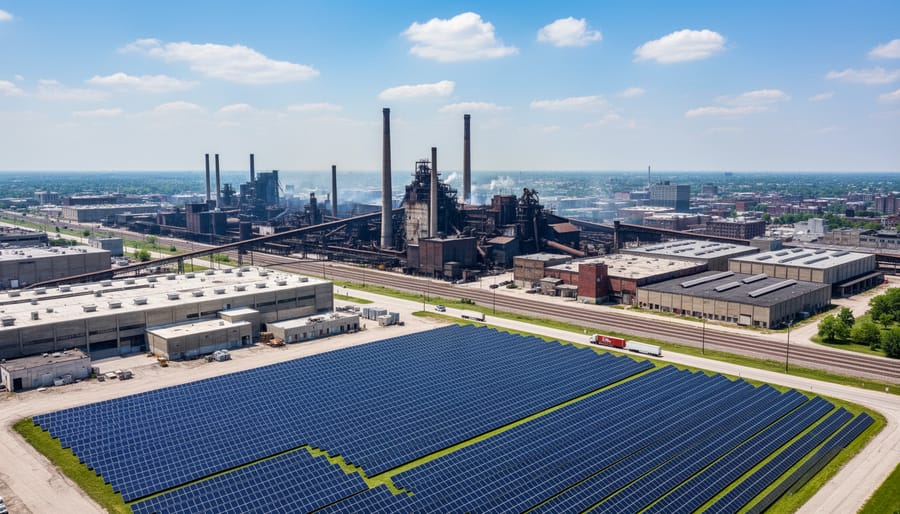
Illinois faces significant air quality challenges, particularly in metropolitan areas like Chicago and regions with concentrated industrial activity. Ground-level ozone and particulate matter remain persistent concerns, especially during warmer months when pollution levels can spike. Urban areas experience higher concentrations of nitrogen oxides and sulfur dioxide from vehicle emissions and industrial operations, while older coal-fired power plants have historically contributed to regional air quality degradation.
The health implications are considerable. Poor air quality contributes to respiratory issues, cardiovascular problems, and can exacerbate conditions like asthma, particularly affecting children and elderly residents. Communities near industrial corridors often bear a disproportionate burden of pollution exposure.
Solar energy deployment offers a practical solution to these challenges. Unlike traditional power generation that burns fossil fuels and releases harmful emissions, solar panels produce electricity without generating air pollutants. Every kilowatt-hour of solar electricity displaces power that might otherwise come from combustion-based sources, directly reducing emissions of particulate matter, nitrogen oxides, and sulfur dioxide.
As Illinois expands its solar infrastructure, particularly through locally owned installations, communities experience measurable air quality improvements. Business owners and homeowners who adopt solar technology contribute to cleaner air while reducing their energy costs. This dual benefit makes solar an increasingly attractive option for those committed to environmental stewardship and economic efficiency. The cumulative effect of widespread solar adoption creates healthier communities across Illinois, demonstrating how individual energy decisions generate collective environmental benefits.
How Your Solar Installation Contributes to Regional Clean Air
When you choose solar energy for your home or business in Illinois, you’re doing more than reducing your electric bill—you’re actively contributing to cleaner air across the entire Midwest region. Each residential solar installations and commercial system reduces reliance on fossil fuel power plants, which are major sources of air pollutants like sulfur dioxide, nitrogen oxides, and particulate matter.
Illinois sits within a regional airshed that affects neighboring states, meaning emissions reductions here create measurable benefits throughout the Midwest. When multiple solar installations across communities generate clean electricity simultaneously, the cumulative effect significantly decreases the need for coal and natural gas generation during peak demand periods—exactly when air quality issues worsen.
Studies show that distributed solar generation helps reduce ground-level ozone formation and particulate pollution, particularly during summer months when air quality alerts are most common. Your individual solar system joins thousands of others creating a network of clean energy sources that collectively displace millions of pounds of harmful emissions annually. This aggregated impact translates to fewer respiratory illnesses, reduced healthcare costs, and improved quality of life for residents throughout the region.
Calculating Your Personal Air Quality Impact
The Numbers Behind Your Solar System’s Clean Air Contribution
Understanding the environmental impact of your solar investment doesn’t require a degree in environmental science. Let’s break down the clean air benefits using straightforward calculations that show exactly how much pollution your solar panels prevent.
A typical 10-kilowatt residential solar system in Illinois generates approximately 12,000 kilowatt-hours annually. To understand the pollution offset, we compare this clean energy production to the emissions from conventional grid electricity.
For every 1,000 kilowatt-hours your solar system produces, you’re avoiding about 1,560 pounds of carbon dioxide that would otherwise come from fossil fuel power plants. Using our 10-kilowatt example, that’s roughly 18,720 pounds of CO2 prevented each year—equivalent to planting nearly 220 trees or taking two cars off the road for twelve months.
Beyond carbon dioxide, solar panels reduce other harmful pollutants. The same system prevents approximately 41 pounds of sulfur dioxide annually, a major contributor to acid rain and respiratory problems. You’ll also offset about 22 pounds of nitrogen oxides, which contribute to smog formation and breathing difficulties, particularly affecting children and seniors.
For commercial installations, the numbers scale impressively. A 100-kilowatt commercial system prevents roughly 187,000 pounds of CO2 yearly—that’s like removing 20 passenger vehicles from Illinois roads permanently.
The calculation formula is simple: Annual solar production (kWh) x 1.56 = pounds of CO2 avoided. While Illinois’s energy grid mix differs slightly from Ohio’s, the fundamental principle remains consistent—every kilowatt-hour of solar energy directly replaces polluting alternatives.
These aren’t abstract numbers. They represent cleaner air for your neighborhood, reduced health impacts on your community, and measurable contributions to regional air quality improvements. When you partner with locally owned solar experts who understand Illinois-specific energy patterns, you’re making an investment whose environmental returns compound year after year, creating lasting benefits for generations.
Beyond Savings: The Complete Value of Going Solar in Illinois
When considering solar panels, most people naturally focus on the dollars and cents—monthly savings, payback periods, and tax incentives. But the real value of solar extends far beyond your utility bill. Every kilowatt-hour of solar energy your system generates replaces electricity that would otherwise come from fossil fuel power plants, directly improving the air your family breathes.
In Illinois, where coal and natural gas still power significant portions of the electrical grid, solar adoption in Illinois creates measurable air quality benefits. When you eliminate emissions at the source, you reduce pollutants like sulfur dioxide, nitrogen oxides, and particulate matter—all contributors to respiratory issues, cardiovascular problems, and environmental degradation. These health benefits represent real economic value that rarely appears in traditional solar calculators.
Think of your solar investment as a dual-purpose decision: it protects your household budget while protecting public health. Studies consistently show that communities with higher renewable energy adoption experience fewer air quality-related health emergencies and associated healthcare costs. Your locally owned solar provider understands these regional benefits and can help quantify both the financial returns and environmental impact specific to your property. While traditional energy sources will continue their necessary role during this transition, each solar installation represents a meaningful step toward cleaner air for Illinois communities, creating value that extends to neighbors, schools, and future generations.
While Ohio’s Air Quality Development Authority provides valuable resources for that state, Illinois residents don’t need to wait for similar programs to make meaningful environmental contributions. By choosing solar energy today, you can immediately reduce air pollution in your community while lowering electricity costs. Solar panels generate clean power without emitting harmful pollutants, directly improving the air your family breathes.
As a locally owned solar provider, we understand Illinois-specific environmental challenges, from seasonal weather patterns to regional air quality concerns. Our team brings expert knowledge of state incentives, local regulations, and installation best practices tailored to Illinois homes and businesses. We offer comprehensive service from initial consultation through system maintenance, ensuring your transition to clean energy is seamless. Ready to create cleaner air and energy savings? Contact us today to discover how solar can work for your Illinois property.
