

How Solar Panel Recycling Could Transform Illinois’s Clean Energy Future
Solar panels deliver clean energy for 25-30 years, but their environmental value extends far beyond operation when circular economy principles guide their entire lifecycle. For Illinois residents investing in solar technology, understanding how manufacturers, installers, and recyclers close the loop on materials makes the difference between a genuinely sustainable choice and one that simply shifts environmental burden downstream.
Circular economy initiatives in solar energy transform end-of-life panels from potential waste into valuable resources. Rather than following the traditional “take-make-dispose” model, these programs recover up to 95% of materials like silicon, silver, aluminum, and glass for remanufacturing. This approach reduces mining demands, cuts manufacturing emissions, and creates local jobs in collection and processing facilities.
Illinois solar adopters benefit directly from supporting companies with established take-back programs and recycling partnerships. Leading manufacturers now design panels for easier disassembly, use fewer toxic materials, and maintain transparent supply chains that track components from production through recovery. Some even offer credit programs where returned panels reduce costs on future purchases.
The practical impact matters for your investment timeline. Panels installed today will reach end-of-life around 2050, when circular infrastructure will be substantially more developed than current systems. Companies with demonstrated commitment to circular practices show greater likelihood of honoring long-term warranty and recycling obligations. By choosing solar providers who participate in established circular economy networks, Illinois property owners ensure their clean energy investment remains environmentally responsible from installation through final material recovery.
What Circular Economy Means for Solar Technology
The Lifecycle of Your Solar Panels
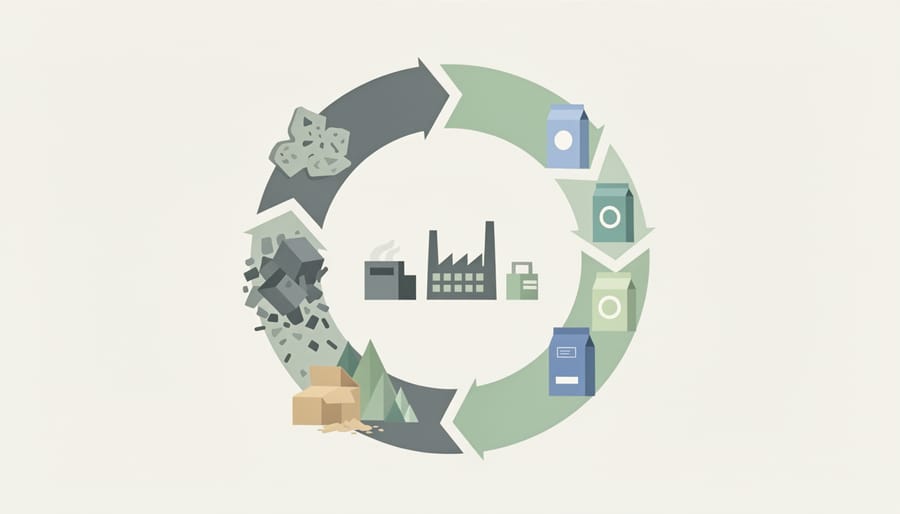
Understanding what happens to your solar panels throughout their lifespan helps you see how circular economy principles create a more sustainable energy future. Solar panels typically last 25-30 years, and their journey involves several distinct stages where resource efficiency matters.
The manufacturing stage begins with extracting and refining raw materials like silicon, aluminum, glass, and silver. Forward-thinking manufacturers increasingly use recycled materials and renewable energy in production facilities, reducing the carbon footprint before panels even reach your property. When you choose solar panels from companies committed to sustainable manufacturing, you’re supporting circular economy principles from day one.
During the installation and operational phase, your solar panels generate clean energy for decades with minimal maintenance. High-quality panels maintain 80-90% of their original efficiency after 25 years, making them remarkably durable investments. Throughout this period, the materials remain in productive use, embodying one of the circular economy’s core principles: maximizing the useful life of products.
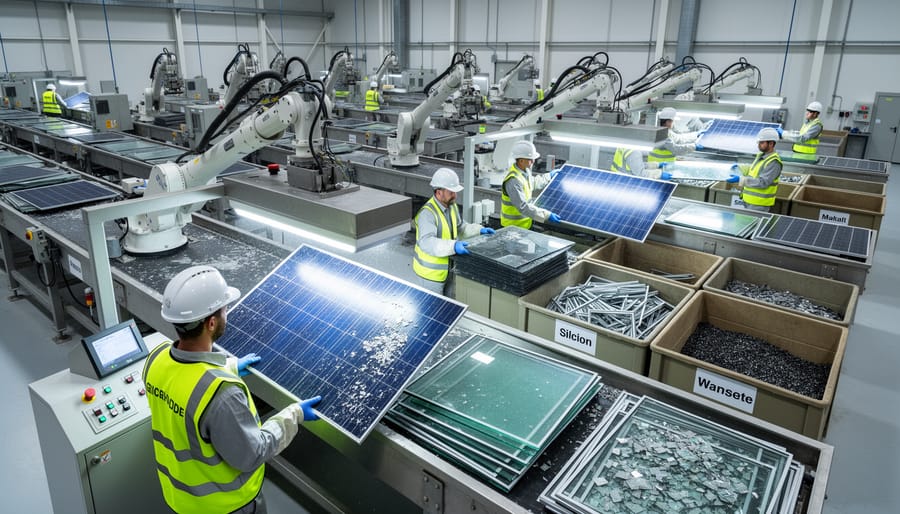
As panels approach the end of their operational life, the critical question becomes what happens next. Rather than ending up in landfills, end-of-life panels can be disassembled and their materials recovered. Modern recycling processes can reclaim up to 95% of a panel’s materials, including valuable silicon cells, aluminum frames, glass, and copper wiring. These recovered materials then become feedstock for new solar panels or other products, completing the circular loop.
In Illinois, as our locally owned solar company has observed, awareness about end-of-life options continues to grow. More manufacturers now design panels with recyclability in mind, using fewer adhesives and creating modular designs that simplify material separation. This design-for-recycling approach represents a fundamental shift toward truly circular solar technology.
Why This Matters for Illinois Solar Owners
For Illinois solar owners, embracing circular economy initiatives delivers tangible benefits that extend well beyond environmental stewardship. When you choose solar panels designed with end-of-life recycling in mind, you’re making a smart financial decision that protects your investment for decades to come.
Long-term cost savings begin with understanding that recycled solar materials help stabilize future panel prices. As more manufacturers adopt circular practices, the industry becomes less dependent on volatile raw material markets, which can translate to more predictable pricing for system expansions or replacements. Additionally, Illinois homeowners and businesses increasingly find that documented recycling plans enhance property value, as sustainability-conscious buyers recognize the forward-thinking approach to asset management.
The environmental impact is particularly significant in our state. Illinois generates substantial solar waste as early installations from the 2000s approach retirement. By supporting circular economy initiatives, you help keep hazardous materials out of landfills while recovering valuable resources like silver, copper, and silicon right here in the Midwest. This reduces the carbon footprint associated with mining new materials and strengthens regional recycling infrastructure.
As a locally owned Illinois company, we understand that responsible solar adoption means considering the complete lifecycle of your system. Choosing manufacturers committed to takeback programs and working with installers who prioritize recyclability ensures your solar investment aligns with both your financial goals and environmental values. Your decision today shapes the sustainability of solar energy for future generations of Illinois residents.
International Leaders Showing the Way Forward
Europe’s Extended Producer Responsibility Programs
European manufacturers have pioneered comprehensive Extended Producer Responsibility (EPR) programs that require solar panel makers to manage their products throughout the entire lifecycle, including end-of-life disposal and recycling. Under the European Union’s Waste Electrical and Electronic Equipment Directive, solar companies must finance the collection, transportation, and recycling of their panels once they reach the end of their useful life. This approach has created a robust infrastructure for panel recovery across Europe.
The results have been impressive. European recycling facilities now recover up to 95% of materials from decommissioned solar panels, including valuable silicon, glass, aluminum, and copper. France’s PV Cycle program, for example, has collected over 100,000 tons of solar equipment since its inception, establishing collection points throughout the country that make responsible disposal convenient for homeowners and businesses alike.
These programs offer valuable lessons as U.S. solar policy standards continue evolving. The European model demonstrates that manufacturer responsibility creates economic incentives for designing panels that are easier to recycle and refurbish. It also reduces the burden on local waste management systems and ensures consistent recycling standards.
For Illinois solar adopters, understanding these international frameworks provides context for emerging domestic initiatives. While the United States doesn’t yet mandate federal EPR programs for solar equipment, several states are exploring similar approaches. As a locally owned company with expertise in solar energy, we monitor these developments closely to help our customers make informed decisions about their solar investments and understand the long-term environmental benefits of supporting circular economy principles.
Japan’s High-Tech Recycling Solutions
Japan has emerged as a leader in developing cutting-edge recycling technologies for solar panels, offering valuable lessons for Illinois homeowners and businesses considering solar investments. The country’s innovative approach addresses a critical challenge in the renewable energy sector: efficiently recovering valuable materials from panels that have reached the end of their 25-30 year lifespan.
Japanese researchers and companies have developed advanced processes that can recover up to 95% of the materials from old solar panels. These technologies use a combination of thermal and chemical treatments to separate the aluminum frames, glass, silicon wafers, and precious metals like silver and copper. One particularly promising method involves heating panels to specific temperatures that allow the different layers to separate cleanly without damaging the recoverable materials.
This global green energy research is already influencing practices here in Illinois. The high recovery rates mean that materials from your solar panels can be reused to manufacture new panels or other products, reducing the need for virgin materials and lowering the overall environmental footprint of solar energy.
Japanese facilities have also streamlined the logistics of panel collection and processing, creating efficient systems that make recycling economically viable. As these technologies mature and become more widely adopted, Illinois solar panel owners can expect improved recycling infrastructure and potentially even financial incentives for returning old panels for proper processing rather than disposal.
Circular Economy Initiatives Taking Root in America
What’s Happening in Illinois and the Midwest
Illinois and the broader Midwest region are making significant strides in establishing circular economy programs that directly benefit local solar panel owners. The state’s growing commitment to renewable energy has spurred collaborative efforts between manufacturers, recycling facilities, and government agencies to address end-of-life solar equipment responsibly.
The Illinois Environmental Protection Agency has partnered with the Clean Energy Trust to develop a statewide solar panel recycling framework. This initiative aims to establish collection points throughout the state where homeowners and businesses can drop off decommissioned panels. Currently, several pilot programs are underway in the Chicago metropolitan area and central Illinois, testing logistics and recovery methods for various panel types.
In neighboring states, Midwest recycling networks are expanding capacity to serve Illinois residents. Wisconsin-based Retrieve Technologies has opened a facility capable of processing solar panels from across the region, recovering up to 95 percent of materials including silicon, glass, and valuable metals. This facility accepts panels from Illinois solar owners, providing a convenient option for responsible disposal.
The Midwest Solar Collaborative, which includes Illinois as a key member, has launched educational programs to help solar installers and property owners understand recycling options. These programs emphasize the importance of tracking panel warranties and planning for eventual decommissioning as part of the initial solar investment.
Several locally owned Illinois solar companies are now incorporating end-of-life services into their offerings, establishing take-back programs that guarantee proper recycling when panels reach their 25 to 30-year lifespan. These forward-thinking businesses recognize that circular economy practices strengthen customer confidence and support long-term sustainability goals.
For Illinois solar owners, these developing initiatives mean greater access to responsible recycling solutions and reduced environmental impact from their renewable energy investments.
Manufacturer Take-Back Programs You Can Access
Several major solar manufacturers have established take-back programs that Illinois residents can access to ensure their panels are properly recycled at end-of-life. These programs demonstrate how the solar industry is embracing circular economy principles and making it easier for you to choose environmentally responsible options.
First Solar, a leading American manufacturer, operates one of the industry’s most comprehensive recycling programs. Their prepaid collection and recycling service covers the transportation and processing of their panels at no cost to owners. The company’s advanced recycling process recovers up to 90% of materials, including semiconductor materials, glass, and metals. Illinois homeowners and businesses using First Solar panels can contact the manufacturer directly to arrange collection.
SunPower has partnered with recycling facilities to ensure their high-efficiency panels don’t end up in landfills. Through their Recycle Program, they work with certified recyclers who handle the complete disassembly and material recovery process. Illinois residents can initiate the recycling process through SunPower’s customer service, which coordinates logistics and ensures proper handling.
Hanwha Q CELLS operates a global take-back program accessible to U.S. customers. They provide detailed instructions for panel return and work with regional partners to minimize transportation impacts. The program accepts both damaged panels requiring early retirement and systems reaching their natural end-of-life.
To participate in these programs, start by identifying your panel manufacturer through your original installation documentation or by checking the panel labels. Contact the manufacturer’s customer service department to verify program availability in Illinois and understand specific requirements. Many programs require advance notice and may have minimum quantity requirements for collection, making it beneficial to coordinate with your solar installer or neighboring solar owners for efficient pickup scheduling.
How Circular Design Makes Solar Systems Better
Longer Lifespans and Easier Repairs
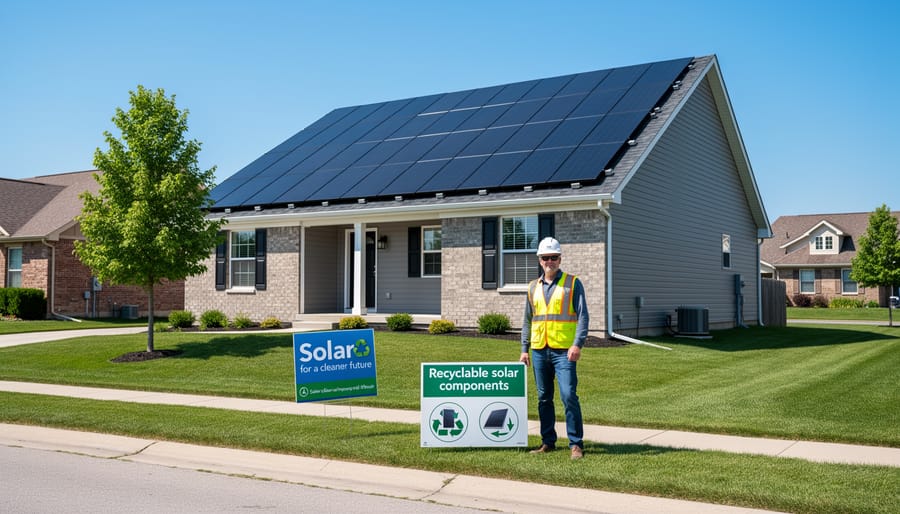
Investing in solar energy means thinking long-term, and circular economy principles ensure your system delivers value for decades. Modern solar installations built with modular design and quality materials can operate efficiently for 30 years or more, significantly outlasting previous generation systems.
Modular design represents a significant advancement in solar technology. Rather than replacing an entire system when one component fails, homeowners and businesses can swap out individual panels, inverters, or mounting hardware. This approach dramatically reduces maintenance costs and minimizes waste. When a single panel underperforms, you simply replace that unit rather than overhauling the entire array.
Quality materials make all the difference in system longevity. Premium solar panels feature reinforced frames, tempered glass, and weather-resistant coatings that withstand Illinois’s variable climate, from heavy snow loads to summer storms. These durable components resist degradation, maintaining higher efficiency rates throughout their lifespan.
For Illinois property owners, this translates to practical financial benefits. Fewer service calls mean lower maintenance expenses over time. Extended operational periods maximize your return on investment while reducing the environmental impact of manufacturing replacement components. Local solar providers with expertise in system design can help you select configurations optimized for both performance and longevity.
By prioritizing repairable, durable systems, circular economy initiatives align environmental responsibility with economic sense. Your solar investment becomes more cost-effective while supporting sustainable practices that benefit your community and reduce landfill waste. This approach ensures that going solar remains both financially sound and environmentally conscious for generations to come.
Materials That Give Back
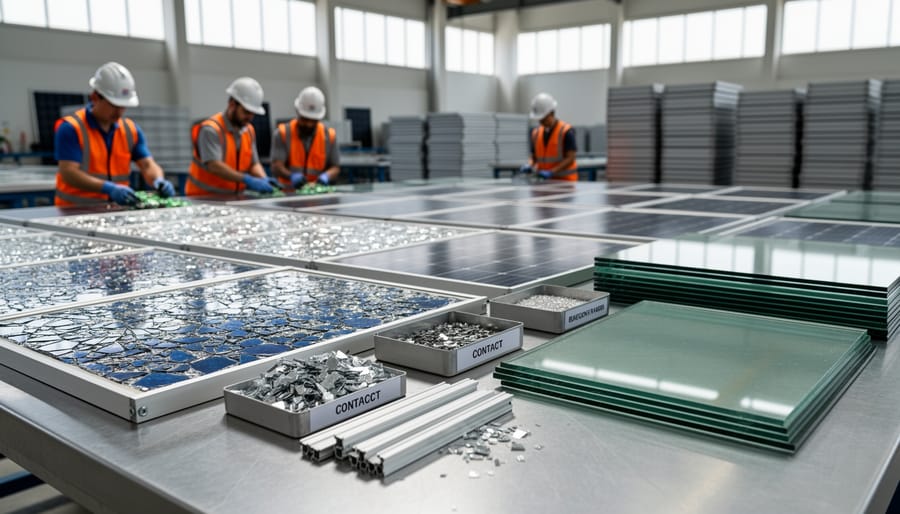
Solar panels contain valuable materials that deserve a second life. Each panel holds silicon for converting sunlight into electricity, silver for conducting that electricity efficiently, aluminum framing for structural support, and high-quality glass protecting the components. These materials represent significant economic value when recovered and reused properly.
Recovery of these materials creates real financial opportunities in the growing global renewable energy trade. Silver, one of the most valuable components, can be extracted and repurposed for new panels or other electronics. Silicon undergoes processing to return to semiconductor-grade quality. Aluminum frames melt down easily for countless applications, while glass becomes raw material for new products. This material recovery reduces the need for virgin resource extraction, cutting production costs and environmental impact simultaneously.
For Illinois solar adopters, this means your investment contributes to a sustainable materials cycle rather than creating future waste. As recycling infrastructure expands, the economic value of these recoverable materials helps offset end-of-life management costs, making solar energy even more financially attractive over its complete lifecycle.
What This Means When You Choose Solar Today
Questions to Ask Your Solar Installer
When evaluating solar proposals, asking the right questions helps ensure your investment aligns with circular economy principles. Start by inquiring about end-of-life planning: “What happens to my panels when they reach the end of their 25-30 year lifespan?” A reputable installer should provide clear information about recycling options and any take-back programs they participate in or recommend.
Ask about manufacturer warranties and their commitment to sustainability: “Does the panel manufacturer have recycling programs or circular economy initiatives?” Many leading manufacturers now offer extended producer responsibility programs that facilitate proper recycling. Understanding these commitments helps you choose products from companies investing in sustainable solutions.
Question the durability and longevity of components: “What materials are used in these panels, and are they designed for easy disassembly and recycling?” Panels built with recyclability in mind typically feature fewer adhesives and more standardized components, making them easier to process at end-of-life.
Inquire about maintenance practices that extend system life: “How does regular maintenance maximize my system’s lifespan and performance?” Proper care can significantly extend your panels’ productive years, delaying recycling needs and maximizing your environmental benefits.
Finally, ask your installer about their own sustainability practices: “What steps does your company take to minimize waste during installation?” As a locally owned solar provider, responsible installers should demonstrate commitment to reducing installation waste and properly disposing of any materials. These conversations reveal whether your installer shares your values regarding environmental stewardship and long-term sustainability.
Future-Proofing Your Investment
Investing in solar systems designed with circular economy principles isn’t just environmentally responsible—it’s a smart financial decision that safeguards your investment for decades to come. As recycling regulations evolve and Illinois solar standards align with global sustainability benchmarks, systems built with end-of-life considerations will become increasingly valuable.
Solar panels designed for disassembly and material recovery maintain higher residual value because their components can be reclaimed and repurposed. This matters when you eventually upgrade or replace your system. Manufacturers committed to take-back programs and circular design are also more likely to offer extended warranties and ongoing support, protecting your investment through the entire lifecycle.
Looking ahead, Illinois is likely to implement extended producer responsibility programs similar to those in Europe, where manufacturers must manage their products at end-of-life. Choosing systems from companies already participating in circular initiatives positions you to benefit from these emerging programs rather than facing potential disposal costs or complications down the road.
Additionally, businesses prioritizing circular economy principles often demonstrate greater long-term stability and innovation. By selecting partners who invest in sustainable practices today, you’re working with companies better prepared for tomorrow’s regulatory landscape and market demands. This forward-thinking approach ensures your solar investment remains compliant, valuable, and aligned with evolving environmental standards well into the future.
The Road Ahead for Renewable Technology Recycling
The next decade promises significant advances in renewable technology recycling, particularly for solar panels. As Illinois continues expanding its solar capacity, the infrastructure supporting end-of-life panel management will mature alongside it. Industry experts predict that by 2030, automated sorting and processing facilities will handle solar components more efficiently, reducing recycling costs by up to 40 percent compared to today’s methods.
Policy developments at both state and federal levels will play a crucial role in shaping this landscape. Illinois lawmakers are exploring extended producer responsibility programs that would require manufacturers to fund collection and recycling systems. Similar legislation in Washington and California has already demonstrated how regulatory frameworks can accelerate circular economy adoption. These policies create accountability while making recycling more accessible for homeowners and businesses.
Technological innovations will transform how we recover materials from retired panels. Research institutions are developing advanced separation techniques that can extract silicon, silver, and rare metals with greater purity and lower energy consumption. These improvements will make recycled materials more competitive with virgin resources, encouraging manufacturers to incorporate them into new products.
The integration of transnational renewable energy projects will also influence recycling standards. International cooperation on material recovery protocols ensures that Illinois solar adopters benefit from global best practices while contributing to worldwide sustainability goals.
For Illinois residents and business owners, these developments mean more convenient recycling options and potentially lower costs. Our locally owned expertise positions us to guide you through emerging programs as they become available. Digital tracking systems will soon allow solar owners to monitor their panels throughout their lifecycle, from installation to recycling, providing transparency about environmental impact.
The circular economy for solar technology is transitioning from a concept to standard practice. By choosing solar today, you’re investing in a system that will become increasingly sustainable, with clear pathways for responsible end-of-life management that protect our environment for future generations.
Circular economy initiatives transform solar energy into an even more compelling investment for Illinois property owners. By choosing solar panels designed for longevity, working with manufacturers committed to recycling programs, and partnering with responsible installers who prioritize end-of-life planning, you’re supporting a truly sustainable energy solution that extends far beyond electricity generation.
The evolution of solar panel recycling infrastructure means your investment today contributes to a cleaner tomorrow, with valuable materials being recovered and reused rather than ending up in landfills. As Illinois continues expanding its renewable energy landscape, locally owned solar companies bring essential expertise in navigating both current incentives and emerging circular economy standards that will shape the industry’s future.
When evaluating solar options, consider installation partners who demonstrate commitment to sustainable practices throughout the entire project lifecycle. These professionals can guide you through panel selection, help you understand manufacturer take-back programs, and ensure your system is installed with future recyclability in mind. By making informed decisions today with knowledgeable local experts, you’re not just reducing your carbon footprint—you’re actively participating in the circular economy and setting a standard for responsible renewable energy adoption in your community.
