

How Illinois Turned Unusable Land Into Clean Energy Powerhouses
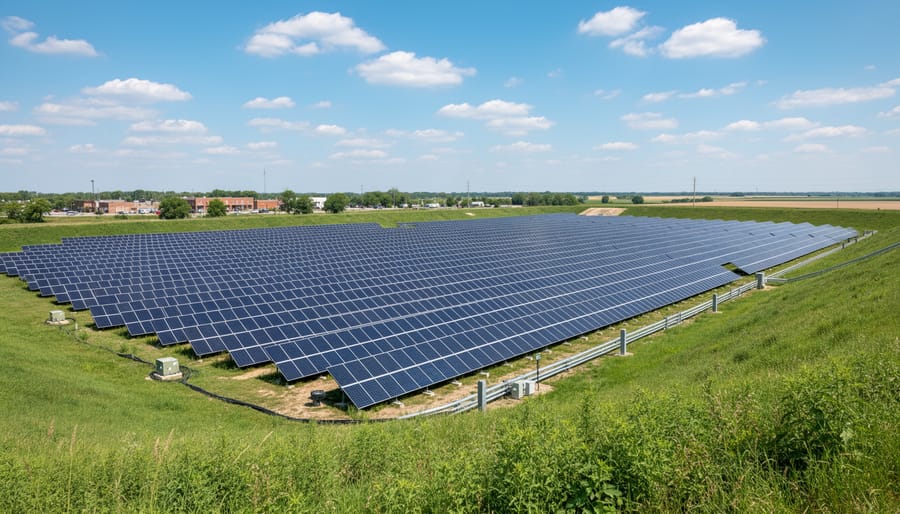
Closed landfills across Illinois represent untapped potential for large-scale solar energy production, transforming environmental liabilities into revenue-generating clean energy assets. These sites, often deemed unsuitable for traditional development due to contamination concerns, offer ideal conditions for solar installations: expansive open space, minimal shading, and existing electrical infrastructure nearby.
The concept addresses a critical challenge in the Illinois renewable energy landscape—finding adequate land for utility-scale solar projects without competing with agriculture or residential development. Landfills present a practical solution that benefits municipalities, reduces waste management costs, and contributes to state clean energy goals.
Illinois has made significant strides in supporting landfill solar development through targeted incentives and streamlined regulations. The Illinois Shines program provides Renewable Energy Credits specifically for brownfield and landfill projects, while the state’s Future Energy Jobs Act prioritizes these installations for interconnection. Municipal officials can lease closed landfills to solar developers, generating consistent income from otherwise idle property. Business owners with contaminated sites gain opportunities to monetize assets while demonstrating environmental stewardship.
Technical considerations include geotechnical assessments, gas monitoring systems, and specialized mounting solutions that protect landfill caps. However, experienced Illinois solar developers understand these requirements and navigate the approval process efficiently. The result is a win-win scenario: communities gain clean energy infrastructure, property owners generate revenue, and Illinois accelerates its transition to renewable power sources without sacrificing valuable land resources.
Why Landfills and Brownfields Make Perfect Solar Sites
The Land Challenge in Illinois
Illinois faces an increasing challenge when it comes to land availability for solar development. With productive farmland commanding premium prices and community concerns about converting agricultural acreage to energy production, finding suitable sites for large-scale solar installations has become more complex. However, the state has a valuable but often overlooked resource: hundreds of closed landfills and contaminated brownfield sites.
According to the Illinois Environmental Protection Agency, there are over 1,000 closed landfills across the state, many of which sit idle and generate no economic value. These properties, along with numerous brownfield sites affected by industrial contamination, represent significant untapped potential for solar energy development. These locations are particularly attractive because they’re already disturbed land that can’t easily be used for residential or agricultural purposes due to environmental restrictions.
Converting these underutilized spaces into solar energy production sites addresses multiple challenges simultaneously. It provides a productive use for land that might otherwise remain dormant, generates clean energy for Illinois communities, and can create local revenue streams through lease agreements or property tax benefits. For locally owned businesses and municipalities, this presents an opportunity to transform environmental liabilities into sustainable assets while contributing to Illinois’s renewable energy goals.
Environmental and Economic Benefits
Solar installations on landfills deliver significant environmental and economic advantages that transform previously unusable land into productive community assets. For Illinois municipalities, these projects create reliable passive income streams through land lease agreements with solar developers or direct ownership of renewable energy systems. Rather than maintaining idle property that generates maintenance costs, local governments can earn consistent revenue for 25-30 years while preserving the land’s protective cap.
The carbon footprint reduction from landfill solar projects is substantial. A typical 5-megawatt installation can offset approximately 3,500 metric tons of carbon dioxide annually, equivalent to removing 750 cars from Illinois roads. These systems generate clean electricity without requiring additional land development, protecting agricultural areas and natural habitats while contributing to state renewable energy goals.
Beyond the environmental remediation benefits, landfill solar transforms financial liabilities into valuable assets. Closed landfills require ongoing monitoring, maintenance, and compliance activities that drain municipal budgets. Solar development offsets these costs while generating new tax revenue and supporting local employment during construction and operation phases.
Illinois property owners benefit from state incentives including Renewable Energy Credits and favorable interconnection policies that improve project economics. For businesses and industries exploring solar options, landfill sites offer scalable solutions without competing for premium real estate, making renewable energy accessible while demonstrating environmental leadership to stakeholders and community members.
How Solar Installation Works on Closed Landfills
Site Assessment and Feasibility
Before beginning the solar installation process on a landfill, a comprehensive site assessment determines whether your property is suitable for solar development. This evaluation examines several critical factors unique to closed landfill sites.
First, engineers assess the landfill cap’s integrity to ensure it can support solar equipment without compromising the protective barrier that contains waste materials. Soil stability testing determines load-bearing capacity and identifies areas where ground settlement might occur over time.
Environmental professionals evaluate contamination levels and methane gas emissions, as these factors influence system design and safety requirements. The assessment includes reviewing historical site records and conducting current soil and air quality tests.
Sun exposure analysis maps shading patterns throughout the year, calculating potential energy generation. This involves studying surrounding structures, vegetation, and topography that might affect panel performance.
In Illinois, these assessments must align with state environmental regulations for closed landfills. The evaluation typically takes several weeks and provides the foundation for determining project feasibility, required permits, and estimated costs. A thorough assessment protects your investment while ensuring environmental compliance and maximizing energy production potential.
Special Engineering Requirements
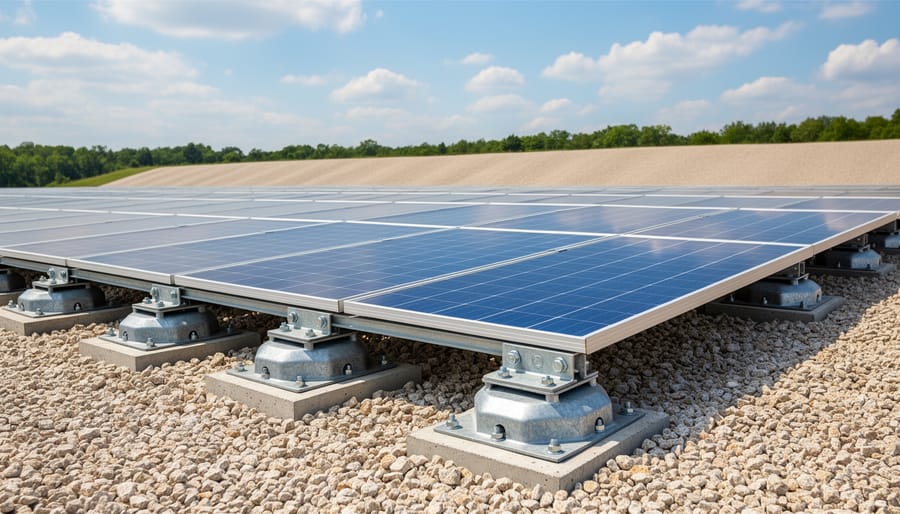
Installing solar panels on landfills requires specialized engineering approaches that differ significantly from traditional ground-mounted systems. The primary challenge is protecting the landfill cap, a critical barrier that prevents contaminants from escaping and protects the waste below from water infiltration.
Ballasted racking systems are the preferred solution for landfill solar installations. Unlike conventional ground-mount systems that require deep foundation penetrations, ballasted systems use weighted blocks or concrete foundations that sit on top of the landfill surface. These systems distribute the weight of the solar panels across a wider area, eliminating the need to drill through the protective cap. The ballast, typically made from concrete blocks, keeps the solar arrays stable even during high winds while maintaining the integrity of the underlying landfill structure.
Engineers also consider factors like landfill settlement, which occurs as waste decomposes over time. Flexible mounting systems accommodate gradual ground shifts without damaging the panels or compromising the cap. Gas venting infrastructure must be carefully mapped and avoided during installation planning.
Additional considerations include soil stability assessments, proper drainage design to manage stormwater runoff, and maintaining access to existing monitoring wells. These specialized techniques ensure that solar installations enhance rather than compromise the environmental protections that closed landfills require.
Environmental Compliance and Permits
Developing solar projects on closed landfills in Illinois requires navigating both federal and state environmental regulations. The U.S. Environmental Protection Agency (EPA) oversees the process through its RE-Powering America’s Land Initiative, which encourages renewable energy development on contaminated sites. Under EPA guidelines, solar installations must not disturb protective landfill caps or interfere with groundwater monitoring systems.
Illinois has specific requirements through the Illinois Environmental Protection Agency (IEPA), which regulates post-closure care plans for landfills. Any solar development must demonstrate that the installation won’t compromise environmental controls already in place. This includes maintaining proper drainage, preventing erosion, and ensuring gas collection systems remain functional.
The permitting process typically involves multiple stages. First, developers must submit detailed engineering plans showing how ballasted racking systems will be used instead of traditional ground penetration methods. Second, environmental assessments verify that solar equipment won’t create new contamination pathways. Finally, sites must comply with local zoning and permitting requirements, which can vary by municipality.
Working with experienced solar developers familiar with Illinois regulations streamlines this process. Local expertise ensures all environmental compliance documentation is properly prepared, reducing approval timelines and helping your project move forward efficiently while protecting environmental integrity.
Illinois Success Stories: Solar on Landfills Already Working
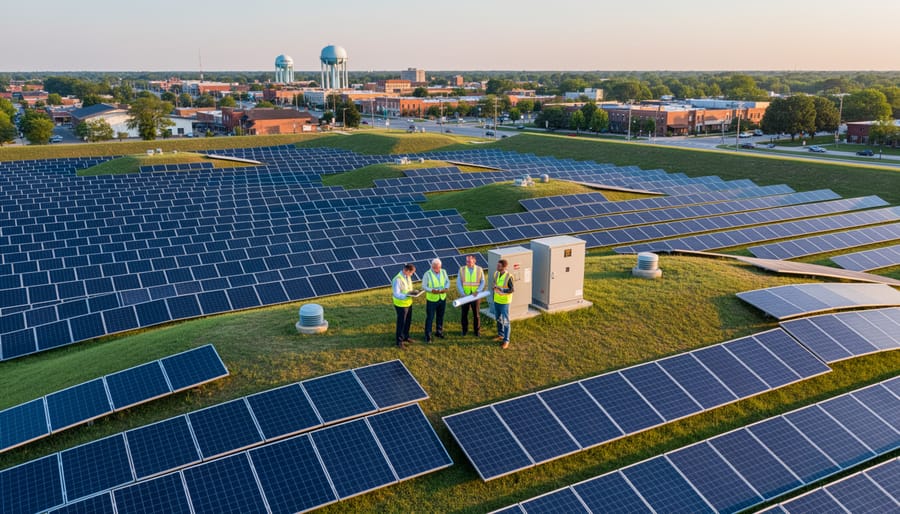
Illinois has become a leader in transforming closed landfills into productive solar energy sites, demonstrating the practical benefits of this innovative approach. Several installations across the state showcase how these projects deliver clean energy while generating revenue from previously unusable land.
The Village of Countryside Solar Farm stands as one of Illinois’ pioneering examples. Built on a 36-acre capped landfill, this 6.4-megawatt installation generates enough electricity to power approximately 900 homes annually. The project not only provides the village with sustainable energy but also creates lease revenue that supports community programs and infrastructure improvements.
In Rockford, the former landfill at Sandy Hollow Road transformed into a 10-megawatt solar facility in 2021. This installation produces clean energy while avoiding the environmental complications that would come with traditional development on contaminated land. The project demonstrates how larger municipalities can leverage closed landfills to meet renewable energy goals while maintaining safety standards.
The Zion Solar Project represents another success story, with a 3.2-megawatt array installed on a capped landfill site. Local officials report that the installation has become a source of pride for the community, showing residents that environmental challenges can become opportunities for progress. The project generates consistent lease payments that help offset municipal costs.
These installations share common benefits that make them attractive models for other Illinois communities. They require no additional land acquisition, avoid disrupting natural habitats, and turn liability sites into revenue-generating assets. The ballasted mounting systems used in these projects protect landfill caps while allowing for proper gas venting and ongoing environmental monitoring.
Each project also demonstrates the importance of working with experienced solar professionals who understand the unique requirements of landfill installations. These locally owned experts help navigate the regulatory landscape, design systems that meet environmental standards, and ensure projects deliver maximum community benefit while maintaining site integrity for decades to come.
Financial Incentives and Revenue Opportunities in Illinois
State and Federal Programs
Several state and federal programs make solar installations on Illinois landfills financially viable. Illinois Solar for All, a statewide initiative, specifically supports solar development in environmental justice communities and on contaminated or underutilized properties, including closed landfills. This program provides incentives and financing mechanisms that reduce upfront costs and make projects accessible to municipalities and organizations that might otherwise lack capital.
At the federal level, the Investment Tax Credit (ITC) allows project owners to claim up to 30% of solar installation costs as a tax credit. This substantial incentive significantly improves project economics and shortens payback periods. When combined with state programs, these credits can cover a major portion of development expenses.
The Environmental Protection Agency offers brownfield grants that support assessment, cleanup, and redevelopment of contaminated properties, including former landfills. These grants can fund preliminary site evaluations, environmental studies, and remediation work necessary before solar installation begins. EPA’s RE-Powering America’s Land initiative specifically encourages renewable energy development on contaminated sites.
Together, these programs create a financial framework that transforms challenging landfill sites into productive solar assets. Working with experienced Illinois solar developers ensures you maximize available incentives and navigate program requirements effectively. Their expertise helps identify applicable funding sources and structures projects to capture every available benefit.
Long-Term Revenue Potential
Solar installations on landfills create substantial financial benefits that extend for decades. Through power purchase agreements (PPAs), municipalities and businesses can secure electricity at predictable, often lower rates than traditional utility costs. These agreements typically span 20-25 years, providing long-term price stability and protection against rising energy costs.
For Illinois municipalities, closed landfills present unique land lease opportunities that generate consistent revenue from previously unusable property. By leasing landfill space to solar developers, local governments can transform environmental liabilities into income-generating assets while maintaining compliance with post-closure requirements. This arrangement requires minimal municipal investment while delivering steady lease payments.
Businesses installing solar on their own contaminated sites benefit from significant energy cost savings. Illinois commercial and industrial facilities can reduce operating expenses by 20-40 percent through on-site solar generation. Combined with federal investment tax credits and Illinois Solar for All incentives, these systems often achieve payback periods of 5-8 years while providing clean energy for 30 years or more.
The financial case strengthens when considering that landfill solar requires no productive land removal, preserves green space, and qualifies for renewable energy credits through Illinois’ Adjustable Block Program, creating multiple revenue streams from a single installation.
Is Your Property Suitable for Solar Development?
Determining whether your Illinois property is a good candidate for solar development involves evaluating several key factors. Understanding these criteria can help municipalities, businesses, and landowners make informed decisions about transforming underutilized land into productive renewable energy sites.
First, consider the size and topography of your property. Most utility-scale solar installations require at least five to ten acres of relatively flat or gently sloping land. Closed landfills and brownfield sites often meet this requirement, making them excellent candidates for solar arrays. The site should receive minimal shading from nearby structures or vegetation throughout the day.
Next, assess your property’s environmental status. For landfills, closure certification and ongoing monitoring compliance are essential. Properties enrolled in Illinois Environmental Protection Agency remediation programs or those with institutional controls can still qualify for solar development. In fact, solar installations can provide an economically beneficial reuse option while maintaining protective caps and monitoring systems.
Grid connectivity is another crucial factor. Properties located near existing electrical infrastructure have lower interconnection costs, improving project economics. Contact your local utility provider to inquire about available grid capacity and connection points near your site.
Consider the structural integrity of your property. Closed landfills require specialized mounting systems that don’t penetrate protective caps. Engineering assessments can determine whether your site can support ballasted racking systems designed specifically for these conditions.
Financial viability depends on several factors, including available incentives, power purchase agreement opportunities, and your organization’s energy goals. Illinois offers attractive incentives through the Adjustable Block Program and Solar for All initiatives, which can significantly improve project returns.
To take the next step, start by gathering your property’s environmental documentation, closure records, and utility information. Consulting with solar development experts who understand both renewable energy systems and environmental remediation requirements will help you navigate technical and regulatory considerations. A preliminary site assessment can provide clarity on your property’s solar potential and identify any modifications needed to move forward with development.
Solar installations on landfills and brownfields represent a transformative opportunity for Illinois communities to turn dormant or underutilized land into clean energy assets. These projects deliver environmental restoration, economic benefits, and significant progress toward renewable energy goals—all while requiring no conversion of productive farmland or natural areas. As a locally owned company with deep expertise in solar energy, we understand the unique characteristics of Illinois properties and the regulatory landscape that makes these projects possible.
Whether you manage a closed landfill, own a brownfield site, or oversee municipal land that could benefit from productive reuse, exploring solar development could unlock substantial value for your property. The combination of federal tax incentives, Illinois-specific renewable energy programs, and declining solar technology costs has created an unprecedented window of opportunity for property owners throughout the state.
We encourage you to take the next step by scheduling a professional site assessment to evaluate your property’s solar potential. Our team will analyze site conditions, regulatory requirements, and financial projections tailored to your specific situation. Contact us today to discuss how your underutilized land could contribute to Illinois’s clean energy future while generating revenue for decades to come.
