
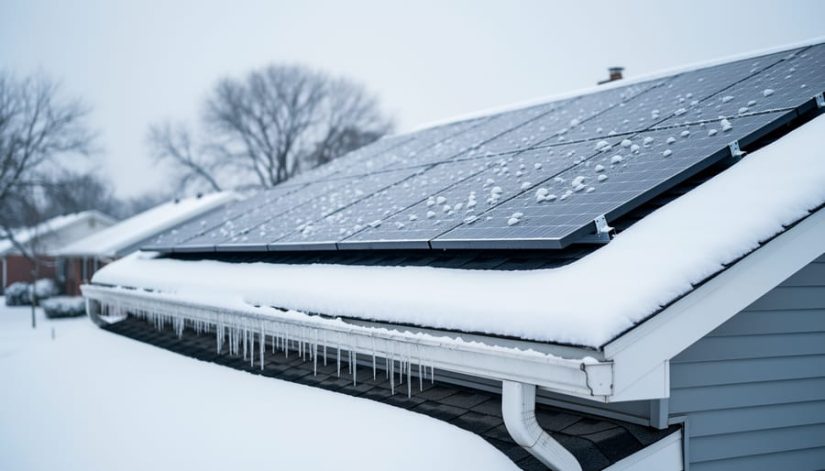
Why Snow on Your Solar Panels Could Be Costing You More Than You Think
Winter snowfall across Illinois presents a unique challenge for solar panel owners: accumulated snow blocking sunlight and reducing energy production by up to 100% until it melts or slides off. While this might sound alarming, understanding how snow interacts with your photovoltaic system helps you make informed decisions about whether intervention is necessary or cost-effective.
Most modern solar installations are designed with snow management in mind. Panels mounted at angles of 35 degrees or greater naturally shed snow within days as temperatures rise, and their dark surfaces absorb heat that accelerates melting from below. For many Illinois homeowners, this passive approach means snow impacts are temporary and minimal over the course of a year, typically reducing annual energy production by only 1-5% in our climate.
However, prolonged winter storms, flat roof installations, or commercial systems where every kilowatt-hour matters may require active snow removal strategies. The key is balancing the cost of intervention against actual energy losses, which varies significantly based on your system size, electricity rates, and local weather patterns.
This guide examines both natural snow melting processes and active removal solutions, helping you determine the right approach for your property. We’ll explore design considerations that minimize snow accumulation, safe DIY removal techniques, professional solutions, and the economic calculations that drive smart decision-making. Whether you’re planning a new installation or managing an existing system, you’ll gain practical strategies to optimize winter performance without unnecessary expense or risk.
The Real Cost of Snow-Covered Solar Panels in Illinois
Energy Production Losses During Winter Months
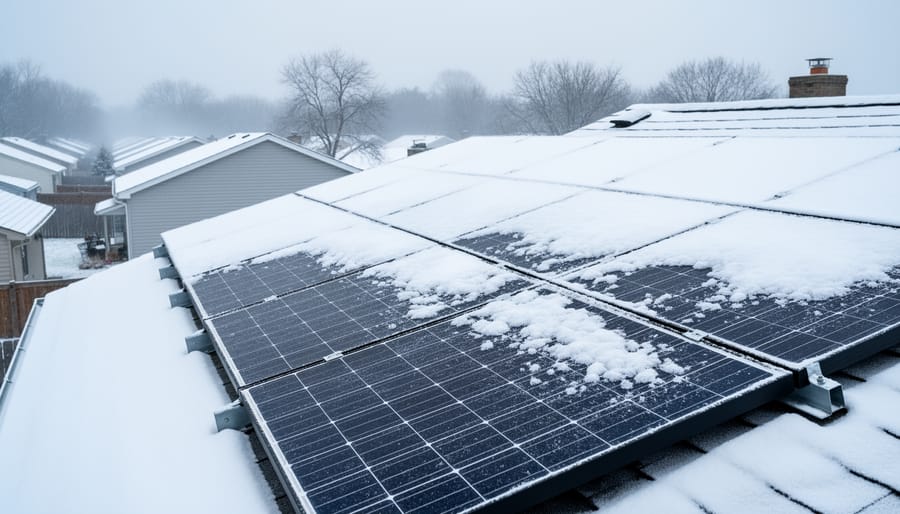
Snow coverage on solar panels creates a significant barrier to energy production during Illinois winters. Even a light dusting of snow can reduce your system’s output by 90% or more, effectively bringing energy generation to a near standstill. The problem intensifies with heavy snowfall, where complete coverage blocks all sunlight from reaching the photovoltaic cells.
Partial snow coverage proves equally problematic. When snow covers just a portion of your panels, it doesn’t simply reduce output proportionally. Instead, the shading effect can trigger safety mechanisms that shut down entire strings of panels, multiplying the energy loss far beyond the covered area. For example, if snow covers 25% of your array, you might lose 50% or more of your total production capacity.
The financial impact adds up quickly during winter months. A typical residential solar system in Illinois might lose several hundred kilowatt-hours of production during snowy periods. For businesses with larger installations, these losses translate to missed opportunities for energy savings and reduced return on investment. Understanding these production losses helps you make informed decisions about snow management strategies that protect your solar investment year-round.
Hidden Risks: Ice Dams and Structural Damage
Ice dams form when snow melts unevenly on your roof, refreezes at the edges, and creates barriers that trap water. This seemingly minor issue can lead to significant problems for both your solar installation and your home’s structure. Water backing up behind ice dams can seep under shingles, causing roof leaks, water damage to insulation, and even interior ceiling damage.
For solar panel systems, ice dams present additional challenges. The weight of accumulated ice can stress mounting hardware and potentially lead to structural risks to roofs, especially on older buildings. Ice buildup around panel edges can also create conditions where water flows into areas not designed for moisture exposure. Illinois homeowners should pay particular attention to proper drainage planning during solar installation to minimize ice dam formation. Preventing these issues requires adequate attic insulation, proper ventilation, and strategic panel placement that considers your roof’s natural drainage patterns.
How Solar Panel Snow Melting Actually Works
Passive Snow Management: Working With Your System
Before considering additional equipment, it’s helpful to understand that solar panels naturally shed snow in many situations. The design of most solar installations actually works in your favor during Illinois winters.
Panel angle plays a significant role in snow management. Most solar arrays in Illinois are tilted between 30 and 40 degrees to optimize sun exposure throughout the year. This angle also encourages snow to slide off naturally, especially as temperatures rise during the day. Even a slight tilt can make a substantial difference compared to flat surfaces.
The dark surface of solar panels absorbs heat more readily than surrounding roof materials. When sunlight hits the panels, even on cold days, this heat absorption creates a thin layer of melt between the snow and the panel surface. This acts as a lubricant, allowing snow to slide off more easily than it would from your roof.
Additionally, solar panels generate small amounts of heat during electricity production. While this heat is minimal, it contributes to the overall warming effect that helps loosen accumulated snow. These passive features mean that light to moderate snowfall often clears naturally within a day or two of sunny weather, allowing your system to resume normal energy production without intervention.
Active Heating Solutions for Heavy Snow Conditions
For locations experiencing heavy, persistent snowfall, active heating solutions offer a direct approach to keeping solar panels clear and productive throughout winter. These systems use electrical heating elements installed beneath or around solar panels to melt accumulated snow before it impacts energy generation.
Heated panel systems typically consist of thin heating cables or mats integrated into the mounting structure. When snow accumulates, these systems activate to warm the panel surface just enough to create a thin water layer between the snow and glass, allowing snow to slide off naturally. Some advanced systems include automatic sensors that detect snow accumulation and temperature conditions, activating only when necessary to minimize energy consumption.
The primary consideration with active heating is the energy trade-off. Running heating elements consumes electricity, which can offset some of the energy production you’re trying to preserve. However, in Illinois where heavy snowfalls can block panels for extended periods, the calculation often favors active systems for commercial installations or homes with significant solar arrays. A panel buried under snow produces zero energy, while the heating system might use only a fraction of what the cleared panels will generate on bright winter days.
These solutions make the most sense for businesses relying on consistent solar output, large residential systems where snow loss significantly impacts energy bills, or properties where manual clearing is impractical or unsafe. For smaller residential systems, the installation cost and operational expense may outweigh the benefits. A qualified solar professional can assess your specific situation, calculating whether the investment will provide meaningful returns based on your location’s snowfall patterns and your system’s capacity.
Design Strategies That Prevent Snow Problems Before They Start
Optimal Panel Angles for Illinois Snow Conditions
The angle at which solar panels are installed plays a crucial role in both snow management and year-round energy production in Illinois. For our region, the optimal tilt angle for maximum annual output typically ranges from 30 to 40 degrees, which corresponds roughly to our latitude. Fortunately, this angle also facilitates natural snow shedding.
Panels installed at steeper angles, around 35 degrees or greater, allow gravity to work in your favor during winter months. Snow slides off more readily as it begins to warm, reducing accumulation time and minimizing production losses. However, installers must balance this benefit against potential decreases in summer efficiency, when the sun is higher in the sky.
Panels mounted at shallower angles, below 25 degrees, tend to retain snow longer since gravity provides less assistance in clearing the surface. While these installations may capture slightly more summer sun, they often experience extended winter downtime in Illinois snow conditions.
Ground-mounted systems offer flexibility to adjust seasonal angles, though this isn’t practical for rooftop installations. For most Illinois homeowners and businesses, a fixed angle between 32 and 38 degrees represents the sweet spot, delivering strong annual performance while promoting natural snow removal without manual intervention.
Roof Design and Integration Considerations
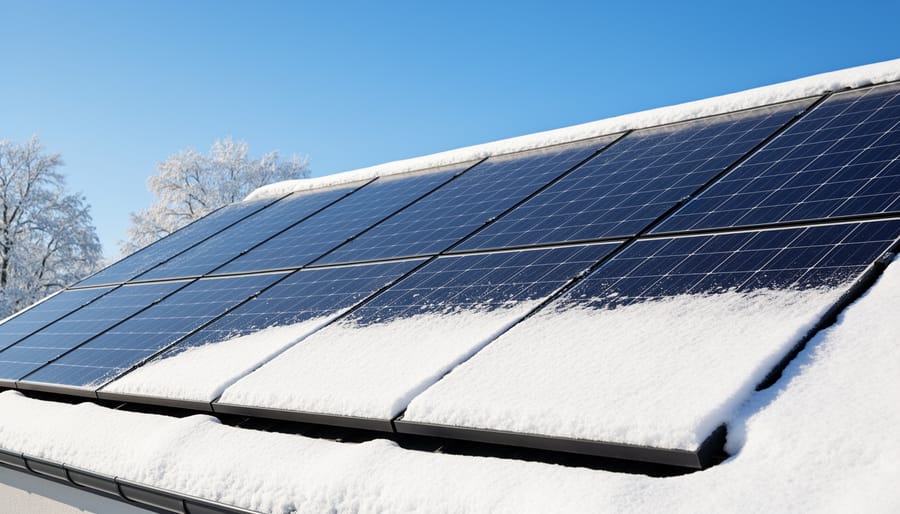
When planning a solar installation in Illinois, thoughtful roof design can significantly reduce snow accumulation issues. Roof pitch plays a crucial role in natural snow shedding—steeper roofs (typically 30 degrees or greater) encourage snow to slide off more readily than flatter surfaces. This passive approach minimizes the need for active snow removal systems.
Material selection matters too. Metal roofing naturally sheds snow better than asphalt shingles due to its smooth surface, making it an excellent choice for solar installations in snowy regions. When mounting panels, proper roof preparation ensures your building envelope remains protected from moisture infiltration and structural stress.
Strategic panel placement also facilitates snow management. Installing panels with adequate spacing allows snow to fall through gaps, while maintaining proper airflow beneath the arrays helps accelerate melting. Ground clearance is essential—ensure panels sit high enough to accommodate snow sliding off without creating ice dams or hazardous conditions below.
For businesses considering new construction or roof replacement, integrating these design considerations from the start creates a more efficient, low-maintenance solar system that performs reliably through Illinois winters.
Managing Meltwater and Ice Dam Prevention
As snow melts from your solar panels, proper drainage becomes essential to prevent ice dams and structural damage. Melting snow can refreeze at roof edges and in gutters, creating ice buildups that force water under shingles and potentially damage your roof and home interior.
Start by ensuring your gutters are clear and properly sloped before winter arrives. Consider installing heating cables in gutters and downspouts to maintain flow during freeze-thaw cycles. For comprehensive protection, managing meltwater drainage requires attention to both roof and ground level.
At ground level, direct downspouts away from your foundation to prevent basement flooding and ice accumulation near entryways. Create sloped pathways using gravel or sand to channel meltwater safely away from high-traffic areas. In Illinois’s variable winter climate, these preventive measures protect both your solar investment and your property while maintaining safe access during the melting season.
Safe Snow Removal: What Works and What to Avoid
Safe Manual Removal Techniques
If you decide to manually remove snow from your solar panels, safety should be your top priority. Never attempt removal while standing on a snow-covered or icy roof, as the risk of falling is simply too high. Instead, work from the ground using a roof rake specifically designed for solar panels, which features a soft foam head that won’t scratch the glass surface.
When clearing snow, use gentle pulling motions rather than pushing or scraping. Start from the bottom edge of the panels and work your way up, allowing gravity to help the snow slide off naturally. Avoid using metal shovels, scrapers, or ice picks, as these can cause permanent damage to the protective coating on your panels. Similarly, never pour hot water on cold panels, as the sudden temperature change can crack the glass.
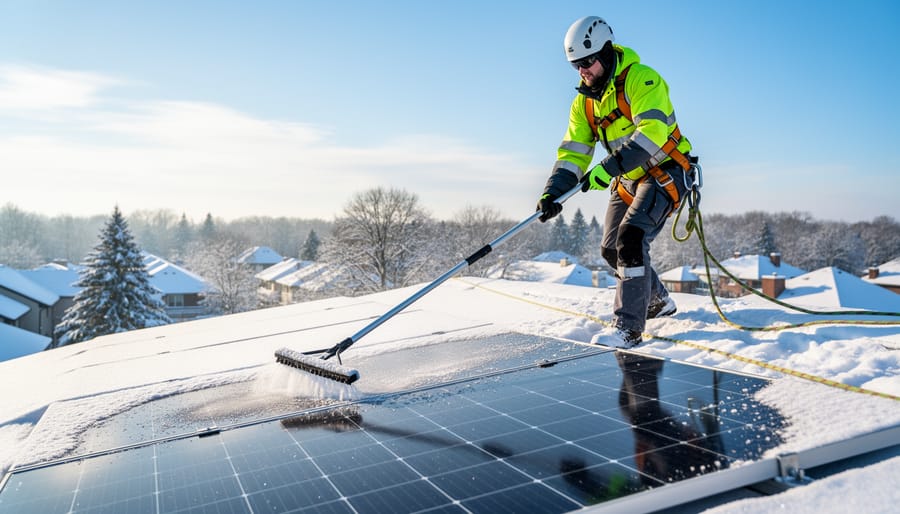
For Illinois homeowners with ground-mounted systems, snow removal is generally safer and easier to manage. However, rooftop installations present additional challenges. If your roof is steeply pitched, snow accumulation exceeds six inches, or ice has formed on the panels, it’s time to call professionals. Experienced solar maintenance technicians have the proper safety equipment and specialized tools to remove snow without damaging your investment. They also understand the electrical components and can identify potential issues during the cleaning process, ensuring your system remains in optimal condition throughout the winter months.
Common Mistakes That Damage Your Investment
While winter weather can be challenging for solar panel owners, well-intentioned but misguided snow removal attempts often cause more harm than good. Understanding what to avoid can protect both your investment and your warranty coverage.
Metal tools like shovels, ice scrapers, or garden rakes are among the worst offenders. These can scratch anti-reflective coatings, crack tempered glass, or damage the protective frame around your panels. Even minor scratches can reduce efficiency and create entry points for moisture over time.
Hot water might seem like a quick solution, but the thermal shock from pouring it onto freezing panels can cause immediate cracking. Similarly, chemical de-icers and rock salt that work on driveways will corrode panel frames, degrade seals, and void most manufacturer warranties. These substances can also damage your roofing materials and harm landscaping below.
Climbing onto your roof during winter conditions poses serious safety risks beyond equipment damage. Icy surfaces combined with sloped roofs create dangerous conditions that result in numerous injuries each year. Additionally, applying excessive force while trying to remove stubborn ice can stress mounting hardware or compromise your roof’s integrity.
If you’re unsure about safe snow removal methods, consulting with local solar professionals familiar with Illinois winter conditions ensures you maintain both system performance and warranty protection while keeping yourself safe.
Cost-Benefit Analysis: Is Active Snow Management Worth It?
Calculating Your Winter Energy Losses
Understanding how much energy you’re actually losing to snow coverage helps you make informed decisions about whether active snow removal is worth the investment. For Illinois solar panel owners, winter production losses vary significantly based on your location and system design.
A typical residential solar array in northern Illinois might experience 5-15% annual energy loss due to snow, while central and southern regions see closer to 3-8%. These numbers depend on several factors: your roof pitch (steeper roofs shed snow faster), panel tilt angle, and local snowfall patterns. For example, a 6-kilowatt system in Rockford producing 7,500 kWh annually might lose 750-1,125 kWh to snow events, translating to roughly $75-$110 in lost electricity value.
To estimate your specific losses, review your monitoring system data from previous winters. Look for multi-day periods where production dropped to near-zero during or after snowfall. Count these “snow days” and multiply by your system’s average daily winter production. This calculation gives you a baseline for comparison.
Business owners with larger commercial installations should pay closer attention to these numbers, as snow-related losses scale proportionally with system size. A 50-kilowatt commercial array could see $500-$900 in annual snow-related losses in snowier Illinois regions.
When Intervention Makes Financial Sense
Not every snowfall requires immediate action. Understanding when to intervene can save you money while protecting your investment.
Active snow removal makes financial sense when snow accumulation exceeds three inches and covers panels for more than 48 hours during peak sunlight periods. For Illinois homeowners, this typically means intervention during heavy winter storms or prolonged cold snaps when natural melting is unlikely. If your system generates significant income through net metering or you rely heavily on solar for daily energy needs, even short periods of coverage represent measurable financial loss.
Conversely, natural melting is sufficient for light dustings under two inches, especially when temperatures are expected to rise above freezing within a day or two. South-facing panels with proper tilt angles often self-clear without assistance, particularly during sunny winter days.
Business owners should calculate their daily solar revenue versus intervention costs. If a professional removal service costs $200 but restores $50 daily production, the break-even point is four days of coverage. For residential systems, DIY removal during extended coverage periods typically offers the best return on effort, while letting nature handle brief, light accumulations preserves both your time and your panels.
Working With Solar Professionals for Snow-Ready Installations
Partnering with experienced solar professionals makes a significant difference in how well your system handles Illinois winters. A locally owned installer familiar with our region’s snow patterns understands the unique challenges of heavy, wet lake-effect snow versus lighter, drier accumulations. This expertise directly impacts your system’s long-term performance and durability.
When interviewing contractors, ask specific questions about their snow mitigation strategies. How do they determine optimal tilt angles for your location? What racking systems do they recommend for snow shedding? Request examples of installations they’ve completed in areas with similar snowfall to your property. A quality installer will also assess your roof’s structural capacity to handle both panel weight and potential snow loads, helping to prevent roof damage.
Local expertise extends beyond installation. Professionals familiar with Illinois building codes and weather patterns can recommend preventive maintenance schedules tailored to your area’s typical winter conditions. They’ll know whether your location experiences frequent freeze-thaw cycles requiring additional attention or if you’re in a zone where heavier snowfall demands different design considerations.
Don’t hesitate to ask about warranty coverage for snow-related issues and what post-installation support they provide during winter months. The right solar partner will view your installation as a long-term relationship, offering guidance throughout every season to ensure your system delivers consistent, reliable energy production year-round.
Managing snow on your solar panels doesn’t have to be complicated, but it does require thoughtful planning. Whether you’re considering a new solar installation or already own a system in Illinois, understanding how snow affects your panels will help you maximize your investment year-round.
The good news is that most solar systems naturally handle snow accumulation fairly well. The dark surface of panels absorbs heat, panels are typically installed at angles that encourage sliding, and snow rarely stays long enough to significantly impact your annual energy production. However, being proactive about snow management can minimize those occasional winter energy dips and protect your equipment from unnecessary stress.
The key takeaway is this: design matters. Choosing the right tilt angle, considering your roof orientation, and planning for proper spacing during installation will give you the best natural snow-shedding performance. For those times when nature needs a helping hand, knowing safe clearing techniques or having access to professional maintenance services keeps your system running efficiently without risking damage.
If you’re planning a solar installation or concerned about your current system’s winter performance, a professional assessment can provide personalized recommendations based on your specific roof conditions and energy needs. Our locally owned team has extensive expertise in solar energy tailored to Illinois weather patterns, and we’re here to help you get the most from your solar investment in every season.
