
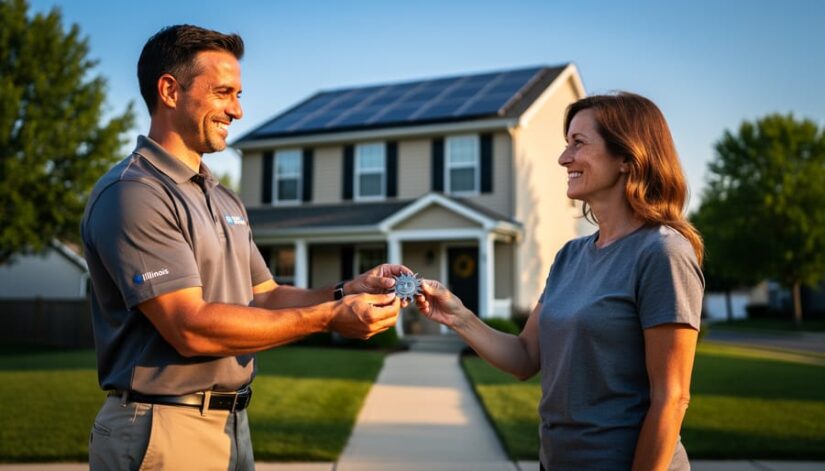
How Solar Companies Keep Customers Coming Back (Without Discounts)
Customer loyalty programs have evolved far beyond simple point-collection systems. Today’s most successful businesses integrate game-like elements that transform routine transactions into engaging experiences, keeping customers returning not just for products or services, but for the enjoyment of participation itself.
Gamification in loyalty programs applies the psychological principles that make games addictive to customer retention strategies. By incorporating challenges, rewards, progress tracking, and competition, businesses create emotional connections that traditional discount programs cannot match. When customers earn badges for reaching milestones, compete on leaderboards, or unlock exclusive tiers, they experience the same dopamine-driven satisfaction that keeps them playing their favorite mobile games.
For Illinois businesses, particularly in the solar industry, gamification offers unique opportunities to educate customers while building loyalty. Instead of passively receiving service, customers actively engage with energy-saving challenges, referral competitions, and educational quests that deepen their understanding of renewable energy benefits. This approach transforms the customer journey from a simple transaction into an interactive partnership.
The results speak volumes: businesses implementing gamified loyalty programs report engagement increases of up to 47% and significant improvements in customer lifetime value. As locally owned Illinois companies compete against national chains, gamification provides a powerful differentiator that combines education, entertainment, and reward. The following strategies demonstrate how any business can implement these proven techniques to create loyalty programs that customers genuinely enjoy participating in, ultimately driving both retention and advocacy.
Why Traditional Loyalty Programs Fall Flat in Solar Energy
The solar energy industry faces distinct challenges when it comes to customer retention that traditional loyalty programs simply aren’t designed to address. Unlike retail businesses where customers make frequent purchases, solar installations are typically once-in-a-lifetime investments for most homeowners and businesses. This extended purchase cycle means that conventional point-based reward systems or discount programs have limited appeal—after all, most customers won’t be buying another solar array anytime soon.
This one-time transaction nature creates a critical gap. Solar companies invest significant resources in acquiring customers through marketing, consultation, and installation, but without ongoing engagement opportunities, these relationships often go dormant immediately after installation. The challenge isn’t just about making that initial sale; it’s about maintaining deep customer connections that extend far beyond the installation date.
Yet customer relationships remain vital to a solar company’s growth. Satisfied customers become your most valuable marketing asset through referrals, which often convert at higher rates than traditional advertising. Additionally, opportunities for battery storage upgrades, panel expansions, and routine maintenance services emerge over time. In Illinois, where solar incentives and technology continue to evolve, keeping customers informed and engaged opens doors for additional services.
Traditional loyalty programs offering discounts or points fail to create meaningful touchpoints in this context. Solar customers don’t need another five percent off their next purchase—they need reasons to stay connected with your company, share their positive experiences, and think of you first when expansion opportunities arise. This is where gamification strategies offer a fresh approach, transforming passive customers into active participants in your company’s community.
What Gamification Actually Means for Your Solar Company

Beyond Points and Badges: Real Value for Solar Customers
Solar loyalty programs built on gamification go far beyond the simple point-collecting systems you might encounter at your favorite retail store. Instead of earning rewards for purchases, solar customers engage with meaningful milestones that reflect their environmental impact and energy independence.
When you install solar panels with a locally owned provider, your gamified loyalty experience centers on three core areas. First, energy savings milestones celebrate real financial achievements. As you reach thresholds like saving your first 1,000 kilowatt-hours or offsetting a full year of traditional energy costs, you unlock rewards that recognize these tangible benefits. This approach transforms abstract energy data into concrete accomplishments.
System performance tracking forms the second pillar, turning routine monitoring into an engaging activity. You might earn recognition for maintaining optimal panel efficiency throughout Illinois seasons or for consistently maximizing production during peak sunlight hours. This element encourages proactive system care while building deeper understanding of how your investment performs.
Educational achievements round out the value proposition. As you learn about solar technology, energy efficiency practices, or Illinois-specific renewable energy incentives, you progress through knowledge levels. Completing educational modules about net metering policies or seasonal maintenance tips earns both expertise and rewards.
This approach creates a personal customer experience that connects your daily choices to long-term sustainability goals. Unlike traditional loyalty programs focused solely on repeat transactions, solar gamification rewards your commitment to clean energy while helping you maximize your system’s value over its 25-year lifespan.
Practical Gamification Strategies That Work in Customer Support
Energy Savings Milestones and Challenges
Creating achievement systems around your solar energy production transforms routine system monitoring into an engaging experience. Start by establishing clear milestones based on kilowatt-hours (kWh) generated. For Illinois homeowners, consider bronze, silver, and gold tier achievements when customers reach 1,000 kWh, 5,000 kWh, and 10,000 kWh of cumulative production. These tangible goals give customers something to celebrate as they watch their investment perform.
Carbon offset achievements add environmental impact to the equation. Translate energy production into relatable metrics like “trees planted” or “miles driven offset” to help customers visualize their contribution to cleaner air. A family producing 6,000 kWh annually is roughly offsetting 4 tons of carbon dioxide, equivalent to planting about 90 trees. This context makes the achievement more meaningful than numbers alone.
Seasonal performance challenges work particularly well in Illinois, where weather patterns create natural competition periods. Summer production challenges encourage customers to maximize peak generation months, while winter resilience badges recognize consistent performance during shorter days. Consider monthly leaderboards where customers can see how their system performs compared to similar installations in their area.
The key challenge is maintaining engagement beyond initial excitement. Combat this by introducing quarterly goals, special event challenges during Earth Month, and anniversary milestones that recognize long-term system ownership. Automated notifications celebrating achievements keep the program top-of-mind without requiring constant manual monitoring, ensuring customers stay connected to both their solar investment and your company.

Educational Quests and Solar Knowledge Building
Educational quests transform routine system ownership into an engaging learning experience. By creating interactive modules that teach homeowners about their solar panels, inverters, and monitoring systems, you empower customers to become knowledgeable advocates for their investment. These gamified tutorials can guide users through understanding their energy production patterns, seasonal variations specific to Illinois weather, and basic troubleshooting steps.
When customers complete learning modules, they earn points and badges that unlock rewards within your loyalty program. For example, finishing a “Solar 101” quest might earn them priority scheduling for maintenance appointments, while mastering an advanced module on energy optimization could provide discounts on system upgrades. This approach creates a win-win situation: customers gain valuable knowledge that helps them maximize their system’s performance, while your support team handles fewer routine questions about normal system behavior.
The educational content can cover topics like reading monitoring apps, recognizing when to clean panels, understanding net metering on Illinois utility bills, and knowing when professional service is truly needed. By building this expertise gradually through bite-sized, rewarding lessons, you create informed customers who feel confident managing their systems. This reduced dependence on support calls lowers your operational costs while strengthening customer relationships through meaningful engagement that extends far beyond the initial installation.
Referral Rewards That Feel Like Wins
Standard referral programs get a major upgrade when you add game-like elements that make sharing solar energy solutions genuinely exciting. Instead of simply offering a flat bonus for referrals, consider creating tiered reward systems where customers unlock increasingly valuable benefits as they refer more neighbors and businesses to solar installations.
Imagine a neighborhood leaderboard where communities compete to see which area can generate the most solar referrals within a quarter. Top-performing neighborhoods could earn community recognition, group discounts on solar maintenance services, or even contribution credits toward local sustainability projects. This transforms individual referrals into a collective achievement that builds community pride around renewable energy adoption.
Community solar challenges take this concept further by setting shared goals. For example, when a neighborhood reaches ten solar installations, everyone who participated in referrals receives bonus rewards. This creates a collaborative environment rather than pure competition, encouraging homeowners and business owners to actively promote solar benefits within their networks.
The key is making progress visible and celebrating milestones. Customers should be able to track their referral status, see how close they are to the next reward tier, and understand the collective impact their referrals create. When people see tangible progress and meaningful rewards, they become natural advocates for solar energy adoption throughout Illinois communities.

Maintenance Tracking and Proactive Care Points
Turning routine maintenance into an engaging experience helps solar system owners stay on top of essential care tasks while building stronger connections with your service team. By incorporating game-like elements into maintenance schedules, you transform what might feel like a chore into an interactive experience that benefits everyone.
Consider implementing a points-based system where customers earn rewards for completing seasonal inspections, scheduling preventive maintenance, or responding promptly to system alerts. When homeowners and business owners in Illinois complete their spring panel cleaning or fall performance check, they accumulate points toward service discounts or priority scheduling. This approach encourages timely maintenance that prevents small issues from becoming costly emergency repairs.
Digital badges and achievement levels work particularly well for tracking long-term care milestones. A customer who maintains their system for five consecutive years without missing an inspection might unlock “Solar Champion” status, earning recognition plus tangible benefits like extended warranties or free monitoring upgrades. These achievements create pride in ownership while reducing the likelihood of neglected maintenance that leads to decreased energy production.
Progress trackers showing system health status add another engaging layer. When customers see visual representations of their maintenance completion rates or how their proactive customer service actions contribute to optimal performance, they understand the direct connection between care and system longevity. This transparency builds trust while motivating continued engagement with maintenance schedules, ultimately extending equipment lifespan and maximizing energy savings throughout Illinois’s varying seasonal conditions.
Real Results: What Solar Companies Gain from Gamified Loyalty
Solar companies implementing gamification strategies typically see measurable improvements across multiple business metrics. Based on industry data and real-world applications, customer engagement rates often increase by 30-50% within the first six months of launching a gamified loyalty program. This translates to homeowners checking their solar production dashboards more frequently and actively participating in energy-saving challenges.
Referral conversions represent another significant gain. Solar companies with gamified referral programs report 25-40% higher conversion rates compared to traditional referral incentives. When Illinois homeowners earn points or unlock achievements for successful referrals, they’re more motivated to share their solar experience with neighbors and friends.
Support efficiency improves notably as well. Gamification naturally encourages customers to explore self-service resources and educational content. Companies typically see a 15-20% reduction in routine support tickets as customers engage with interactive tutorials and community forums to solve common questions independently.
Perhaps most importantly, customer lifetime value grows substantially. Engaged customers who participate in loyalty programs tend to purchase additional services, such as battery storage or electric vehicle chargers, at rates 35% higher than non-participants. They also maintain longer relationships with their solar provider, leading to more service contracts and maintenance agreements.
Implementation timelines vary, but most solar companies begin seeing initial engagement improvements within 60-90 days. Full program maturity, including consistent referral activity and maximum customer lifetime value gains, typically develops over 12-18 months. Starting with simple point systems and gradually adding complexity ensures sustainable growth without overwhelming your team or customers.
Starting Small: Your First Gamification Steps
You don’t need sophisticated software or a large budget to introduce gamification into your solar company’s loyalty program. Starting with simple, manageable steps allows you to test what resonates with your Illinois customers before investing in complex systems.
Begin with a basic tracking system using spreadsheets or free customer relationship management tools. Create a simple points structure where customers earn rewards for actions like referrals, social media reviews, or attending educational webinars about solar maintenance. For example, award 10 points for sharing their solar installation experience on Facebook, 25 points for referring a neighbor, and 50 points for scheduling an annual system checkup.
Email-based challenges offer another low-cost entry point. Send monthly challenges to your customer base, such as “Share Your Energy Savings Month” where customers submit their utility bill comparisons for a chance to win a solar panel cleaning service. These campaigns require only your existing email platform and create engagement without technical overhead.
Implement a tiered reward structure with three levels: Bronze for new solar customers, Silver after their first year, and Gold after referring two customers or completing specific actions. Benefits can include priority scheduling for maintenance, exclusive educational content about maximizing solar efficiency in Illinois weather conditions, or discounts on system expansions.
Start by selecting just one or two of these approaches rather than attempting everything simultaneously. Monitor participation rates and customer feedback over three to six months. This measured approach lets you understand which gamification elements your customers value most while keeping implementation costs minimal. As you gain confidence and see results, you can gradually expand your program with more sophisticated features and technology.
Gamification transforms the solar experience from a one-time purchase into an ongoing partnership. By incorporating these engaging strategies into your loyalty program, you create meaningful connections that extend well beyond the installation day. Illinois homeowners and businesses who participate in gamified programs become more than customers—they evolve into enthusiastic advocates who share their positive experiences with neighbors, colleagues, and communities.
The value proposition is clear: engaged customers monitor their systems more actively, refer more prospects, and develop deeper appreciation for their renewable energy investment. When you map gamification elements to your customer journey, you create touchpoints that keep solar top-of-mind while reinforcing the environmental and financial benefits they’re achieving daily.
Ready to strengthen your solar relationships? Consider which gamification strategies align with your goals—whether rewarding energy milestones, encouraging referrals, or building community connections. The right approach can transform satisfied customers into passionate advocates for clean energy across Illinois.
