
Why Energy Justice Matters More Than Ever in Illinois’ Solar Transition
Energy justice means ensuring everyone—regardless of income, race, or location—has access to clean, affordable energy and shares in the benefits of the clean energy transition. As Illinois moves toward renewable power, the question isn’t just whether solar panels work, but whether they work for you. Too often, the shift to clean energy leaves behind the communities that need it most: families struggling with high utility bills, small businesses operating on tight margins, and neighborhoods excluded from financial incentives designed for wealthier homeowners.
The reality is that solar energy can reduce electricity costs by 50-90 percent and increase property values, but upfront costs, complex financing, and lack of information create real barriers. Energy justice addresses these gaps by making solar accessible through community solar programs, low-income incentives, and financing options that don’t require perfect credit or significant cash reserves.
For Illinois homeowners and businesses, understanding energy justice isn’t abstract philosophy—it’s practical economics. When solar benefits flow only to those who can already afford them, we perpetuate inequality while missing opportunities to strengthen our entire economy. This article explains how energy justice principles shape solar accessibility in Illinois, what programs exist to level the playing field, and how you can determine whether solar is within reach for your home or business, regardless of your starting point.
What Energy Justice Really Means for Illinois Communities
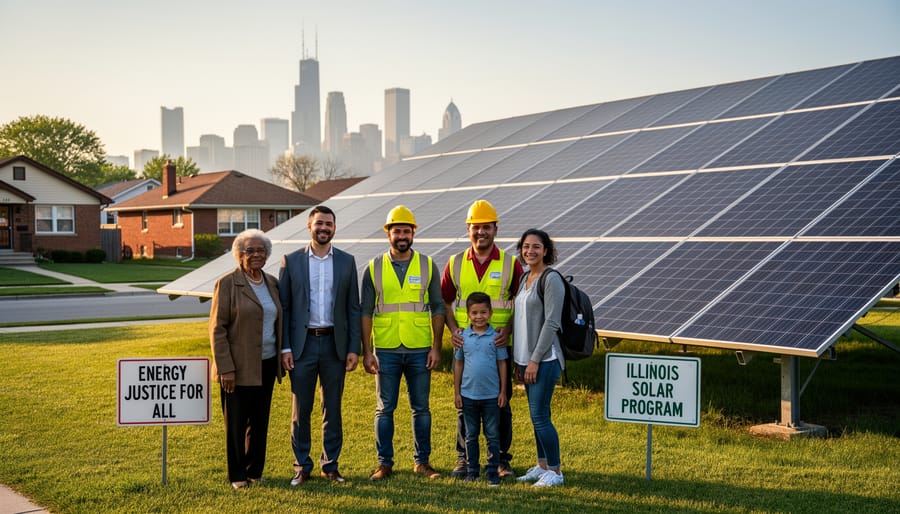
The Three Pillars of Energy Justice
Energy justice rests on three fundamental pillars that ensure the transition to renewable energy benefits everyone fairly. Understanding these principles helps Illinois homeowners and business owners recognize how solar energy can serve entire communities, not just those with greater financial resources.
Affordability means energy costs should not place an undue burden on any household or business. For solar energy, this translates to ensuring that the upfront investment doesn’t prevent participation. In Illinois, some families spend a disproportionate percentage of their income on electricity bills, making programs like community solar subscriptions and financing options essential for broader access. When solar becomes affordable, it stops being a luxury available only to wealthier property owners and becomes a practical choice for typical middle-income families and small businesses across the state.
Equity addresses whether energy resources and their benefits are distributed fairly across different communities. Historically, low-income neighborhoods and communities of color have faced higher energy costs while having fewer opportunities to benefit from clean energy programs. In Illinois, equity means ensuring that solar installations, jobs in renewable energy, and bill savings reach diverse populations throughout urban, suburban, and rural areas equally.
Participation ensures that communities have a meaningful voice in energy decisions affecting them. Rather than having solar programs designed without input from the people they serve, participation means Illinois residents can shape policies, provide feedback on programs, and access clear information about their options. This locally owned approach to energy planning creates solutions that genuinely address community needs rather than imposing one-size-fits-all models.
Why Traditional Energy Systems Created Disparities
For decades, Illinois communities experienced vastly different levels of access to reliable, affordable energy based on geography and economic status. Traditional energy infrastructure development focused heavily on urban centers and affluent areas where utility companies saw the strongest return on investment. This created a patchwork system where rural communities, low-income neighborhoods, and historically marginalized areas often faced higher energy costs, less reliable service, and fewer options for choosing their energy sources.
The centralized nature of conventional power generation meant that coal plants and natural gas facilities were frequently located near communities with less political influence, exposing residents to environmental impacts while energy benefits flowed elsewhere. Meanwhile, these same communities lacked the upfront capital needed to invest in alternative solutions. In Illinois, this pattern left many families and small businesses struggling with energy burdens—spending disproportionately high percentages of their income on electricity and heating—while having limited control over their energy future. Understanding this history helps explain why intentional efforts toward energy justice are essential as we transition to renewable sources like solar power.
How Solar Energy Can Level the Playing Field
Bringing Power Generation Closer to Home
Traditional power generation relies on large, centralized plants located far from the communities they serve. This model concentrates control in the hands of a few utilities and leaves residents dependent on long transmission lines. When you choose rooftop or community solar, you’re participating in a fundamentally different approach that brings electricity generation closer to where it’s actually used.
Rooftop solar systems transform homes and businesses into power producers, giving property owners direct control over their energy supply. This locally owned approach means you generate electricity right where you need it, reducing reliance on distant facilities and the modern energy networks required to transport power across miles of infrastructure. For renters or those with unsuitable roofs, community solar offers similar benefits through shared solar arrays built within Illinois communities.
This decentralization represents genuine energy democracy. Rather than waiting for utilities to decide when and where to invest, Illinois residents and business owners can take action themselves. Community-scale projects also create local jobs and keep energy dollars circulating within the state economy. By spreading generation across thousands of locations, we build a more resilient grid while ensuring more people have a stake in our clean energy future.
Reducing Energy Costs Where They’re Needed Most
Energy costs can place a heavy burden on families and businesses, particularly those in underserved communities where electricity bills often consume a disproportionate share of household income. This energy burden—the percentage of income spent on energy—can exceed 10% for low-income households, compared to just 3% for the average American family. Solar energy offers a practical solution to reduce these costs where they matter most.
By generating electricity on-site, solar panels significantly lower monthly utility bills, providing immediate financial relief. For homeowners, this means more money available for other essential needs like food, healthcare, and education. Business owners benefit from predictable energy costs that improve their bottom line and allow for better long-term planning.
Illinois has recognized this opportunity through programs designed to make solar accessible to communities facing the highest energy burdens. These initiatives prioritize installations in environmental justice areas and provide incentives that help offset upfront costs. Our locally owned company works directly with households and businesses to navigate these programs, ensuring that the financial benefits of solar reach those who need them most. By reducing energy costs for vulnerable populations, solar contributes to a more equitable energy transition across Illinois.
Creating Local Economic Opportunities
The transition to solar energy creates meaningful local economic opportunities throughout Illinois. Locally owned solar installation companies generate quality jobs for electricians, engineers, sales professionals, and support staff within communities. These positions often provide training and career advancement paths for residents who might not have previously worked in the renewable energy sector. Beyond direct employment, solar projects stimulate related economic activity through equipment purchases, permitting services, and ongoing maintenance contracts. When you choose a local solar installer, you’re investing in your community’s economic health while making energy more accessible. Small businesses particularly benefit from this growing sector, as they can compete effectively by offering personalized service and regional expertise. This localized approach to clean energy development ensures that the financial benefits of Illinois’s energy transition remain within the state, supporting families and strengthening neighborhood economies.
Energy Justice Challenges in Illinois’ Solar Transition
The Upfront Cost Barrier
The initial investment required for solar energy systems remains one of the most significant obstacles preventing Illinois homeowners and small businesses from making the switch to renewable energy. Even though solar panels can generate substantial long-term savings on electricity bills, the typical upfront cost for a residential solar installation ranges from $15,000 to $30,000 before incentives. For many families and small business owners operating on tight budgets, this represents a considerable financial hurdle.
This cost barrier disproportionately affects lower-income communities and small businesses that could benefit most from reduced energy expenses. Without access to significant capital or savings, these property owners may feel excluded from the clean energy transition, even when they’re enthusiastic about going solar. The good news is that various financing options and assistance programs are now available throughout Illinois to help bridge this gap, making solar accessible to more residents regardless of their economic status.
The Renter and Multi-Family Dilemma
Renters and apartment residents often face the greatest barriers to solar energy access, creating a significant energy justice gap. Unlike homeowners who can install rooftop panels, tenants typically cannot make permanent modifications to their rental properties. Even when willing to invest, they lack the authority to install systems on buildings they don’t own.
Multi-family buildings present additional challenges. Individual apartment dwellers rarely have dedicated roof space, and coordinating solar installations across multiple units requires buy-in from property owners who may not prioritize renewable energy investments. The split incentive problem compounds this issue—landlords pay for installation while tenants receive the utility bill savings, reducing property owners’ motivation to act.
Community solar programs offer a promising solution by allowing renters to subscribe to off-site solar arrays and receive credits on their electricity bills without rooftop installations. These programs enable participation regardless of housing type or ownership status. Illinois has expanded community solar initiatives specifically to address this equity concern, recognizing that energy justice means ensuring pathways to clean energy benefits for all residents, not just property owners. As locally owned solar experts, we help connect renters and property managers with accessible solar solutions that work within existing housing arrangements.
Awareness and Trust Gaps
Even when financial programs exist, many Illinois residents simply aren’t aware that solar is an option for them. Information about available incentives, financing structures, and installation processes doesn’t always reach every neighborhood equally. Communities that have historically been underserved by the energy industry may lack trusted sources to explain how solar works and whether it’s genuinely beneficial for their situation.
Trust concerns also create barriers. Some homeowners worry about working with installers they don’t know, especially when making a significant investment. Questions about company reputation, contract terms, and long-term system performance can feel overwhelming without guidance. Language barriers and limited access to bilingual resources further complicate these challenges for immigrant communities across Illinois.
Locally owned solar companies play an important role in bridging these gaps. When installers are part of the communities they serve, they’re better positioned to build relationships, answer questions in accessible language, and provide ongoing support. Transparent communication about costs, realistic expectations about energy savings, and clear explanations of available programs help create the confidence needed for more residents to consider solar as a viable energy solution.
Illinois Programs Making Solar More Accessible
Illinois Shines and Adjustable Block Program
Illinois Shines is the state’s flagship solar incentive program, designed to make solar energy accessible to all residents and businesses through the Adjustable Block Program. This locally owned initiative provides financial incentives called Renewable Energy Credits (RECs) that significantly reduce the upfront cost of solar installations. The program operates on a block system, where incentive rates adjust as capacity goals are met, encouraging steady adoption across the state.
What sets Illinois Shines apart is its commitment to energy justice through dedicated equity categories. The program allocates specific funding blocks for community solar projects serving low-income subscribers, public schools in underserved areas, and non-profit organizations. These provisions ensure that communities historically excluded from clean energy benefits can participate meaningfully in the solar transition. Additionally, projects located in Environmental Justice Communities—areas disproportionately affected by pollution—receive enhanced incentive rates, recognizing both the greater need and the barriers these communities face.
Illinois energy policies continue to evolve, strengthening these equity provisions to ensure the renewable energy transition benefits everyone, not just those with readily available capital or property ownership.
Community Solar Options
Community solar programs represent a significant breakthrough in making solar energy accessible to everyone, regardless of whether you own your property or have a suitable roof for panels. These programs work by allowing multiple participants to subscribe to a portion of a larger, centrally-located solar array—often called a solar farm or solar garden. Instead of installing panels on your own roof, you receive credits on your electricity bill for your share of the power generated by the community solar project.
In Illinois, community solar has grown substantially thanks to supportive state policies that recognize not everyone can participate in traditional rooftop solar. Renters, those living in multi-unit buildings, homeowners with shaded properties, and businesses in leased spaces can all benefit from these programs. You simply subscribe to a project in your utility territory, and the credits applied to your monthly bill typically result in savings on your energy costs.
The energy justice aspect is particularly important here: community solar removes the financial barriers of upfront installation costs, as most programs require little to no money down. Income-qualified subscribers often receive enhanced benefits, ensuring that low-to-moderate income households can participate meaningfully in the clean energy transition. Locally owned community solar projects can keep more economic benefits within Illinois communities, supporting regional job creation and energy independence.
For those interested in exploring community solar, start by checking with your utility provider about available programs in your area and comparing subscription options that align with your energy usage and budget.
How Local Solar Companies Support Energy Justice
Local solar companies play a vital role in advancing energy justice by building trust and removing barriers that larger, distant corporations often cannot address. These businesses understand the unique needs of their communities because they live and work in them, creating accountability that extends beyond a single transaction.
Locally owned solar installers typically offer more flexible approaches to financing, recognizing that standardized loan products don’t serve everyone equally. They take time to explain available incentive programs, including federal tax credits, state rebates, and community solar options that allow renters and those with unsuitable roofs to participate in clean energy. This personalized guidance helps customers from diverse economic backgrounds navigate what can feel like an overwhelming process.
Education is another cornerstone of how local companies support equitable transitions. Rather than simply selling systems, they invest in helping customers understand their energy use, the true costs and savings of solar, and how the technology works. This transparency empowers people to make informed decisions and challenges the information gaps that have historically excluded lower-income communities from energy choices.
Perhaps most importantly, local solar businesses demonstrate commitment to serving all customers, not just those with the highest credit scores or largest roofs. They build relationships with community organizations, participate in local conversations about energy access, and advocate for policies that expand solar availability. Their proximity means they witness firsthand when neighbors struggle with energy costs, motivating them to find creative solutions.
When solar companies root themselves in the communities they serve, they become partners in building a more equitable energy future. This local ownership model ensures that the economic benefits of the solar transition stay within the region while prioritizing accessibility over profit maximization.
Taking Action: Making Solar Work for Your Situation
The path to solar energy looks different for every home and business, and that’s exactly as it should be. Energy justice means finding solutions that work for your specific situation, not a one-size-fits-all approach.
If you’re a homeowner considering solar, start by evaluating your current energy costs and roof condition. For those with strong credit and available capital, purchasing a system outright often provides the best long-term savings. However, if upfront costs are a concern, explore Illinois programs like the Illinois Shines incentive program, which can significantly reduce installation expenses. Community solar programs offer another viable option, allowing you to benefit from solar energy without installing panels on your property. This works particularly well for renters, condo owners, or those with shaded roofs.
Business owners should consider solar as both an operational cost reduction and a community investment. Many Illinois businesses qualify for federal tax credits covering 30 percent of installation costs, combined with state incentives that can further improve return on investment. The key is working with locally owned solar providers who understand Illinois-specific programs and can navigate available financing options with you.
Regardless of your economic position, three steps can help you move forward. First, request a no-obligation solar assessment to understand your property’s potential. Second, research available incentives specific to your situation, including income-qualified programs if applicable. Third, compare multiple financing options, from purchases to loans to power purchase agreements.
The transition to clean energy should be accessible at every income level. By taking time to explore options designed for your circumstances, you’re not just making an economic decision but participating in a broader movement toward energy fairness in Illinois.
Energy justice isn’t an abstract ideal—it’s a practical framework that determines whether Illinois’ clean energy transition creates opportunities for everyone or leaves communities behind. As our state moves toward renewable energy, the question isn’t just whether we adopt solar and other clean technologies, but whether all residents and businesses can participate in and benefit from this transformation.
The programs, policies, and partnerships emerging across Illinois show that equitable access to solar energy is achievable. From income-qualified solar programs to community solar projects, the infrastructure for a fair energy transition is taking shape. However, realizing this vision requires continued commitment from locally owned renewable energy providers, policymakers, and community members working together.
Whether you’re a homeowner considering rooftop solar, a business owner exploring cost-saving opportunities, or simply someone who believes in a more equitable energy system, you have a role to play. By asking questions about accessibility, supporting inclusive energy policies, and choosing partners with expertise in solar energy who prioritize community benefit, you help ensure Illinois’ clean energy future serves everyone. The transition is happening now—and with intentional action, we can make it truly just.
