
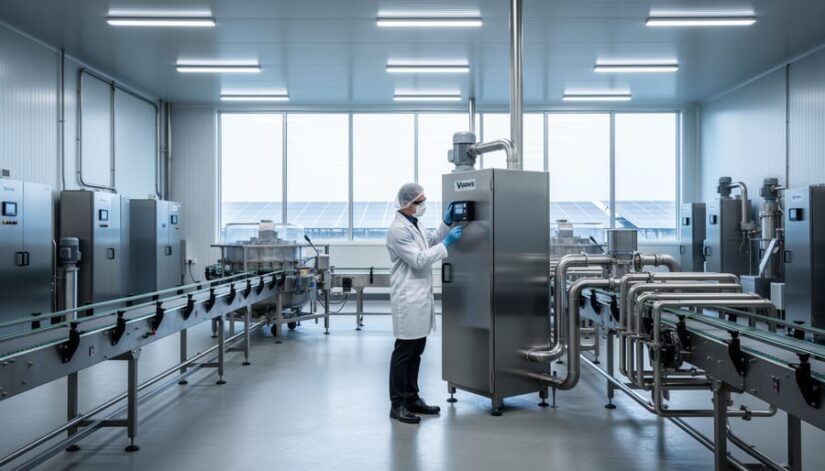
How Food Manufacturers Cut Energy Costs While Keeping Production Running
Manufacturing facilities across Illinois waste 20-30% of their energy through inefficient equipment, poor insulation, and outdated processes. For food supply chain operations where refrigeration and processing run continuously, these losses translate directly into diminished profit margins and increased environmental impact. The solution lies not in complete facility overhauls, but in strategic, phased improvements that deliver measurable returns.
Start by conducting an energy audit to identify your highest consumption areas. Food manufacturers typically find their greatest opportunities in refrigeration systems, HVAC units, and production line equipment. Installing variable frequency drives on motors, upgrading to LED lighting, and optimizing refrigeration schedules can reduce consumption by 15-25% within the first year.
Pair immediate efficiency improvements with long-term renewable energy strategies. Solar installations offer manufacturing facilities a hedge against rising electricity costs while providing predictable energy expenses for decades. Illinois manufacturers benefit from federal tax incentives and state renewable energy credits that can offset 40-50% of initial solar investment costs.
The most successful energy efficiency programs combine operational changes with equipment upgrades and renewable energy adoption. This three-pronged approach reduces dependence on grid power, lowers operating costs, and positions your facility as an industry leader in sustainability. With proper planning and local expertise, manufacturing operations can achieve energy independence while maintaining production quality and meeting strict food safety standards.
Why Food Manufacturing Burns Through So Much Energy
The Biggest Energy Users in Your Facility
Understanding where your facility uses the most energy is the first step toward meaningful efficiency improvements. In manufacturing operations, particularly within the food supply chain, certain equipment consistently accounts for the largest portions of your energy bill.
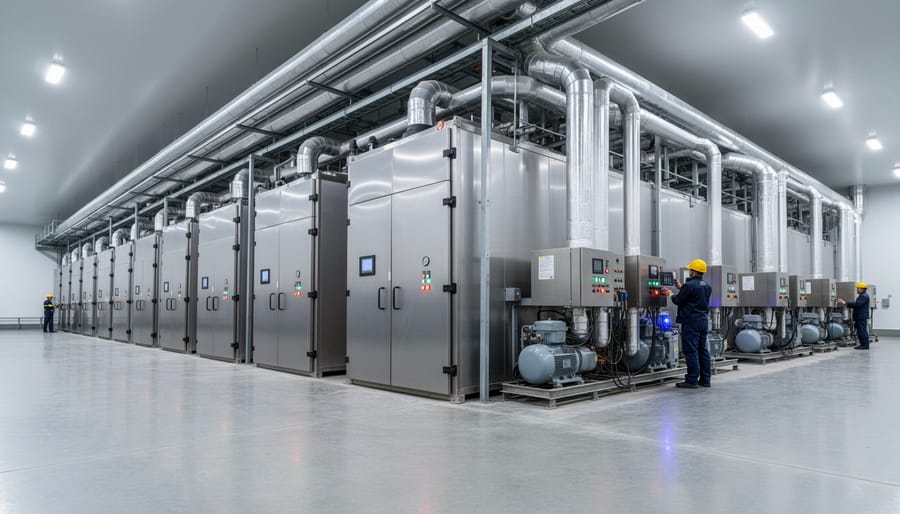
Refrigeration and freezer systems typically consume 30-40% of total energy in food manufacturing facilities. These systems run continuously to maintain food safety standards, making them the heaviest energy users in most plants. Even small inefficiencies in refrigeration equipment can translate to thousands of dollars in unnecessary costs annually.
Industrial ovens and cooking equipment represent another 20-25% of energy consumption. Whether you’re operating batch ovens, continuous tunnel ovens, or fryers, these high-temperature processes demand substantial energy to maintain consistent production temperatures.
Electric motors powering conveyor systems, mixers, pumps, and processing equipment account for approximately 15-20% of facility energy use. While individual motors may seem modest, their combined impact across your entire operation adds up quickly.
Compressed air systems, often called the “fourth utility” in manufacturing, consume roughly 10-15% of total energy. Unfortunately, these systems frequently operate at only 10-20% efficiency due to leaks and improper maintenance, representing significant waste.
HVAC systems round out the major energy users at 10-15%, maintaining proper temperatures and humidity levels throughout production and storage areas.
The remaining 10-15% covers lighting, office spaces, and miscellaneous equipment. While these percentages vary by facility size and production type, identifying your specific breakdown through an energy audit helps prioritize where efficiency improvements will deliver the greatest return on investment.
Peak Demand and Its Cost Impact
Understanding how Illinois utilities charge for electricity can reveal significant opportunities to reduce your manufacturing energy costs. Beyond the standard per-kilowatt-hour rate you see on invoices, many Illinois manufacturers face peak demand charges that can dramatically increase their monthly bills.
Peak demand charges are fees based on the highest amount of electricity your facility uses during a specific time window, typically measured in 15 or 30-minute intervals throughout the month. Illinois utilities like ComEd and Ameren structure their commercial and industrial rates to include these demand charges because they must maintain infrastructure capable of meeting your facility’s maximum power needs. Even if you only reach that peak consumption for a brief period, you’ll pay for that capacity all month long.
Time-of-use rates add another layer to this pricing structure. Electricity costs more during high-demand periods, typically weekday afternoons when businesses across Illinois are running at full capacity. Manufacturing operations that run heavy equipment during these peak hours face substantially higher energy costs compared to facilities that can shift operations to off-peak times.
By analyzing your energy consumption patterns, you can identify when your facility draws the most power and what equipment drives those peaks. This knowledge allows you to implement strategies like load shifting, staggering equipment startup times, or investing in on-site solar generation to offset daytime peak usage. Understanding these patterns isn’t just about tracking usage—it’s about uncovering where your dollars are going and finding practical ways to keep more money in your operation.
Proven Strategies to Reduce Manufacturing Energy Consumption
Quick Wins: Low-Cost Changes With Immediate Impact
Before investing in major equipment upgrades, manufacturers can achieve significant energy savings through straightforward operational improvements that require minimal capital investment. These quick wins often deliver immediate results and help build momentum for larger efficiency projects.
Start by optimizing your production schedules to reduce energy waste during off-peak hours. Aligning high-energy processes with periods when your facility operates at full capacity prevents unnecessary equipment idling and conditioning of empty spaces. Many Illinois manufacturers have reduced their energy bills by 10-15% simply by consolidating production runs and powering down equipment during planned downtimes.
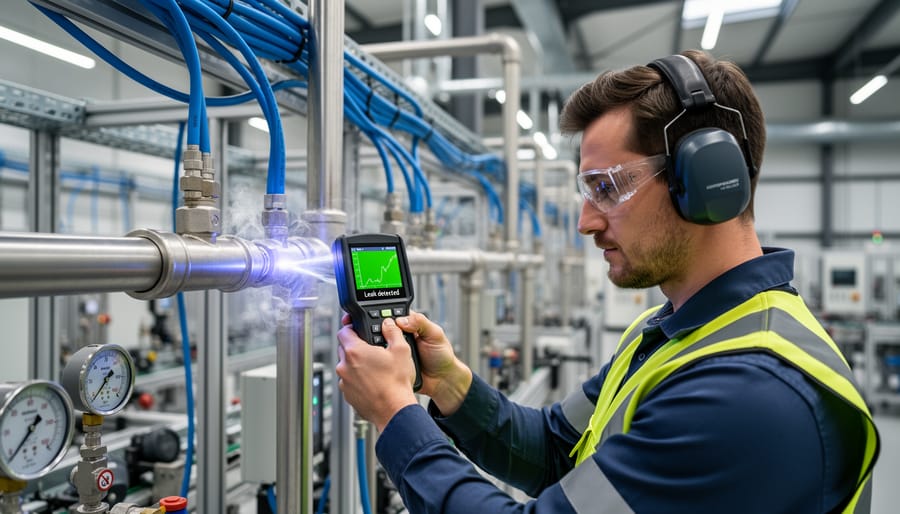
Compressed air systems are notorious energy drains, with leaks accounting for up to 30% of compressed air production in typical facilities. A systematic leak detection program using ultrasonic detectors can identify problem areas quickly. Repairing leaks, tightening connections, and replacing worn fittings often costs just hundreds of dollars while saving thousands annually in reduced compressor runtime.
Improving building insulation delivers year-round benefits by reducing heating and cooling demands. Focus on loading dock doors, roof penetrations, and older wall sections where thermal bridging occurs. Even simple weatherstripping and door seals can make measurable differences in energy consumption.
Upgrading to LED lighting represents one of the fastest payback investments available. LEDs use 75% less energy than traditional lighting and last significantly longer, reducing both utility bills and maintenance costs. The upfront investment typically returns within two years through energy savings alone.
Finally, implement a preventive maintenance program for motors, HVAC systems, and refrigeration equipment. Regular cleaning, calibration, and component replacement keep systems running at peak efficiency. Well-maintained equipment uses less energy, breaks down less frequently, and extends its operational lifespan, protecting your capital investment while reducing operating costs.
Equipment Upgrades That Pay for Themselves
Strategic equipment upgrades represent some of the fastest returns on investment in manufacturing energy efficiency. Many facilities in Illinois have reduced their energy consumption by 20-40% through thoughtful equipment modernization, with payback periods that make these improvements financially attractive.
High-efficiency motors are an excellent starting point. Modern premium-efficiency motors use 2-8% less energy than standard models, and when replacing an aging motor that’s already inefficient, savings can reach 15-20%. For a 50-horsepower motor running continuously, this translates to approximately $1,500 in annual savings. Most facilities see payback periods of 2-4 years, making this a straightforward decision during routine replacements.
Variable frequency drives deserve serious consideration for any motor-driven equipment that doesn’t need to run at full speed constantly. These devices adjust motor speed to match actual demand, typically reducing energy consumption by 25-50% on applications like pumps, fans, and conveyors. A VFD on a 20-horsepower pump might cost $3,000 to install but save $2,000 annually, achieving payback in 18 months.
Heat recovery systems capture waste heat from processes like refrigeration compressors, ovens, or air compressors and redirect it for space heating or water heating. Facilities implementing heat recovery often see 10-30% reductions in heating costs with payback periods of 3-5 years.
Modern refrigeration technology, including variable-speed compressors and high-efficiency condensers, can cut cooling costs by 30-40%. While initial investments are higher, Illinois manufacturers typically achieve payback within 4-6 years while significantly improving system reliability and reducing maintenance needs.
Process Optimization and Automation
Modern manufacturing facilities can significantly reduce energy consumption through strategic process optimization and automation technologies. Energy management systems continuously monitor and analyze power usage across production lines, identifying inefficiencies and opportunities for improvement in real-time.
Smart controls and IoT systems enable precise adjustments to equipment operation based on actual production demands. These systems automatically shut down or reduce power to machinery during idle periods, adjust lighting based on occupancy, and optimize HVAC settings to maintain necessary conditions without overworking systems. For Illinois manufacturers, this technology adapts to seasonal variations, particularly important during extreme summer heat or winter cold.
AI-powered energy management takes optimization further by learning production patterns and predicting energy needs. These systems can schedule energy-intensive operations during off-peak hours when utility rates are lower, reducing costs without affecting output quality or quantity.
Production scheduling software coordinates multiple processes to minimize equipment startup and shutdown cycles, which consume substantial energy. By batching similar tasks and maintaining consistent operating temperatures, facilities avoid the energy spikes associated with frequent equipment cycling.
The result is a more efficient operation that maintains or even improves production output while significantly reducing energy waste. Most manufacturers implementing these systems see measurable energy reductions within the first few months, with ongoing improvements as the systems gather more operational data.
The Solar Solution for Food Manufacturers
For food manufacturers in Illinois, solar energy systems offer a practical solution to one of the industry’s most persistent challenges: high daytime energy costs. Food processing operations typically run during daylight hours when electricity rates peak, making solar energy integration particularly advantageous for offsetting these expensive demand charges.
Solar panels generate maximum output precisely when food manufacturing facilities consume the most power—during production runs, refrigeration cycles, and processing operations. This alignment means that energy produced by your solar array directly reduces the amount of electricity you purchase from the grid during the costliest periods. Many Illinois food manufacturers see demand charge reductions of 30-50% after installing appropriately sized solar systems.
Beyond immediate savings, solar energy provides long-term cost stability that’s especially valuable in the food manufacturing sector. While utility rates have historically increased 3-5% annually, solar installations lock in predictable energy costs for 25 years or more. This financial certainty simplifies budget planning and improves your facility’s competitive position.
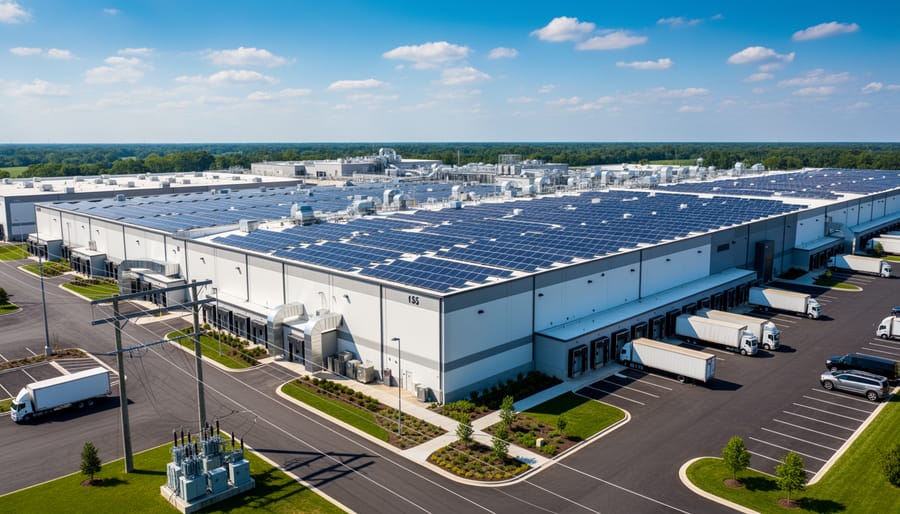
Facility considerations for food plants differ from other commercial installations. Your building must have adequate roof space and structural capacity to support solar panels—typically 100 square feet per kilowatt of capacity. Food processing facilities often have large, flat roofs ideal for solar arrays, though we assess roof age, condition, and load-bearing capacity before installation. If your roof requires replacement within 5-10 years, coordinating both projects saves money long-term.
Illinois food manufacturers benefit from additional incentives through state renewable energy programs. Combined with federal tax credits, these incentives can offset 40-60% of installation costs, significantly accelerating your return on investment.
As a locally owned company with deep expertise in solar energy, we understand the unique requirements of food manufacturing facilities. We evaluate your specific energy usage patterns, roof characteristics, and operational needs to design systems that deliver maximum savings while meeting food safety and operational standards.
Real Numbers: What Energy Efficiency Actually Costs and Saves
Understanding the real costs and savings of energy efficiency investments helps manufacturers make informed decisions. Here’s what you can expect when implementing various efficiency measures at your Illinois facility.
LED lighting upgrades typically cost between $2 to $8 per square foot, depending on facility size and existing infrastructure. Manufacturers usually see 50-75% reduction in lighting energy costs, with payback periods of 2-4 years. For a 50,000 square foot facility, annual savings often range from $8,000 to $15,000.
Variable frequency drives for motors and HVAC systems represent a larger investment, generally $500 to $2,500 per unit installed. These systems can reduce energy consumption by 20-50% for specific equipment, with payback periods of 3-5 years. The savings compound quickly in facilities running multiple shifts.
High-efficiency HVAC upgrades cost approximately $3,000 to $7,000 per ton of cooling capacity. Expect energy savings of 15-30% compared to older systems, with payback periods of 5-8 years. Proper maintenance extends equipment life and maximizes efficiency gains.
Solar energy systems provide substantial long-term value. Commercial solar installations in Illinois typically cost $2.50 to $3.50 per watt before incentives. A 100kW system might cost $250,000 upfront but can reduce electricity costs by 40-70% over its 25-year lifespan.
Illinois manufacturers benefit from significant financial incentives. The state’s Adjustable Block Program offers substantial solar renewable energy credits. The federal Investment Tax Credit currently provides 30% back on solar installations. ComEd and Ameren Illinois offer rebates for efficiency upgrades, including lighting, motors, and HVAC improvements. Many manufacturers also qualify for accelerated depreciation through the Modified Accelerated Cost Recovery System, which reduces the effective cost of solar investments by an additional 15-20%.
These combined incentives can reduce payback periods by 40% or more, making efficiency upgrades and solar installations increasingly attractive for Illinois manufacturers looking to control long-term energy costs.
Starting Your Energy Efficiency Journey
Beginning your manufacturing energy efficiency journey starts with understanding exactly where and how your facility uses energy. A professional energy audit is the essential first step for any manufacturing operation, providing detailed insights that internal assessments often miss. For Illinois manufacturers, working with qualified energy assessors who understand local utility structures and incentive programs ensures you capture every available opportunity for savings.
Start by scheduling a comprehensive facility assessment with certified energy professionals who specialize in manufacturing environments. These experts will analyze your entire operation, from production equipment and HVAC systems to lighting and compressed air systems. They’ll identify inefficiencies, quantify potential savings, and provide a prioritized roadmap based on return on investment. This professional perspective is crucial because manufacturing facilities have complex energy profiles that require specialized knowledge to properly evaluate.
Once you have your audit results, prioritize improvements using a structured approach. Focus first on projects offering the highest ROI with the shortest payback periods. These quick wins often include lighting upgrades, compressed air leak repairs, and process control improvements. These initiatives build momentum and generate savings that can fund larger projects.
Next, evaluate medium-term investments like equipment upgrades, motor replacements, and building envelope improvements. These proven efficiency strategies typically pay back within three to five years. Finally, consider long-term renewable energy solutions, particularly solar installations, which can dramatically reduce operating costs while insulating your facility from utility rate increases.
Work exclusively with licensed contractors who have manufacturing experience and can provide verifiable references. Establish clear metrics before implementation begins, and track energy consumption monthly to measure actual results against projected savings. This data-driven approach ensures accountability and helps refine your ongoing efficiency strategy.
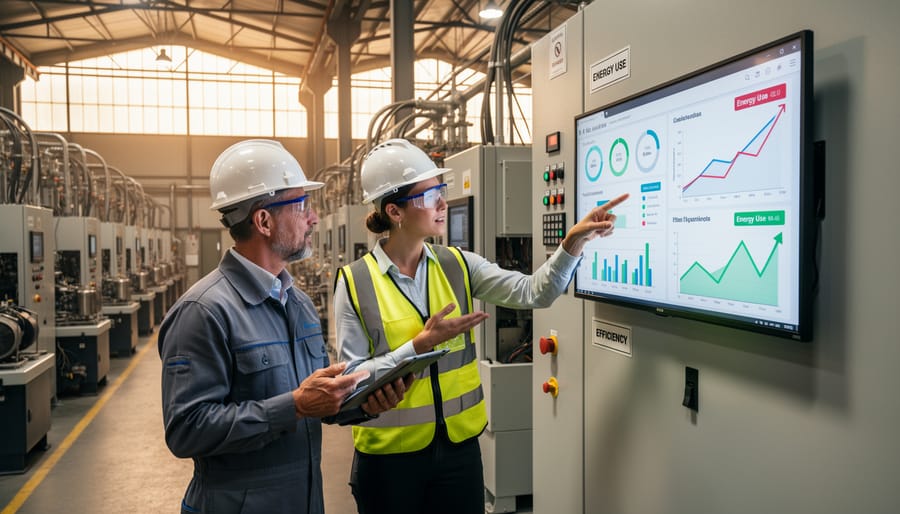
Energy efficiency in food manufacturing represents far more than an opportunity to reduce utility bills. It’s a strategic investment that strengthens your competitive position, ensures compliance with evolving regulations, and positions your operation as a sustainability leader in an industry facing increasing scrutiny. As energy costs continue to rise and environmental expectations grow, manufacturers who prioritize efficiency today will be better positioned for long-term success tomorrow.
The path forward starts with understanding where your facility stands. A comprehensive energy assessment reveals opportunities specific to your operations and provides the data needed to prioritize improvements with the strongest return on investment. From optimizing refrigeration systems to upgrading lighting and HVAC, even incremental changes deliver measurable results.
As you develop your long-term energy strategy, consider solar energy as a cornerstone solution. Solar installations offer predictable energy costs, significant tax incentives, and demonstrate environmental commitment to customers and stakeholders. For Illinois food manufacturers, working with locally owned solar experts who understand both the technical requirements and regional incentives ensures your transition to renewable energy is smooth and financially sound. Take the first step today by scheduling an energy assessment and exploring how solar can transform your facility’s energy profile while supporting your broader business objectives.
