
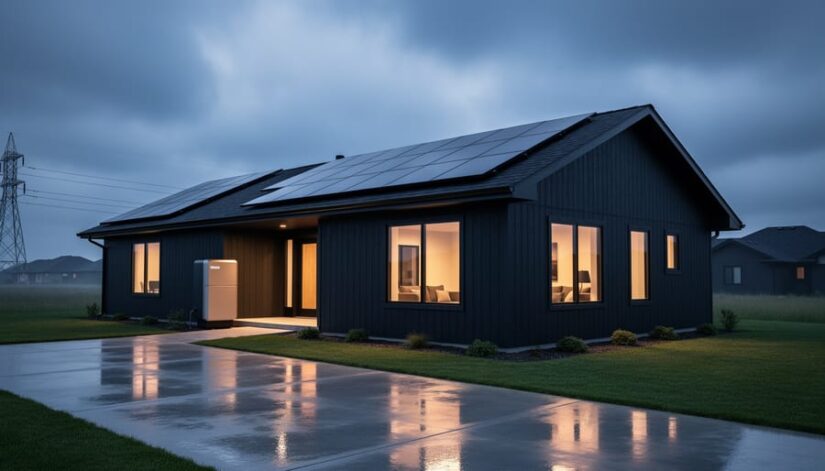
How Hybrid Solar Systems Keep Your Power Running When the Grid Goes Down
Prepare for extended power outages by installing a hybrid solar system that combines panels, battery storage, and grid connection—this three-part setup automatically switches to stored energy when the grid fails, keeping essential circuits running for days rather than hours. During Illinois’ increasingly common severe weather events, from summer derechos to winter ice storms, standard grid-tied solar systems shut down entirely for safety reasons, leaving you without power despite having panels on your roof.
Calculate your emergency power needs by listing critical loads—refrigerators, medical equipment, heating systems, and communication devices—then size your battery bank to run these essentials for 24-48 hours minimum, which typically requires 15-20 kWh of storage capacity for most Illinois homes. A properly configured hybrid system delivers value beyond disasters by reducing peak-time electricity costs year-round and providing protection against Illinois’ rising utility rates, effectively paying for itself over time while serving as insurance against grid failures.
Understand that battery technology has transformed disaster preparedness from expensive, maintenance-heavy generator setups to clean, automatic backup systems that require minimal upkeep and operate silently. Modern lithium batteries charge from both solar production and off-peak grid power, ensuring they’re ready when storms approach, and they can partially recharge even during cloudy emergency conditions that follow severe weather.
Work with experienced local installers who understand Illinois-specific challenges like heavy snow loads, humidity effects on equipment, and regional utility interconnection requirements—these factors directly impact system reliability when you need it most.
What Makes Hybrid Energy Systems Different from Standard Solar

The Three Components That Create Resilience
A resilient hybrid energy system functions like a well-coordinated team, with three essential components working in harmony to keep your power flowing when the grid goes down.
Solar panels form the foundation of your system, converting sunlight into electricity during daylight hours. These panels continue generating power even when your neighborhood experiences an outage, providing a consistent energy source as long as the sun is shining. For Illinois property owners, modern solar panels perform efficiently even on cloudy days, making them reliable throughout our varied weather conditions.
Battery storage serves as your energy reservoir, capturing excess electricity produced by your solar panels and storing it for later use. Think of it as a backup fuel tank that automatically fills when your panels generate more power than you’re currently using. During an outage, this stored energy becomes your lifeline, powering essential appliances and systems after sunset or during extended cloudy periods. The size of your battery determines how long you can maintain power independently from the grid.
Intelligent inverters act as the brain of your system, managing the flow of electricity between your solar panels, batteries, and home. These sophisticated devices seamlessly switch between grid power and your backup system during outages, often so quickly you won’t notice the transition. They also optimize when to charge your batteries, when to use stored energy, and when to draw from the grid based on real-time conditions and your usage patterns.
Together, these three components create a self-sufficient power ecosystem that automatically responds to grid disruptions while maximizing your energy independence and cost savings during normal operations.
Why Battery Storage Is Your Insurance Policy
When the power grid fails during a severe storm or system overload, battery storage transforms your solar investment into a reliable backup power system. Unlike grid-tied solar alone, which shuts down during outages for safety reasons, battery backup keeps your essential systems running when you need them most.
Battery storage systems work by capturing excess solar energy produced during the day and storing it for later use. During a grid outage, your system automatically disconnects from the utility and switches to battery power, often in a matter of seconds. This seamless transition means your refrigerator stays cold, your sump pump continues protecting your basement, and critical medical equipment remains operational.
Understanding capacity is essential for setting realistic expectations. Battery systems are measured in kilowatt-hours, which indicates how much energy they can store. A typical home battery might range from 10 to 20 kilowatt-hours. This capacity can power essential circuits for several hours to multiple days, depending on your energy consumption and whether your solar panels continue generating power during daylight hours.
Most homeowners prioritize backing up critical loads rather than their entire home. This might include refrigerators, a few lights, phone chargers, internet routers, well pumps, or medical devices. A 13-kilowatt-hour battery could typically power these essentials for 24 hours or longer with solar recharging. For businesses, battery backup can maintain security systems, preserve inventory, and enable continued operations during brief outages.
Illinois residents face particular risks from severe weather, including thunderstorms, ice storms, and occasional tornadoes. As our locally owned team has observed, grid outages in our state can last anywhere from a few hours to several days in extreme situations. Battery storage provides peace of mind that your household or business won’t be left vulnerable when weather strikes unexpectedly.
Real Disaster Scenarios Where Hybrid Systems Shine

Severe Weather Events: Ice Storms and Tornadoes
Illinois experiences some of the nation’s most volatile weather patterns, creating significant vulnerabilities for the electrical grid. Winter ice storms coat power lines with heavy accumulations, causing extensive outages that can last days or even weeks in rural areas. The state also sits in a tornado-prone region, with severe thunderstorms bringing damaging winds that topple transmission infrastructure. According to recent data, the average Illinois resident experiences multiple hours of power outages annually, with some areas facing significantly longer disruptions.
Traditional grid-tied solar systems shut down during outages for safety reasons, offering no backup power when you need it most. However, hybrid solar systems with battery storage maintain continuous operation by automatically disconnecting from the grid and switching to stored energy. This seamless transition means your essential systems stay running during extended weather-related outages.
A properly sized hybrid system can power critical loads including refrigeration, heating systems, medical equipment, and communication devices. For businesses, maintaining power during severe weather prevents inventory loss, ensures operational continuity, and protects sensitive electronic equipment from damage caused by sudden outages or power surges when the grid restores.
As a locally owned Illinois company, we understand the specific weather challenges facing our communities. We design hybrid systems based on regional weather patterns and historical outage data, ensuring your investment provides reliable backup capacity when severe weather threatens your power supply. This localized expertise means your system is sized appropriately for Illinois conditions, not generic national averages.
Grid Overload During Extreme Temperatures
Illinois experiences some of the most dramatic temperature swings in the country, and these extremes put enormous pressure on our electrical grid. During summer heat waves, air conditioning usage surges across the state, while polar vortex events send heating demands skyrocketing. These peak demand periods strain infrastructure to its limits, sometimes resulting in brownouts or complete power failures when the grid simply cannot keep up with demand.
Hybrid solar systems with battery storage provide a critical buffer during these challenging times. When temperatures reach extremes and your neighbors are competing for limited grid capacity, your hybrid system can automatically switch to stored solar energy to power essential functions like refrigeration, medical equipment, heating, or cooling. This reduces your dependence on an overloaded grid precisely when it matters most.
During summer afternoons when electricity rates spike and grid stress peaks, your system can draw from battery reserves charged earlier by your solar panels. In winter, stored energy keeps furnace blowers, sump pumps, and other critical systems running even when ice storms or equipment failures affect local infrastructure.
As a locally owned company with expertise in solar energy, we help Illinois property owners design hybrid systems sized appropriately for their actual needs during extreme weather events, ensuring you maintain comfort and safety regardless of what the thermometer reads.
Planning Your Recovery Strategy: What to Keep Running
Essential Loads for Residential Properties
Understanding which systems truly need backup power helps you right-size your battery capacity and manage expectations during outages. Not every appliance requires emergency power, and strategic planning ensures your investment delivers practical resilience.
Critical loads typically include your refrigerator and freezer to preserve food during extended outages. A modern refrigerator uses approximately 1-2 kWh daily, while freezers consume similar amounts. Medical equipment like CPAP machines, oxygen concentrators, or medication refrigerators are non-negotiable for many Illinois families. Communication devices—phones, internet routers, and computers—keep you connected during emergencies and typically draw minimal power.
Heating and cooling present the biggest challenge. Central air conditioning systems consume substantial energy that quickly depletes batteries. During Illinois summers, consider powering window units in essential rooms instead. In winter, gas furnaces require electricity only for blowers and controls, making them more battery-friendly than electric heating systems.
Realistic battery capacity planning matters. A typical 10 kWh battery might power a refrigerator, several lights, phone charging, and internet for 24-48 hours without solar recharging. Adding heating or cooling significantly reduces runtime. Most Illinois homeowners find that 13-20 kWh of battery storage balances cost with practical backup capability, especially when paired with solar panels that recharge batteries during daylight hours.

Business Continuity: Protecting Revenue and Operations
For businesses, power interruptions translate directly to lost revenue. A hybrid solar system with battery backup protects critical operations during outages, from computer networks and security systems to refrigeration and production equipment. Illinois businesses face average grid interruption costs ranging from hundreds to thousands of dollars per hour, depending on industry and scale.
When evaluating system investment, calculate your specific interruption costs. Consider lost sales, spoiled inventory, missed production targets, and labor inefficiency during outages. For example, a restaurant losing refrigeration for six hours might face $3,000 in spoiled inventory plus lost customer revenue, while a manufacturing facility could see production delays costing significantly more.
Compare these potential losses against the incremental cost of adding battery backup to your solar installation. Many Illinois business owners find that even one or two avoided outages per year justify the investment, while the system continues providing daily energy cost savings.
Beyond immediate financial protection, backup power preserves business reputation and customer relationships. Maintaining operations when competitors cannot gives you a competitive advantage, while protecting sensitive data and security systems prevents long-term consequences that extend beyond a single outage event.
As a locally owned company with expertise in commercial solar installations, we help Illinois businesses identify critical loads and right-size systems that protect operations without overbuilding capacity.
System Design Considerations for Maximum Resilience
Right-Sizing Battery Storage for Illinois Weather Patterns
Determining the right battery storage capacity for your Illinois property requires understanding three key factors: typical outage durations in your area, seasonal solar production variations, and your essential power needs.
In Illinois, most weather-related outages last between 4 to 8 hours, though severe storms can extend disruptions to 24-48 hours. Your battery system should accommodate at least the average outage length while powering critical loads. Start by identifying which appliances and systems you absolutely need during an outage. Refrigeration, heating or cooling systems, medical equipment, and communication devices typically top the list. Calculate the combined wattage of these essentials and multiply by your target backup duration.
Seasonal considerations matter significantly in Illinois. Solar production drops substantially during winter months when days are shorter and cloud cover increases. A system sized only for summer production may leave you underpowered during December and January outages. Plan for winter performance levels to ensure year-round reliability.
Most Illinois homes find that 10-15 kWh of battery capacity provides adequate backup for essential loads during typical outages. Larger properties or businesses with greater energy demands may require 20-30 kWh or more. However, oversizing can mean unnecessary expense without proportional benefit.
Working with a locally owned solar provider familiar with Illinois weather patterns ensures your system matches regional realities rather than generic recommendations. This expertise helps balance upfront investment with practical resilience, delivering backup power when you truly need it.
The Role of Professional Assessment in Resilient Design
Designing a resilient hybrid energy system requires more than just purchasing equipment—it demands careful assessment of your property, energy needs, and local requirements. Working with experienced local installers who understand Illinois-specific challenges makes the difference between a system that merely functions and one that truly protects your home or business during emergencies.
Professional installers familiar with Illinois building codes ensure your system meets all regulatory requirements while maximizing performance. They understand how our state’s varied weather patterns—from severe winter storms to summer heat waves—impact system design and placement. Local expertise also proves invaluable when navigating utility interconnection requirements, which vary significantly between Illinois power companies and can delay or complicate installation without proper guidance.
An experienced installer will conduct a thorough energy audit to determine which circuits you need backed up, calculate appropriate battery capacity for your specific usage patterns, and design a system that integrates seamlessly with your existing electrical infrastructure. They’ll also help you understand available incentives and rebates specific to Illinois, ensuring you maximize your investment while building genuine resilience into your property’s energy infrastructure.
Beyond Disasters: Everyday Benefits of Hybrid Systems
Energy Independence and Cost Savings
While disaster preparedness often drives initial interest in hybrid solar systems, the daily financial benefits make these investments worthwhile regardless of emergency scenarios. Hybrid systems generate substantial cost savings by producing solar electricity during the day, which directly reduces your purchased power from the utility. In Illinois, where electricity rates continue climbing, this production offset can lower monthly bills by 50-70% for typical residential installations.
The real financial advantage comes from strategic battery use during peak rate periods. Many Illinois utilities charge significantly higher rates during afternoon and evening hours when demand peaks. Your hybrid system stores excess solar energy produced midday, then automatically draws from batteries during these expensive periods instead of pulling from the grid. This peak-shaving capability can add thousands in annual savings.
Most homeowners and businesses see return on investment within 7-10 years through combined solar production and intelligent battery management. Federal tax credits currently covering 30% of system costs further accelerate payback timelines. As a locally owned company with extensive Illinois experience, we help clients maximize these financial benefits while building long-term energy independence.
Environmental Impact and Community Resilience
Hybrid solar systems contribute to Illinois’s broader sustainability goals while strengthening the entire community’s resilience. When multiple homes and businesses deploy distributed energy resources like battery-backed solar, they reduce strain on the central grid during peak demand periods. This distributed approach means fewer large-scale power plants needed and less infrastructure vulnerable to single points of failure.
During extreme weather events, neighborhoods with hybrid systems maintain critical services, supporting vulnerable residents and providing charging stations for emergency equipment. Locally owned solar installations keep energy dollars circulating in Illinois communities rather than flowing to distant utility companies. These systems also reduce carbon emissions year-round, not just during outages, advancing statewide clean energy targets. By investing in hybrid solar, you’re not only protecting your own operations but contributing to a more resilient, sustainable energy future for your entire community. This community-wide benefit makes hybrid systems a smart choice for forward-thinking homeowners and business owners who understand that true energy security comes from diversified, local power generation.
When power outages threaten, hybrid solar systems deliver more than backup electricity—they provide genuine peace of mind. For Illinois property owners, these systems represent a practical investment in uninterrupted operations, protected food supplies, maintained comfort, and continued business productivity when the grid fails. Unlike traditional solar alone, hybrid solutions with battery storage ensure you’re never left in the dark during storms, equipment failures, or grid overloads.
The benefits extend well beyond emergencies. Your hybrid system reduces energy costs daily through solar generation, provides protection against rising utility rates, and increases property value. You gain energy independence while knowing your family or business remains operational during critical moments.
Every property has unique resilience needs based on location, power requirements, and priorities. A locally owned company with deep expertise in solar energy, Illinois Renewables understands the specific challenges Illinois residents face—from severe summer storms to winter ice events. We’ll assess your situation, design a customized hybrid system that protects what matters most, and ensure you have reliable power when it counts. Contact us today to discover how a properly sized hybrid solar solution can safeguard your investment and deliver resilience exactly when you need it.
