

How ESG Data Integration Makes Solar Investments Smarter in Illinois
Integrate ESG data streams directly into investment decision-making by establishing automated data collection protocols for environmental metrics, social impact indicators, and governance parameters across your renewable energy portfolio. Transform fragmented sustainability reporting into actionable insights through standardized frameworks, particularly crucial for solar energy investments in Illinois where renewable energy policies demand rigorous ESG compliance. Deploy cloud-based ESG analytics platforms to streamline real-time monitoring of carbon emissions, workforce diversity metrics, and corporate governance standards, enabling data-driven sustainability decisions that align with both regulatory requirements and investor expectations.
Map ESG performance indicators to specific renewable energy project milestones, creating a comprehensive dashboard that tracks environmental impact, community engagement, and regulatory compliance. This integrated approach not only enhances reporting accuracy but also provides stakeholders with transparent, verifiable data that demonstrates commitment to sustainable development goals while maximizing investment potential in the growing renewable energy sector.
Understanding ESG Metrics in Solar Energy

Environmental Impact Measurements
Environmental metrics in solar projects focus on key performance indicators that measure direct and indirect environmental impacts. These include greenhouse gas emissions avoided (measured in metric tons of CO2), energy production efficiency (kWh per square foot), and waste reduction during installation and maintenance. Projects track water consumption savings, particularly relevant in Illinois’ varying climate conditions, and measure the reduction in conventional energy dependence through detailed energy offset calculations.
Land use impact assessments evaluate the project’s footprint, including habitat preservation and soil health maintenance. Material sustainability metrics monitor the environmental cost of solar components, from manufacturing to end-of-life recycling. Regular data collection on these metrics helps projects maintain compliance with Illinois environmental regulations while demonstrating tangible environmental benefits to stakeholders. This comprehensive approach ensures solar installations maximize their positive environmental impact while minimizing potential negative effects on local ecosystems.
Social Responsibility Indicators
Social impact metrics play a crucial role in measuring how solar installations benefit local communities. Key indicators include job creation within Illinois’s renewable energy sector, improved air quality metrics, and reduced healthcare costs due to decreased pollution. Community engagement levels, such as participation in solar education programs and local energy initiatives, also serve as valuable benchmarks. We track workforce development through training programs and partnerships with local technical schools, while monitoring energy cost savings for low-income households through solar access programs. These metrics help demonstrate the tangible social benefits of solar investments, from increased property values to enhanced energy independence for Illinois communities.
Governance Standards
Solar energy companies in Illinois must adhere to strict governance standards that ensure transparency and accountability in their ESG reporting. These standards include regular audits of environmental impact data, clear documentation of workforce safety practices, and detailed financial reporting of renewable energy investments. Companies are required to maintain comprehensive records of their solar installations, energy production metrics, and maintenance protocols.
Local regulations require solar providers to implement robust data management systems that track both environmental performance and social impact metrics. This includes monitoring community engagement initiatives, maintaining transparent pricing structures, and documenting job creation within Illinois communities. Regular reporting to stakeholders and regulatory bodies ensures compliance with state and federal guidelines while building trust with customers and investors.
To maintain high governance standards, companies must also establish clear lines of responsibility, implement strong cybersecurity measures to protect data, and regularly update their ESG integration processes to reflect evolving industry best practices.
Data Collection and Integration Methods
Automated Monitoring Systems
Real-time ESG data monitoring has become essential for solar energy projects in Illinois, enabling businesses to track their environmental impact and sustainability metrics automatically. Modern monitoring systems use smart sensors and IoT devices to collect data across various environmental parameters, from energy production to carbon emissions reduction.
These automated systems integrate seamlessly with existing solar installations, providing continuous data streams that help track performance and sustainability metrics. For Illinois businesses, this means having instant access to key performance indicators like solar power generation, grid consumption offset, and emissions reduction data.
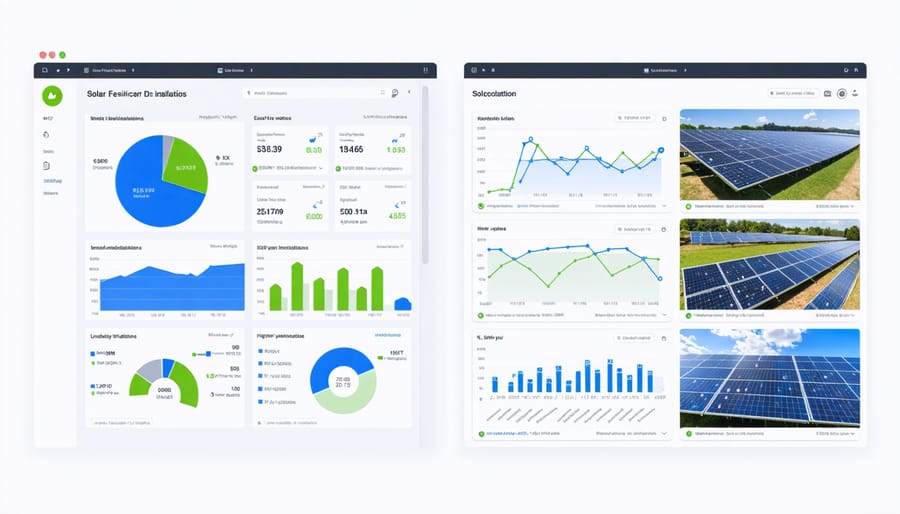
Cloud-based monitoring platforms aggregate this information into user-friendly dashboards, making it easy to track progress toward sustainability goals. These systems can automatically generate reports for stakeholders and regulatory compliance, saving time and ensuring accuracy in ESG reporting.
Advanced features include predictive analytics that can forecast future performance and identify potential issues before they impact operations. Real-time alerts notify facility managers when systems aren’t performing optimally, allowing for quick responses to maintain peak efficiency.
For Illinois solar installations, these monitoring systems are particularly valuable during extreme weather conditions, providing critical data about system performance and helping maintain optimal energy production year-round. The automation of data collection reduces human error and provides a more reliable foundation for ESG reporting and decision-making.
The integration of these monitoring systems with other business software ensures that ESG data becomes part of the broader operational picture, supporting more informed sustainability strategies and investment decisions.
Reporting and Analysis Tools
Modern ESG reporting tools have revolutionized how solar energy companies track and analyze their environmental impact data. Popular platforms like Tableau and Power BI offer customizable dashboards that transform complex ESG metrics into clear, actionable insights. These tools can process data from multiple sources, including solar panel performance metrics, carbon offset calculations, and community engagement statistics.
For Illinois solar installations, specialized software solutions help track state-specific compliance requirements while monitoring key performance indicators. These platforms typically include features for measuring renewable energy generation, calculating greenhouse gas emissions prevented, and assessing social impact metrics within local communities.
Real-time monitoring systems integrate seamlessly with existing solar infrastructure, providing instant updates on energy production and environmental benefits. This data can be automatically compiled into standardized reports that meet regulatory requirements and stakeholder expectations. Many tools also offer predictive analytics capabilities, helping solar businesses forecast future environmental impacts and plan sustainability initiatives accordingly.
Small and medium-sized solar businesses can benefit from cloud-based solutions that offer scalable reporting options without requiring significant IT infrastructure. These platforms often include built-in templates for common ESG reporting frameworks, making it easier to maintain consistency in environmental performance tracking and stakeholder communications.
For maximum effectiveness, many Illinois solar companies combine multiple reporting tools to create comprehensive ESG monitoring systems that align with both state regulations and international sustainability standards.
Making Investment Decisions with ESG Data
Risk Assessment Framework
ESG data integration plays a crucial role in evaluating investment risks, particularly in the solar energy sector. By analyzing environmental, social, and governance factors, investors and businesses can better understand potential challenges and opportunities in their renewable energy projects.
For environmental considerations, risk assessment focuses on factors like carbon emissions, resource efficiency, and climate change impacts. In Illinois’s solar market, this includes evaluating how weather patterns and seasonal variations might affect solar panel performance and energy generation capabilities.
Social risk factors encompass community relations, workforce safety, and stakeholder engagement. This is particularly relevant for solar installations in residential areas or large-scale commercial projects where community support is essential for project success.
Governance risks are assessed through regulatory compliance, management structure, and corporate responsibility metrics. In Illinois, this includes understanding state-specific renewable energy policies, incentive programs, and permitting requirements.
A comprehensive risk assessment framework typically involves:
– Data collection from multiple verified sources
– Regular monitoring and updating of ESG metrics
– Integration with traditional financial analysis
– Stakeholder feedback incorporation
– Compliance tracking with local and federal regulations
By implementing this framework, solar energy investors can make more informed decisions while maintaining alignment with sustainability goals. This approach helps identify potential risks early, enabling proactive risk management and ensuring long-term project viability.
Return on Investment Calculations
When evaluating solar energy investments through an ESG lens, calculating return on investment requires a comprehensive approach that goes beyond traditional financial metrics. In Illinois’s evolving renewable energy landscape, ROI calculations must account for environmental benefits, social impact, and governance improvements alongside financial returns.
The financial component includes direct cost savings from reduced energy bills, tax incentives, and potential revenue from renewable energy credits. Environmental returns are quantified through carbon emission reductions, which can be assigned a monetary value based on carbon pricing models. Social returns encompass job creation, community health benefits, and increased property values, while governance returns include improved regulatory compliance and risk management.
To effectively integrate these factors, many Illinois businesses are adopting the Triple Bottom Line (TBL) framework, which measures success across profit, people, and planet dimensions. This approach has proven particularly effective when combined with green bonds financing, allowing organizations to access dedicated funding while demonstrating their commitment to sustainability.
A practical calculation method involves:
1. Standard financial ROI calculation
2. Environmental impact monetization
3. Social benefit quantification
4. Risk reduction value assessment
By combining these elements, businesses can develop a more accurate picture of their solar investment’s total return, typically revealing higher overall returns than traditional ROI calculations would suggest.

Illinois-Specific Considerations
Illinois presents unique opportunities and challenges for ESG data integration in solar projects. The state’s commitment to renewable energy through the Climate and Equitable Jobs Act (CEJA) has created a robust Illinois renewable energy market, making ESG metrics particularly relevant for local projects.
Local factors such as severe weather patterns, agricultural land use considerations, and urban density significantly impact solar installations and must be reflected in ESG reporting. Illinois’s diverse climate requires careful monitoring of environmental impact data, particularly regarding snow load management and storm resilience.
Community engagement metrics carry special weight in Illinois, where solar projects often interact with farming communities and urban neighborhoods. Social impact tracking typically includes job creation statistics, particularly in disadvantaged communities as specified by CEJA guidelines.
Governance considerations must align with Illinois’s specific regulatory framework, including compliance with the Illinois Power Agency’s requirements and local municipal codes. Projects must also track their contribution to the state’s renewable portfolio standard goals and document community benefit agreements where applicable.
ESG data integration represents a crucial step forward for solar energy investments in Illinois, offering enhanced decision-making capabilities and improved risk management. By incorporating environmental, social, and governance metrics into investment strategies, businesses and homeowners can better align their solar projects with sustainability goals while maximizing long-term returns. The path forward involves selecting appropriate ESG metrics, implementing reliable data collection systems, and regularly reviewing performance against established benchmarks. For Illinois investors looking to embrace sustainable energy solutions, starting with a comprehensive ESG framework will provide valuable insights and create a solid foundation for future growth. Take action by consulting with local solar experts, establishing clear ESG objectives, and developing a systematic approach to data collection and analysis. This strategic integration will not only support environmental initiatives but also drive sustainable business value in the evolving Illinois energy landscape.
