
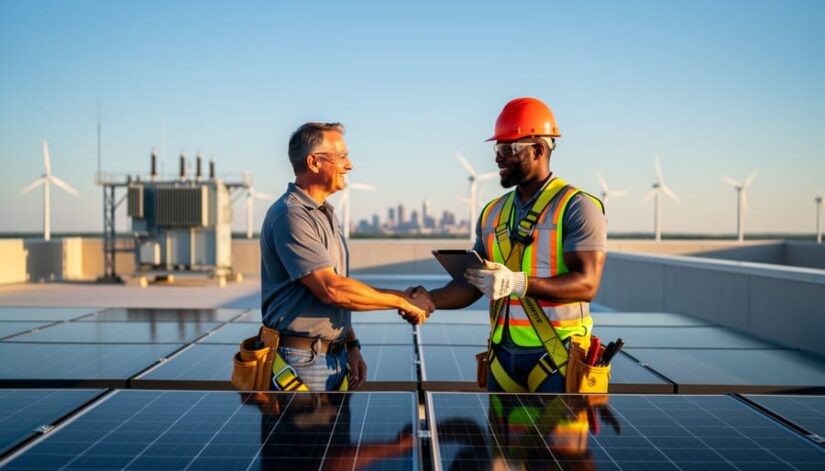
How Public-Private Partnerships Are Making Renewable Energy Affordable in Illinois
Illinois homeowners and businesses today have unprecedented access to clean energy through public-private partnerships that transform renewable technology from abstract concepts into practical solutions. Understanding your renewable options means recognizing how collaborative programs remove traditional barriers like high upfront costs, technical complexity, and maintenance concerns that once made sustainable energy feel out of reach.
Solar, wind, geothermal, and five other renewable sources now power thousands of Illinois properties through locally owned initiatives that combine utility expertise with community investment. These partnerships work by connecting you directly with installation professionals, financing options, and long-term support systems designed specifically for our state’s climate and regulatory environment.
The shift toward renewable energy in Illinois isn’t just environmental—it’s economic. Property owners who participate in collaborative renewable programs typically see reduced energy costs within the first year, while businesses gain competitive advantages through sustainability credentials and predictable energy expenses. Public-private models specifically address the knowledge gap that stops many from pursuing renewable options by providing education, site assessments, and post-installation monitoring.
Each renewable source offers distinct advantages depending on your property type, location, and energy needs. Solar installations work exceptionally well for commercial buildings with expansive roof space, while geothermal systems suit properties with sufficient land area for ground loops. The key is matching the right technology to your specific situation through partnerships that provide expert guidance without the sales pressure of traditional energy companies.
This comprehensive look at eight renewable sources explains not just how each technology works, but how collaborative programs make them accessible and affordable for Illinois residents ready to take control of their energy future.
Why Public-Private Partnerships Matter for Renewable Energy
Public-private partnerships represent a collaborative approach where government entities and private companies join forces to advance renewable energy projects throughout Illinois. These arrangements combine the best of both worlds: public sector resources, regulatory support, and community focus with private sector innovation, technical expertise, and operational efficiency.
For Illinois homeowners and businesses, these partnerships matter because they significantly lower the barriers to adopting renewable energy technologies. When local governments team up with experienced solar providers and other renewable energy companies, they can negotiate better pricing, streamline permitting processes, and create financing programs that make clean energy more affordable and accessible. This collaboration directly impacts your ability to transition to renewable power without shouldering the entire financial burden alone.
The structure of these partnerships typically involves government entities providing policy frameworks, incentives, and sometimes initial funding, while private companies bring specialized knowledge in installation, maintenance, and system design. Together, they develop programs that serve residential, commercial, and industrial customers more effectively than either sector could accomplish independently. Local ownership of these private companies often means better understanding of Illinois-specific challenges, from weather patterns affecting system performance to state-level renewable energy policy requirements.
In Illinois specifically, these collaborations have proven essential for meeting ambitious clean energy goals while ensuring economic benefits stay within communities. They create jobs, reduce energy costs, and accelerate the deployment of technologies like solar panels and wind turbines. Rather than waiting for purely market-driven adoption or relying solely on government programs, public-private partnerships leverage combined strengths to deliver practical, cost-effective renewable energy solutions that work for everyday property owners and businesses across the state.
Solar Energy: The Leading Partnership Success Story
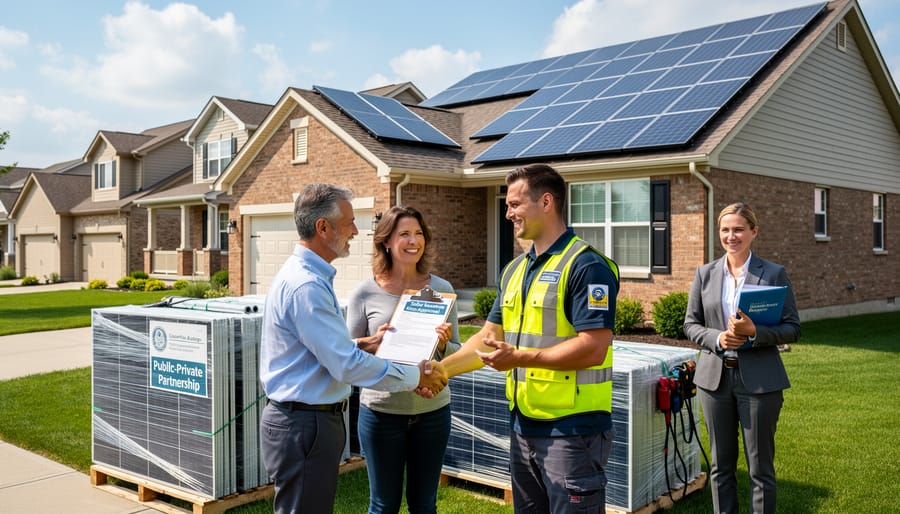
Solar energy stands out as the most successful example of renewable energy collaboration in Illinois, with public-private solar partnerships making clean power accessible to thousands of residents and businesses. These partnerships combine government policy support with the technical expertise of locally owned installation companies to create a thriving solar market that benefits everyone.
The Illinois Shines program serves as the cornerstone of these collaborative efforts, offering incentives that significantly reduce the upfront costs of going solar. Through this initiative, homeowners and businesses receive renewable energy credits for the power their systems generate, creating immediate value. The program works seamlessly with federal tax credits, which currently cover 30 percent of installation costs, making solar more affordable than ever before.
Private solar companies bring essential technical knowledge and customer service to these partnerships. Locally owned businesses understand Illinois-specific challenges, from our weather patterns to building codes, ensuring installations perform optimally throughout our changing seasons. These companies handle everything from initial site assessments to permit applications and ongoing maintenance, removing complexity from the process for property owners.
Community solar programs represent another partnership success, allowing residents without suitable roofs to participate in solar energy. These shared solar farms, developed through collaboration between municipalities and private developers, give renters and those with shaded properties access to clean energy benefits.
For businesses, net metering policies create additional value by crediting excess solar production back to utility bills. This policy framework, established through government action and supported by utility partnerships, makes commercial solar installations financially attractive with typical payback periods of seven to ten years.
Various financing options further enhance accessibility, including solar loans with competitive rates and power purchase agreements that require no upfront investment. These financial tools, developed through banking and solar industry collaboration, ensure that solar energy works for diverse budgets and property types across Illinois.
Wind Power: Large-Scale Collaborative Projects
Wind energy has become one of Illinois’ fastest-growing renewable resources, thanks largely to collaborative efforts between public entities and private developers. These partnerships have transformed the state’s landscape, making Illinois one of the top wind energy producers in the nation.
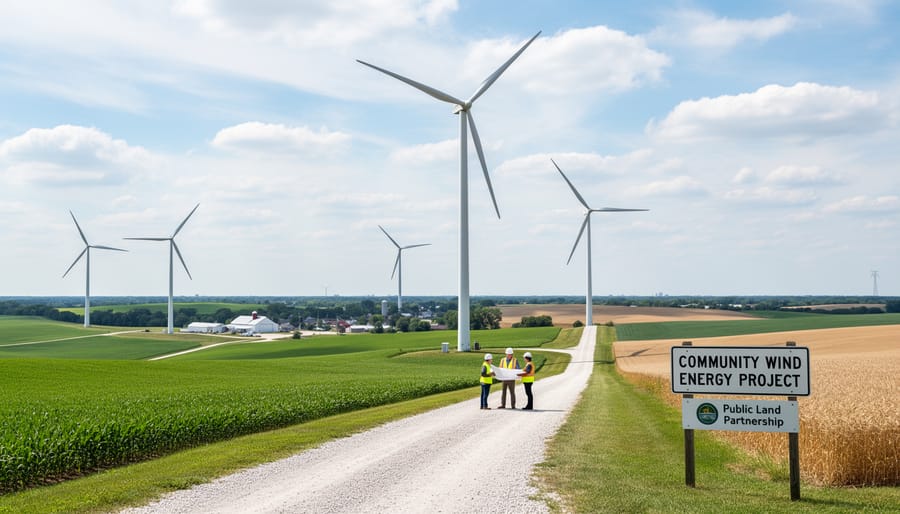
Public-private partnerships play a crucial role in developing both community wind farms and large commercial installations. Government agencies provide essential support through land agreements, zoning approvals, and infrastructure development, while private companies bring technical expertise and capital investment. This collaborative approach reduces financial barriers and accelerates project timelines, making wind energy more accessible across the state.
Community wind farms represent an especially promising model for local participation. These projects allow municipalities, farmers, and rural landowners to partner with developers, generating clean energy while creating new revenue streams for their communities. Landowners who host wind turbines receive lease payments that provide stable income for decades, while local governments benefit from increased tax revenues that support schools and infrastructure improvements.
Commercial-scale wind installations require significant coordination between multiple stakeholders. In Illinois, state agencies work with private developers to identify suitable locations, secure necessary permits, and connect projects to the electrical grid. These large installations can power thousands of homes and businesses, demonstrating the scalability of wind energy when public resources and private innovation work together.
The Illinois Clean Energy Community Foundation and other state programs have facilitated numerous wind projects by providing technical assistance and helping navigate regulatory requirements. For homeowners and businesses interested in supporting wind energy, several options exist beyond direct installation. Many Illinois utilities now offer green energy programs that allow customers to purchase wind-generated electricity, supporting continued expansion of this renewable resource while enjoying predictable energy costs.
Geothermal Energy: Underground Potential for Illinois Properties
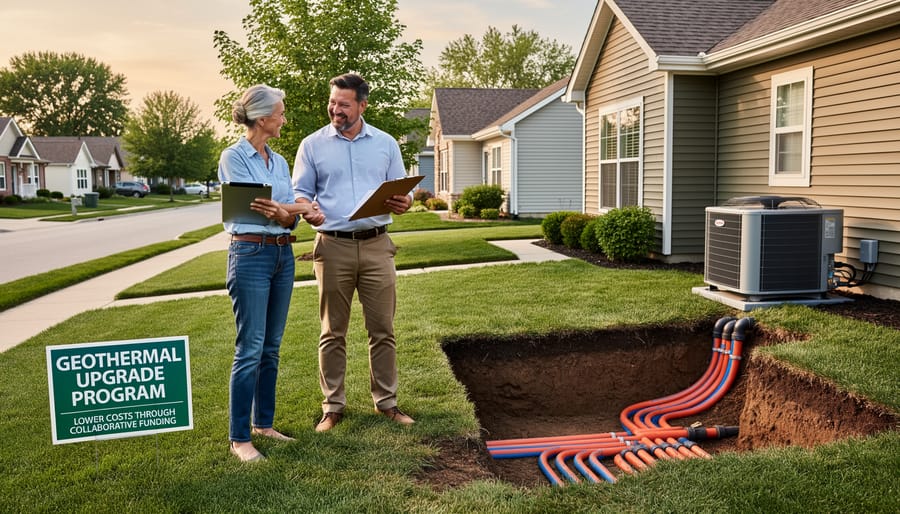
Geothermal energy systems tap into the earth’s stable underground temperature to provide efficient heating and cooling for Illinois properties year-round. Unlike solar panels that capture energy from the sun, geothermal heat pumps use the constant 50-60 degree temperature found just below the surface to regulate indoor climate. During winter, the system extracts heat from the ground to warm your building. In summer, it reverses the process, transferring heat from your property back into the earth.
While geothermal systems offer exceptional energy efficiency and can reduce heating and cooling costs by up to 50 percent, the upfront installation costs have historically been a barrier for many property owners. This is where collaborative funding programs become essential. Illinois has developed several state incentive programs that partner with private installers to make geothermal technology more accessible.
The Illinois Department of Commerce and Economic Opportunity offers rebates and low-interest financing options specifically for geothermal installations. These programs work alongside private installation companies that provide competitive pricing through volume partnerships. Some utilities in Illinois also participate in cooperative programs that provide additional rebates for customers who install geothermal systems.
Local installer partnerships have emerged throughout the state, allowing property owners to access bundled services that include site assessment, system design, installation, and ongoing maintenance at reduced rates. These collaborative efforts significantly lower the financial threshold for adopting geothermal technology, making it a practical option for both residential and commercial properties seeking long-term energy savings.
Hydroelectric Power: Small-Scale Community Solutions
Hydroelectric power offers proven renewable energy potential, and Illinois communities can tap into this resource through small-scale micro-hydroelectric systems installed along rivers and streams. Unlike massive dam projects, these compact systems generate electricity from flowing water without significantly disrupting natural waterways or requiring major construction.
Micro-hydroelectric systems typically produce between 5 kilowatts and 100 kilowatts of power, making them suitable for community facilities, small businesses, or groups of homes. These systems work by channeling a portion of stream flow through turbines that convert water movement into electricity. The technology is particularly effective in areas with consistent water flow and modest elevation changes.
In Illinois, public water management agencies are increasingly partnering with private developers to identify suitable locations along waterways. These collaborations help navigate regulatory requirements, secure necessary permits, and ensure environmental protections remain in place. The Illinois Department of Natural Resources works with local developers to assess potential sites and streamline approval processes.
The partnership model reduces financial barriers that often discourage individual property owners from pursuing hydroelectric projects. Shared infrastructure costs, combined expertise in site assessment, and collective maintenance responsibilities make these installations more economically viable. Several Illinois communities have successfully implemented these systems along the Rock River and Kaskaskia River watersheds.
For property owners with water features, consulting with local water authorities about partnership opportunities represents a practical first step. While solar remains the most accessible renewable option for most Illinois residents and businesses, micro-hydroelectric power demonstrates how collaborative approaches unlock diverse renewable energy sources suited to specific geographic conditions.
Biomass Energy: Agricultural Collaboration Opportunities
Illinois farms and rural businesses have significant opportunities to generate revenue while supporting clean energy through biomass conversion programs. Agricultural waste like corn stalks, livestock manure, and food processing byproducts can be transformed into electricity, heat, and biofuels through partnerships between farmers, energy companies, and state initiatives.
The Illinois Department of Agriculture works with local energy providers to help farms install anaerobic digesters that convert animal waste into biogas. These systems generate electricity for on-site use or sale back to the grid while producing nutrient-rich fertilizer as a byproduct. Medium to large livestock operations find these systems particularly valuable, reducing waste management costs while creating new income streams.
Several Illinois municipalities partner with agricultural cooperatives to establish community-scale biomass facilities. These plants process crop residues, wood waste, and organic materials from multiple farms, making the technology accessible to smaller operations that couldn’t justify individual systems. The Illinois Environmental Protection Agency offers technical assistance and grants to help rural communities assess biomass potential and navigate permitting requirements.
Energy companies in Illinois increasingly seek long-term contracts with farmers for consistent biomass feedstock supply. These agreements provide farmers with stable pricing and guaranteed markets for materials previously considered waste. Some partnerships include equipment financing options and technical support for collection and storage.
Rural businesses like grain elevators, food processors, and ethanol plants also participate by converting their organic waste into on-site power generation. State incentive programs help offset installation costs, making these projects financially viable. The combination of reduced disposal costs, energy savings, and potential revenue creates compelling business cases for agricultural sector participation in renewable energy development.
Hydrogen Fuel Cells: Emerging Partnership Frontiers
Hydrogen fuel cells represent one of the most promising frontiers in renewable energy, converting hydrogen gas into electricity through a clean chemical process that produces only water vapor as a byproduct. While still emerging compared to established technologies like solar, hydrogen energy is gaining momentum through strategic public-private partnerships across Illinois.
The state has launched several pilot programs exploring hydrogen applications for commercial and industrial properties. These initiatives focus on large-scale facilities where hydrogen’s high energy density offers advantages for sustained power demands. Manufacturing plants, distribution centers, and transportation hubs are testing hydrogen fuel cell systems as backup power sources and primary energy solutions.
Public-private collaborations are addressing the current challenges of hydrogen infrastructure development. State agencies partner with private energy companies to build hydrogen production facilities using renewable electricity through a process called electrolysis. This “green hydrogen” approach ensures the fuel source itself remains truly renewable, avoiding reliance on fossil fuel-derived hydrogen.
For Illinois business owners, hydrogen technology presents future opportunities particularly suited to operations requiring consistent, high-volume power or those with existing natural gas infrastructure that could transition to hydrogen. Several demonstration projects in the Chicago metropolitan area and downstate industrial corridors are proving the viability of hydrogen for commercial applications.
While hydrogen systems currently require higher upfront investment than solar installations, ongoing partnerships aim to reduce costs through shared infrastructure development and coordinated purchasing programs. As technology matures and production scales increase, hydrogen fuel cells may become practical alternatives for businesses seeking diverse renewable energy portfolios alongside solar solutions.
Battery Storage Systems: Supporting the Renewable Grid
Energy storage has become the missing piece that makes renewable energy truly reliable for Illinois homes and businesses. Battery storage systems capture excess power generated during peak production times—like sunny afternoons for solar installations—and release it when demand is high or generation is low. This technology transforms intermittent renewable sources into dependable, round-the-clock energy solutions.
Across Illinois, utilities are partnering with private companies to deploy large-scale battery storage projects that stabilize the electrical grid. These partnerships allow for shared investment costs and technical expertise, making advanced storage technology more accessible to communities. ComEd and Ameren Illinois have launched collaborative programs that integrate battery systems with residential and commercial solar installations, providing backup power during outages while reducing strain on the grid during peak hours.
For property owners, battery backup systems offer practical benefits beyond grid support. During power outages, stored energy keeps essential systems running. Time-of-use rate structures allow you to store energy when electricity costs less and use it during expensive peak periods, lowering your overall energy bills. Many locally owned solar installers throughout Illinois now offer battery storage as part of comprehensive renewable energy packages, bringing their expertise in solar energy to complete home and business solutions.
State incentive programs and utility rebates make battery storage increasingly affordable. These collaborative efforts between government agencies, utilities, and private providers help overcome the initial cost barrier, allowing more Illinois residents and businesses to participate in creating a more resilient, sustainable energy grid.
Community Solar Programs: Shared Renewable Access
Community solar offers Illinois residents and businesses a practical pathway to renewable energy without the need for rooftop installations. These community solar programs operate through shared solar farms developed through partnerships between public entities, private developers, and utility companies. The model creates economies of scale that make solar energy accessible to renters, homeowners with shaded roofs, and businesses without suitable building infrastructure.
In Illinois, the Adjustable Block Program and Illinois Shines initiative have accelerated community solar development across the state. These programs allow participants to subscribe to a portion of a larger solar array, typically located in their utility service territory. Subscribers receive credits on their electricity bills for their share of the power generated, often resulting in savings of 10 to 15 percent on monthly energy costs.
The enrollment process is straightforward. Participants can subscribe through locally owned solar developers who handle site selection, construction, and ongoing maintenance. No upfront investment or equipment installation is required at your property. Your subscription size aligns with your typical energy usage, ensuring you receive appropriate bill credits without overcommitting.
Community solar particularly benefits those who cannot install traditional solar panels due to structural limitations, rental situations, or budget constraints. The flexible subscription model allows businesses to test renewable energy integration before making larger infrastructure investments. As solar farms generate clean electricity for multiple subscribers simultaneously, communities reduce their collective carbon footprint while supporting local renewable energy development and job creation in the solar industry.
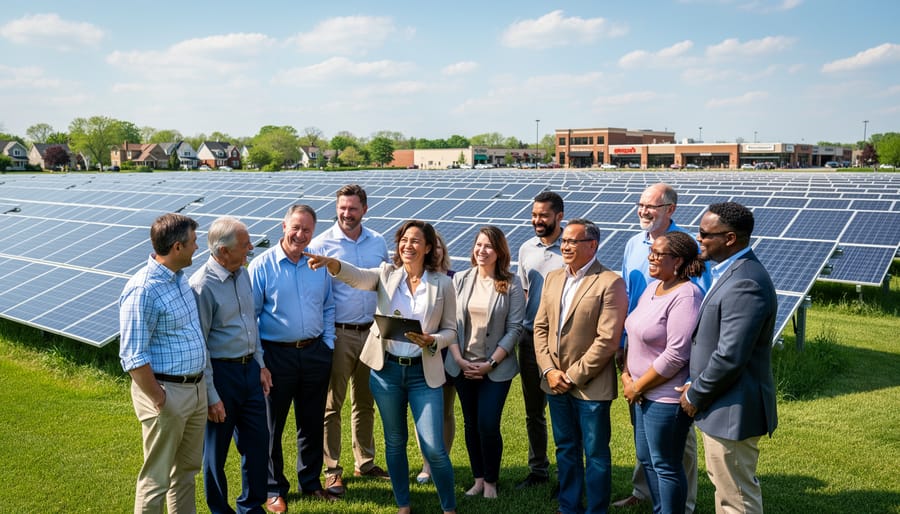
How Illinois Homeowners and Businesses Can Get Involved
Illinois homeowners and businesses have multiple pathways to access renewable energy through state incentives and partnerships that make adoption more affordable. Understanding available programs and working with qualified local partners simplifies the transition to clean energy.
The Illinois Shines program offers substantial incentives for solar installations through Adjustable Block Program rebates and Solar for All initiatives designed for income-qualified residents. Commercial properties can benefit from federal Investment Tax Credits covering up to 30% of system costs, combined with state programs that further reduce upfront expenses. Illinois Power Agency administrations regularly update incentive structures, so checking current offerings ensures you maximize financial benefits.
Financing options have expanded significantly through local energy alliances and specialized lenders offering solar loans with competitive rates. Property Assessed Clean Energy programs allow repayment through property tax assessments, making monthly costs manageable. Many installations achieve positive cash flow immediately when monthly savings exceed loan payments.
Selecting qualified partners requires verifying credentials and local expertise. Look for contractors with North American Board of Certified Energy Practitioners certification and established track records in Illinois. Local installers understand regional permitting requirements, utility interconnection processes, and climate considerations that affect system performance. Companies with longstanding community presence typically provide better long-term service and warranty support.
Starting your renewable energy project involves several straightforward steps. First, schedule a property assessment to evaluate solar potential or other renewable opportunities. Request multiple quotes comparing equipment specifications, warranties, and total costs. Review available incentives with your installer to structure optimal financing. Once you select a partner, they handle permitting, utility applications, and installation coordination.
Illinois Renewables brings locally owned expertise to guide you through every phase. Our team understands Illinois-specific programs, connects you with appropriate incentives, and delivers installations backed by reliable service. Whether you’re exploring residential solar or commercial renewable solutions, partnering with knowledgeable local experts ensures your project succeeds from initial consultation through long-term operation.
The transformative impact of public-private renewable energy collaborations cannot be overstated. These partnerships have successfully broken down the financial and technical barriers that once made renewable energy seem out of reach for many Illinois residents and businesses. By combining government incentives with private sector innovation and expertise, these collaborations have created accessible pathways for everyone from individual homeowners to large industrial facilities to participate in the clean energy transition.
Whether you’re considering solar panels for your home, exploring wind energy for your business, or investigating geothermal solutions for your facility, numerous programs and locally owned companies throughout Illinois stand ready to guide you through the process. These experts understand the unique challenges and opportunities within our state, from navigating local regulations to maximizing available incentives.
The renewable energy landscape continues to evolve, bringing new technologies and partnership models that make adoption easier and more cost-effective than ever before. We encourage you to take the next step by researching available programs in your area, connecting with experienced local providers, and discovering how renewable energy can benefit your property or business while contributing to a more sustainable Illinois.
