

How Hydrogen Energy is Reshaping Emerging Markets’ Power Future
The hydrogen energy market stands at the forefront of global renewable energy innovation, poised to reshape how we power our future. As governments worldwide commit to net-zero emissions targets, the hydrogen sector has emerged as a $184.3 billion industry in 2021, with projections showing explosive growth to reach $700 billion by 2030. This clean energy revolution is actively transforming emerging economies, driving technological advancement, and creating sustainable job opportunities across the supply chain.
From green hydrogen production using renewable electricity to industrial applications in steel manufacturing and transportation, the market demonstrates remarkable versatility. Major investments from both public and private sectors, coupled with declining production costs and improving infrastructure, signal a turning point in hydrogen’s role in the global energy transition. For businesses and investors, this rapidly evolving landscape presents unprecedented opportunities to participate in shaping a cleaner, more sustainable energy future.
The Current State of Hydrogen Energy in Emerging Markets
Key Market Players and Investment Trends
Major energy companies are making significant strides in the hydrogen market, with industry leaders like Air Liquide, Linde, and Air Products leading the charge. These companies are investing heavily in production facilities and distribution networks, particularly in emerging markets across Asia and Latin America.
Shell and BP have recently announced substantial investments in green hydrogen projects, demonstrating the fossil fuel industry’s pivot toward cleaner energy solutions. In emerging markets, partnerships between local utilities and international technology providers are becoming increasingly common, creating new opportunities for market growth.
Investment trends show a clear shift toward renewable hydrogen production, with global investments expected to reach $500 billion by 2030. Asian markets, particularly China and India, are attracting significant capital due to their ambitious hydrogen adoption targets and supportive government policies. The Middle East is also emerging as a key player, leveraging its abundant solar resources for green hydrogen production.
Private equity firms and venture capital investments in hydrogen startups have tripled since 2020, focusing on innovative storage solutions and fuel cell technology development. This surge in investment is driving down production costs and improving technology efficiency, making hydrogen increasingly competitive with traditional energy sources.
Infrastructure Development Progress
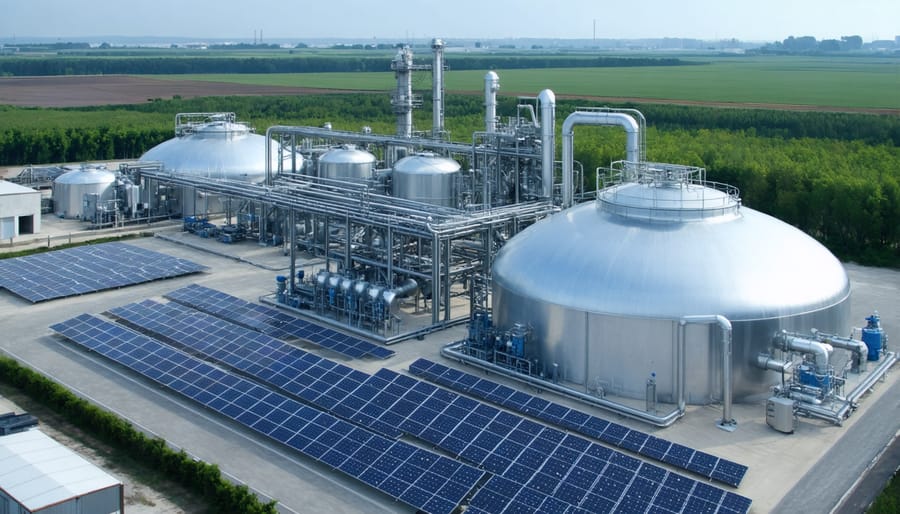
Emerging economies are making significant strides in developing hydrogen infrastructure, with several key projects taking shape across Asia, Latin America, and Africa. Countries like India and Brazil are leading the way by establishing dedicated hydrogen production facilities and distribution networks. India has already launched its first hydrogen-powered bus services in major cities, while Brazil is focusing on integrating hydrogen into its existing natural gas infrastructure.
China stands out with its ambitious plans to build over 1,000 hydrogen refueling stations by 2025, supported by substantial government investments in production facilities and transportation networks. Meanwhile, South Africa is leveraging its abundant solar and wind resources to develop green hydrogen production capabilities, with several pilot projects already operational.
Despite these advances, challenges remain in scaling up infrastructure. Many emerging economies are addressing these through public-private partnerships and international collaborations. For example, Morocco’s partnership with European nations for green hydrogen production demonstrates how cross-border cooperation can accelerate infrastructure development. These initiatives are creating valuable templates for other developing nations to follow, while also establishing crucial supply chains for the global hydrogen market.
Economic Impact and Opportunities
Cost Analysis and Market Viability
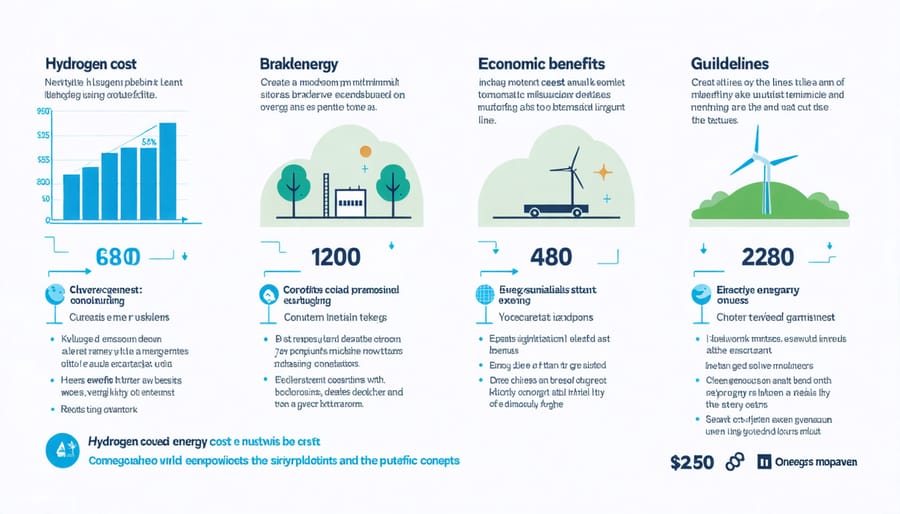
The current cost of hydrogen production varies significantly based on the production method, with green hydrogen averaging $3-6 per kilogram compared to $1-2 for grey hydrogen. However, experts project these costs to decrease by up to 50% by 2030 as technology advances and economies of scale improve. This shift is particularly relevant for smart city energy solutions, where hydrogen can integrate with existing infrastructure.
Market analysis indicates strong growth potential, with global hydrogen demand expected to increase by 500% by 2050. Industries like transportation, manufacturing, and power generation are driving this growth. Investment in hydrogen infrastructure is accelerating, with over $300 billion in announced projects worldwide. While initial costs remain a barrier, government incentives and carbon pricing mechanisms are making hydrogen increasingly competitive with traditional fossil fuels, particularly in regions with abundant renewable energy resources.
Job Creation and Skills Development
The hydrogen energy sector is emerging as a significant job creator, offering diverse employment opportunities across the value chain. From research and development to manufacturing, installation, and maintenance, the industry is generating positions for both skilled technicians and professionals. Current projections indicate that the hydrogen market could create up to 5.4 million jobs globally by 2050, with substantial growth potential in engineering, construction, and operations roles.
Workforce development programs are adapting to meet this growing demand, with technical schools and community colleges introducing specialized training courses in hydrogen technologies. These programs focus on essential skills such as electrolyzer operation, fuel cell maintenance, and safety protocols. Companies are also partnering with educational institutions to develop apprenticeships and on-the-job training opportunities, ensuring a skilled workforce ready to support the expanding hydrogen infrastructure.
The transition to hydrogen energy is creating new career pathways while requiring upskilling of existing workers in traditional energy sectors, contributing to a more sustainable and technologically advanced workforce.
Technical Challenges and Solutions
Production and Storage Solutions
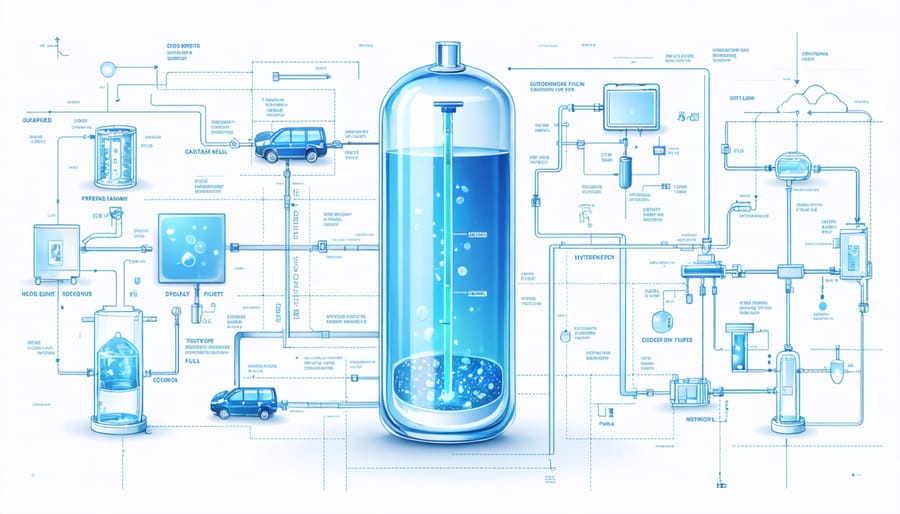
The hydrogen energy market continues to evolve with innovative production and storage solutions that make this clean energy source more accessible and practical. Green hydrogen production through electrolysis, powered by renewable energy sources, has become increasingly efficient and cost-effective. This aligns with the growing trend of industrial renewable energy adoption across various sectors.
Advanced storage technologies now include compressed hydrogen tanks, liquid hydrogen systems, and metal hydride storage solutions. These developments address previous challenges of hydrogen storage density and safety concerns. Particularly promising are the new composite materials used in storage tanks, which offer improved durability and reduced weight while maintaining high safety standards.
Recent breakthroughs in production methods, such as photoelectrochemical water splitting and biological hydrogen production, show promise for reducing production costs. Additionally, modular hydrogen production units are making on-site generation more feasible for businesses and industrial facilities. These innovations, combined with improving storage solutions, are making hydrogen energy increasingly viable for commercial and industrial applications while supporting the transition to cleaner energy sources.
Distribution Network Development
The development of hydrogen distribution infrastructure represents a crucial stepping stone in the widespread adoption of hydrogen energy. Currently, the network consists primarily of dedicated pipelines serving industrial clusters and specialized transportation systems for compressed or liquefied hydrogen. Major energy companies are investing in expanding this infrastructure, with several pilot projects demonstrating the feasibility of converting existing natural gas pipelines for hydrogen transport.
However, significant challenges remain in establishing a comprehensive distribution network. The costs associated with building new hydrogen pipelines and modifying existing infrastructure are substantial. Additionally, technical considerations such as hydrogen embrittlement and specialized storage requirements necessitate careful planning and implementation.
Despite these challenges, progress continues through innovative solutions like hydrogen hubs and regional networks. These developments are supported by public-private partnerships and government initiatives aimed at creating efficient distribution channels. The integration of hydrogen refueling stations along major transportation corridors is also gaining momentum, particularly in regions with strong renewable energy resources. This strategic approach helps create sustainable hydrogen supply chains while reducing overall distribution costs.
Policy Framework and Government Support
Current Policies and Incentives
Governments worldwide are implementing robust policies to accelerate hydrogen energy adoption. The U.S. Department of Energy’s Hydrogen Shot initiative aims to reduce clean hydrogen costs to $1 per kilogram within a decade. The European Union’s hydrogen strategy targets 40GW of renewable hydrogen electrolyzers by 2030, supported by significant funding mechanisms and tax incentives.
In Asia, Japan leads with its Basic Hydrogen Strategy, offering subsidies for fuel cell vehicles and infrastructure development. China’s New Energy Vehicle program includes hydrogen vehicles in its scope, while South Korea’s Hydrogen Economy Roadmap provides comprehensive support for the entire hydrogen value chain.
Key incentives include production tax credits, research grants, and infrastructure development subsidies. Many countries have also introduced carbon pricing mechanisms and renewable energy mandates that indirectly benefit hydrogen projects. These policies are creating a favorable environment for hydrogen market growth while addressing climate change objectives.
Future Policy Directions
The hydrogen energy market is poised for significant policy evolution in the coming years. Governments worldwide are expected to introduce more comprehensive incentive programs and tax benefits to accelerate hydrogen infrastructure development. These policies will likely focus on promoting green hydrogen production through renewable energy sources, particularly solar and wind power.
Industry experts anticipate stricter regulations on carbon emissions, which will naturally favor hydrogen as a clean energy alternative. New safety standards and certification processes for hydrogen production, storage, and transportation are also expected to be implemented, providing clarity for businesses and investors.
Local and state governments may introduce zoning reforms and streamlined permitting processes to facilitate hydrogen infrastructure projects. Additionally, international cooperation frameworks are likely to emerge, supporting cross-border hydrogen trade and technology sharing. These policy developments will play a crucial role in reducing production costs and making hydrogen energy more accessible to both industrial and residential consumers.
The hydrogen energy market in emerging economies shows tremendous promise for sustainable growth and development. As countries increasingly commit to decarbonization goals, hydrogen’s role as a clean energy carrier continues to expand. Market projections indicate substantial growth potential, with emerging markets expected to play a pivotal role in driving global hydrogen adoption.
Investment in hydrogen infrastructure is accelerating across developing nations, supported by decreasing production costs and improving technology. Countries like India, Brazil, and South Africa are positioning themselves as future hydrogen hubs, developing comprehensive strategies to integrate hydrogen into their energy mix. This transformation is creating new opportunities for local businesses and international partnerships.
The future outlook remains optimistic, with analysts predicting a significant increase in hydrogen demand across industrial, transportation, and power generation sectors. Government initiatives, private sector participation, and international cooperation are expected to drive market expansion. As technology advances and costs continue to decline, hydrogen energy is poised to become an increasingly viable solution for emerging markets’ energy needs, contributing significantly to global sustainability goals while fostering economic growth.
