
How Solar Partnerships Are Transforming Waste into Illinois Energy
Sustainable energy partnerships transform how Illinois communities access renewable power by embedding solar solutions within circular economy frameworks that minimize waste, maximize resource efficiency, and create lasting environmental value. Unlike traditional transactional installations, these collaborations integrate lifecycle planning from manufacturing through decommissioning, ensuring panels, batteries, and components return to productive use rather than landfills.
Choose partners who demonstrate circular economy commitment through verified recycling programs, component refurbishment capabilities, and transparent material sourcing practices. Locally owned providers understand Illinois-specific regulations, seasonal performance factors, and regional grid dynamics that influence system design and long-term returns.
Evaluate partnership models based on comprehensive service offerings beyond installation. Full-service providers deliver ongoing monitoring, maintenance, performance optimization, and end-of-life planning that protects your investment while reducing environmental impact. This approach particularly benefits commercial and industrial facilities where energy demands fluctuate and system complexity requires expert oversight.
Examine how potential partners measure sustainability impact. Request documentation on carbon offset calculations, waste diversion rates, and supply chain transparency. Partners committed to circular economy principles provide detailed lifecycle assessments showing environmental benefits across manufacturing, operation, and decommissioning phases.
Prioritize relationships with providers who offer adaptable financing structures aligned with your sustainability timeline. Whether residential, commercial, or industrial applications, effective partnerships accommodate growth, technology upgrades, and evolving environmental goals while maintaining economic viability. The right collaboration delivers immediate energy savings alongside systemic environmental improvements that compound over decades.
What Makes a Sustainable Energy Partnership Different
The Circular Economy Connection
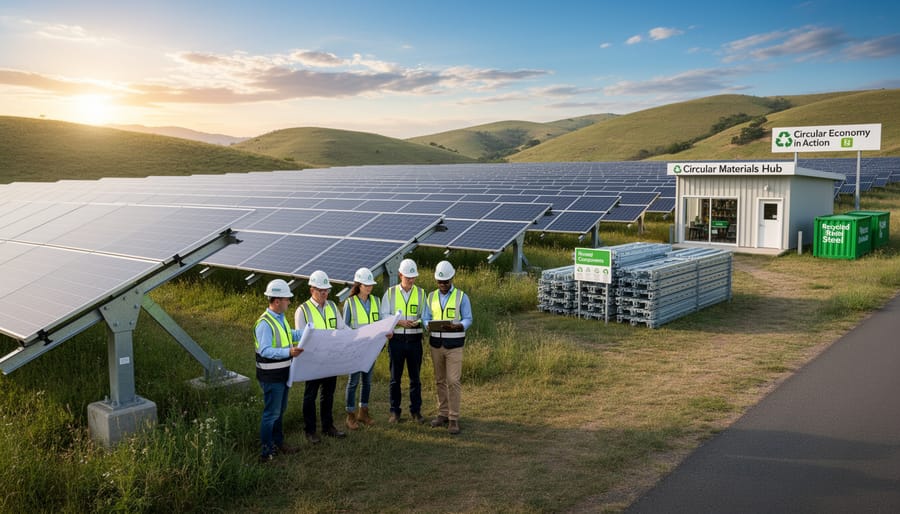
The circular economy represents a fundamental shift from the traditional “take-make-dispose” model to a regenerative system where materials and resources maintain their value for as long as possible. In the renewable energy sector, this approach transforms how we think about solar installations and energy production across Illinois.
Unlike conventional energy systems that extract finite resources and create waste, circular economy principles in solar energy focus on designing systems where materials flow in continuous loops. This means solar panels are manufactured using recycled materials when possible, generate clean energy for decades, and eventually have their components recovered and reused at end-of-life rather than entering landfills.
For Illinois homeowners and businesses, this connection matters in practical ways. When you partner with a locally owned solar provider, you’re supporting a system that considers the entire lifecycle of your installation. Quality panels designed for longevity reduce replacement frequency, while proper system design maximizes energy production efficiency, ensuring nothing goes to waste.
The manufacturing side tells an important story too. Modern solar panel production increasingly incorporates recycled silicon, aluminum, and glass, reducing the need for virgin materials. Illinois businesses investing in solar are essentially closing resource loops, as the energy their panels generate can power local manufacturing facilities that produce more renewable energy equipment.
Energy storage adds another layer to this circular approach. Battery systems store excess solar generation instead of letting it dissipate, ensuring every electron serves a purpose. When these batteries eventually reach end-of-life, responsible recycling programs recover valuable materials like lithium and cobalt for reuse.
This circular thinking extends beyond hardware. Community solar programs in Illinois exemplify resource sharing, where multiple participants benefit from a single installation, maximizing land use efficiency and reducing per-person environmental impact while making renewable energy accessible to more residents.
Beyond Installation: The Full Partnership Lifecycle
A genuine sustainable energy partnership extends far beyond the day your solar panels start generating power. When you choose a comprehensive partner, you’re investing in a relationship that spans the entire lifecycle of your renewable energy system, creating lasting environmental and economic benefits.
The partnership begins with customized design services. Your provider analyzes your property’s specific conditions, energy consumption patterns, and long-term goals to create a solar solution tailored to your needs. This upfront planning ensures maximum efficiency and prevents unnecessary material waste from oversized or poorly configured systems.
Professional installation follows, with experienced technicians ensuring your system meets all Illinois building codes and performance standards. Quality installation extends equipment lifespan and reduces the need for premature replacements, keeping materials productive longer.
Ongoing maintenance forms the backbone of a circular economy approach. Regular inspections, cleaning, and performance monitoring catch small issues before they require major repairs or replacements. Similar to public-private solar partnerships that maintain community solar arrays, residential and commercial maintenance programs keep systems operating at peak efficiency for decades.
When components eventually reach end-of-life, responsible partners coordinate equipment recycling. Solar panels, inverters, and batteries contain valuable materials like silicon, copper, and lithium that can be recovered and reused in new products rather than ending up in landfills.
Finally, comprehensive partnerships include system upgrades as technology advances. Rather than replacing entire installations, strategic component upgrades extend system life while improving performance. Locally owned providers with deep Illinois expertise understand regional climate factors and can recommend upgrades that make sense for your specific situation, ensuring your investment remains productive and sustainable for years to come.
How Renewable Energy Partnerships Support Circular Economy Goals
Material Recovery and Equipment Recycling
A truly sustainable energy partnership doesn’t end when your solar system is installed. Forward-thinking providers incorporate circular economy principles that keep valuable materials in productive use for decades, reducing environmental impact while maximizing your investment.
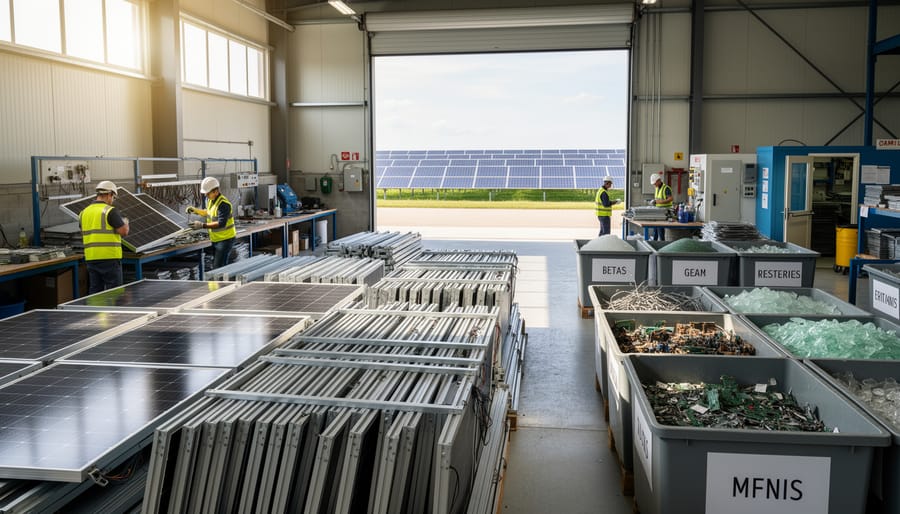
Solar panel recycling has become increasingly sophisticated in recent years. When panels reach the end of their 25-30 year lifespan, quality partners don’t simply dispose of them. Instead, specialized recycling processes recover up to 95% of materials including silicon, glass, aluminum frames, and copper wiring. These recovered materials re-enter manufacturing supply chains, reducing the need for virgin resource extraction. For Illinois property owners, this means your solar investment contributes to sustainability even after its primary operational life.
Inverter refurbishment extends the utility of these critical components. Rather than replacing entire inverter systems, experienced technicians can often rebuild and upgrade existing units with new circuit boards and updated software. This approach cuts waste substantially while maintaining system efficiency. Locally owned solar providers with deep technical expertise are particularly well-positioned to evaluate refurbishment opportunities specific to your equipment.
Mounting hardware presents another recycling opportunity often overlooked in conventional installations. Aluminum racking systems, stainless steel fasteners, and structural supports can be recovered, inspected, and reused across multiple installations when properly maintained. This practice significantly reduces the embodied carbon footprint of new solar projects.
By choosing a partner committed to material recovery throughout the equipment lifecycle, you’re supporting a genuine circular economy that benefits Illinois communities and the environment.
Energy-Positive Construction Practices
When you partner with a sustainable energy provider that offers integrated construction services, you’re not just getting solar panels—you’re benefiting from a coordinated approach that reduces environmental impact from the start. Combining essential services like roof installation with solar panel deployment creates significant efficiency gains that traditional, fragmented approaches simply can’t match.
This integrated model minimizes waste in several key ways. First, it eliminates redundant site mobilizations. Instead of separate crews arriving at different times for roofing and solar work, a single coordinated team completes both projects in one streamlined effort. This reduces vehicle emissions, fuel consumption, and the carbon footprint associated with multiple site visits. For Illinois property owners, this means less disruption to your daily operations or home life while achieving better environmental outcomes.
Material waste decreases dramatically through coordinated planning. When roofing and solar installation happen simultaneously, contractors can precisely calculate material needs, avoiding the excess ordering that occurs when projects operate in silos. Packaging materials, protective coverings, and scaffolding get used once rather than duplicated across separate projects.
The planning phase itself becomes more efficient. Structural assessments, permitting processes, and utility coordination happen in unified timelines rather than stretched across months. This reduces administrative overhead and accelerates your transition to clean energy. For businesses, shorter project timelines mean faster returns on investment and quicker achievement of sustainability benchmarks.
By choosing locally owned providers with expertise in solar energy who offer comprehensive construction services, you’re supporting a truly circular approach where every phase of your project reinforces your environmental commitment.
Local Supply Chains and Community Impact
Choosing to work with locally owned Illinois solar providers creates measurable environmental and economic benefits that extend far beyond your individual installation. When you partner with regional firms for your sustainable energy needs, you actively reduce the carbon footprint associated with transporting equipment, materials, and personnel across long distances. Local teams mean shorter travel for site assessments, installations, and maintenance visits, directly cutting transportation emissions from your project.
These partnerships also strengthen Illinois communities through job creation and economic development. Local solar companies employ installers, electricians, project managers, and customer service professionals from nearby neighborhoods, keeping expertise and wages within the region. Unlike national chains that funnel profits to distant headquarters, locally owned businesses circulate revenue through Illinois suppliers, contractors, and service providers, creating a multiplier effect that benefits the broader economy.
Community reinvestment represents another significant advantage. Local energy alliances typically sponsor youth programs, support technical education initiatives, and participate in regional sustainability efforts. These firms understand Illinois-specific incentives, permitting requirements, and utility interconnection processes because they navigate them daily alongside their neighbors.
By selecting local partners, you ensure accountability and accessibility. Service teams remain readily available for system monitoring, troubleshooting, and upgrades throughout your installation’s lifespan. This proximity guarantees faster response times and personalized attention that distant providers cannot match, while simultaneously advancing Illinois toward a more resilient, community-centered energy future.
What to Look for in a Sustainable Energy Partner
Comprehensive Service Offerings
When you partner with a comprehensive solar provider, you eliminate the inefficiencies that come from managing multiple vendors. A single team handling design, installation, financing, and maintenance streamlines communication, reduces redundant site visits, and minimizes material waste from coordination errors.
Working with separate contractors for each phase means repeating assessments, explaining your needs multiple times, and risking compatibility issues between components selected by different parties. This fragmented approach often leads to excess materials, longer project timelines, and higher carbon footprints from additional transportation and administrative overhead.
Comprehensive service packages create a closed-loop system where every element works together from day one. Your provider designs the system knowing exactly how it will be installed and maintained, selecting components that optimize long-term performance rather than short-term convenience. This integrated approach extends to solar financing options, where understanding your complete energy picture allows for better payment structures aligned with actual energy production.
Maintenance becomes more effective when the same team that installed your system handles ongoing care. They know every detail of your configuration, can stock appropriate replacement parts, and identify potential issues before they become costly problems. This continuity reduces waste from unnecessary replacements and maximizes the lifespan of your solar investment, making it a truly sustainable partnership.
Long-Term Commitment and Local Presence
Choosing a sustainable energy partner isn’t just about the initial installation—it’s about establishing a relationship that extends throughout your system’s 25-30 year lifespan. Locally owned solar providers in Illinois offer significant advantages for long-term support compared to national chains that may shift priorities or exit markets.
Established local firms provide reliable warranty service with technicians who understand regional climate challenges, from heavy snow loads to summer storms. When issues arise, you’re working with a team that’s invested in maintaining their community reputation, not a distant call center routing your concern across state lines.
System optimization becomes increasingly important as technology advances and energy needs evolve. Local partners can monitor performance, recommend upgrades, and adjust configurations to maximize efficiency over decades. They understand Illinois-specific incentives and regulatory changes that might benefit your operation, ensuring you capture ongoing value from your investment.
This commitment extends to the circular economy principles that define true sustainability partnerships. Local providers are more likely to offer end-of-life recycling services, component refurbishment programs, and responsible decommissioning when systems eventually need replacement. Their proximity means lower transportation emissions for service calls and a genuine stake in creating lasting environmental benefits for the communities they serve. This localized approach transforms a simple transaction into a multi-decade partnership supporting both your energy goals and broader sustainability objectives.
Sustainability Practices and Values
When evaluating a sustainable energy partnership, understanding a company’s environmental practices beyond solar panel installation demonstrates their commitment to genuine sustainability. Start by asking how they handle end-of-life equipment disposal. Reputable partners should have clear protocols for recycling solar panels, inverters, and batteries rather than sending them to landfills. Illinois has specific regulations regarding electronic waste, so your partner should be familiar with state-compliant disposal methods.
Material sourcing matters significantly in circular economy principles. Inquire whether your potential partner prioritizes suppliers who use recycled materials or sustainable manufacturing processes. Companies committed to environmental responsibility will track their supply chain and choose components with lower carbon footprints when possible.
Construction waste management during installation reveals operational values. Ask about their site waste reduction strategies, recycling programs for packaging materials, and how they minimize environmental impact during project execution. Locally owned companies often have stronger connections to Illinois communities and demonstrate greater accountability for responsible construction practices.
Environmental certifications provide objective validation of sustainability claims. Look for partners holding certifications like B Corp status, LEED accreditation, or membership in green business associations. These credentials indicate third-party verification of environmental commitments.
Finally, ask whether the company conducts lifecycle assessments of their solar systems. This analysis evaluates environmental impact from manufacturing through disposal, ensuring your investment genuinely supports circular economy goals rather than simply shifting environmental burdens elsewhere. A transparent partner will readily discuss these practices and provide documentation supporting their sustainability values.
Real-World Applications in Illinois
Residential Projects: Complete Home Energy Solutions
Homeowners throughout Illinois are discovering that partnering with locally owned sustainable energy providers delivers far more than just solar panels. A comprehensive residential energy partnership begins with an integrated assessment of your home’s complete energy profile, identifying opportunities for efficiency improvements alongside renewable energy installation.
The most effective partnerships coordinate roof replacement with solar installation when needed, eliminating duplicate labor costs and ensuring your roof can support panels for decades. This integrated approach saves money while maximizing long-term performance. Energy efficiency upgrades, including insulation improvements and HVAC optimization, reduce your overall energy demand before solar installation, allowing you to install a smaller, more cost-effective system that still meets your needs.
Illinois homeowners benefit from expert guidance through available incentives, including federal tax credits and state programs. Your sustainable energy partner handles permitting, utility coordination, and system monitoring, simplifying the process from start to finish. For those without suitable rooftops, community solar programs provide alternative pathways to renewable energy.
Long-term system support ensures your investment continues delivering value. Locally owned providers remain accessible for maintenance, troubleshooting, and system expansion as your energy needs evolve, creating a genuine partnership focused on your home’s sustainable energy future rather than a one-time transaction.
Commercial Applications: Business Sustainability Goals
Illinois businesses increasingly partner with solar providers to achieve measurable sustainability goals while improving their bottom line. Manufacturing facilities across the state have reduced operational waste by integrating solar energy systems that power equipment during peak production hours, lowering their carbon footprint and energy costs simultaneously. Retail chains and office buildings demonstrate environmental leadership by installing visible rooftop solar arrays, which communicate their commitment to sustainability to customers and stakeholders.
Local businesses working with green energy partnerships benefit from comprehensive approaches that extend beyond simple installation. These partnerships often include energy efficiency audits, waste reduction strategies, and ongoing performance monitoring to ensure systems deliver maximum environmental and financial returns. Warehouses and distribution centers particularly benefit from solar installations that offset high daytime energy consumption, allowing them to meet corporate sustainability targets while maintaining operational efficiency.
Agricultural businesses in Illinois have found solar partnerships especially valuable for achieving sustainability goals. By powering irrigation systems and processing facilities with clean energy, farms reduce operational waste and position themselves as environmental stewards in their communities. These partnerships provide the technical expertise and financial structuring necessary to make solar accessible, helping businesses of all sizes demonstrate meaningful progress toward their environmental commitments.
Industrial Scale: Closing the Energy Loop
Illinois manufacturers are discovering that sustainable energy partnerships offer more than cost savings—they create opportunities to fundamentally redesign production processes around renewable power. Large-scale solar installations can offset substantial portions of facility energy consumption, directly reducing operational carbon footprints while stabilizing long-term energy costs against market volatility.
The circular economy connection becomes particularly powerful in industrial settings. Solar partnerships enable manufacturers to claim renewable energy sourcing throughout their supply chains, meeting customer sustainability requirements and accessing green supply chain incentives. When paired with battery storage systems, these partnerships provide consistent renewable power that supports continuous manufacturing operations.
Forward-thinking Illinois industries are integrating solar into broader circular manufacturing strategies—using renewable energy to power recycling operations, reduce waste heat through efficient electrification, and support closed-loop production systems. Locally owned solar providers with industrial expertise understand these complex requirements, designing systems that align with production schedules, accommodate facility expansion plans, and integrate with existing energy management infrastructure.
For Illinois facilities committed to environmental stewardship, these partnerships represent practical pathways toward carbon neutrality while maintaining competitive manufacturing operations that attract environmentally conscious customers and investors.
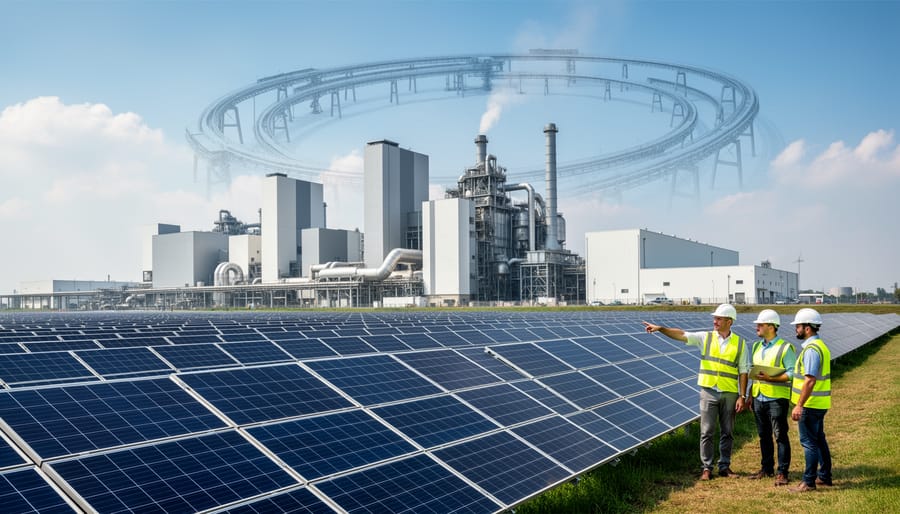
Choosing the right sustainable energy partner delivers value that extends far beyond your monthly electricity savings. When you work with a provider committed to circular economy principles, you’re participating in a system that minimizes waste, maximizes resource efficiency, and keeps materials in productive use for years to come. This approach transforms solar installations from simple energy projects into comprehensive sustainability initiatives that strengthen Illinois communities and build environmental resilience for future generations.
A true sustainable energy partnership connects you with local expertise that understands Illinois-specific climate conditions, regulatory requirements, and community needs. Locally owned providers invest in your region’s economic health, support workforce development, and maintain long-term relationships that ensure your system performs optimally throughout its lifecycle. This commitment to comprehensive service means you have a trusted partner available for maintenance, upgrades, and eventual end-of-life recycling—not just an installer who disappears after completing the project.
The benefits ripple outward in meaningful ways. Your solar investment supports local jobs, reduces strain on aging grid infrastructure, and demonstrates environmental leadership that encourages others to take action. By choosing a partner that prioritizes circular practices, you ensure that components are responsibly sourced, systems are designed for longevity and repairability, and materials return to productive use when replacement becomes necessary.
Now is the time to take action. Evaluate potential partners based on their full-service capabilities, commitment to sustainability beyond installation, and roots in Illinois communities. The right partnership transforms your renewable energy project into a lasting contribution to environmental and economic resilience.
