

How Tax Equity Financing Makes Solar Projects Affordable in Illinois
You’re paying less for your solar installation than you would have a decade ago, and tax equity financing is a major reason why. This sophisticated financial arrangement allows solar companies to convert federal tax incentives into immediate capital, dramatically lowering the upfront costs passed on to homeowners and businesses across Illinois.
Tax equity financing works like this: Large institutional investors with substantial tax liability—banks, insurance companies, and corporations—provide funding to solar developers in exchange for the tax credits these projects generate. Since most homeowners and small businesses can’t fully utilize these federal incentives themselves, this partnership unlocks their value and channels it back into making solar more affordable for everyone.
For Illinois residents and business owners, this behind-the-scenes financing mechanism translates into tangible benefits: lower installation costs, more competitive lease and loan options, and faster project development timelines. When your local solar provider can access tax equity funding, they’re better positioned to offer attractive pricing and flexible payment plans that make going solar financially viable.
Understanding how tax equity financing operates helps you recognize why working with experienced, well-capitalized solar companies matters. These providers have the relationships and financial sophistication to leverage these funding structures effectively, ensuring you receive the full benefit of federal incentives even if you can’t claim them directly on your own taxes. The result is a more accessible path to clean energy that reduces both your electricity bills and your carbon footprint.
What Is Tax Equity Financing and Why Does It Matter?

The Basic Concept Behind Tax Equity
Tax equity financing is a specialized funding mechanism that makes renewable energy projects more affordable and accessible. At its core, the concept is straightforward: investors with significant tax liability provide upfront capital to solar projects in exchange for the federal tax benefits those projects generate, particularly the Investment Tax Credit and accelerated depreciation benefits.
Here’s how it works in practice. When a solar installation company develops a project, they partner with tax equity investors who can actually use these tax credits. The investor contributes capital to fund the project’s construction and operation, then receives the tax benefits over time. This arrangement creates a win-win situation: the investor gains valuable tax credits that reduce their tax burden, while the solar developer receives the funding needed to build projects at competitive prices.
This financing model is particularly important because many solar companies and property owners don’t have enough tax liability to fully utilize these federal incentives on their own. By connecting projects with investors who can maximize these benefits, tax equity financing unlocks billions of dollars in funding for the solar industry.
For Illinois homeowners and business owners, this behind-the-scenes financing translates directly into more affordable solar installations. When solar companies can access tax equity funding, they can offer better pricing and more flexible payment options to their customers, making the switch to clean energy more financially attractive for everyone involved.
Key Tax Incentives That Drive Solar Investment
Tax equity financing works because of powerful federal incentives that significantly reduce the cost of solar installations. The Investment Tax Credit (ITC) allows project owners to deduct 30% of their solar system costs directly from their federal taxes. This substantial credit forms the foundation of most tax equity partnerships, as investors purchase the right to claim these credits in exchange for funding the project.
Depreciation benefits add another layer of value through the Modified Accelerated Cost Recovery System (MACRS). This allows solar system owners to recover their investment through accelerated depreciation over just five years, rather than the typical 20-30 year lifespan of the equipment. Combined with bonus depreciation provisions, these benefits can offset a significant portion of taxable income in the early years.
For Illinois property owners, these federal incentives work alongside Illinois grants and incentives to make solar investments more attractive. While you may not directly participate in tax equity partnerships, understanding how these incentives work helps explain why solar developers can offer competitive pricing and favorable financing terms for residential and commercial installations.
How Tax Equity Financing Reduces Your Solar Costs
Lower Upfront Costs for Solar Installation
When you’re considering solar energy for your Illinois home or business, one of the biggest questions is typically about cost. Tax equity financing plays a crucial role in making solar installations more affordable, though you might not see it directly reflected on your contract. Here’s how it works to your advantage.
Solar developers and installation companies require significant upfront capital to fund projects. Traditionally, they would need to finance these costs entirely through loans or their own resources, which translates to higher prices for customers. Tax equity financing changes this equation by bringing in investors who can fully utilize the federal Investment Tax Credit and other renewable energy incentives that many developers cannot immediately use.
When these tax equity partners invest in solar projects, they effectively reduce the capital burden on installation companies. This injection of funding means developers don’t have to pass along the full financing costs to you. The result is more competitive pricing on your solar installation without compromising quality or service.
For Illinois property owners, this financing mechanism works quietly in the background. You benefit from reducing energy costs through lower installation prices, even though you’re not directly involved in the tax equity arrangement. Locally owned solar companies with expertise in navigating these financial structures can access better funding options, allowing them to offer prices that make solar energy accessible to more homeowners and businesses across Illinois. This behind-the-scenes financing ultimately accelerates the adoption of clean energy throughout our communities.
Better Financing Terms and Options
Tax equity financing creates a ripple effect that ultimately benefits you as a homeowner or business owner in Illinois. When solar installers and developers secure tax equity funding, they gain the financial flexibility to offer more competitive and customer-friendly terms on your solar installation.
One of the most significant advantages appears in power purchase agreements (PPAs). With tax equity investors absorbing the upfront costs and claiming tax benefits, solar providers can offer PPAs with lower electricity rates from day one. This means you pay less for the clean energy your system generates compared to what would be possible without this financing structure. Some Illinois businesses have locked in rates significantly below their utility costs thanks to this model.
Lease agreements also become more attractive when tax equity is involved. Since the financing structure reduces the developer’s capital requirements, they can pass those savings along through lower monthly lease payments. This makes solar accessible to more Illinois families and businesses who might not have the capital for an outright purchase.
Even if you choose to purchase your system through a loan, you benefit indirectly. Solar companies working with tax equity partners often have stronger relationships with lenders and can negotiate better loan terms, including lower interest rates and longer repayment periods. The overall financial stability that tax equity brings to solar projects gives lenders more confidence, which translates to more favorable financing options for customers across all payment structures.

Who Benefits From Tax Equity Financing in Illinois?
Benefits for Homeowners and Businesses
Tax equity financing creates meaningful advantages for Illinois property owners by reducing the upfront costs and financial barriers associated with solar installations. When solar developers secure tax equity investors, they can pass those savings directly to customers through lower system prices and more attractive financing terms. This means homeowners and businesses can access solar energy without shouldering the full financial burden of tax credit monetization.
For property owners, this financing structure translates into flexible payment options that align with your budget and energy goals. You can benefit from competitive lease agreements, power purchase arrangements, or loan programs that wouldn’t be possible without the capital infusion tax equity provides. Many Illinois businesses going solar have discovered that these arrangements eliminate the complexity of claiming tax credits themselves while still enjoying reduced electricity costs from day one.
Additionally, tax equity financing reduces your financial risk by transferring the responsibility for system performance and maintenance to experienced solar providers. This locally owned approach ensures that sophisticated financing mechanisms work behind the scenes, allowing you to focus on the practical benefits: lower energy bills, predictable costs, and contributing to Illinois’ clean energy future without navigating complicated tax implications.
Why Local Solar Companies Use Tax Equity Partnerships
For locally owned solar companies in Illinois, tax equity partnerships provide a competitive advantage that directly benefits customers. These financing arrangements allow smaller, community-focused installers to access the same federal tax incentives that large national corporations use, leveling the playing field in the solar marketplace.
Without tax equity financing, a local solar company would need substantial taxable income to absorb the Investment Tax Credit and accelerated depreciation benefits. By partnering with tax equity investors, these companies can monetize tax credits they otherwise couldn’t use, then pass those savings directly to homeowners and businesses through lower installation costs and more attractive financing terms.
This financing structure enables local installers to offer pricing comparable to national chains while maintaining the personalized service and community expertise that sets them apart. Instead of turning away customers due to limited capital, locally owned companies can take on more projects and serve more Illinois families and businesses.
The result is a win-win situation: customers receive better value on their solar installations, local companies grow their businesses and create jobs in the community, and investors earn returns while supporting clean energy development throughout Illinois.
Economic Impact on Illinois Communities
Tax equity financing generates substantial economic value across Illinois communities by making renewable energy projects financially viable at scale. When solar installations expand through this funding mechanism, they create immediate construction jobs and long-term maintenance positions for local workers. Illinois has seen significant employment growth in the solar sector, with opportunities ranging from installation technicians to project managers, many of whom receive specialized training that builds valuable skills.
Beyond job creation, these projects deliver community economic benefits through increased local tax revenue and property values. Commercial solar installations contribute to the tax base while reducing operational costs for businesses, allowing them to reinvest savings into growth and additional hiring. For homeowners, the proliferation of solar options made possible by sophisticated financing creates competitive pricing and better access to clean energy solutions.
Environmental advantages extend throughout the state as tax equity-financed projects displace fossil fuel generation, improving air quality and reducing carbon emissions. This transition supports Illinois’ clean energy goals while protecting public health and natural resources for future generations, demonstrating how financial innovation can drive meaningful environmental progress.
Common Tax Equity Financing Structures Explained
Partnership Flip Structures
Partnership flip structures represent one of the most common tax equity financing arrangements in solar energy development. Here’s how they work: an investor provides upfront capital to a solar project in exchange for most of the tax benefits during the early years, typically receiving 99% of tax credits and deductions. After these benefits are exhausted (usually five to seven years), ownership “flips,” with the original project sponsor taking majority control.
This arrangement benefits everyone involved. The tax equity investor receives valuable tax credits they can use immediately, while project developers gain the capital needed to build solar installations without shouldering the full financial burden upfront. For homeowners and businesses in Illinois considering solar, partnership flips matter because they help keep installation costs competitive. When locally owned solar companies can access these sophisticated financing structures, they pass savings along to customers through lower pricing and more attractive financing terms.
Partnership flips are typically used for larger commercial and utility-scale projects where substantial tax benefits justify the complex legal structure. While individual homeowners don’t directly participate in these arrangements, understanding them helps explain why solar pricing has become increasingly accessible across Illinois.
Inverted Lease Structures
Inverted lease structures, also known as sale-leaseback arrangements, represent another important financing tool in the solar industry that helps reduce costs for property owners. In this model, a solar developer installs a system on your property, then sells it to a tax equity investor. The developer immediately leases the system back from that investor and operates it for your benefit through a power purchase agreement or lease.
This arrangement allows the tax equity investor to claim depreciation benefits and tax credits as the system owner, while the developer maintains operational control and customer relationships. For Illinois homeowners and businesses, this financing structure works behind the scenes to make solar more affordable. The capital provided by tax equity investors reduces the amount developers need to finance through traditional loans, which translates to lower electricity rates in your solar agreement.
Sale-leaseback structures are particularly common in commercial solar projects where sophisticated investors seek stable, tax-advantaged returns. Working with locally owned solar providers experienced in these financing mechanisms ensures you benefit from competitive pricing without needing to understand every financial detail. These arrangements demonstrate how institutional investment in renewable energy creates practical advantages for everyday customers choosing solar power.
What This Means for Your Illinois Solar Project
When you’re exploring solar options for your Illinois property, understanding tax equity financing can help you make informed decisions and potentially save money. While you won’t directly participate in tax equity arrangements, the installers and developers you work with likely use these financial structures to reduce project costs, which translates to better pricing for you.
Start by asking potential solar installers about their financing partnerships and how they structure larger projects. Reputable companies that work with tax equity partners can often offer more competitive rates because they’ve secured backing from institutional investors. Questions worth asking include: “How do you finance your projects?” and “Do you work with financial partners that help reduce installation costs?”
For commercial solar installations, tax equity financing becomes particularly relevant. If you’re a business owner considering a significant solar investment, installers who utilize these sophisticated funding mechanisms can provide better terms and potentially faster installation timelines. They have the financial backing to manage larger projects efficiently.
Look for installers with proven track records in Illinois who understand both state incentives and tax equity structures. A locally owned company with expertise in solar energy will know how to maximize available benefits, including Illinois Solar for All programs and federal tax credits, while potentially leveraging tax equity partnerships for larger installations.
Don’t hesitate to request references from similar projects and ask about the installer’s financial stability. Companies that successfully navigate tax equity financing typically demonstrate strong industry relationships and financial acumen, both indicators of a reliable partner for your solar journey. The right installer will explain how their financing approach benefits your bottom line without overwhelming you with unnecessary technical details.
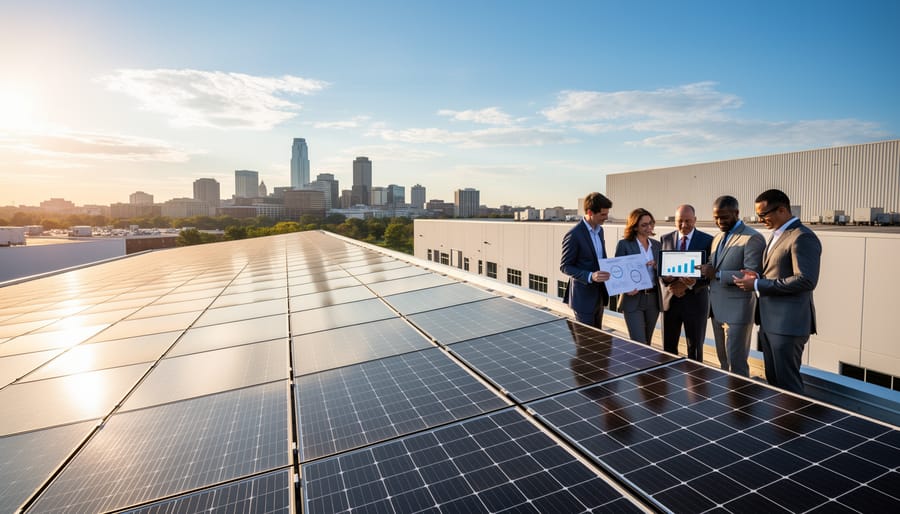
Tax equity financing may sound complex, but its impact on your solar investment is straightforward: it helps make clean energy more affordable and accessible throughout Illinois. By enabling solar developers and installers to leverage federal tax incentives effectively, this financing mechanism reduces the upfront costs passed on to homeowners and businesses. While you won’t interact directly with tax equity investors, their role in the renewable energy marketplace creates the competitive pricing and flexible financing options available to you today.
Working with experienced, locally owned solar installers who understand these sophisticated financing structures ensures you receive maximum value from your investment. These professionals navigate the complexities of tax equity partnerships, federal incentives, and Illinois-specific renewable energy programs to deliver comprehensive solutions tailored to your needs. Their expertise means you benefit from behind-the-scenes financial mechanisms without needing to become an expert yourself. As solar energy continues growing across Illinois, tax equity financing remains a critical tool that transforms federal policy support into tangible savings for residential and commercial customers alike.
