
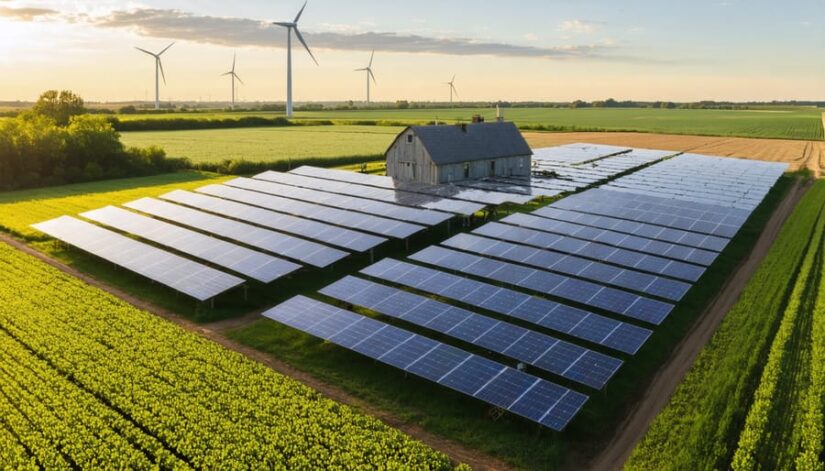
Solar-Powered Farms: How Illinois Agriculture is Cutting Costs with Clean Energy
Renewable energy transforms modern agriculture by slashing operational costs while enhancing environmental sustainability. As farms across Illinois are revolutionizing their power consumption, agricultural operations leverage solar panels, wind turbines, and biomass systems to power everything from irrigation systems to climate-controlled storage facilities. This shift not only reduces dependency on fossil fuels but also provides farmers with reliable, cost-effective energy solutions that can operate off-grid during critical growing seasons.
Smart integration of renewable technologies into existing farm infrastructure offers immediate benefits: decreased utility bills, enhanced energy independence, and access to federal and state incentives. Modern farming operations utilizing these sustainable energy sources report up to 40% reduction in operational costs while maintaining or improving productivity levels. For Illinois farmers facing rising energy costs and increasing pressure to adopt sustainable practices, renewable energy systems represent a practical solution that aligns economic benefits with environmental stewardship.
Why Solar Power is Transforming Illinois Agriculture
Energy Cost Reduction for Farmers
Farmers implementing renewable energy systems can significantly reduce their operational costs while contributing to sustainable agriculture practices. The initial investment in solar installations typically pays for itself within 5-7 years through reduced utility bills and various incentive programs available in Illinois. Agricultural operations can see energy cost reductions of 40-75% through strategic renewable energy adoption, particularly in power-intensive areas like irrigation, dairy operations, and climate-controlled storage facilities.
For example, a typical Illinois dairy farm consuming 250,000 kWh annually can save approximately $20,000-$30,000 per year after installing a solar system. When combined with federal tax incentives, USDA REAP grants, and state-specific agricultural solar programs, farmers can offset up to 75% of the initial installation costs. Additional savings come from net metering benefits, allowing farmers to sell excess power back to the grid during peak production periods.
The long-term reliability of solar systems, with minimal maintenance requirements and 25+ year warranties, ensures consistent energy cost reduction throughout the system’s lifetime. This predictable energy expense helps farmers better manage their operational budgets and protect against future utility rate increases.
Environmental Benefits for Agricultural Land
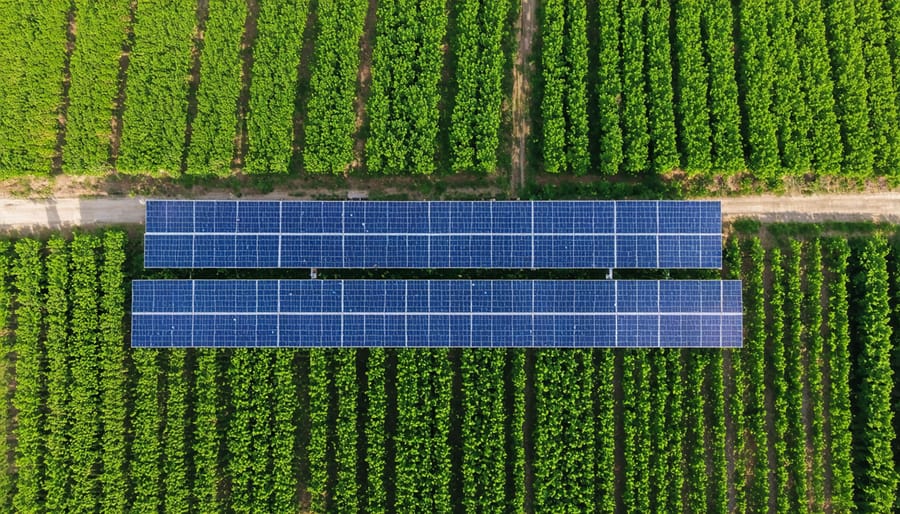
Implementing renewable energy in agricultural settings creates a powerful synergy between farming and environmental conservation. Solar installations on farmland can significantly reduce carbon emissions while allowing continued agricultural activities beneath and around the panels. This dual-use approach, known as agrivoltaics, helps preserve valuable topsoil and reduces water evaporation, creating more efficient growing conditions for certain crops.
Solar panels provide natural shade that can benefit heat-sensitive plants and protect livestock, while the panels themselves perform better due to the cooling effect of crops growing underneath. In Illinois, where weather patterns can be extreme, this mutual benefit system helps create more resilient farming operations.
Additionally, renewable energy projects on agricultural land can help prevent soil erosion and improve biodiversity. The presence of solar installations often leads to the establishment of native plant species between and around panels, creating habitats for pollinators and beneficial insects. This natural approach to land management reduces the need for chemical treatments and supports healthier soil biology, contributing to long-term land sustainability and improved crop yields.
Popular Solar Applications in Agriculture
Solar-Powered Irrigation Systems
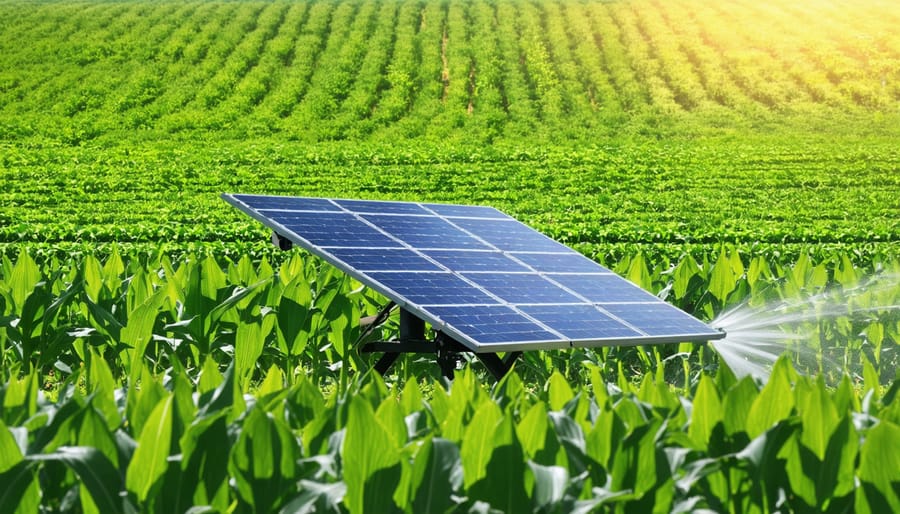
Solar-powered irrigation systems have revolutionized agricultural practices in Illinois, offering farmers a sustainable and cost-effective solution for water management. These systems use photovoltaic panels to power water pumps, delivering precise amounts of water to crops when needed while reducing reliance on grid electricity or diesel-powered pumps.
A typical solar irrigation setup includes solar panels, a controller, pumps, and distribution systems. The panels convert sunlight into electricity, which powers pumps that draw water from wells, ponds, or other water sources. Modern systems often incorporate smart controllers that can be programmed to optimize watering schedules based on weather conditions and soil moisture levels.
Illinois farmers have reported significant benefits after implementing solar irrigation, including reduced energy costs of up to 60% and decreased carbon emissions. These systems are particularly effective during peak growing seasons when sunlight is most abundant, naturally aligning with crops’ highest water demands.
The initial investment in solar irrigation typically ranges from $15,000 to $40,000, depending on farm size and system complexity. However, various federal and state incentives can offset these costs. Many Illinois farmers recover their investment within 3-5 years through reduced operational expenses and improved crop yields.
For maximum efficiency, solar irrigation systems should be designed according to specific farm needs, considering factors like crop type, field size, and local climate patterns. Regular maintenance is minimal, primarily involving panel cleaning and occasional system checks, making these systems a practical choice for sustainable agriculture.
Solar Barn and Building Solutions
Solar-powered farm buildings and storage facilities are revolutionizing agricultural operations across Illinois. These systems help farmers significantly reduce their energy costs while maintaining optimal conditions for livestock, equipment, and harvested crops. Modern solar installations can power essential barn functions including ventilation, lighting, heating, and cooling systems.
Agricultural buildings present ideal opportunities for solar panel installation due to their large, unobstructed roof spaces. Many Illinois farmers are installing panels on existing barn roofs or incorporating them into new construction projects. These installations can often generate enough electricity to power multiple buildings, including equipment storage facilities, livestock barns, and grain drying operations.
Smart energy management systems allow farmers to monitor and control power consumption in real-time, ensuring efficient distribution across different facilities. Battery storage solutions help maintain consistent power supply during cloudy days or nighttime operations, particularly crucial for climate-controlled storage areas and automated systems.
The financial benefits are substantial, with many Illinois farmers reporting 40-60% reductions in their annual energy costs after installing solar systems on their buildings. State and federal incentives, including USDA grants and tax credits, can help offset initial installation costs. Additionally, excess power generated can be sold back to the grid, creating an additional revenue stream for the farm.
When properly maintained, solar installations on farm buildings can operate efficiently for 25-30 years, making them a reliable long-term investment in sustainable agriculture.

Greenhouse Climate Control
Solar energy plays a crucial role in modern greenhouse operations, offering Illinois farmers efficient and sustainable climate control solutions. By harnessing solar power, greenhouse operators can maintain optimal growing conditions while significantly reducing their energy costs and environmental impact.
Solar-powered climate control systems help regulate temperature, humidity, and ventilation throughout the year. During winter months, solar thermal collectors can provide supplemental heating, while solar-powered ventilation fans help maintain airflow and prevent overheating during summer. These systems work in conjunction with automated controls to create ideal growing conditions for crops, extending the growing season and increasing productivity.
Energy-efficient greenhouse designs often incorporate passive solar features, such as proper orientation and thermal mass materials, to naturally regulate temperature. Combined with active solar systems, these features can reduce heating costs by up to 75% compared to conventional greenhouses.
For Illinois growers, solar-powered climate control offers particular advantages during extreme weather conditions. The systems can maintain consistent temperatures despite external fluctuations, protecting sensitive crops from frost or heat stress. Additionally, solar battery storage systems ensure continuous operation during power outages, providing crucial backup power for essential climate control functions.
Many local farmers have found that integrating solar climate control systems into their greenhouse operations not only reduces operating costs but also qualifies them for various agricultural energy incentives and grants, making the initial investment more financially attractive.
Implementation and Support
Available Incentives for Illinois Farmers
Illinois farmers have access to numerous financial incentives and support programs that make transitioning to renewable energy more affordable and practical. The USDA’s Rural Energy for America Program (REAP) offers grants covering up to 25% of renewable energy project costs, while guaranteed loan financing can cover up to 75% of total eligible project costs.
At the state level, Illinois offers several available solar energy grants through the Illinois Department of Agriculture and Department of Commerce and Economic Opportunity. The Agriculture Energy Program provides grants of up to $500,000 for energy efficiency improvements and renewable energy systems.
Farmers can also benefit from the Illinois Solar for All program, which offers additional incentives for income-qualified participants and agricultural businesses in environmental justice communities. The Smart Inverter Rebate Program provides compensation for grid services provided by solar installations, while net metering allows farmers to receive credits for excess energy produced.
Tax incentives include the federal Investment Tax Credit (ITC), which currently offers a 30% tax credit for solar installations, and accelerated depreciation benefits. Local property tax incentives may also be available, depending on the county. These programs can be combined to significantly reduce the initial investment costs of renewable energy projects.
Getting Started with Agricultural Solar
Getting started with agricultural solar requires careful planning and consideration of your farm’s specific needs. Begin by conducting an energy audit to understand your current consumption patterns and identify areas where solar power can make the most impact. This assessment should include both your immediate power needs and potential future expansion.
Next, evaluate your property for optimal solar panel placement. In Illinois, south-facing installations typically yield the best results, but factors like shade from buildings or trees, land grade, and distance from power connections all play crucial roles. Consider whether ground-mounted or roof-mounted systems better suit your operation.
Work with a qualified solar installer to design a system that matches your farm’s energy requirements. They can help determine the appropriate system size, equipment specifications, and estimate potential energy production based on local weather patterns and sunlight availability.
Before installation, secure necessary permits and check local zoning regulations. Many Illinois counties have specific requirements for agricultural solar installations. Also, investigate available incentives, including USDA REAP grants, federal tax credits, and state-specific programs that can significantly reduce your initial investment.
Finally, develop an implementation timeline that minimizes disruption to your farming operations. Many farmers choose to install solar systems during off-peak seasons. Remember to plan for regular maintenance and monitoring to ensure optimal system performance throughout the year.
Future of Solar in Illinois Agriculture
The future of solar energy in Illinois agriculture looks increasingly bright as new technologies and sustainable practices continue to emerge. Farmers across the state are embracing innovative renewable energy solutions that promise to revolutionize traditional farming methods while reducing operational costs and environmental impact.
Agrivoltaics, the practice of combining solar panels with crop production, is gaining traction among Illinois farmers. This dual-use approach allows for simultaneous energy generation and agricultural production, maximizing land efficiency. Early adopters are experimenting with shade-tolerant crops beneath elevated solar arrays, showing promising results for both energy production and crop yields.
Smart solar tracking systems are becoming more sophisticated and affordable, allowing panels to follow the sun’s path throughout the day, increasing energy generation efficiency by up to 25% compared to fixed systems. These advanced tracking systems are particularly valuable for Illinois farmers, helping them optimize energy production despite varying seasonal sunlight conditions.
Battery storage technology is also evolving rapidly, addressing one of solar energy’s biggest challenges: intermittency. New storage solutions enable farmers to store excess energy generated during peak sunlight hours for use during cloudy periods or at night, providing more reliable power for agricultural operations.
Looking ahead, the integration of artificial intelligence and IoT (Internet of Things) with solar systems will enable more precise energy management. Smart systems will automatically adjust energy distribution based on real-time needs, weather forecasts, and crop requirements, maximizing both energy efficiency and agricultural productivity.
State incentives and federal programs supporting solar adoption in agriculture are expected to expand, making solar investments more accessible to Illinois farmers of all sizes. This financial support, combined with decreasing installation costs and improving technology, suggests a future where solar power becomes a standard feature of Illinois farms, contributing to both environmental sustainability and economic viability.
The adoption of renewable energy in agriculture represents a significant opportunity for Illinois farmers to reduce operational costs while contributing to environmental sustainability. Throughout this article, we’ve explored how solar energy can revolutionize farming operations, from powering irrigation systems and barn facilities to supporting greenhouse operations and crop drying processes.
The benefits are clear: reduced energy costs, increased farm resilience, potential new revenue streams through net metering, and significant environmental advantages. With federal and state incentives currently available, there’s never been a better time for farmers to invest in solar energy solutions.
For farmers interested in transitioning to solar energy, the path forward begins with a thorough energy audit of your farm operations. This helps identify areas where solar implementation would be most beneficial. Next, consult with local solar providers who understand Illinois agriculture and can design systems that meet your specific needs. Consider starting with a smaller pilot project to familiarize yourself with the technology before scaling up.
Remember that while the initial investment may seem substantial, the long-term returns through reduced energy costs and increased operational efficiency make solar adoption a smart business decision. Take advantage of available agricultural grants, tax incentives, and renewable energy programs to help offset installation costs.
By embracing solar energy today, you’re not just investing in your farm’s future – you’re contributing to a more sustainable agricultural sector in Illinois.
