
Why Wind Turbines Aren’t as Green as You Think (And What Illinois Needs to Know)
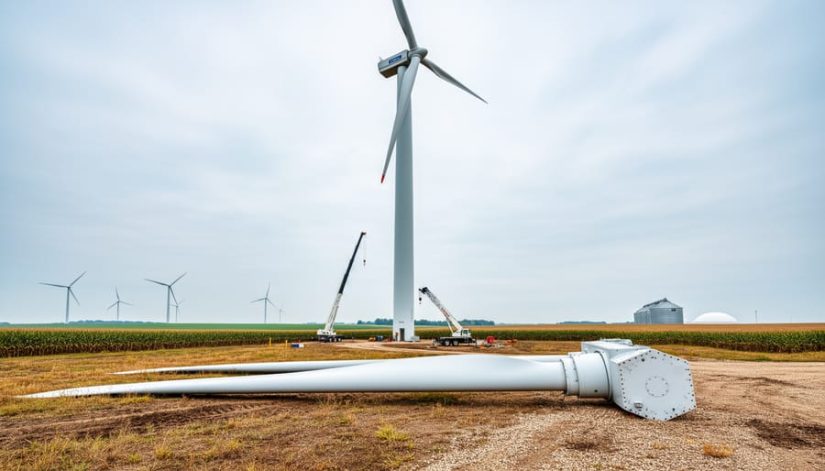
Understand that wind turbines don’t simply appear on hillsides generating clean electricity—each 300-foot tower represents decades of environmental impacts worth examining honestly. Before you consider wind energy for your Illinois property or business, examine the complete environmental footprint through life cycle assessment, which tracks impacts from raw material extraction through manufacturing, transportation, installation, operation, and eventual disposal. Recognize that a single 2-megawatt turbine requires approximately 335 tons of steel, 4.7 tons of copper, 3 tons of aluminum, and 700 tons of concrete, plus rare earth elements for generators, all demanding significant energy to extract and process.
Calculate the energy payback period—typically 5 to 8 months for modern turbines—meaning the turbine generates enough clean electricity within months to offset the energy consumed during its entire production and installation. Compare this to the 20-30 year operational lifespan, during which a single utility-scale turbine prevents roughly 5,000 tons of carbon dioxide emissions annually while generating power without fuel inputs, water consumption, or air pollution.
Consider how hybrid energy systems combine wind’s strengths with solar’s practicality for Illinois properties. Evaluate disposal challenges, including blade recycling difficulties, though newer designs increasingly incorporate recyclable materials. For most Illinois homeowners and businesses, rooftop solar presents fewer logistical barriers, lower upfront costs, and comparable environmental benefits without requiring acres of land or specialized wind resources. Life cycle assessment reveals wind turbines deliver genuine environmental advantages at utility scale, but understanding the complete picture helps you make informed renewable energy choices appropriate for your specific situation and location.
What Lifecycle Assessment Actually Measures in Wind Energy
The Four Phases of a Wind Turbine’s Life
Understanding the complete life of a wind turbine helps reveal its true environmental footprint. Like all energy systems, wind turbines impact the environment differently at each stage of their existence.
The first phase, manufacturing and construction, requires significant resources. Producing turbine components demands raw materials including steel, fiberglass, copper, and rare earth elements. Manufacturing processes consume energy, often from conventional sources, creating an initial carbon footprint. Transportation of massive turbine parts to installation sites and construction activities further add to early-phase environmental costs. Foundation construction requires substantial concrete, while creating access roads can disturb local ecosystems.
During the operational lifetime, which typically spans 20 to 25 years, wind turbines generate clean electricity without fuel consumption or direct emissions. This phase represents the environmental benefit period where turbines offset their initial carbon debt. However, operations aren’t entirely impact-free. Turbines affect local wildlife, particularly birds and bats, and produce low-frequency noise that some communities find disruptive. Weather and seasonal variations also influence energy production efficiency throughout this phase.
The maintenance and repairs phase runs concurrent with operations. Regular inspections, lubrication, and component replacements ensure optimal performance but require additional resources and energy. Unexpected failures may necessitate manufacturing replacement parts, adding incremental environmental costs. Access roads need ongoing maintenance, and service vehicles contribute modest emissions throughout the turbine’s working life.
Finally, the end-of-life phase presents both challenges and opportunities. Decommissioning involves dismantling turbines and removing foundations. Steel components are readily recyclable, recovering significant material value. However, fiberglass blades present recycling challenges, with many currently destined for landfills, though emerging technologies show promise for better solutions. Proper site restoration returns land to previous uses.
Understanding these phases helps you make informed decisions about renewable energy investments. While wind turbines carry environmental costs, comprehensive assessments show their long-term benefits substantially outweigh initial impacts, typically offsetting manufacturing emissions within six to eighteen months of operation.
The Hidden Environmental Costs of Wind Turbine Production
Raw Materials and Manufacturing Energy
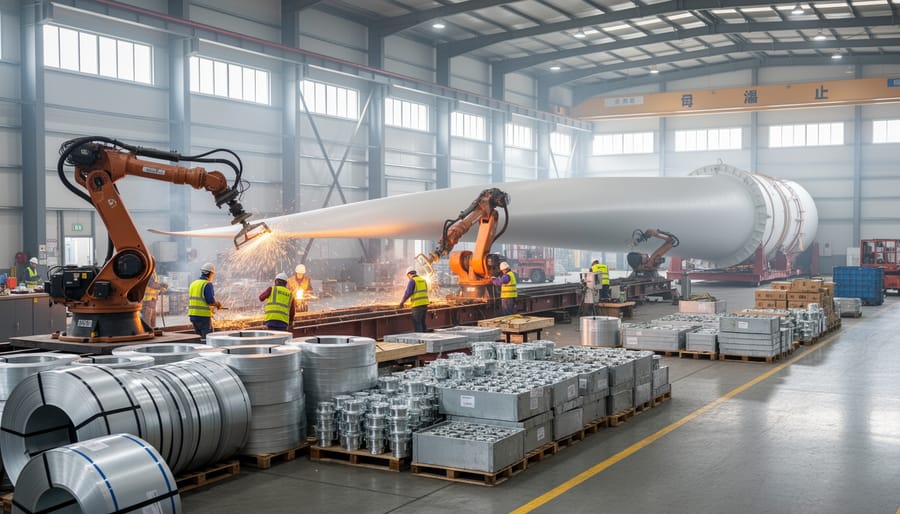
Building a wind turbine requires substantial raw materials and manufacturing energy, creating a significant upfront environmental cost that deserves honest examination. The turbine blades, typically made from fiberglass composites and carbon fiber, require energy-intensive production processes. The tower and nacelle demand large quantities of steel, while internal components like generators and gearboxes contain copper, rare earth elements, and specialized alloys.
Manufacturing these components involves mining operations, metal refining, and precision fabrication—all processes with their own carbon footprints. A typical utility-scale wind turbine requires approximately 200 tons of steel and 10 tons of copper. Extracting and processing these materials consumes considerable energy, often from conventional power sources. The rare earth elements used in permanent magnet generators, like neodymium and dysprosium, require particularly energy-intensive extraction and refinement.
Transportation of massive components from manufacturing facilities to installation sites adds another layer of environmental impact. Wind turbine blades can exceed 200 feet in length, requiring specialized transport that consumes significant fuel.
However, context matters. While this upfront environmental investment is real, studies show that modern wind turbines typically offset their manufacturing emissions within six to eight months of operation. The turbine then provides clean energy for 20-25 years, creating a net positive environmental impact. This payback period makes the initial resource investment worthwhile from a lifecycle perspective. Similar to solar energy systems, the long-term benefits substantially outweigh the manufacturing costs.
Transportation and Installation Impacts
Moving wind turbine components presents significant logistical challenges that contribute to overall environmental impact. Modern turbine blades can exceed 200 feet in length, requiring specialized heavy-haul trucks and sometimes custom-designed transportation equipment. These oversized loads often need police escorts, temporary road modifications, and careful route planning to navigate turns and bridges.
Site preparation demands substantial resources as well. Each turbine requires a massive concrete foundation, typically using 300 to 500 cubic yards of concrete and tons of steel reinforcement to anchor the structure against powerful wind forces. The cement production alone generates considerable carbon emissions during this installation phase.
Road construction or reinforcement becomes necessary to accommodate delivery vehicles and cranes at remote wind farm locations. This infrastructure development disturbs land and local ecosystems, though the footprint remains relatively small compared to other energy facilities.
For Illinois property owners considering renewable energy, these transportation and installation challenges highlight why distributed solar systems often prove more practical for individual properties. While utility-scale wind projects serve regional needs effectively, rooftop or ground-mounted solar installations avoid the complex logistics and foundation requirements associated with wind turbines, making them a more accessible choice for homeowners and businesses seeking clean energy independence.
How Wind Turbines Pay Back Their Environmental Debt
One of the most impressive aspects of wind turbines is how quickly they offset the environmental costs of their production. This recovery period, known as energy payback time, measures how long a turbine must operate to generate the same amount of energy consumed during its manufacturing, transportation, and installation.
Research consistently shows that modern wind turbines achieve energy payback within 6 to 12 months of operation. This remarkably short timeframe means that a turbine operating for a typical lifespan of 20 to 25 years will produce 20 to 40 times more clean energy than was required to create it. The exact payback period depends on factors like turbine size, location wind speeds, and manufacturing processes, but even under less favorable conditions, the return on environmental investment remains strongly positive.
Greenhouse gas payback follows a similar pattern. Manufacturing turbines requires energy-intensive processes like steel production, fiberglass molding, and concrete pouring, which generate carbon emissions. However, once operational, wind turbines produce electricity without burning fossil fuels or releasing greenhouse gases. Studies indicate that turbines offset their total lifecycle carbon emissions within the first year of operation, then continue generating emission-free electricity for two decades or more.
This means that for every ton of carbon dioxide equivalent emitted during a turbine’s creation, dozens of tons of emissions are prevented over its operational lifetime compared to conventional power generation. The net environmental benefit becomes even more substantial when you consider that many components, particularly the steel tower and copper wiring, can be recycled at end-of-life and reused in new turbines or other applications.
For Illinois residents and businesses evaluating renewable energy options, understanding these payback metrics demonstrates the genuine environmental value of wind power at utility scale. While large wind farms excel at this energy generation model, property owners seeking on-site renewable solutions often find solar panels offer similar environmental benefits with greater practical feasibility for individual installations.
Why Hybrid Energy Systems Change the Calculation
Solar-Wind Complementarity in Illinois
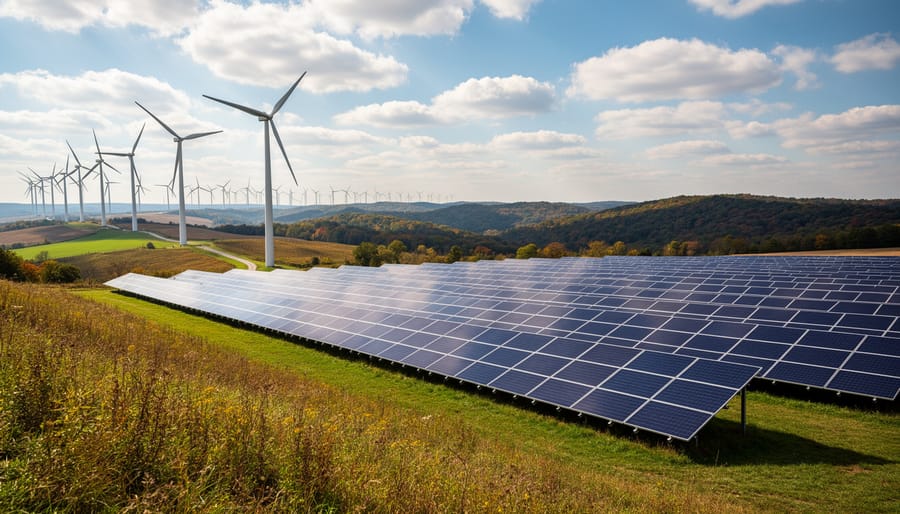
Illinois experiences distinct seasonal weather patterns that make wind and solar energy naturally complementary throughout the year. While wind turbines reach peak performance during winter months when cold air masses and strong frontal systems generate consistent breezes, solar panels produce maximum output during summer’s longer days and clearer skies. This seasonal balance creates an opportunity for reduced environmental impact when compared to relying on a single renewable source.
Understanding this complementarity becomes especially relevant when evaluating the life cycle assessment of wind turbines. During Illinois winters, when heating demands spike and solar production drops, wind energy generation typically increases by 30-40 percent compared to summer months. Conversely, summer cooling loads align perfectly with peak solar output, while wind generation naturally decreases. This inverse relationship means a hybrid renewable energy system can maintain more consistent power generation year-round, requiring less backup infrastructure and fewer battery storage resources.
The environmental benefits of this complementarity extend beyond individual turbine assessments. When renewable systems work together, the overall material intensity per kilowatt-hour decreases since both technologies share grid infrastructure, transmission lines, and optimized land use. For Illinois property owners evaluating renewable options, solar installations offer more practical scalability for residential and commercial applications while contributing to this balanced energy portfolio. Large-scale wind projects complement distributed solar generation across the state, creating a resilient renewable ecosystem that minimizes environmental costs throughout each technology’s life cycle. This seasonal synchronization demonstrates why comprehensive life cycle assessments must consider regional weather patterns and the broader renewable energy mix rather than evaluating technologies in isolation.
The End-of-Life Challenge Nobody Talks About
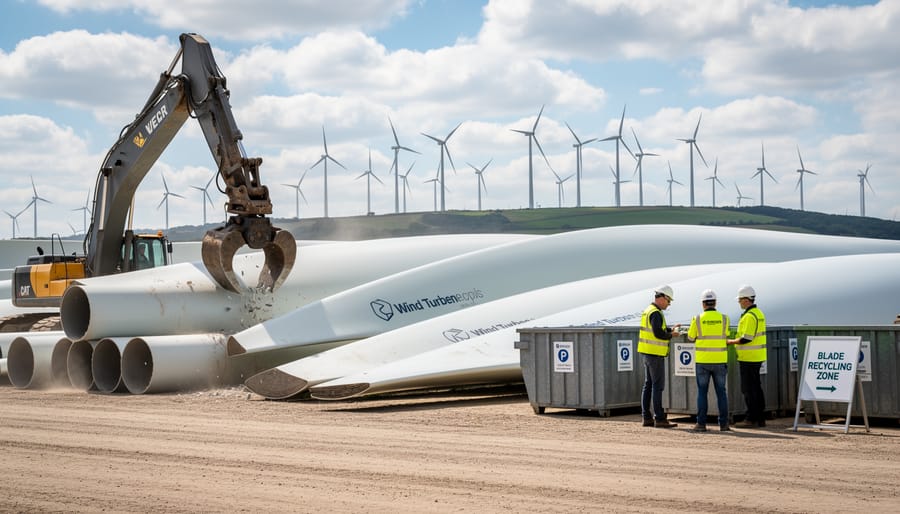
One of wind energy’s biggest environmental challenges happens at the end of a turbine’s operational life, particularly with the turbine blades. These massive structures, some stretching over 100 feet long, are made from composite materials like fiberglass and carbon fiber that were designed for strength and durability. Unfortunately, those same qualities make them incredibly difficult to recycle.
Currently, most decommissioned wind turbine blades end up in landfills. The thermoset resin used to bind the fibers creates a material that cannot simply be melted down and reformed like metals or many plastics. This presents a growing concern as the first generation of large-scale wind turbines reaches the end of their 20-to-25-year lifespan. Industry experts estimate that approximately 43 million tons of blade material could require disposal by 2050 globally.
However, emerging solutions are showing promise. Researchers and manufacturers are developing mechanical recycling methods that grind blades into particles for use in cement production, replacing some raw materials and fuel in the process. Chemical recycling techniques that break down the composite materials into reusable components are also advancing, though not yet economically viable at large scale. Some manufacturers are designing new blades with recyclability in mind, using thermoplastic resins that can be reheated and reshaped.
Life cycle assessments do factor in decommissioning impacts, including transportation, dismantling, and disposal or recycling of materials. Even with current blade disposal challenges, the overall environmental benefits of wind energy during its operational phase typically outweigh end-of-life impacts. Steel towers and concrete foundations can be recycled relatively easily, and the recyclable copper and rare earth elements in generators retain significant value.
This evolving situation highlights an important consideration for anyone evaluating renewable energy options. While wind energy faces this specific recycling challenge, solar panels have established recycling infrastructure and processes for recovering valuable materials like silicon, silver, and aluminum, making them a more straightforward choice for property owners planning long-term sustainability investments.
What This Means for Illinois Property and Business Owners
When Solar Makes More Sense Than Wind for Your Property
While wind turbines have their place in large-scale renewable energy production, they’re rarely the right choice for individual properties in Illinois. For homeowners and most commercial businesses, solar installations offer a more practical and cost-effective path to clean energy.
The reasons are straightforward. Residential wind turbines require significant space, specific zoning permissions, and consistent high-speed winds that aren’t common across most of Illinois. They also involve moving parts that need regular maintenance and can create noise concerns for neighbors. In contrast, solar panels work quietly on your roof or property without disturbing anyone, require minimal maintenance, and perform reliably in Illinois weather conditions.
From a life cycle perspective, solar systems designed for residential and commercial properties have simpler manufacturing processes and shorter supply chains compared to wind turbines. This translates to lower embodied energy and faster environmental payback periods. Solar panels typically reach energy payback within two to three years, while the return on investment becomes clear much sooner for property owners.
As a locally owned Illinois company specializing in solar energy, we understand the unique conditions of our state. We’ve helped countless property owners navigate the transition to clean energy with solutions tailored to their specific needs. Our expertise ensures you get a system that maximizes your investment while genuinely reducing your environmental footprint.
Life cycle assessments reveal an important truth about wind energy: while turbines require significant upfront environmental investment in materials and manufacturing, they generate substantial net positive benefits throughout their operational lifetime. The energy payback period typically ranges from six to twelve months, meaning turbines spend the remaining 20-plus years of their lifespan producing clean energy with minimal ongoing environmental impact. This balanced perspective helps Illinois property owners understand that renewable energy solutions require honest evaluation of both costs and benefits.
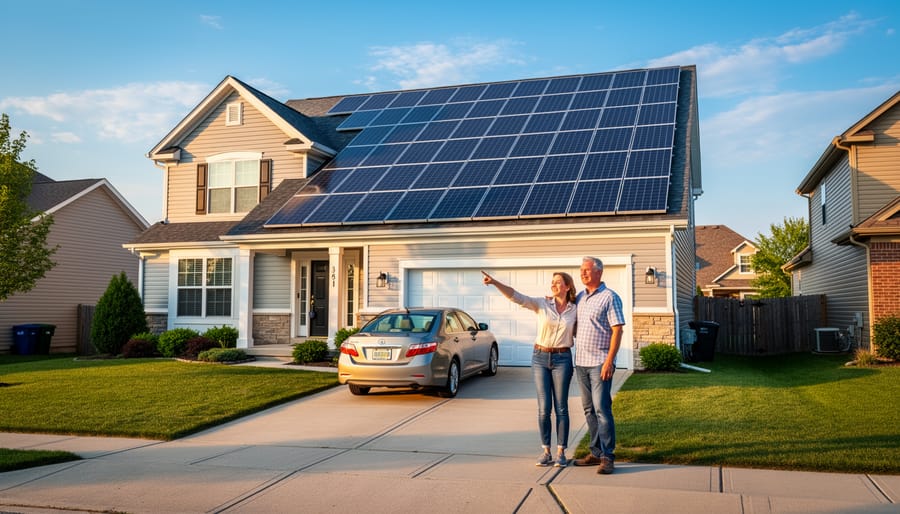
For most homeowners and businesses in Illinois, solar energy presents the most practical renewable option. Individual properties typically lack the space and wind resources necessary for turbine installation, while solar systems scale effectively to various property sizes and offer reliable performance in our region’s conditions. Understanding life cycle assessments empowers you to make informed decisions about renewable energy investments that align with your property’s specific characteristics and environmental goals.
Whether you’re exploring solar installation or simply want to understand your renewable energy options, professional guidance makes all the difference. Our locally owned team brings expertise in solar energy to help Illinois property owners navigate these important decisions with confidence and clarity.
