
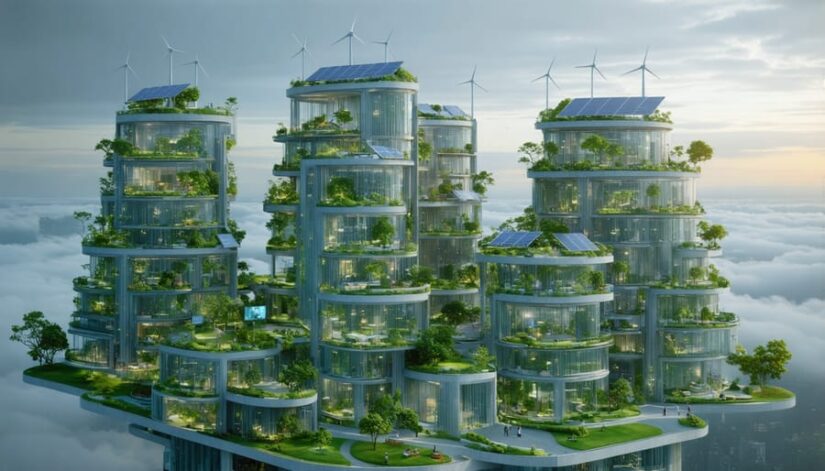
These Smart Buildings Are Cutting Energy Costs by 40% (Real Examples)
Smart buildings are revolutionizing how we interact with our built environment, delivering unprecedented levels of comfort, efficiency, and sustainability. From the Edge building in Amsterdam, achieving the highest BREEAM sustainability score ever recorded, to Chicago’s own 151 North Franklin Street featuring AI-powered energy optimization, these intelligent structures are setting new standards for modern architecture.
Today’s smartest buildings seamlessly integrate automated systems, real-time monitoring, and predictive maintenance to reduce energy consumption by up to 40% while enhancing occupant experience. In Illinois, forward-thinking property owners are implementing these technologies to combat rising energy costs and meet ambitious sustainability goals.
Through advanced sensors, machine learning algorithms, and interconnected building management systems, smart buildings adapt in real-time to occupancy patterns, weather conditions, and energy demand. This intelligent responsiveness not only optimizes resource usage but also creates healthier, more productive spaces for occupants.
As we explore cutting-edge examples from around the globe and right here in Illinois, you’ll discover how smart building technology is no longer a futuristic concept but a present-day solution delivering measurable returns on investment while supporting environmental stewardship.

The Edge (Amsterdam): World’s Most Sustainable Building
Smart Lighting and Climate Control
Modern smart buildings leverage advanced IoT systems to optimize lighting and climate control, resulting in significant energy savings and enhanced occupant comfort. These integrated systems use a network of sensors to detect occupancy, natural light levels, and temperature variations throughout the building.
Motion sensors automatically adjust lighting based on room occupancy, dimming or turning off lights in vacant areas. Photosensors measure natural daylight and adjust artificial lighting accordingly, maintaining optimal illumination while minimizing energy usage. Smart LED fixtures can even adjust their color temperature throughout the day to support occupants’ natural circadian rhythms and boost productivity.
The climate control system works similarly, using temperature and humidity sensors to create targeted comfort zones. Rather than heating or cooling entire floors uniformly, the system can adjust conditions in specific areas based on occupancy and individual preferences. During off-hours, the system automatically adjusts to eco-mode, reducing energy consumption while maintaining basic climate control.
These systems are managed through a central building management platform that provides real-time monitoring and automated controls. Facility managers can access detailed analytics about energy usage patterns and system performance, enabling data-driven decisions about efficiency improvements. Many buildings report 30-50% reduction in lighting costs and 20-30% savings in HVAC energy consumption after implementing these smart technologies.
Solar and Rainwater Management
Modern smart buildings excel at harnessing natural resources through integrated solar power systems and innovative water management solutions. The Edge building in Amsterdam, for example, utilizes rooftop solar panels combined with rainwater harvesting systems that reduce water consumption by up to 70%. These solar arrays not only power the building’s operations but also feed excess energy back into the local grid.
In Illinois, similar systems are being implemented with growing success. The Bullitt Center in Seattle serves as an inspiration, featuring a 242-kilowatt photovoltaic array that produces 60% more energy than the building consumes annually. Its rainwater collection system captures and filters precipitation for all non-potable water needs, demonstrating how buildings can achieve water independence.
Smart buildings typically incorporate advanced monitoring systems that track both energy production and water usage in real-time. These systems automatically adjust collection and distribution based on weather forecasts and usage patterns. For instance, the Bank of America Tower in New York uses a gray water system that captures and reuses rainwater for cooling towers and toilet flushing, saving millions of gallons annually.
For Illinois property owners, these solutions offer particular value given the state’s climate patterns and available solar incentives. When combined with smart building automation, solar and rainwater management systems can significantly reduce operational costs while supporting environmental sustainability goals.
Tower at PNC Plaza (Pittsburgh)
Double-Skin Facade Technology
Double-skin facades represent one of the most innovative ventilation systems in smart buildings today. This technology consists of two layers of glass separated by an air corridor, creating a natural ventilation system that significantly reduces heating and cooling costs. The outer glass layer acts as a shield against extreme weather conditions, while the air space between the layers serves as a thermal buffer.
During summer months, the facade automatically adjusts to release hot air through top vents, preventing heat buildup. In winter, the system traps solar heat within the corridor, creating a warm blanket around the building. This intelligent design reduces HVAC energy consumption by up to 30% compared to traditional single-skin buildings.
The system also improves indoor air quality by filtering fresh air through the corridor before it enters the building. Sensors monitor temperature, humidity, and air quality, automatically adjusting ventilation rates to maintain optimal conditions. For Illinois buildings dealing with extreme temperature swings, this technology offers a smart solution that combines energy efficiency with improved occupant comfort.
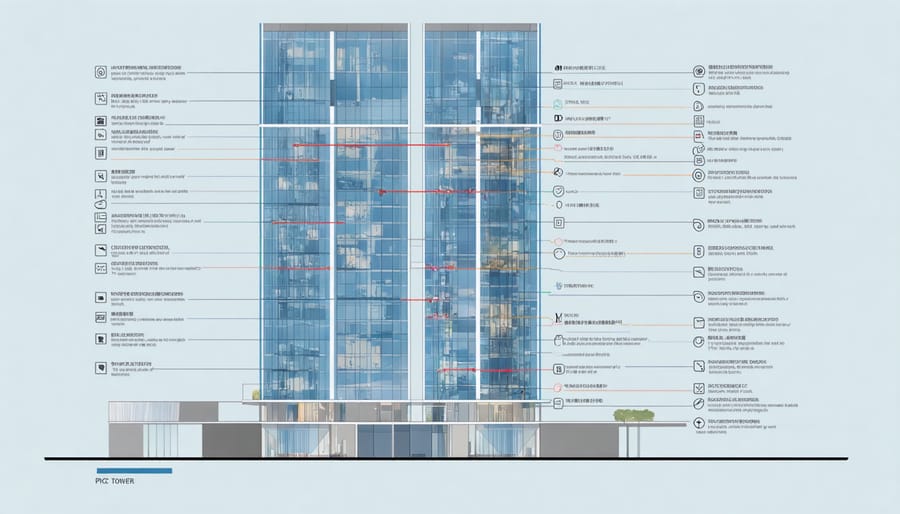
Smart Energy Management
Modern smart energy management systems form the backbone of efficient building operations, automatically adjusting energy usage based on real-time conditions and occupancy patterns. These systems utilize a network of sensors and smart meters to monitor and control lighting, HVAC, and electrical systems throughout the building.
Advanced algorithms analyze data from multiple sources, including weather forecasts, occupancy sensors, and historical usage patterns, to optimize energy consumption. For example, the system might automatically adjust temperature settings in different zones based on occupancy, or dim lights in areas receiving sufficient natural daylight.
In Illinois buildings, these systems have proven particularly valuable during extreme weather conditions, helping maintain comfort while minimizing energy waste. Many facilities report energy savings of 20-30% after implementing smart energy controls. The technology also enables demand response participation, allowing buildings to reduce power consumption during peak grid periods in exchange for utility incentives.
Integration with renewable energy sources, such as solar panels, further enhances efficiency by optimizing when to use stored versus grid power based on real-time electricity rates and consumption patterns.
Bullitt Center (Seattle)
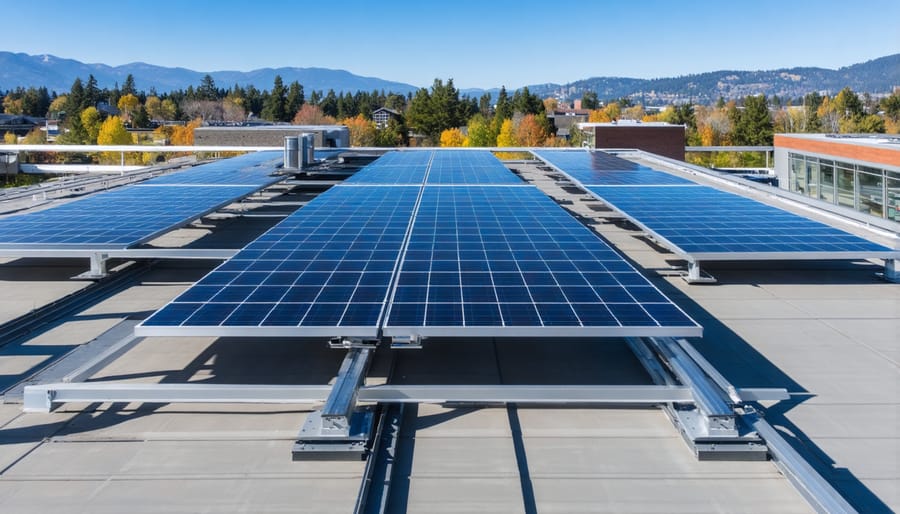
Solar Integration and Energy Storage
Modern smart buildings are increasingly incorporating advanced solar integration and energy storage systems as cornerstone sustainability features. These systems combine rooftop solar arrays with sophisticated battery storage solutions, enabling buildings to generate, store, and efficiently utilize renewable energy. Through automated building intelligence, these systems can predict energy demands and optimize power distribution throughout the day.
A typical smart building solar setup includes high-efficiency photovoltaic panels connected to lithium-ion battery banks, which store excess energy generated during peak sunlight hours. This stored energy can then be used during evening hours or cloudy days, reducing dependency on the grid and lowering operational costs. Advanced monitoring systems track energy production and consumption in real-time, allowing facility managers to make data-driven decisions about energy usage.
In Illinois, where weather patterns can be unpredictable, these integrated systems prove particularly valuable. They help maintain consistent power supply during extreme weather events and contribute to grid stability during peak demand periods. Many Illinois buildings are now achieving significant energy independence while supporting the state’s renewable energy goals through these smart solar solutions.
Smart Water and Waste Management
Smart buildings are revolutionizing water and waste management through innovative systems that maximize efficiency and minimize environmental impact. Advanced water monitoring sensors continuously track usage patterns, detect leaks instantly, and automatically adjust flow rates to prevent waste. These systems can reduce water consumption by up to 30% in commercial buildings.
Water recycling systems capture and treat greywater from sinks and showers for reuse in toilets and irrigation, while rainwater harvesting systems collect and filter precipitation for various non-potable applications. Smart buildings often incorporate dual-plumbing systems that separate potable and recycled water lines, ensuring safe and efficient water distribution throughout the facility.
For waste management, smart buildings utilize automated sorting systems and compactors that optimize waste handling. Smart sensors in waste bins monitor fill levels and automatically schedule collections when needed, reducing unnecessary pickup trips. Some advanced buildings feature waste-to-energy systems that convert organic waste into biogas for power generation.
These integrated water and waste management solutions not only reduce operational costs but also help buildings achieve sustainability certifications while supporting environmental conservation efforts in Illinois communities.
Implementing Smart Building Solutions in Illinois
Illinois businesses and building owners are increasingly adopting smart building solutions to enhance efficiency and reduce operating costs. Local implementations range from small retail spaces to large commercial complexes, with each project demonstrating the versatility of smart technology in different settings.
The Willis Tower in Chicago serves as a prime example, having undergone a comprehensive smart building transformation. The installation of automated lighting systems, smart HVAC controls, and occupancy sensors has resulted in a 30% reduction in energy consumption. This success story has inspired many mid-sized office buildings throughout the state to implement similar solutions.
Several manufacturing facilities in the Greater Chicago area have embraced cost-effective AI solutions to optimize their operations. These systems monitor equipment performance, predict maintenance needs, and adjust energy usage based on production schedules, leading to significant cost savings and improved operational efficiency.
Local universities have also joined the smart building movement. The University of Illinois has implemented smart building management systems across its campuses, incorporating features like automated ventilation control, smart lighting, and real-time energy monitoring. These implementations have not only reduced energy costs but also created valuable learning opportunities for students studying sustainable technologies.
Small businesses throughout Illinois are finding success with scalable smart solutions. Many have started with basic smart thermostats and lighting controls, gradually expanding to more comprehensive systems as they see the benefits. Local retailers report average energy savings of 15-20% after implementing even basic smart building features.
For building owners considering smart upgrades, Illinois offers various incentives and programs to offset initial costs. The Illinois Clean Energy Community Foundation provides grants for energy-efficient improvements, while local utilities offer rebates for smart technology installations. These programs, combined with documented success stories, make smart building solutions an increasingly attractive option for Illinois property owners looking to modernize their facilities and reduce operating costs.
Smart building systems represent a significant leap forward in how we manage and operate our buildings, offering substantial benefits in energy efficiency, cost savings, and occupant comfort. As demonstrated through various examples, these intelligent systems are proving their worth across different building types and applications. Looking ahead, the potential for smart building technology continues to expand with advances in artificial intelligence, Internet of Things connectivity, and automated systems. For Illinois property owners and businesses, implementing smart building solutions isn’t just about staying current with technology – it’s about creating sustainable, efficient spaces that deliver long-term value. As energy costs rise and environmental concerns grow, smart buildings will become increasingly essential in meeting both operational and sustainability goals. The future of building management lies in these intelligent systems, making now the ideal time to explore and implement smart building solutions.
