

Transport Infrastructure: The Backbone of Electric Vehicle Revolution
Transport infrastructure forms the backbone of our modern society, encompassing the intricate network of roads, railways, charging stations, and smart systems that enable the movement of people and goods. As Illinois transitions toward sustainable transportation, this vital framework is evolving to accommodate electric vehicles and renewable energy integration. Traditional infrastructure components like highways and bridges are now being reimagined with charging capabilities, solar-powered lighting, and intelligent traffic management systems. These adaptations reflect a broader shift in how we think about transportation networks, moving from purely functional corridors to integrated systems that support both conventional and electric vehicles while reducing environmental impact.
The modernization of transport infrastructure represents a critical intersection between established transportation networks and emerging clean energy technologies. For Illinois communities and businesses, understanding these developments is essential for making informed decisions about fleet electrification, solar energy adoption, and sustainable transportation planning. This evolution creates new opportunities for reducing operational costs while contributing to a more resilient and environmentally conscious transportation ecosystem.
Core Components of Transport Infrastructure
Physical Infrastructure
Physical transportation infrastructure forms the foundation of our mobility systems, encompassing essential elements that facilitate the movement of people and goods. Roads and highways serve as the primary arteries, connecting communities and enabling efficient travel across urban and rural areas. These pathways are strategically designed to accommodate various vehicle types, from personal cars to commercial trucks, and are increasingly being adapted to support electric vehicle usage.
Bridges play a crucial role in overcoming natural barriers and creating seamless connections across waterways, valleys, and other obstacles. These engineering marvels require regular maintenance and upgrades to ensure safety and reliability, particularly as transportation needs evolve with the adoption of new technologies.
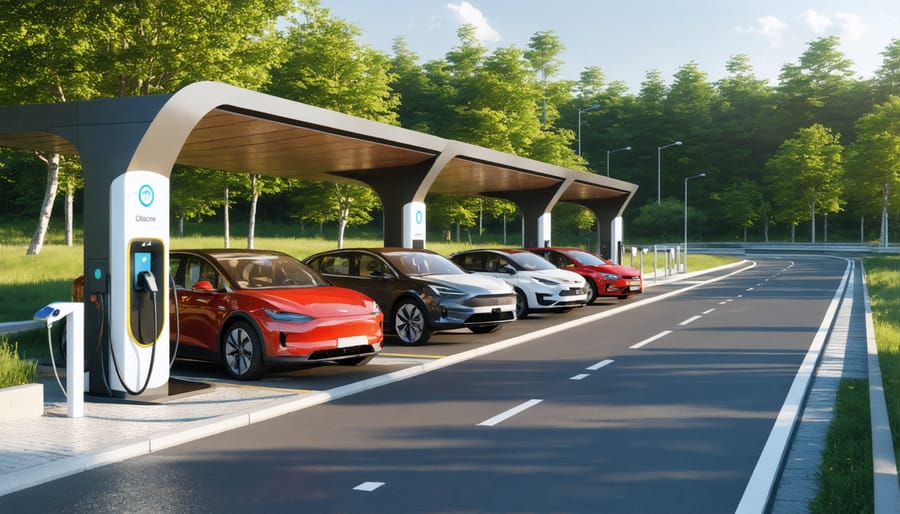
Parking facilities, both public and private, are integral components that support the daily operation of transportation systems. Modern parking structures are being reimagined to incorporate charging stations for electric vehicles and solar panels for sustainable power generation. This integration of renewable energy infrastructure with traditional parking facilities represents a forward-thinking approach to meeting current and future transportation needs while promoting environmental sustainability.
Energy Distribution Networks
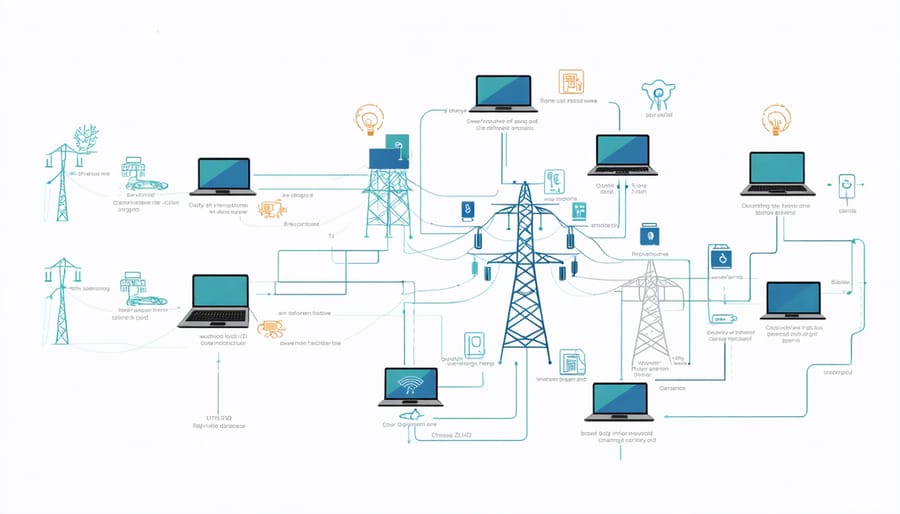
Energy distribution networks form the backbone of modern transport infrastructure, particularly as we transition toward electric mobility. These networks consist of interconnected power lines, transformers, and substations that deliver electricity from generation sources to charging stations and other transportation facilities. In Illinois, our robust power grid system supports the growing demand for electric vehicle charging infrastructure while increasingly incorporating clean solar energy.
The distribution system includes high-voltage transmission lines that carry power across long distances, step-down transformers that convert electricity to usable voltages, and local distribution networks that connect directly to charging stations and transportation hubs. Smart grid technology enhances these networks by enabling real-time monitoring and efficient power distribution, especially crucial during peak charging times.
For communities across Illinois, these networks are evolving to accommodate distributed energy resources, including solar installations that help power transportation infrastructure. Modern substations now feature advanced equipment that can handle bi-directional power flow, allowing excess solar energy to be fed back into the grid while ensuring reliable power delivery to transportation facilities.
Electrification Components
Charging Infrastructure
As electric vehicles become increasingly popular, charging infrastructure has emerged as a crucial component of modern transport systems. Three main types of charging stations serve different needs: Level 1 chargers, which use standard 120V outlets and are typically found in homes; Level 2 chargers, operating at 240V and commonly installed at workplaces and public locations; and DC Fast Chargers (Level 3), which provide rapid charging capabilities along major transportation corridors.
Each charging station type requires specific infrastructure considerations. Level 1 charging typically needs minimal modifications to existing electrical systems, making it ideal for residential use. Level 2 stations demand dedicated electrical circuits and may require local grid upgrades, particularly when multiple units are installed in one location. DC Fast Chargers necessitate substantial power infrastructure, often requiring transformer upgrades and specialized equipment to handle high-power delivery.
The successful implementation of charging infrastructure depends on strategic placement and adequate power supply. Urban areas need a mix of all charging types to serve various user needs, while highway corridors primarily require DC Fast Chargers. Grid capacity assessment, proper electrical equipment installation, and regular maintenance are essential for reliable operation. Additionally, smart charging capabilities and integration with renewable energy sources, particularly solar power, help optimize grid load and promote sustainable transportation solutions.
Grid Integration Systems
Modern transport infrastructure increasingly relies on sophisticated smart grid technology to manage power distribution effectively. These grid integration systems serve as the backbone for electric vehicle charging networks, ensuring reliable power delivery while balancing load demands across the infrastructure.
In Illinois, grid integration systems are particularly crucial as they connect renewable energy sources, like solar installations, with EV charging stations and traditional power networks. These systems use advanced monitoring tools and automated controls to optimize power flow, prevent outages, and manage peak demand periods efficiently.
Key components include power management units, energy storage systems, and intelligent distribution networks. These work together to ensure charging stations receive consistent power supply while maintaining grid stability. For homeowners and businesses investing in EV infrastructure, these systems provide real-time monitoring capabilities and automated load balancing, helping to reduce energy costs and maximize charging efficiency.
The integration of solar power with transport infrastructure has become increasingly important in Illinois, where smart meters and grid-connected inverters enable bidirectional power flow. This allows excess solar energy to support EV charging needs while maintaining grid reliability during peak usage times.
Illinois’s Transport Infrastructure Transformation
Current Infrastructure Status
Illinois has made significant strides in developing its electric vehicle infrastructure, with over 1,000 public charging stations currently installed across the state. The Chicago metropolitan area leads with the highest concentration of charging points, while suburban and rural areas are seeing steady growth in infrastructure deployment. Recent initiatives have focused on expanding charging accessibility along major highways and integrating solar-powered charging stations, aligning with the state’s commitment to renewable energy.
The Illinois Electric Vehicle Infrastructure Plan has accelerated electric vehicle adoption through strategic placement of fast-charging stations every 50 miles along key transportation corridors. This network includes Level 2 chargers at workplace parking lots, shopping centers, and municipal facilities, complemented by DC fast-charging stations for rapid charging needs.
However, challenges remain in achieving uniform coverage across all regions. Rural communities particularly face infrastructure gaps, though ongoing state and federal funding programs are addressing these disparities. The integration of solar power generation with charging stations is becoming increasingly common, offering sustainable charging solutions while reducing grid dependency and operating costs.
Future Development Plans
The future of transport infrastructure in Illinois is rapidly evolving, with significant emphasis on sustainable and electric vehicle-friendly developments. Several major projects are currently in planning stages, including the expansion of EV charging networks along key highways and the integration of solar-powered charging stations at public parking facilities. The Illinois Department of Transportation has outlined a comprehensive ten-year plan that prioritizes the development of smart road systems capable of supporting autonomous vehicles and vehicle-to-grid communication technologies.
Local municipalities are also investing in modernizing existing infrastructure with renewable energy solutions. This includes installing solar-powered traffic signals, implementing smart parking systems, and developing multimodal transportation hubs that combine traditional transit options with EV charging capabilities. The Chicago Metropolitan Area is leading these initiatives with plans to create solar-integrated transit stations and electric bus depots.
Rural areas aren’t being left behind, with plans for strategic placement of charging stations every 50 miles along major routes. These developments will be supported by local solar installations to ensure reliable, clean energy supply. The focus remains on creating a resilient, future-ready transport network that seamlessly integrates renewable energy sources while maintaining accessibility for all Illinois residents.
Solar Energy’s Role in Transport Infrastructure
Solar power is revolutionizing transport infrastructure across Illinois, offering sustainable solutions for powering everything from electric vehicle charging stations to traffic signals and road lighting. Through innovative solar system integration, transportation hubs are becoming more energy-efficient and environmentally friendly.
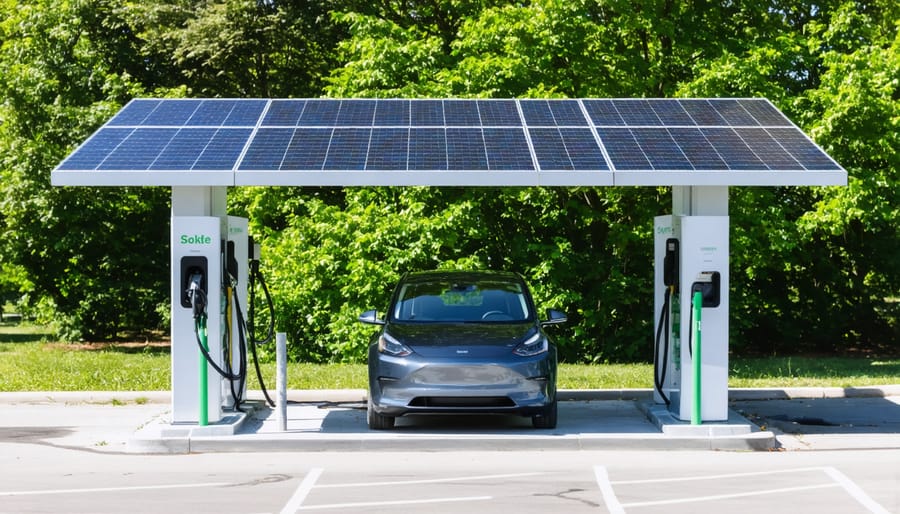
Solar-powered charging stations are becoming increasingly common at parking facilities, rest areas, and transportation centers throughout the state. These installations provide clean energy for electric vehicles while reducing strain on the traditional power grid. Solar canopies over parking lots serve dual purposes: generating electricity while providing shade for vehicles.
Smart traffic management systems powered by solar energy help optimize traffic flow and reduce congestion. Solar-powered LED street lighting and digital signage improve safety while decreasing operational costs for municipalities. Meanwhile, railway stations and bus terminals are incorporating solar panels on rooftops and unused spaces to offset their energy consumption.
The integration of solar power into transport infrastructure also enhances resilience during power outages. Battery storage systems paired with solar installations ensure critical transportation systems remain operational during emergencies. This combination of renewable energy and modern infrastructure creates a more reliable and sustainable transportation network for Illinois residents and businesses.
Modern transport infrastructure stands as a cornerstone of sustainable development, connecting communities while supporting environmental goals. The integration of renewable energy sources, particularly solar power, into transportation systems has revolutionized how we move people and goods. This evolution towards cleaner mobility solutions not only reduces carbon emissions but also creates more resilient and efficient networks. As cities and regions continue to grow, investing in smart infrastructure that supports electric vehicles, public transit, and alternative transportation methods becomes increasingly crucial. The future of transport infrastructure lies in its ability to adapt to changing technologies while maintaining accessibility, safety, and environmental responsibility. By embracing these innovations, communities can build transportation systems that serve current needs while preparing for a more sustainable tomorrow.
