Historical Energy Perspectives

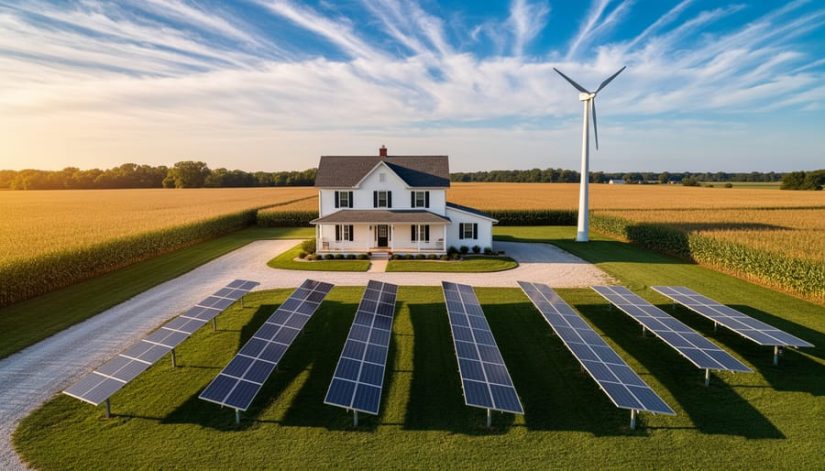
How Earth’s Six Wind Belts Could Power Your Illinois Property

The Earth’s atmosphere circulates in six distinct wind belts that determine weather patterns, climate zones, and energy resources across every continent. These global air currents—three in each hemisphere—move predictably based on solar heating at the equator and cooling at the poles, creating the trade winds, westerlies, and polar easterlies that have shaped human civilization for millennia.
Understanding these wind patterns reveals crucial insights about renewable energy potential in different regions. The prevailing westerlies that dominate Illinois’ latitude between 30 and 60 degrees north create consistent wind …
Historical Energy Perspectives

How the Power Distribution Grid Brings Electricity to Your Illinois Home

Every time you flip a light switch or charge your phone, you’re tapping into one of the most sophisticated infrastructure networks ever built—the power distribution grid. This intricate system of wires, transformers, and substations delivers electricity from massive generation facilities to your front door, evolving dramatically since Thomas Edison’s first DC networks illuminated New York City streets in the 1880s.
Understanding how the grid works matters more than ever for Illinois property owners, especially as solar energy transforms from alternative technology to mainstream power source. The grid isn’t just …

Historical Energy Perspectives

How the 1970s Oil Crisis Changed America’s Energy Future Forever

In October 1973, American drivers experienced something unprecedented: miles-long lines at gas stations, fuel rationing, and prices that quadrupled almost overnight. The Arab oil embargo exposed a stark reality—the United States, despite its industrial might, had become dangerously dependent on foreign energy sources. What began as a geopolitical response to Middle Eastern conflicts transformed into a decade-long crisis that reshaped how nations, businesses, and families thought about energy security.
The 1970s oil crisis wasn’t just about expensive gasoline. It triggered recession, unemployment, and inflation that touched …

Historical Energy Perspectives

How Ancient Wood Fires Led to Your Solar Panels: The Complete Energy Evolution Story

Understanding how energy has traveled from its source to power our homes and businesses reveals why modern solar technology represents such a logical advancement for Illinois residents. The 3.5 tracing energy worksheet concept helps students and curious learners follow energy’s path through various transformations—from ancient sunlight trapped in fossil fuels to the electricity flowing through our outlets today.
Trace energy backwards from any electrical device in your home, and you’ll discover a fascinating chain: electricity came from a power plant, which burned fuel or harnessed natural forces, which originally …

Historical Energy Perspectives

Wind Power’s Journey: From Ancient Sailors to Modern Energy Revolution

Wind power’s journey spans millennia, from ancient sailors harnessing ocean breezes to today’s towering turbines powering Illinois communities. For over 5,000 years, humans have ingeniously captured wind energy, beginning with simple windmills in Persia that ground grain and pumped water. This renewable resource transformed medieval European landscapes, where Dutch windmills became iconic symbols of technological progress, draining wetlands and processing materials that fueled the pre-industrial economy.
The late 19th century marked a pivotal shift when inventors like Charles Brush constructed the first electricity-…

Historical Energy Perspectives

How Earth’s Core Heat Powers Your Home’s Geothermal System

Harness the Earth’s limitless thermal energy lurking right beneath your feet – a powerful, sustainable heat source that’s revolutionizing how Illinois homes and businesses approach energy independence. Unlike intermittent renewable energy sources, geothermal power taps into our planet’s core heat, providing consistent, clean energy 24/7/365. At depths of just 300-500 feet beneath Illinois properties, underground temperatures maintain a steady 50-60°F …

Historical Energy Perspectives

Coal’s Legacy: How Modern Energy Transformed Illinois Industry

William L. Shirer’s “The Rise and Fall of the Third Reich” stands as one of the most comprehensive accounts of Nazi Germany, yet its historical accuracy continues to spark intense scholarly debate. Published in 1960, this monumental work draws from captured Nazi documents, the Nuremberg trials, and Shirer’s firsthand observations as a foreign correspondent in Berlin during Hitler’s ascent to power. While praised for its vivid narrative and extensive documentation, historians have questioned certain aspects of Shirer’s interpretation, particularly his emphasis on the German national character and his …

Historical Energy Perspectives

How Water Power Transformed Our World: From Ancient Mills to Modern Hydroelectric Marvels

The journey of hydroelectric power stands as one of humanity’s greatest achievements in harnessing natural energy. From ancient water wheels grinding grain in Mesopotamia to massive modern dams powering entire cities, water has been a constant companion in our quest for sustainable energy. The first industrial-scale hydroelectric facility, built at Niagara Falls in 1879, marked a pivotal moment when we transformed flowing water into electricity that could light homes and power factories.
Today’s hydroelectric facilities generate roughly 16% of the world’s electricity, making them the largest source of renewable …

Historical Energy Perspectives

Nuclear Energy’s Global Power Players: How Nine Nations Shape Our Energy Future

Nine nations wield the world’s most formidable nuclear arsenals, shaping global power dynamics and energy policies in ways that continue to influence the evolution of energy sources worldwide. The United States and Russia lead with the largest stockpiles, while China, France, and the United Kingdom round out the original nuclear club established by the Nuclear Non-Proliferation Treaty. India, Pakistan, Israel, and North Korea later joined this exclusive group, each developing nuclear …

Historical Energy Perspectives

How Wood Powered America: The Forgotten Energy Giant That Built Our Nation

Wood, humanity’s oldest energy source, continues to shape our renewable energy landscape in surprising ways. From traditional fireplaces to modern biomass power plants, wood energy represents a crucial bridge between our past and our sustainable future. As Illinois homeowners and businesses seek cleaner energy alternatives, wood-based solutions offer a renewable option that combines ancient wisdom with cutting-edge technology.
Unlike fossil fuels, wood energy operates within a natural carbon cycle, releasing only the carbon dioxide that trees previously absorbed during their growth. Today’s advanced wood energy systems …

Historical Energy Perspectives

The Oil Age’s Energy Revolution: What It Means for Your Solar Future

The Oil Age transformed human civilization more profoundly than any energy transition since the mastery of fire. Unlike the gradual shift from wood to coal in early American energy history, petroleum’s rise revolutionized society within a single generation. From the first commercial well in 1859 to today’s global production of over 95 million barrels daily, oil has shaped everything from transportation and manufacturing to geopolitics and climate change.
Yet this …

Historical Energy Perspectives

Coal’s Price Journey: From Industrial Revolution to Modern Energy Markets

Coal prices have shaped global energy markets since the Industrial Revolution, serving as a critical economic indicator for over two centuries. From powering steam engines in 1800s England to fueling modern power plants across Illinois, coal’s price fluctuations reflect broader economic trends, technological advances, and shifting energy policies.
Throughout history, coal prices have followed distinct patterns: dramatic spikes during industrial booms and wartime, followed by sustained periods of stability. These cycles continue to influence today’s energy landscape, particularly as …