Integrated Energy Communities

Why Your Solar System Needs to Talk to the Grid (And What Happens When It Can’t)

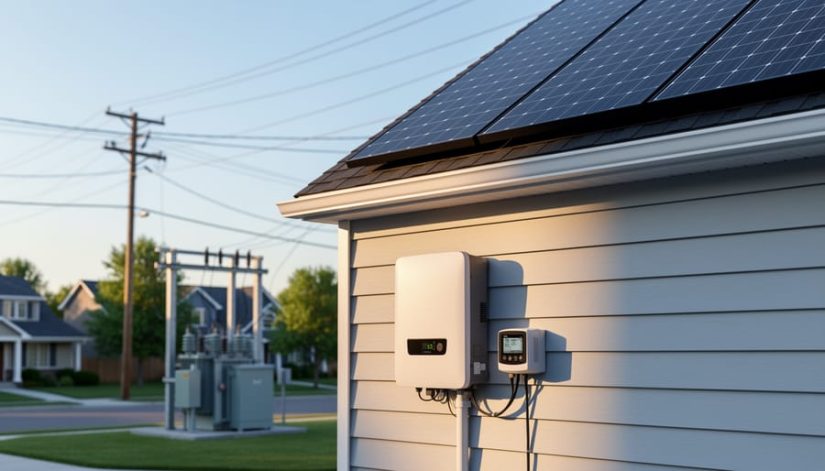
Verify that your solar installer adheres to IEEE 1547 standards, which govern how your solar system connects to the electrical grid and ensure it can safely disconnect during outages while maintaining power quality. This certification protects your investment and guarantees your system will work seamlessly with ComEd or Ameren Illinois infrastructure.
Confirm your equipment carries UL 1741 listing, the safety standard that validates inverters and other interconnection components meet rigorous performance requirements. Without this certification, your utility company may refuse to approve your system for grid connection, delaying or …

Integrated Energy Communities

How Solar Energy Creates Real Economic Value in Illinois Communities

When you flip on a light switch or power up your business equipment, you’re participating in something far more complex than a simple transaction with your utility company. Every energy decision ripples through your local economy, affecting jobs, tax revenues, property values, and community resilience. An integrated economy approach reveals these interconnected effects, showing how renewable energy investments create cascading benefits that traditional cost-benefit analyses often miss.
Think of Illinois’s economy as a web rather than a collection of isolated transactions. When a manufacturing facility in Rockford …

Integrated Energy Communities

How Integrated Energy Communities Are Reshaping Illinois Neighborhoods

Integrated communities represent a revolutionary shift in how we think about sustainable living in Illinois, combining renewable energy systems, smart infrastructure, and collaborative resource management into cohesive neighborhood ecosystems. These forward-thinking developments transform traditional residential and commercial spaces into interconnected networks that share energy resources, reduce environmental impact, and create resilient local economies.
By integrating solar panels, energy storage systems, and smart grid technologies, these communities achieve up to 60% greater energy efficiency compared to conventional …

Integrated Energy Communities

How Integrated Energy Systems Are Transforming Illinois Communities

Integrated energy systems are revolutionizing how Illinois communities power their future, combining renewable sources, smart storage solutions, and advanced grid management to create resilient, sustainable power networks. These sophisticated systems seamlessly blend solar panels, wind turbines, and energy storage technologies with traditional power infrastructure, enabling communities to reduce costs, enhance reliability, and minimize environmental impact. By interconnecting various energy sources and implementing intelligent control systems, integrated energy solutions provide the flexibility needed to meet fluctuating power demands …

Integrated Energy Communities

How Solar Communities Are Transforming Illinois Neighborhoods

Transform neighborhoods into thriving energy communities by building stronger solar communities that combine environmental sustainability with social connection. Illinois residents are discovering that shared solar initiatives create more than just clean energy—they forge lasting bonds between neighbors, reduce collective utility costs, and establish resilient local power networks. When communities collaborate on solar projects, they develop a shared sense of purpose and achievement that extends …

Integrated Energy Communities

Shared Energy Networks: How Illinois Communities Are Slashing Power Costs Together

Shared energy programs are revolutionizing how Illinois communities power their homes and businesses, offering a practical solution to rising energy costs while accelerating the transition to renewable resources. Through innovative community solar projects and collaborative financing models, neighbors can now pool their resources to invest in large-scale solar installations, reducing individual upfront costs by up to 40% while maximizing collective energy independence.
This collaborative approach transforms traditional energy consumption models, enabling residents who can’t install solar panels on their own properties – …